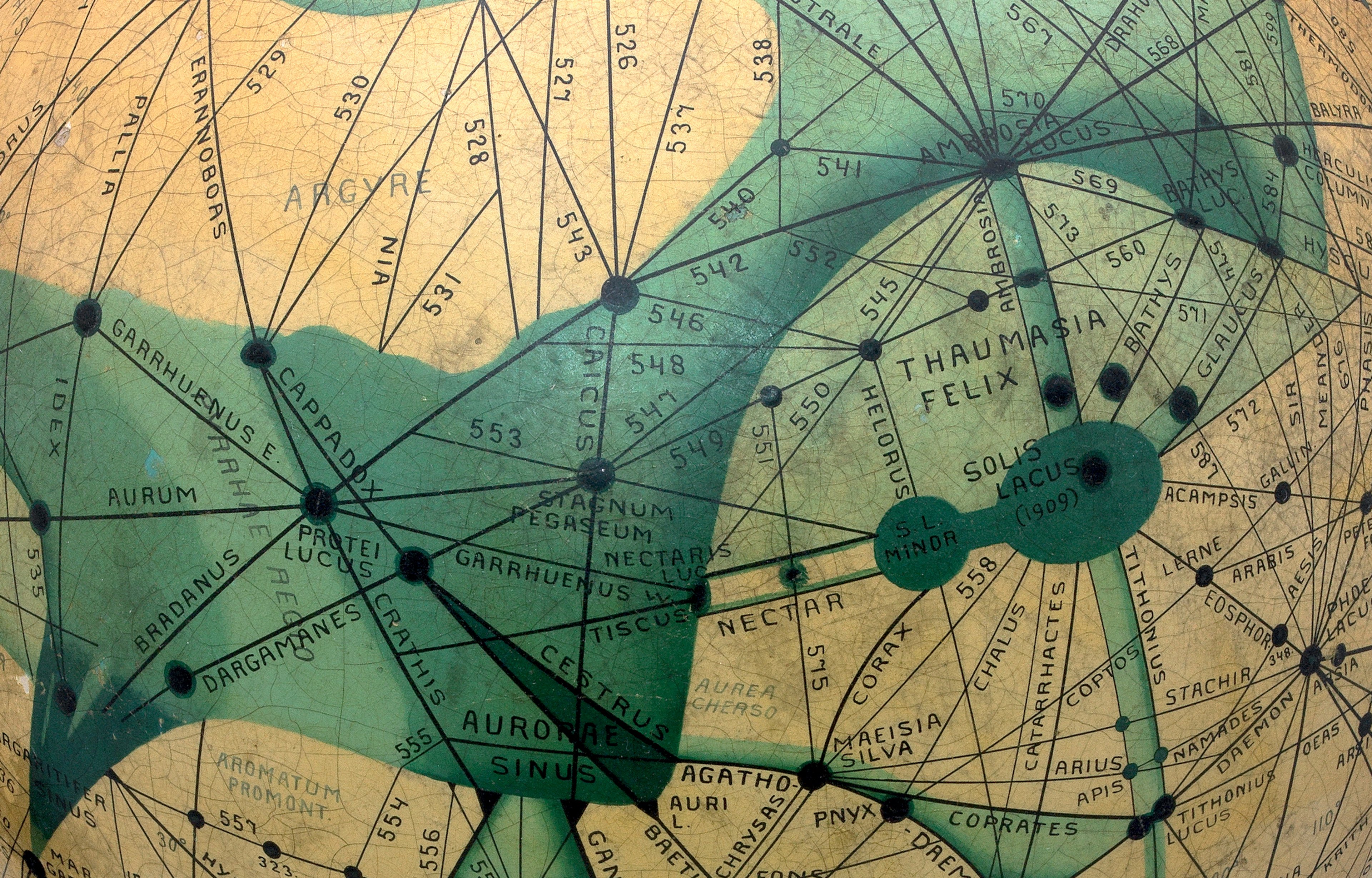
Mars, the Moon and Other Planets
Remarkable alien landscapes in fantasy fiction

From the sixteenth century onwards, as cartographic and scientific knowledge of the Earth became more complete, the more remote and mysterious regions – what Joseph Conrad called the ‘blank spaces on the earth’ – gradually disappeared from European maps. By the close of the nineteenth century, they were less plausible settings for imaginative literature.
This expansion of knowledge was accompanied by what the German sociologist Max Weber (1864–1920) described as the ‘disenchantment of the world’ [1]: the process by which the world increasingly came to be understood through empirical investigation and calculation, rather than magic, mystery, or supernatural agency. There remained, however, one vast realm into which human empirical investigation had made only the tiniest inroads: the cosmos.
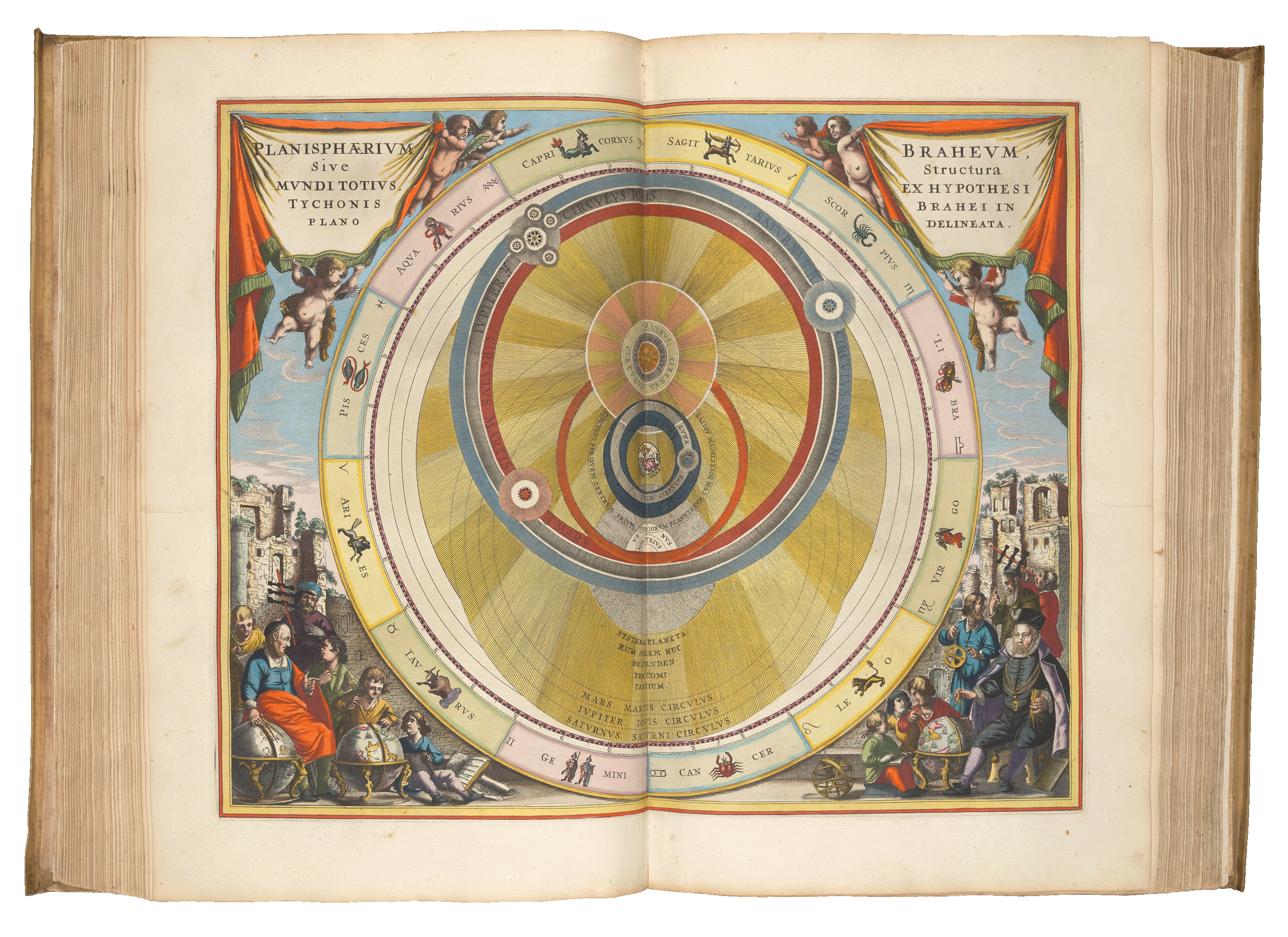
Tycho Brahe’s Solar System Theory and in contrast
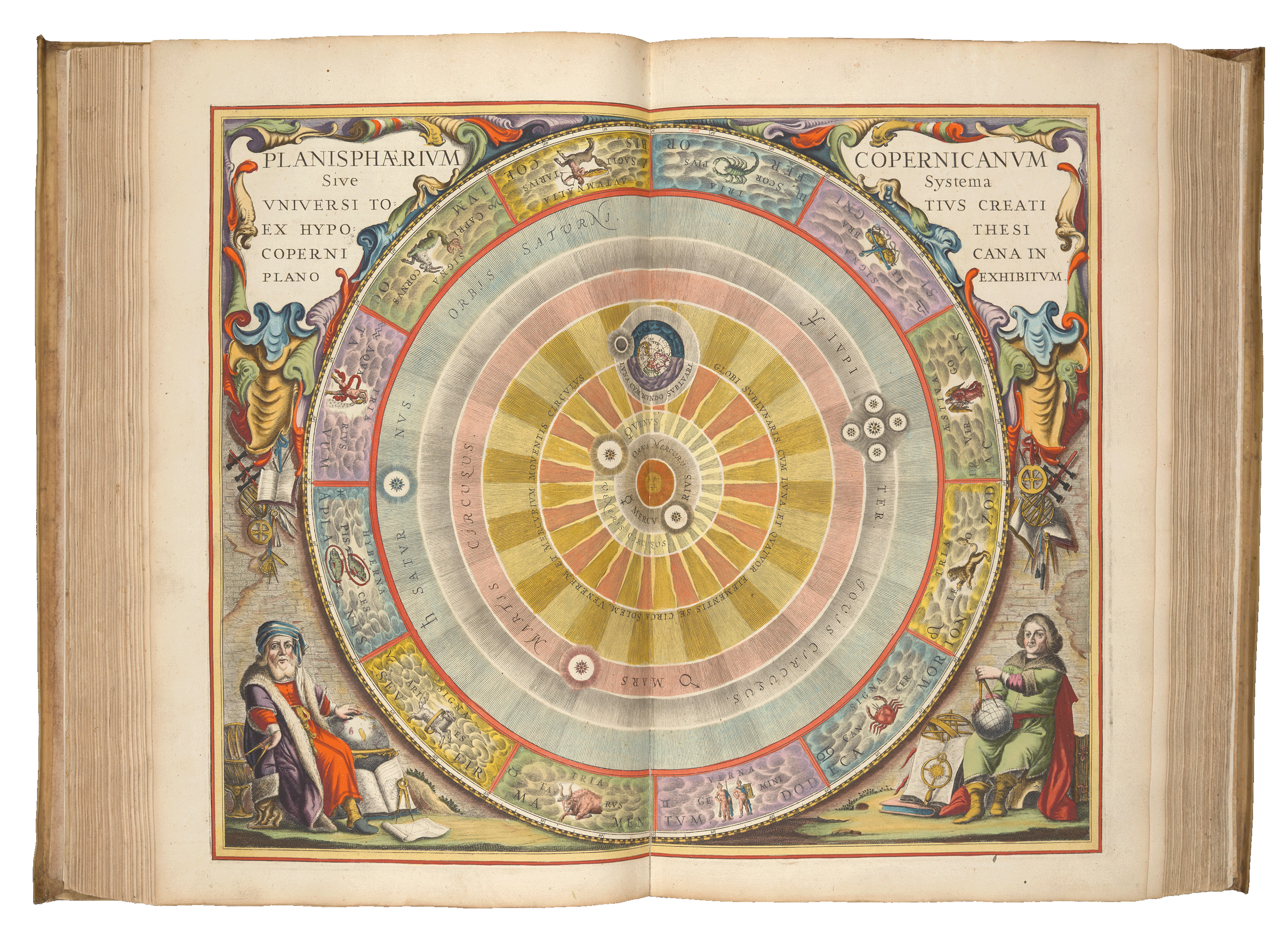
Copernicus’ System, Harmonia Macrocosmica (1661)
The heavens have been subject to cartographic investigation for centuries, as demonstrated by the many celestial charts and cosmological diagrams in the Sunderland Collection. These range from medieval representations of the Christian cosmos to the elaborate celestial atlas of the Dutch-German cartographer Andreas Cellarius (1596–1665), Harmonia Macrocosmica (1660–61), which depicts the competing Ptolemaic, Tychonic and Copernican models of the universe. Similar astronomical diagrams appear in the Ottoman scholar Kâtip Çelebi’s (1609–1657) Cihannümâ (Mirror of the World, 1732), which brought together Islamic and European traditions of geographical and cosmological knowledge.
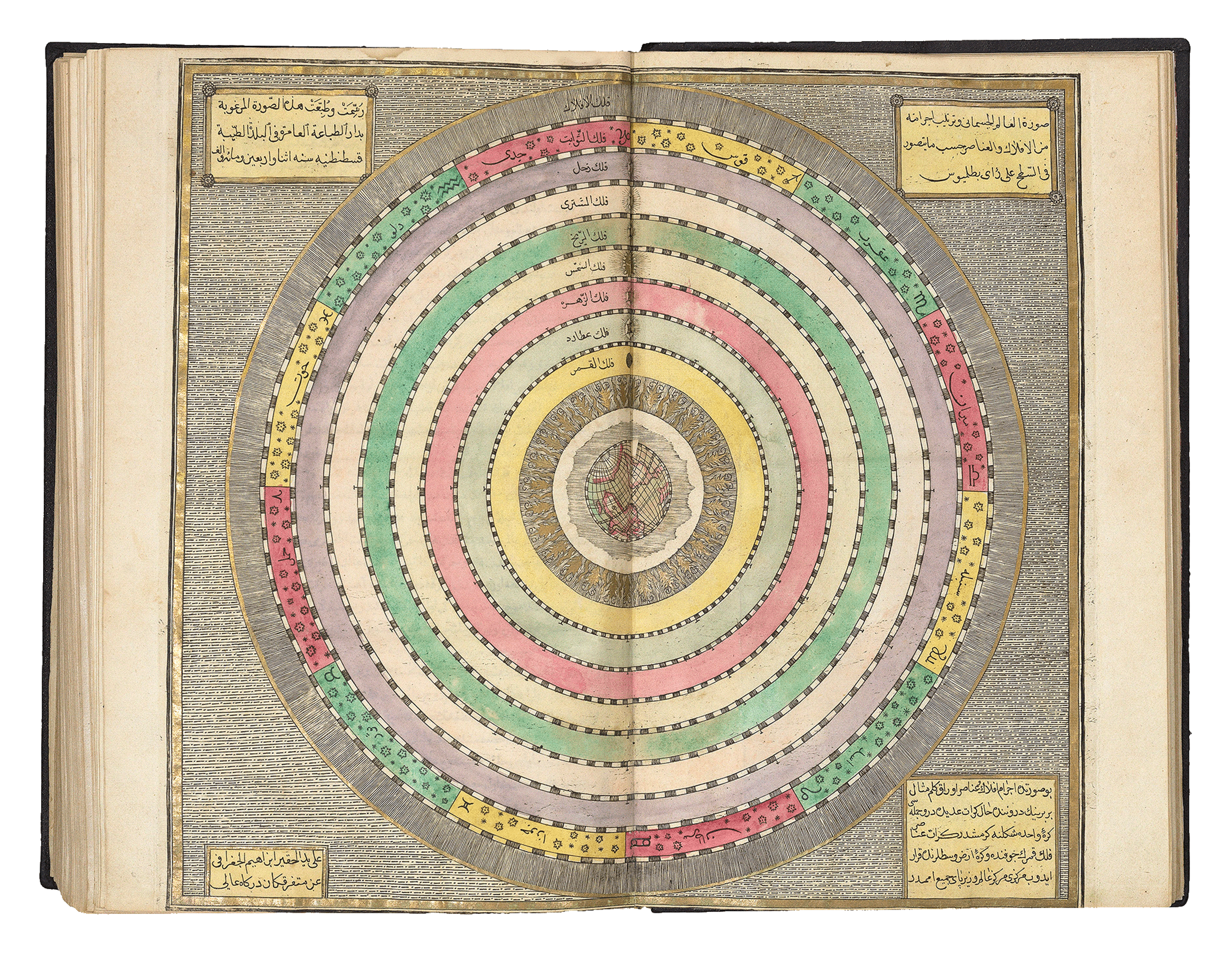
Ptolemaic Solar System from Kâtip Çelebi’s Cihannümâ (1732)
Historical attempts across cultures worldwide to systematise the cosmos sought to impose order upon the seemingly innumerable points of light in the night sky, whose movements could be observed and calculated but whose physical nature remained largely mysterious.
Early maps thus did not merely record astronomical observations, but also projected philosophical, religious and metaphysical meaning onto the heavens, seeking to establish humanity’s place within a divinely ordered universe through imaginative conjecture.
In Europe, that Judeo-Christian interpretive framework also brought with it a catch: man was the divinely ordained centre of creation and the idea that life existed on other planets was therefore a dangerous heresy. Speculation that other worlds had inhabitants was possibly among the ideas that led to Renaissance cosmologist Giordano Bruno (1548–1600) being burnt at the stake by the Inquisition. [2]
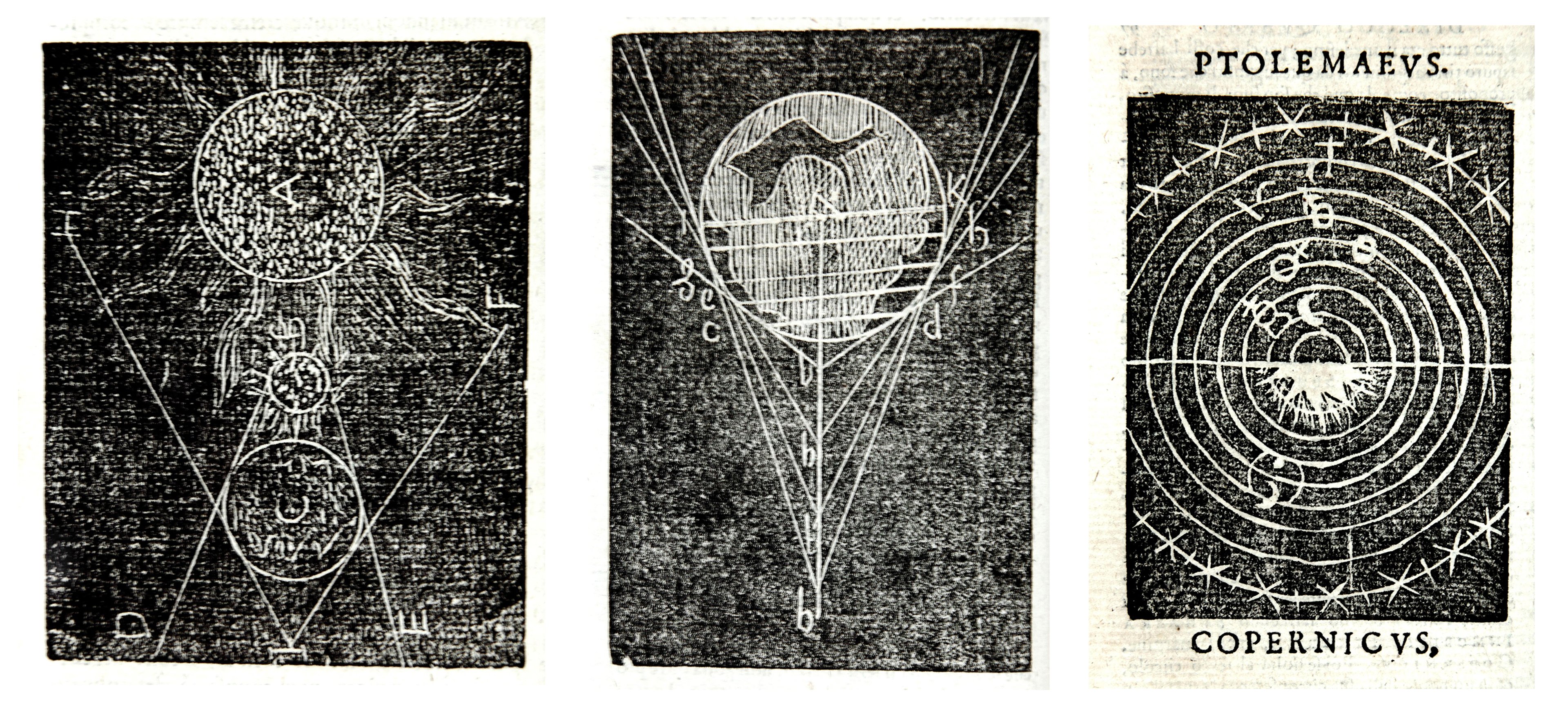
Illustrations from Giordano Bruno’s La Cena de le Ceneri (The Ash Wednesday Supper, 1584). Public Domain, via Library of Congress
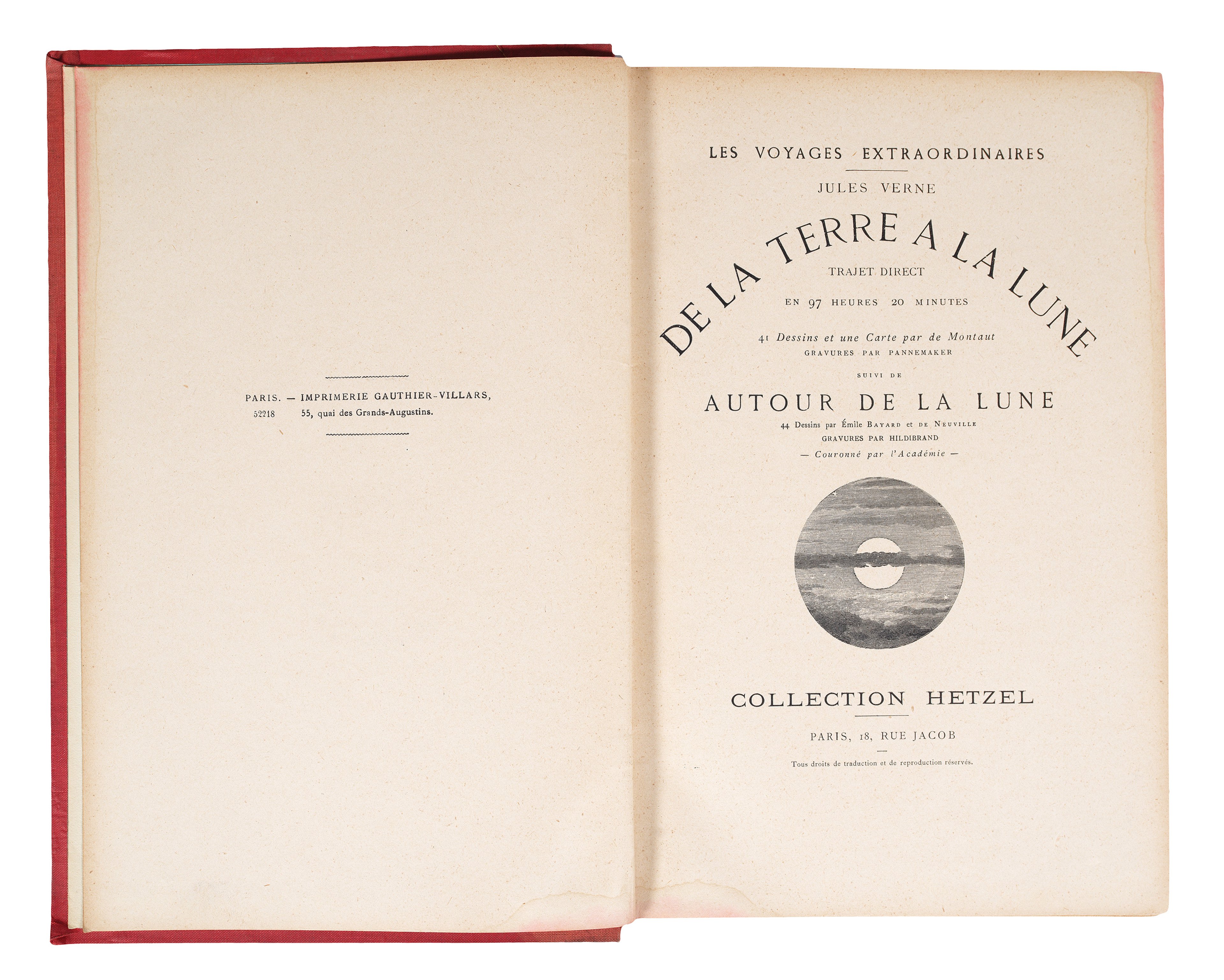
By the nineteenth century, modern scientific technologies and telescopy were revealing more and more detailed information on neighbouring heavenly bodies, which could be discussed free from the control of religious authority. The increasing fascination with the possibility of reaching and exploring other worlds is reflected in Jules Verne’s (1828–1905) celebrated Voyages Extraordinaires, a complete set of which is held by Ex Carta.
While many of his novels, such as Journey to the Centre of the Earth (1864), explored the remaining mysteries of our own planet, From the Earth to the Moon (1865) and its sequel, Around the Moon (1870), extended the possibilities of scientific exploration beyond the Earth itself. Interestingly, Verne’s French antecedent, Cyrano de Bergerac (1619–1655), had already sent a literary protagonist into space in his Comical History of the States and Empires of the Moon (1657) – Arthur C. Clarke (1917–2008) considered this the first use of the notion of rocket propulsion in relation to space travel. [3]
However, Verne was one of the earliest authors to treat the idea of visiting the Moon as a serious possibility in the context of new industrial technology and his treatment remains surprisingly accurate – including his estimates of the distances involved and his conclusion that the Moon is barren of life.
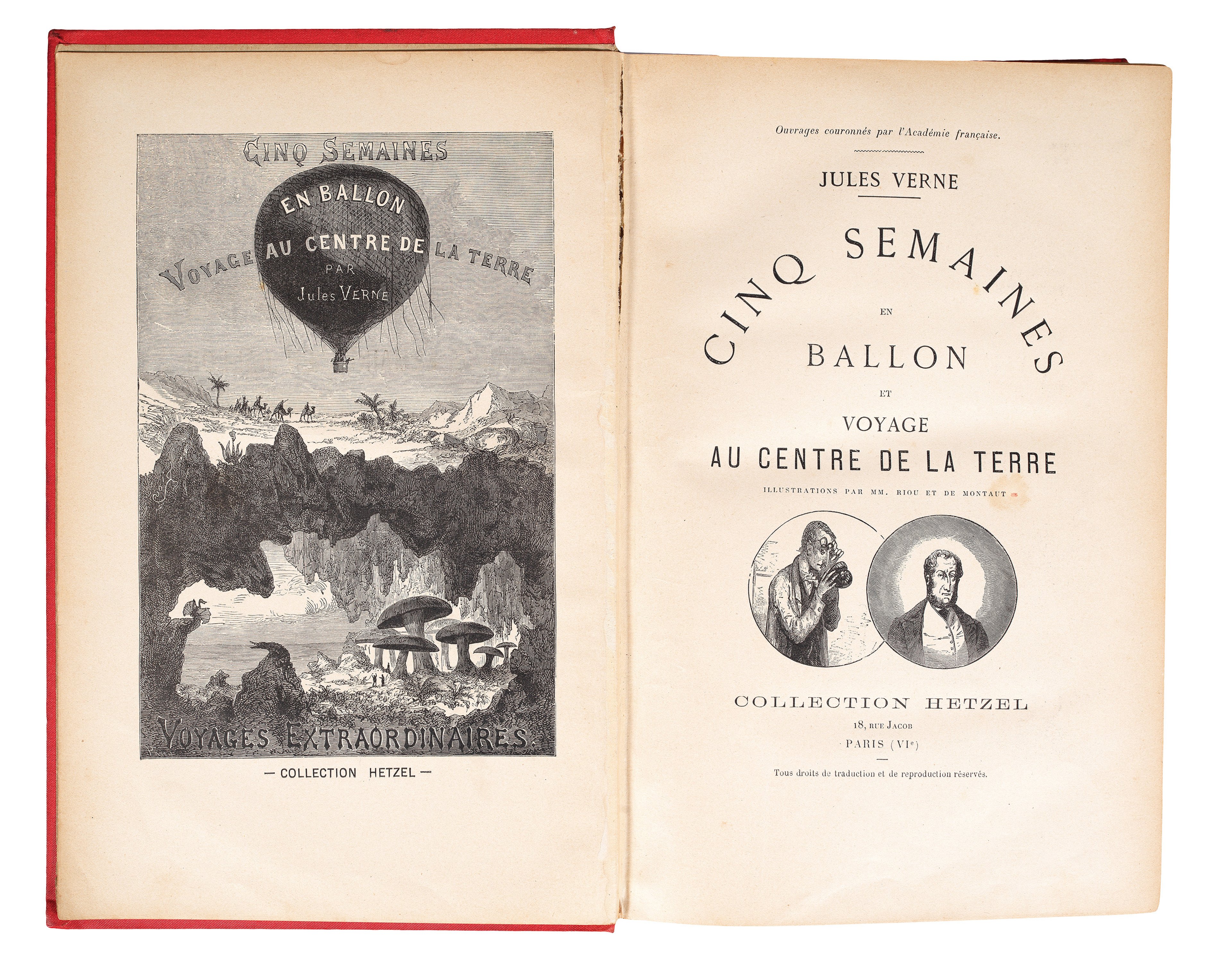
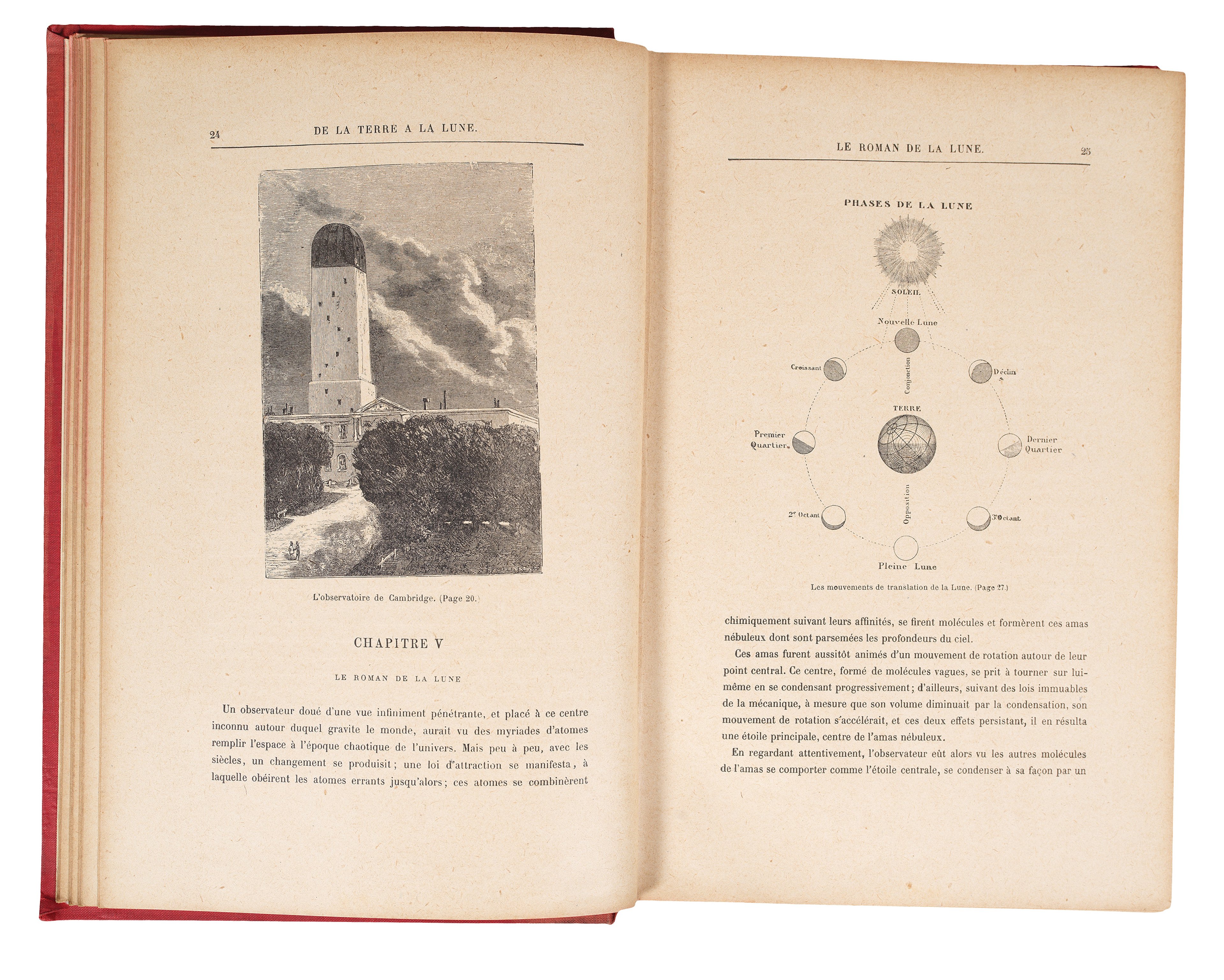
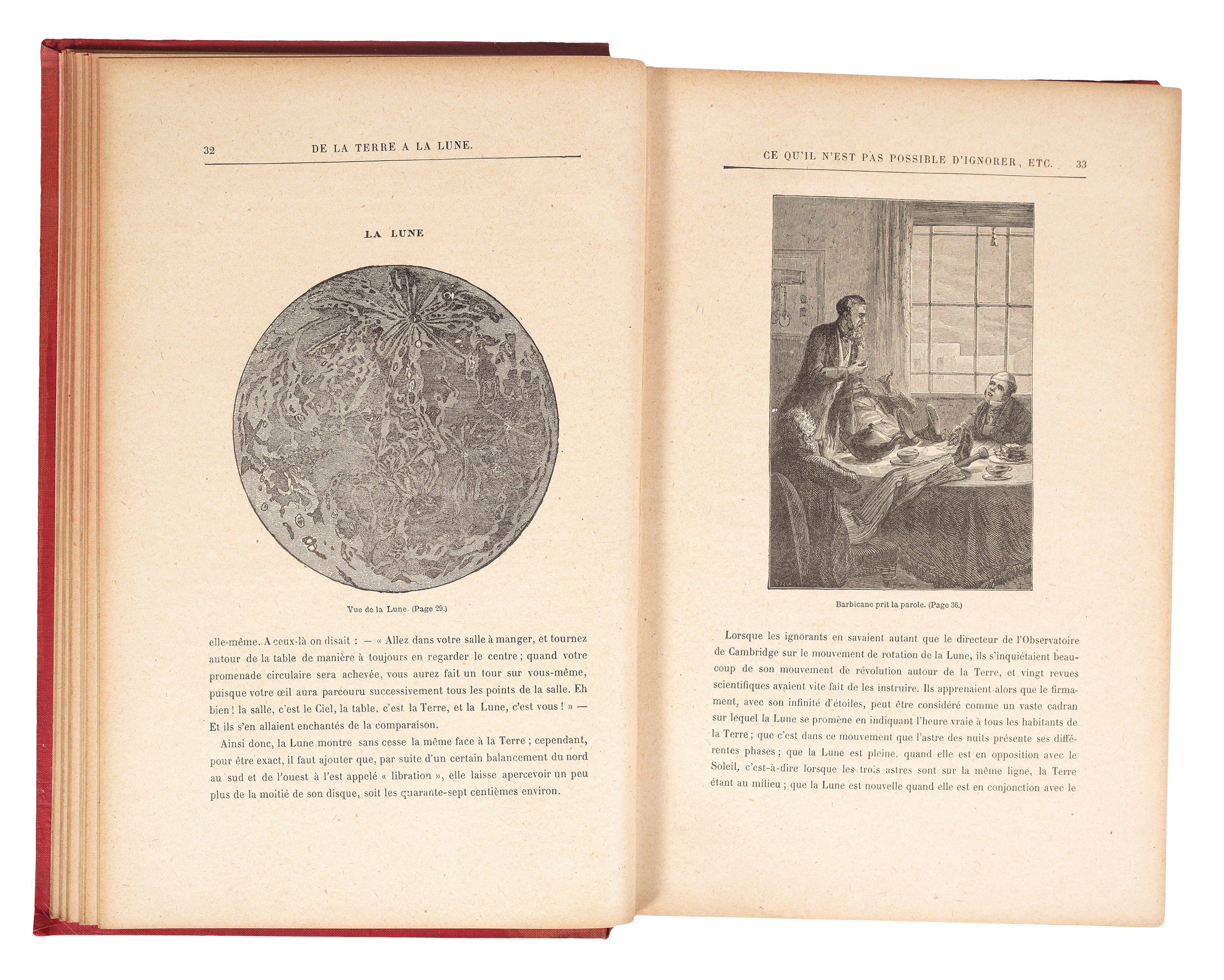
Mapping Mars
One fascinating item in the Ex Carta collection illustrates an irony of the empirical process: a scientific paper detailing observations of Mars during its unusually close approach to Earth in 1877, which, far from dispelling mystery, would have a seminal influence on imaginative literature and popular culture. [4] Italian astronomer Giovanni Virginio Schiaparelli (1835–1910) used a powerful refracting telescope at the Brera Observatory in Milan to produce a considerably more detailed and systematic map of the surface of Mars than had previously been possible, identifying and naming a series of light and dark regions that he interpreted, with caution, as analogues to terrestrial ‘seas’ and ‘continents’.
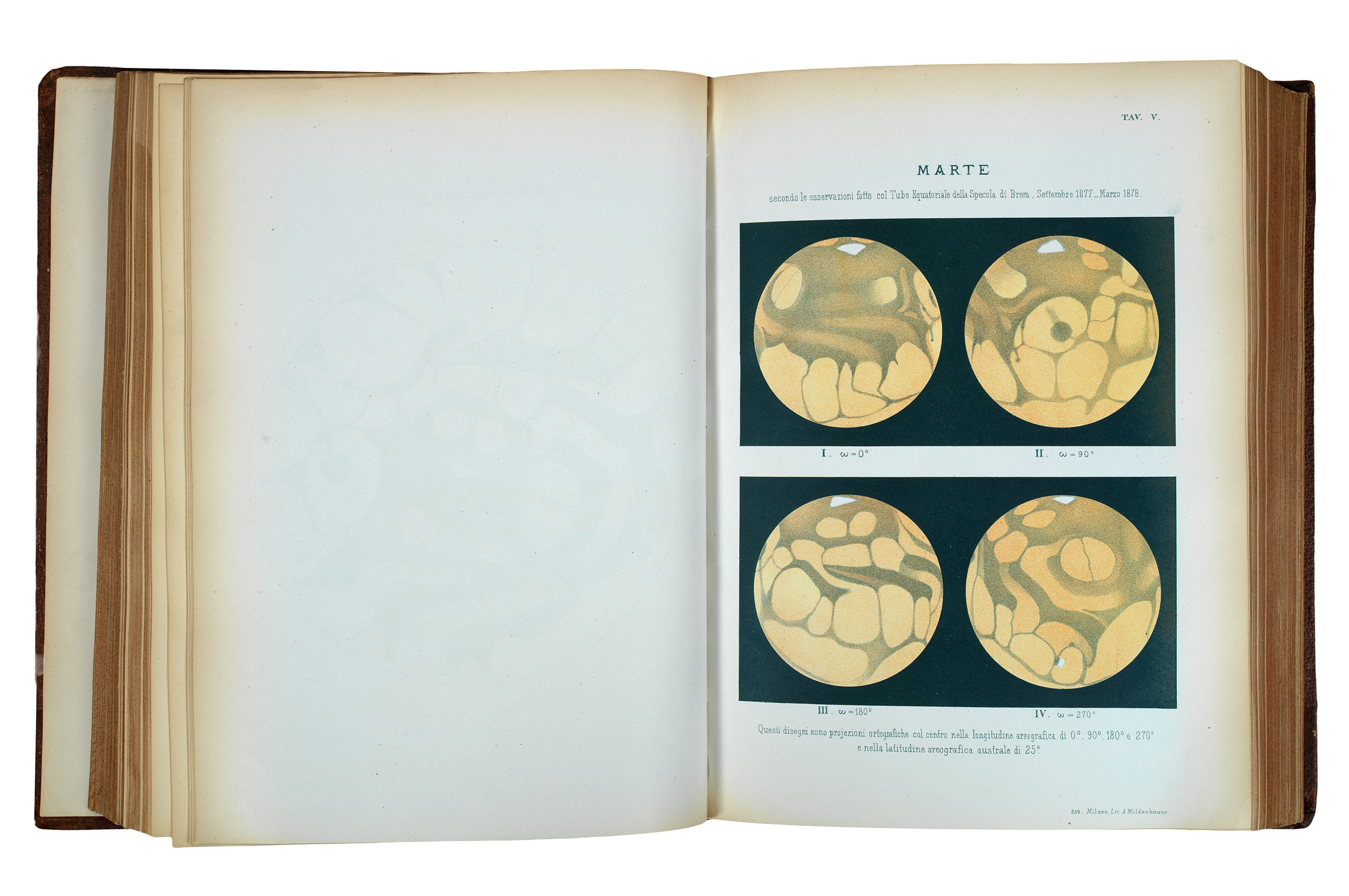
Illustrations from Schiaparelli’s Astronomical and
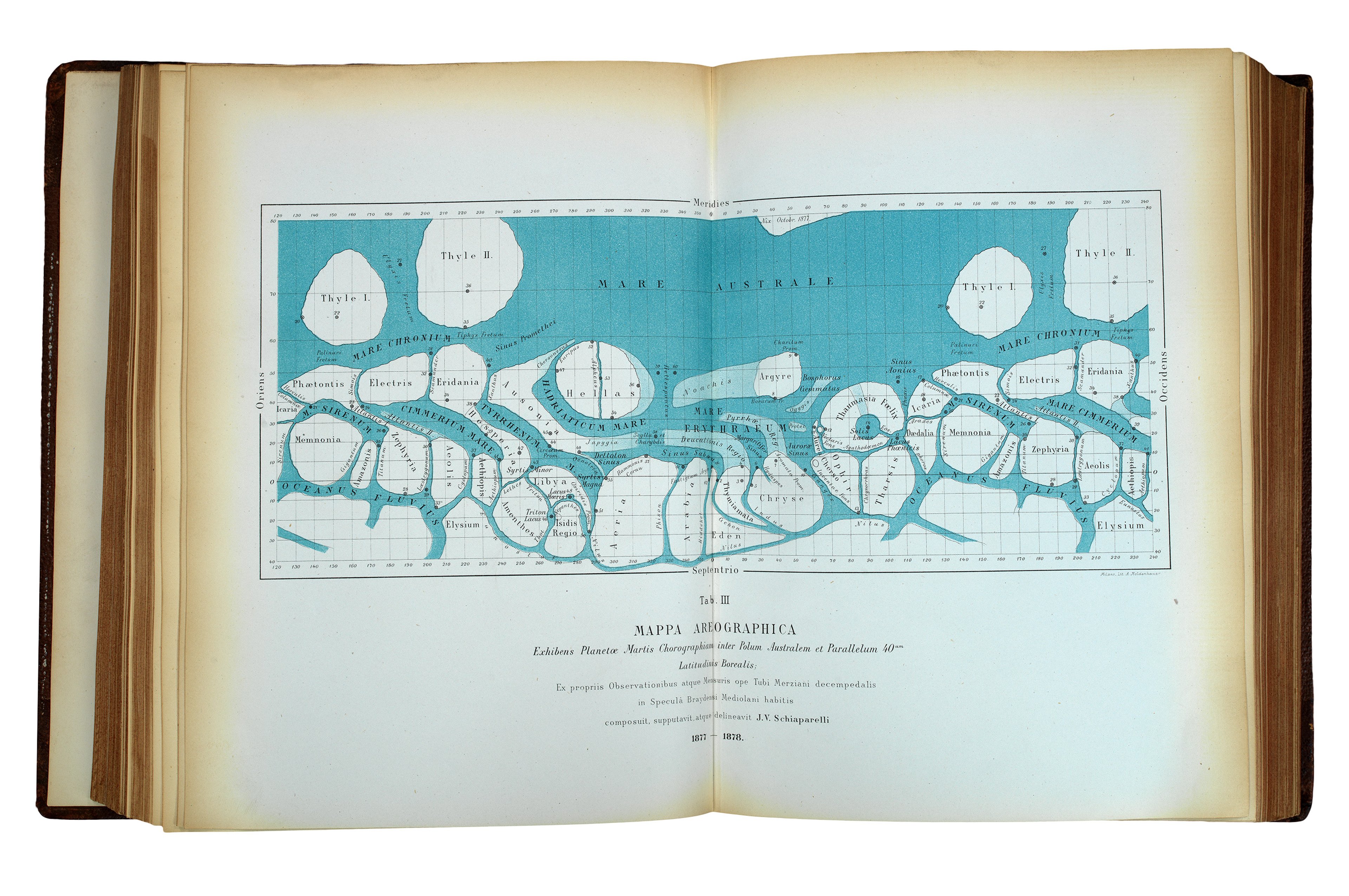
Physical Observations (1878) ©Ex Carta
While Schiaparelli remained careful to stress the provisional and hypothetical nature of his interpretations, his work nevertheless marked a decisive moment in the transformation of Mars from a distant astronomical object into a world that could be described, classified, and mapped.
It is within these maps that Schiaparelli’s most influential and controversial contribution to the study of Mars emerges: the linear features he observed and termed ‘canali’. Intended simply to denote ‘channels’ or ‘grooves’, the Italian term was frequently rendered in English as ‘canals’. This had the added connotation of artificial construction – presumably by inhabitants of Mars.
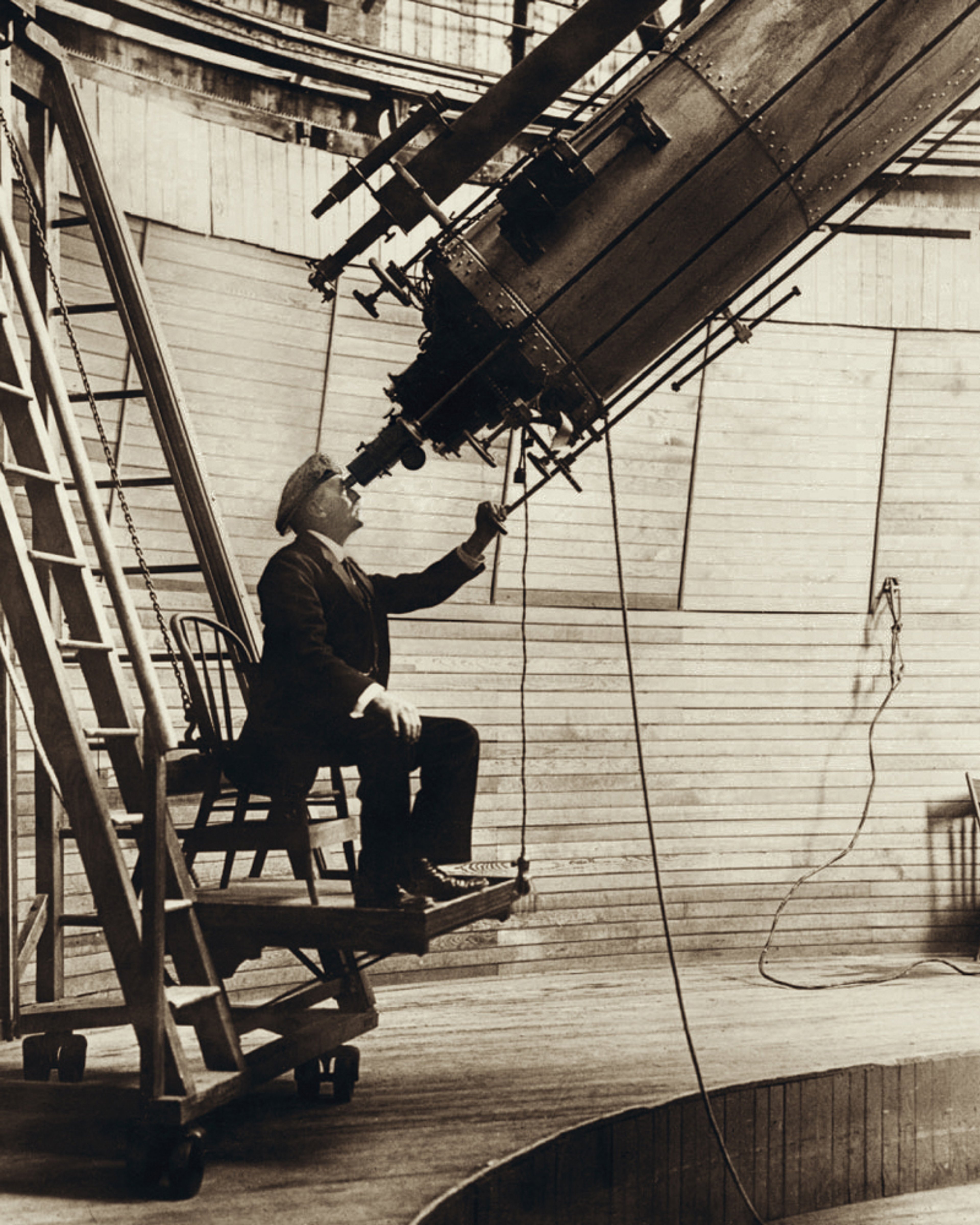
Percival Lowell in 1914, observing Venus. Public Domain.
The consequences of this interpretation were far-reaching. The Martian canals ‘eventually became powerful cartographic icons that were viewed as indications of intelligent Martian life’. [5]
The American businessman Percival Lowell (1855–1916), though lacking formal astronomical training, established himself as a leading authority on the geography of Mars through his own series of highly detailed maps.
In these, the ‘canals’ became explicitly non-natural features: vast engineered structures, taken as proof of a dying but technologically advanced civilisation, desperately trying to save their world in the face of environmental catastrophe.
While failing to convince the scientific community, Lowell’s confident interpretations – given persuasive authority through cartographic precision in books such as Mars (1895) – captured the public imagination and helped to fix the idea of an inhabited Mars in popular culture. The idea of a canal-crossed Mars proved especially influential in early science fiction.
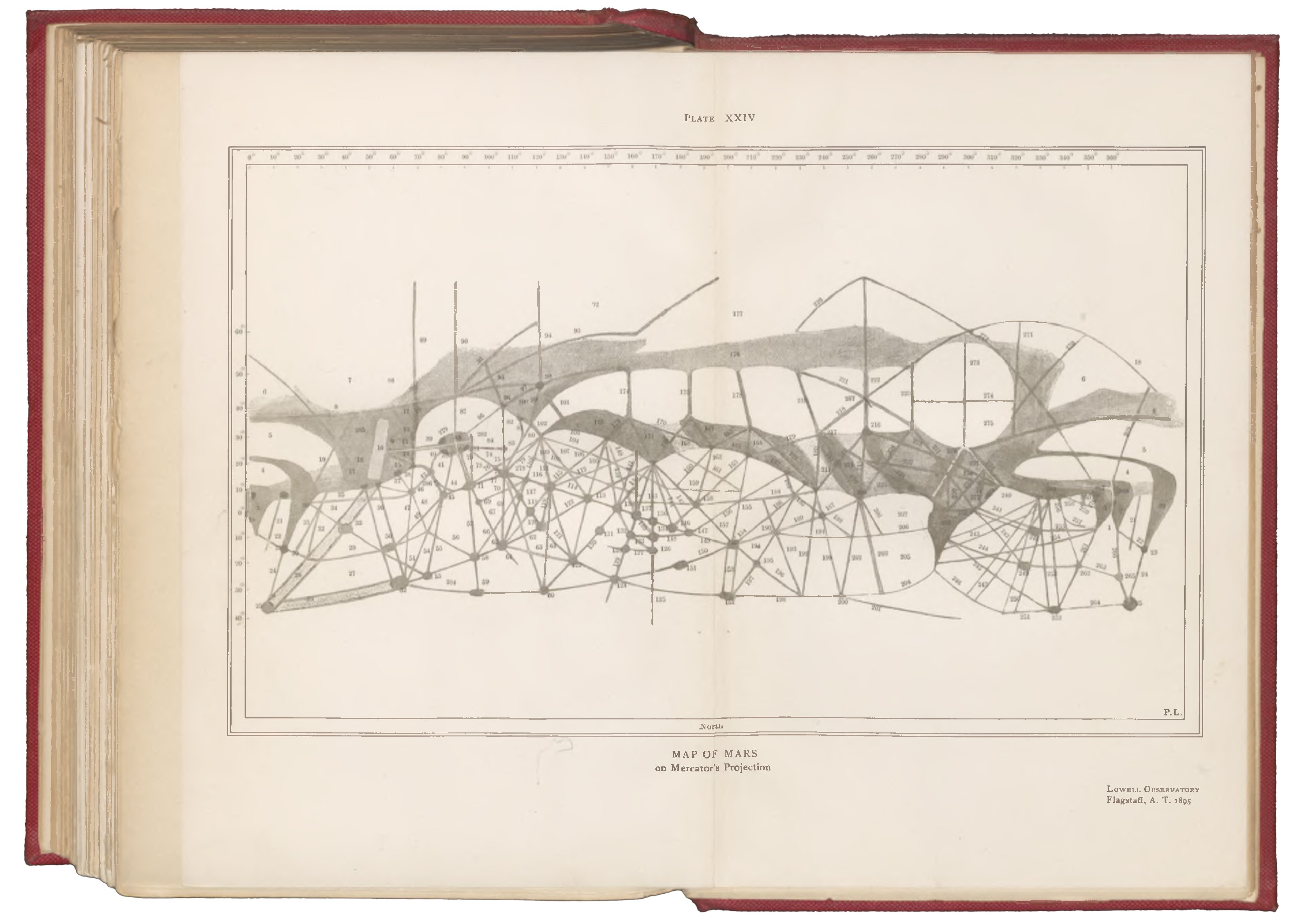
Lowell’s Map of Mars (1895). Courtesy of The Linda Hall Library of Science, Engineering & Technology
In 1898, H. G. Wells (1866–1946) terrified readers with The War of the Worlds, which mentions Schiaparelli in its opening paragraphs. The seminal work of science fiction depicts Mars as inhabited by an advanced, utterly inhuman civilisation possessed of devastating military technology. Wells used the conceit of a Martian invasion of Earth to examine various contemporary ideological and political discourses, particularly colonialism in the novel’s depiction of a vastly superior military force subjugating another culture.
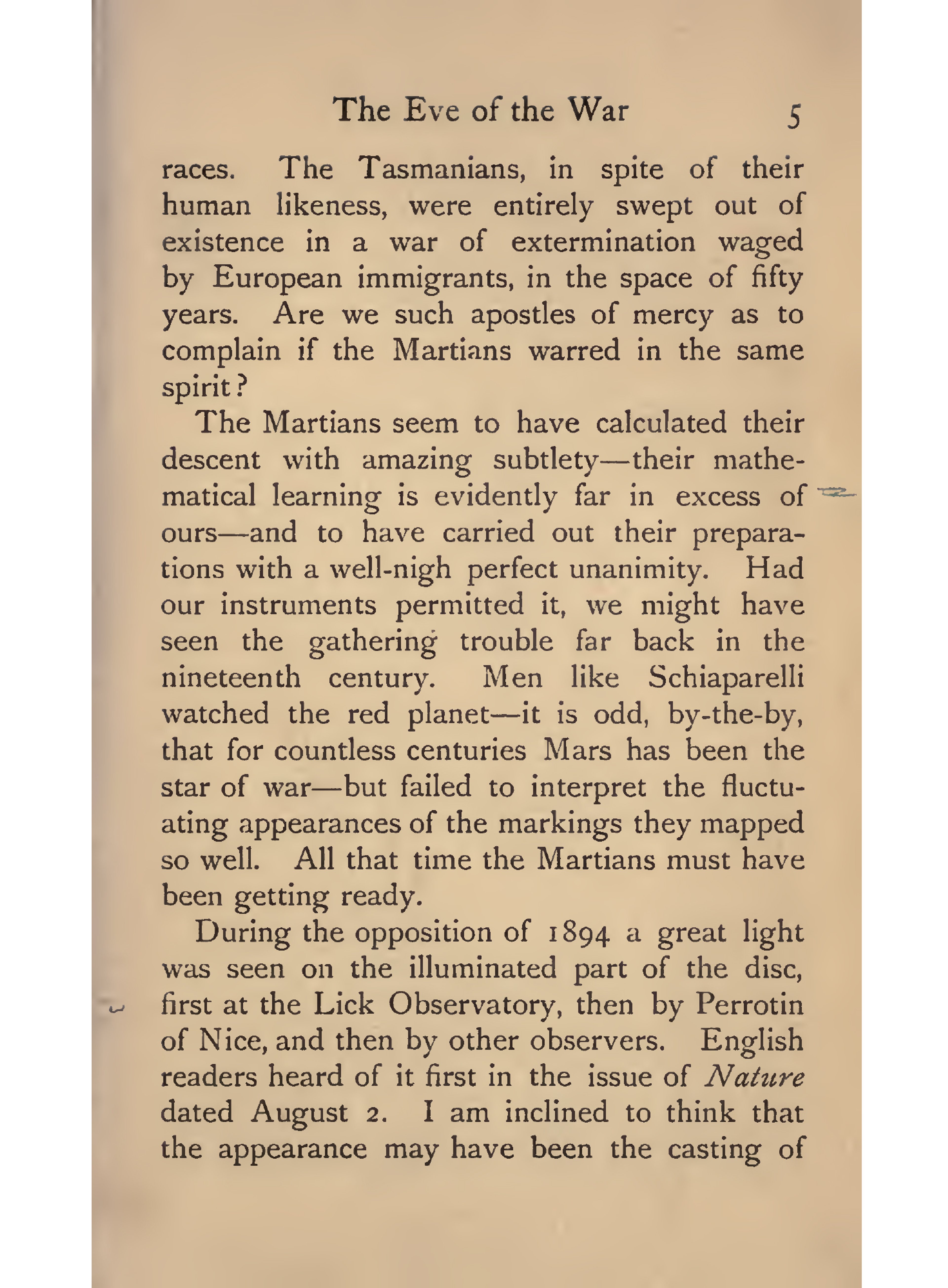
Excerpt from H. G. Wells’ War of the Worlds (1898) Public domain, via archive.org
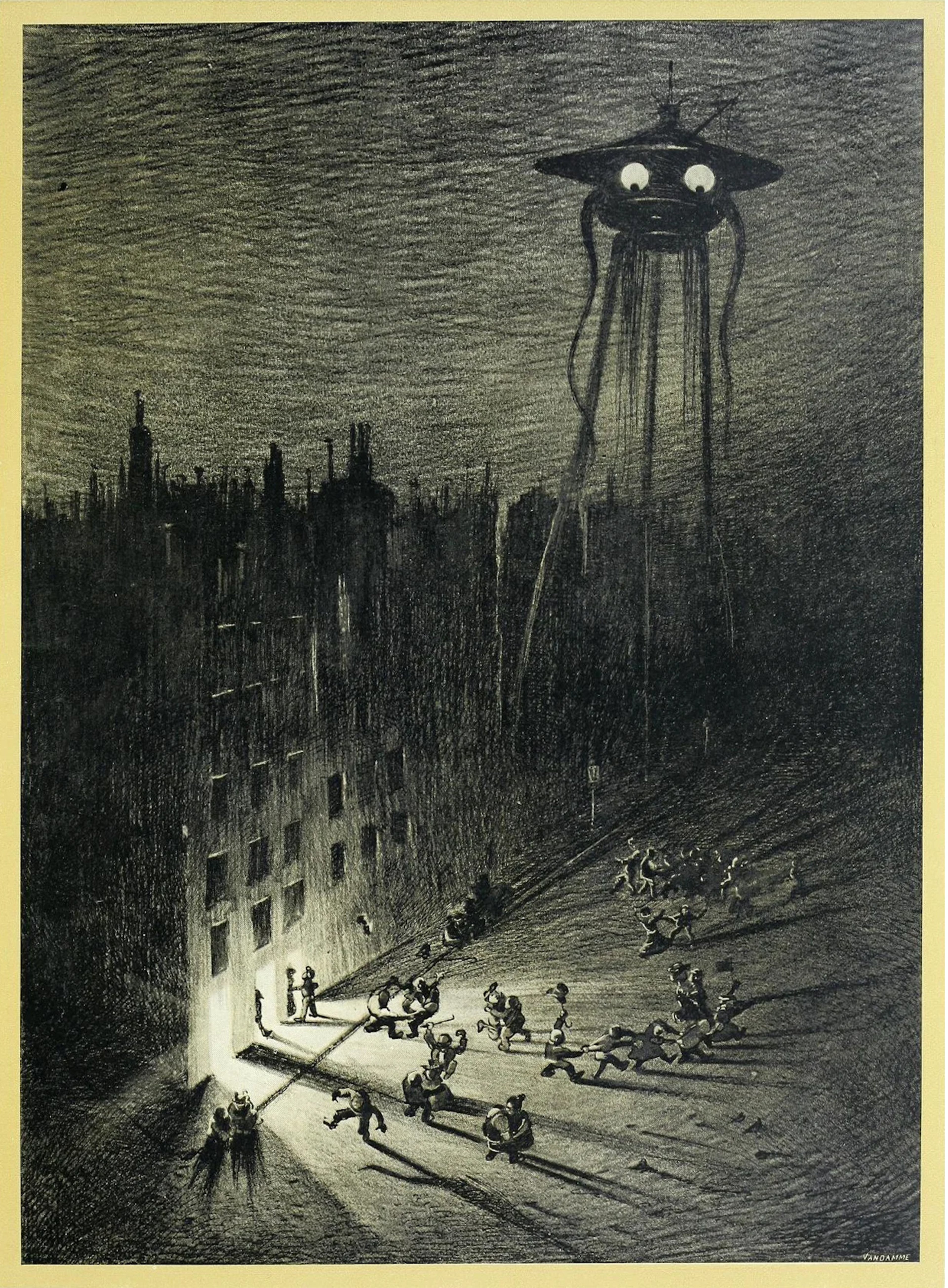
Henrique Alvim Corrêa’s illustration for the 1906 edition. Public domain, via archive.org
Mars as a political canvas
Schiaparelli also speculated about a Martian civilisation, but explicitly as a thought experiment rather than a serious claim. His conjecture was informed by his politics and he pointedly described the possibility of Mars being a ‘paradise for socialists’ working together to thrive in their challenging environment [6]. Lowell, an ‘heir to a cotton fortune and a lifelong opponent of socialism and unions’, shaped his Martian civilisation accordingly as a ‘society where survival had been enabled by development through capitalism’.
Despite Schiaparelli’s efforts to gather cartographic detail about the planet, by the early twentieth century Mars had ironically become a blank canvas upon which humans could project their political and ideological fantasies, utopias, and dystopias. The 1908 Russian novel Red Star by Alexander Bogdanov (1873–1928) revealed Martian society to be a model of technology-driven socialist efficiency.
The Danish writer and amateur astronomer Emmy Ingeborg Brun (1872–1929) took Lowell’s speculations in a comparable direction, though one specifically shaped by her Christian Socialist beliefs and the ideas of American political economist Henry George (1839–1897).
Although raised in an ‘intellectual bourgeois household’, Brun was prevented from studying astronomy at university. [7] Disappointed, she ‘became neurasthenic, went to bed and spent the rest of her life in bed’ from where ‘she manufactured her beautiful globes’. [8] Her hand-painted manuscript globes of Mars were based on Percival Lowell’s influential maps of the planet (1894–1914) and are hugely impressive artefacts in their own right.
Following her political instincts and interests, Brun viewed the canals as proof of a planetary system beyond national boundaries, embodying collective rather than competitive endeavour.

Emmy Ingeborg Brun’s Mars Globe (1909) ©Ex Carta
Brun constructed her globes by overpainting existing terrestrial examples, adapting Lowell’s cartography and Schiaparelli’s nomenclature. The globe held by Ex Carta is one of a small number of surviving examples, with estimates ranging from eight to twelve.
It postulates the canal system using a red and blue colour scheme, and its bronze stand bears the motto ‘Free Land. Free Trade. Free Men’, echoing George’s political ideals, alongside a line from the Lord’s Prayer: ‘Thy will be done on earth as it is in heaven.’
The result merges astronomy, politics, and theology into a singular object replete with meaning. Brun presented her globes to leading observatories and figures, including Lowell himself, who, despite their very different political convictions, praised the one he received as ‘a capital piece of work’.
Barsoom: a dying world
Barsoom is the name Edgar Rice Burroughs (1875–1950) gave to his fictional iteration of Mars, as introduced to readers of the pulp magazine The All-Story in 1912. In Burroughs’s breathless tales of the adventures of earthman John Carter on the barbarous and exotic red planet, Barsoom is depicted as a dying world, beset by environmental calamity and scarred by violent competition over its depleted resources.
Two races dominate: the human-like ‘red men’, including Dejah Thoris, the eponymous princess of the first published novel, A Princess of Mars (1917); and the six-limbed, tusked green men, larger than humans and fearsome and war-like.
In his creation, Burroughs was directly inspired by Lowell’s speculations concerning Schiaparelli’s ‘canals’ and Lowell’s imaginative embellishments. Burroughs was bringing to fictional life – in vivid detail – Lowell’s conceit of a world languishing in the face of ecological disaster and planetary collapse.
On Barsoom, the Martian canals are revealed to be the infrastructure of a planet dealing with a climate crisis: they transport vital water from the dwindling ice caps to the planet’s city-states and act as vast irrigation systems allowing agriculture in its precarious desert landscapes. Burroughs used this hostile environment as a stage upon which to explore, through narrative, his ideas about race, eugenics, and civilisation versus barbarity.
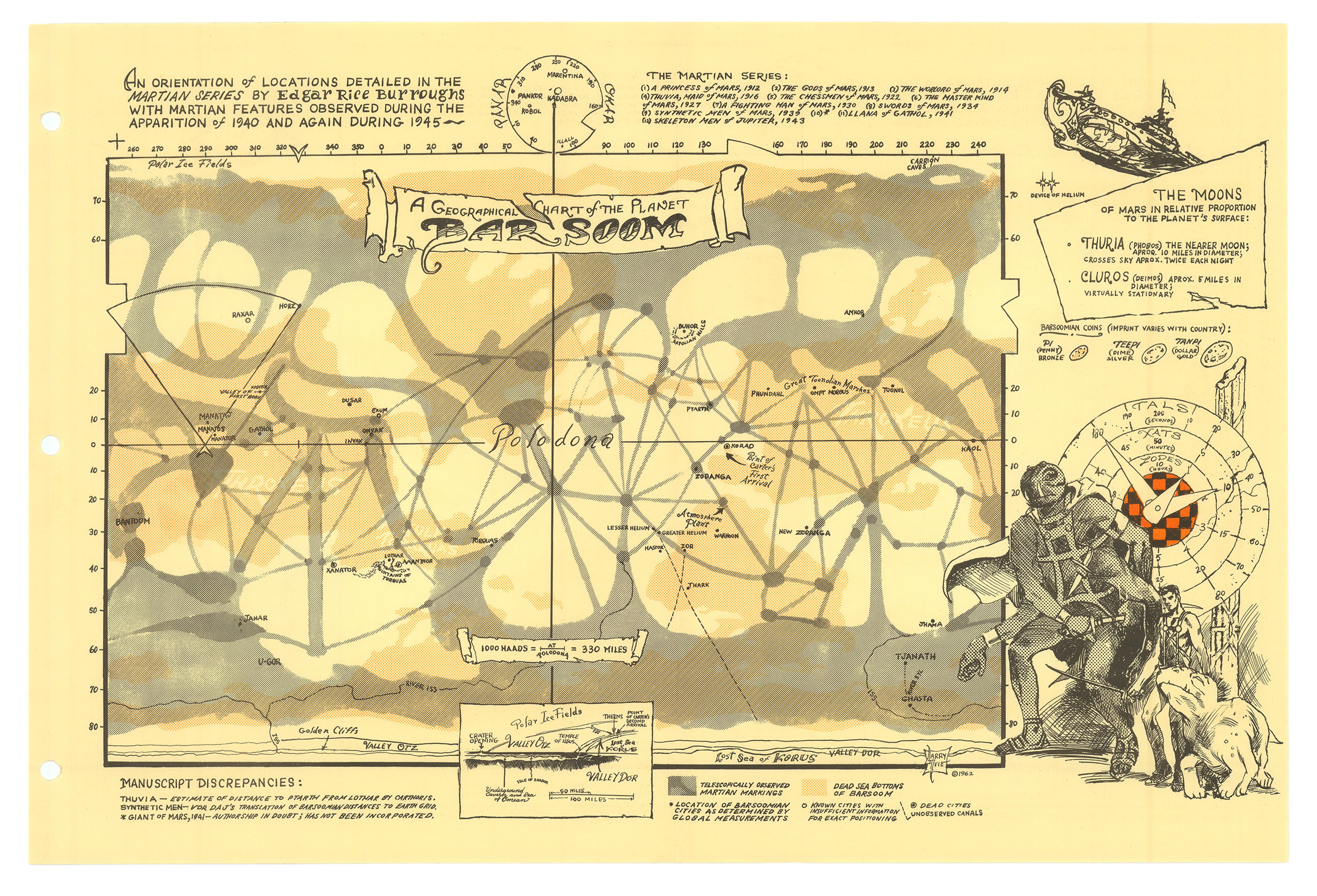
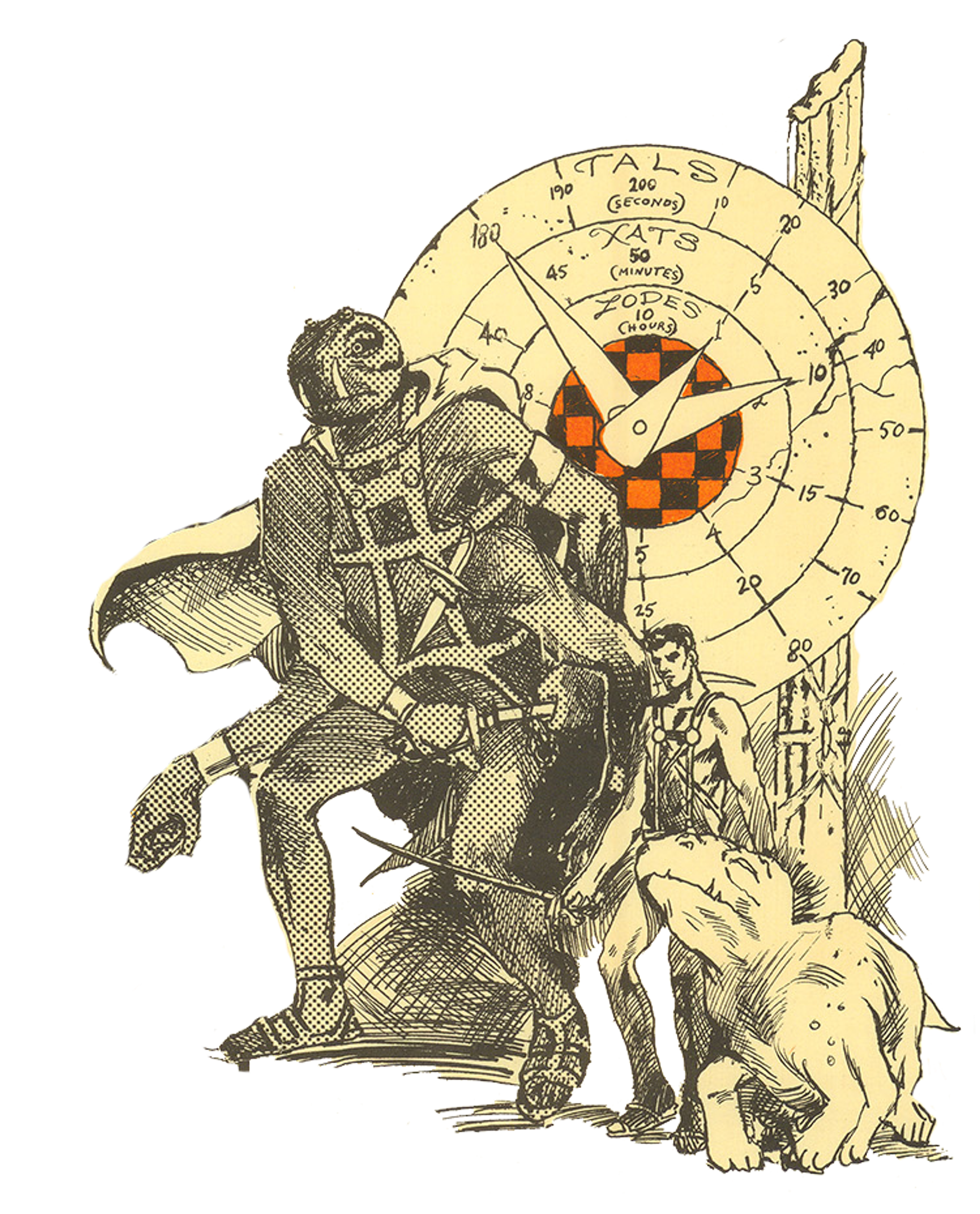
Fold out map from The Reader’s Guide to Barsoom and Amtor (1963) ©Ex Carta
Much of this intellectual context is now considered grotesquely offensive and misguided, not least the ways in which the green Martians are explicitly based on and compared to indigenous American tribal peoples. Nevertheless, Burroughs does not present any ideologically consistent worldview in the Barsoom novels. Instead, he raises questions similar to those posed by H. G. Wells in The Time Machine (1895): is a truly healthy society and culture predicated on rising to existential environmental threats? Does superior technology inevitably result in decadence, as a culture becomes complacent and indolent?
Such questions have preoccupied science fiction ever since. In terms of genre, the Barsoom novels did more than almost any other works to define what became known as planetary romance.
Although John Carter is from Earth, the series is almost entirely set on Barsoom, without the detailed accounts of interstellar travel, connections, and exchanges more usual in science fiction. Burroughs certainly described the technology of Barsoom in some detail, but he was not attempting to predict future human development with any scientific rigour.
In fact, John Carter travels to Mars through a vague, metaphysical process that has more in common with, for example, Theosophical ‘clairvoyant’ exploration of the lost continents of Atlantis and Lemuria, a subject also explored in Ex Carta’s Drowned Worlds essay.
A remarkably similar conceit appears in Olaf Stapledon’s novel Star Maker (1937), whose narrator leaves his physical body to journey through the cosmos, observing other worlds and civilisations through a form of astral travel. As scholars have argued, science fiction did not simply supersede occult modes of knowledge: concepts such as clairvoyance and telepathy were absorbed into the genre, often under the guise of scientific speculation. [9] Barsoom may have been inspired by the real astronomical observations of Schiaparelli, but it operates in a much older tradition, characteristic of the Renaissance, in which metaphysics and empiricism coexisted as complementary modes of knowledge.
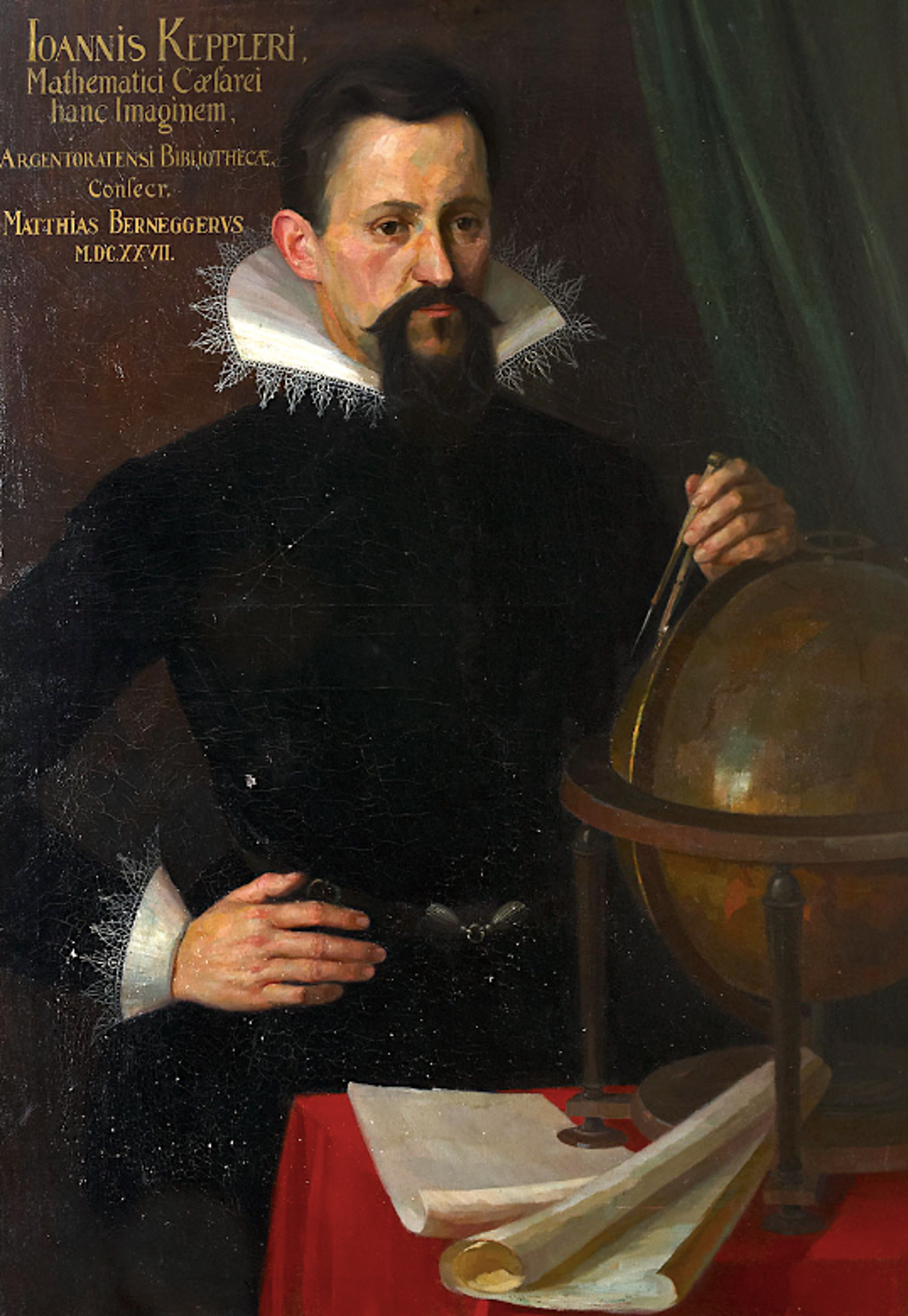
Johannes Kepler (1571-1630). Public Domain via, the Kepler Museum.
German astronomer and polymath Johannes Kepler (1571–1630), for example, wrote what was regarded by Arthur C. Clarke as the first ‘serious story of a journey to the Moon’, Somnium (first published in 1634). [10]
While Clarke lauded the fact that Kepler’s description of the Moon was the ‘first one to be based on the new knowledge revealed by the telescope’, he also disparaged some elements of Kepler’s novel as ‘retrograde’ because of Kepler’s adoption of supernatural tropes rather than scientific ones.
This is an anachronistic criticism, since the modern distinction between scientific and supernatural explanations had yet to become firmly established in Kepler’s time. Nor has science fiction ever entirely abandoned such supernatural elements. While ‘hard’ science fiction – the subgenre that applies itself rigorously to scientifically plausible speculation – is sometimes misapprehended as representative of the genre as a whole, many of its most enduring franchises, including Star Trek and Star Wars, incorporate psychic and metaphysical phenomena with roots in spiritual and occult discourse – most famously, the mysterious ‘Force’ in Star Wars.
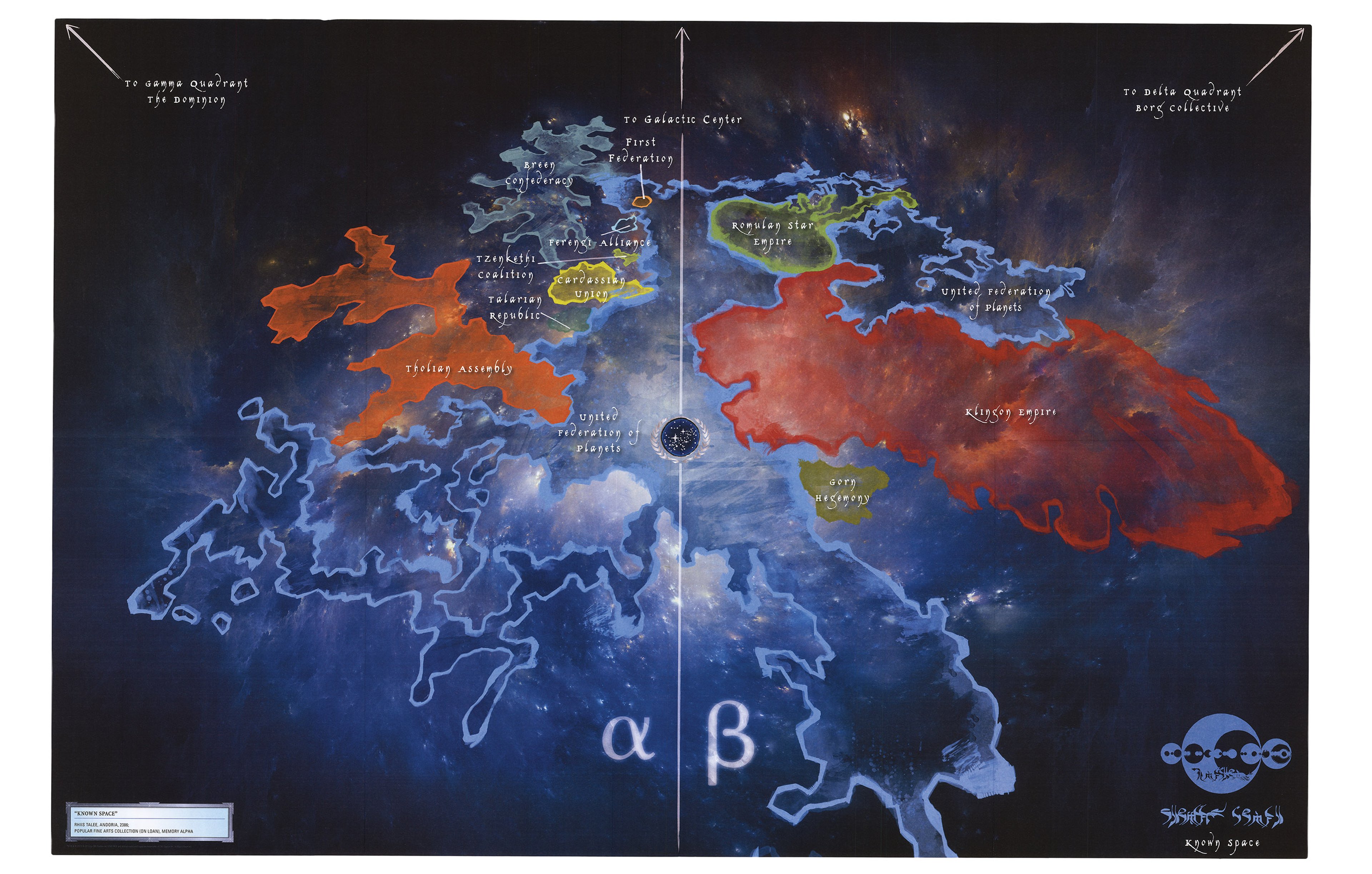
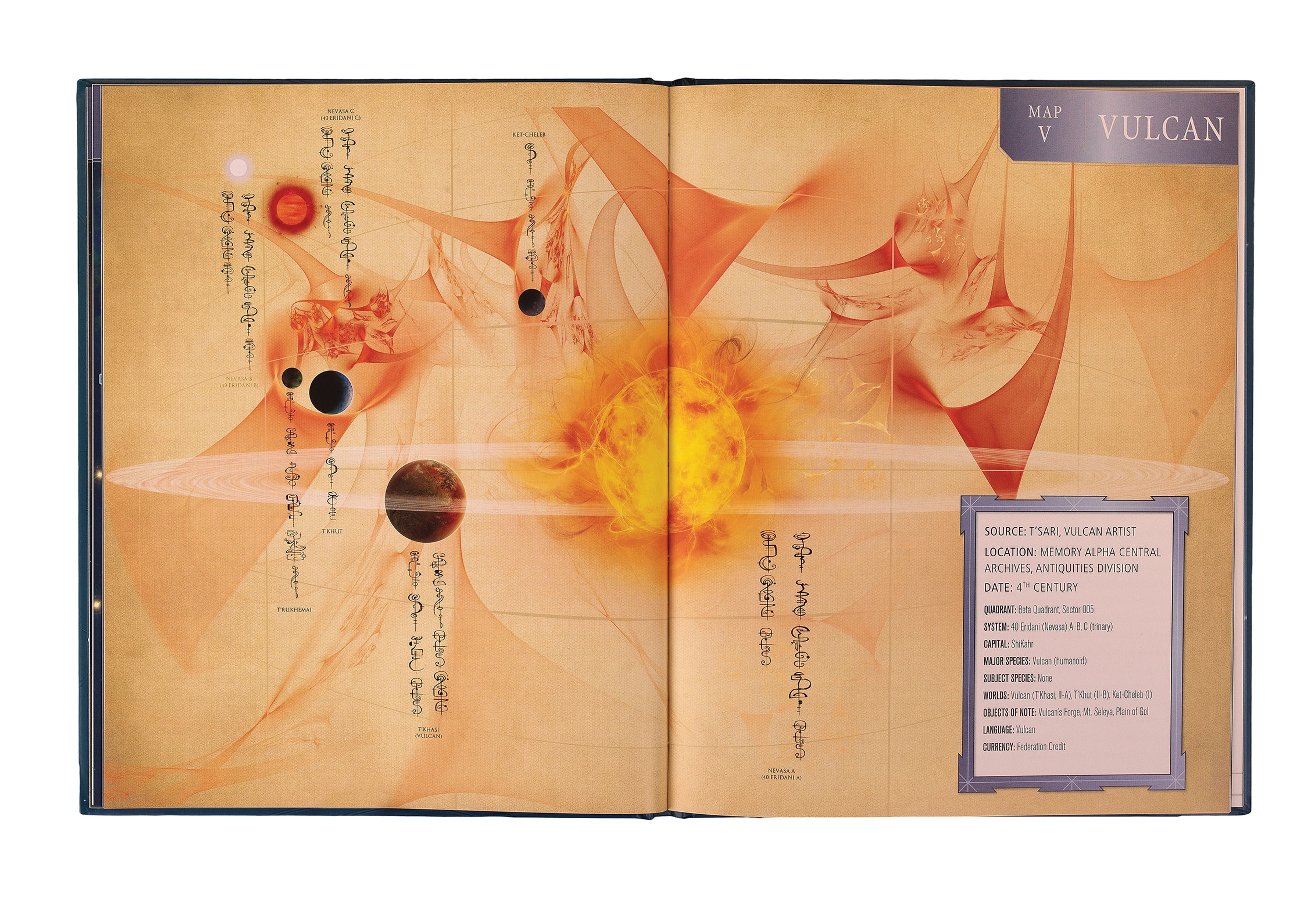
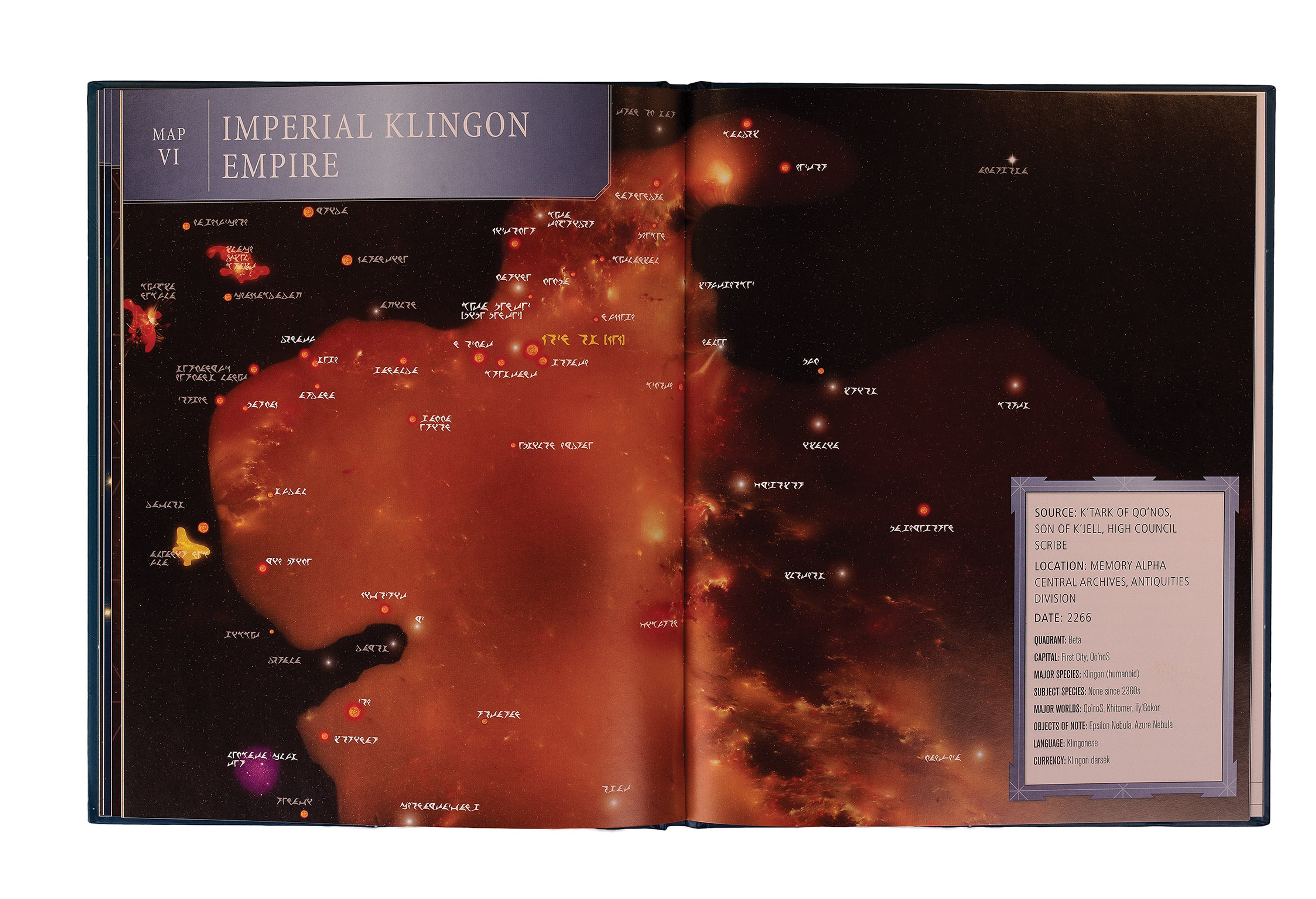
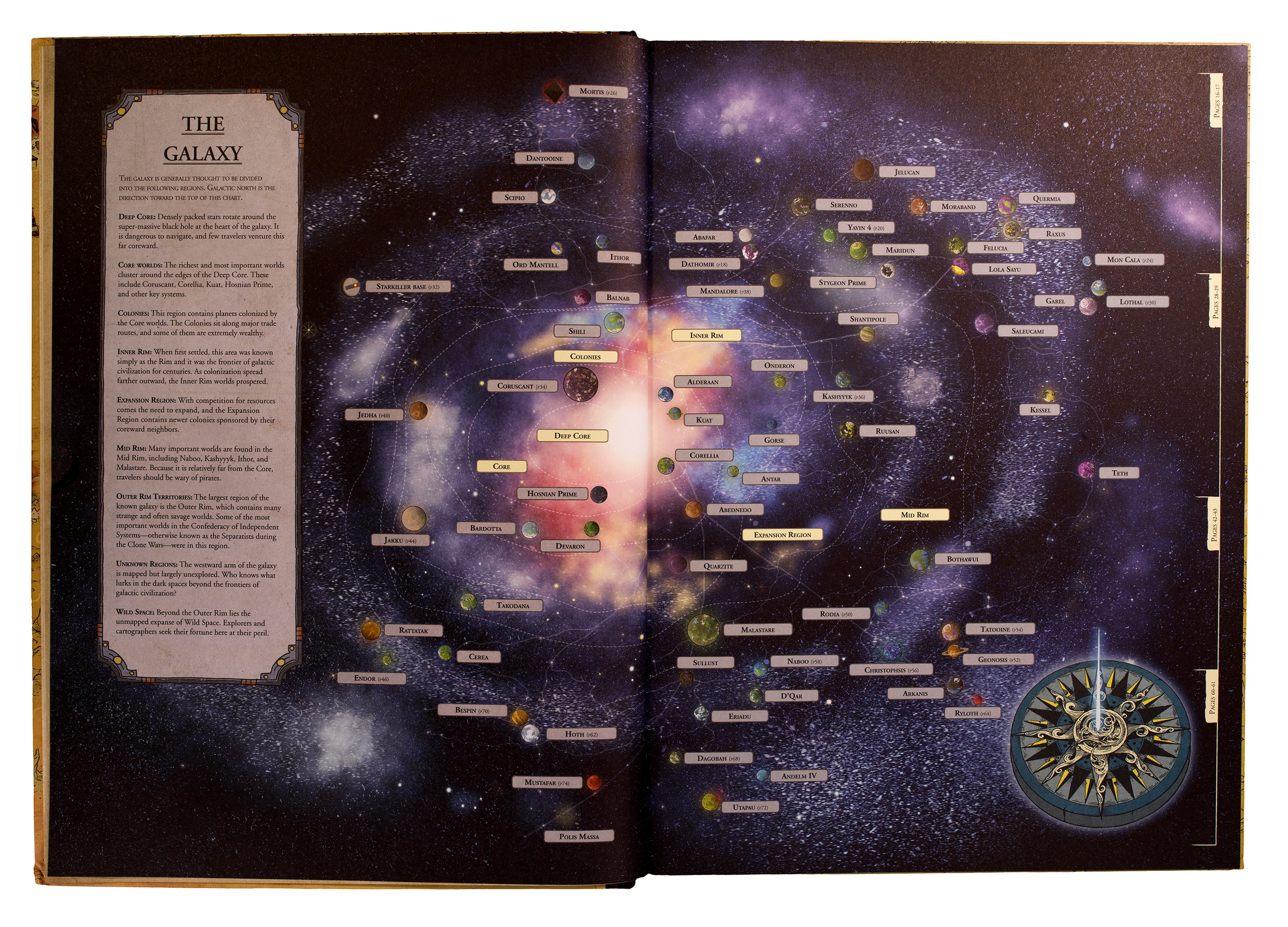
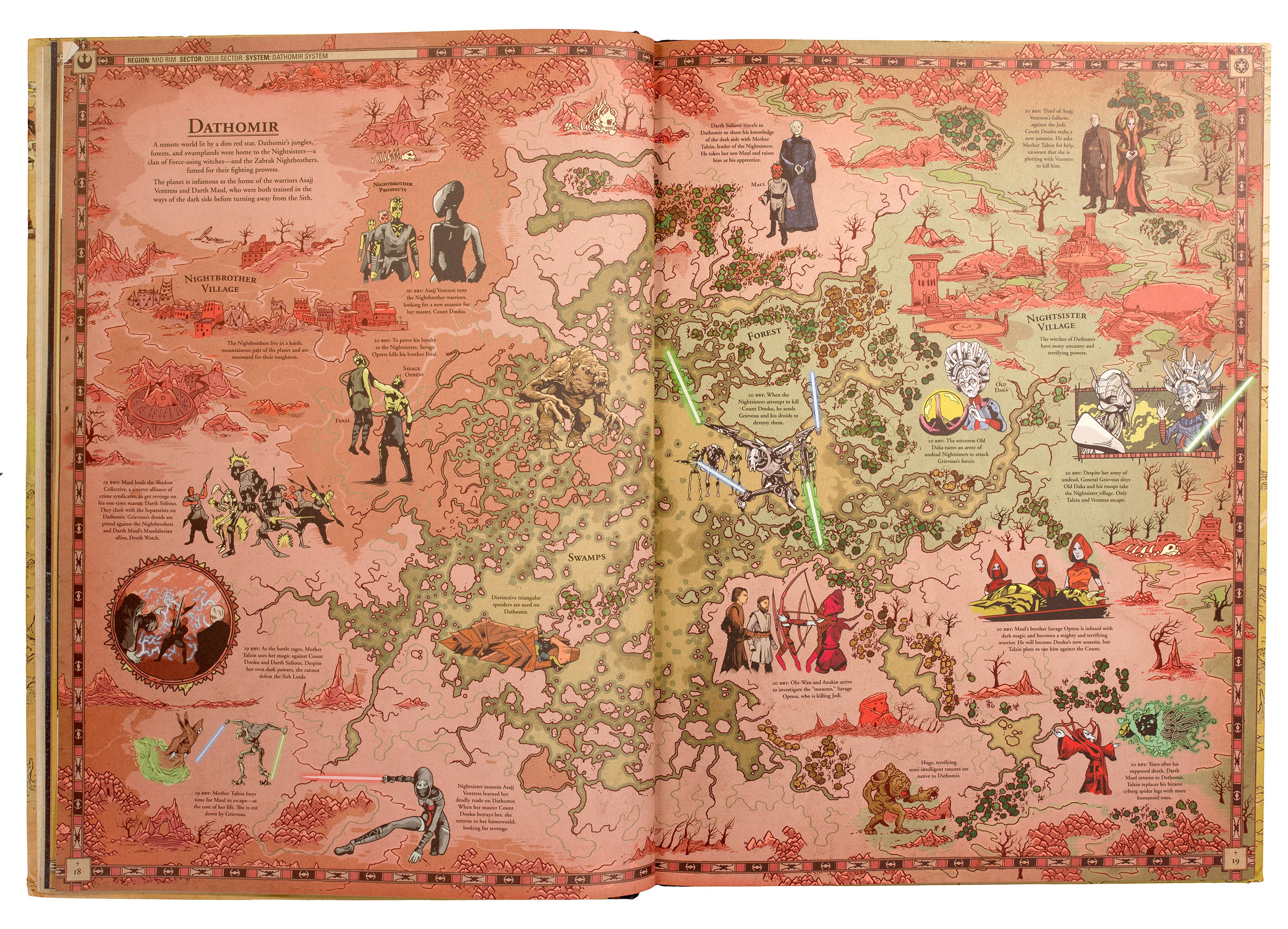
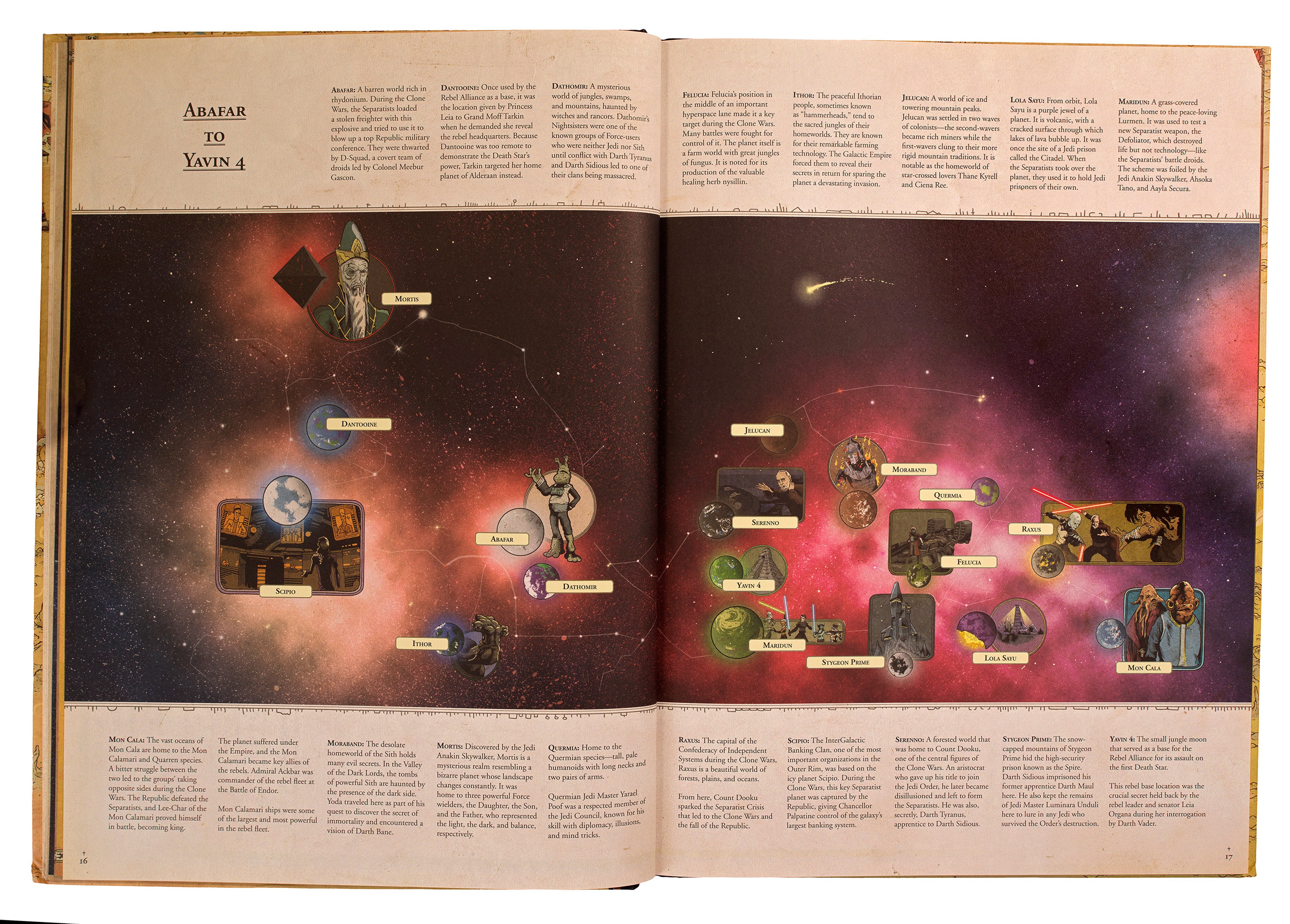
Mapping Barsoom
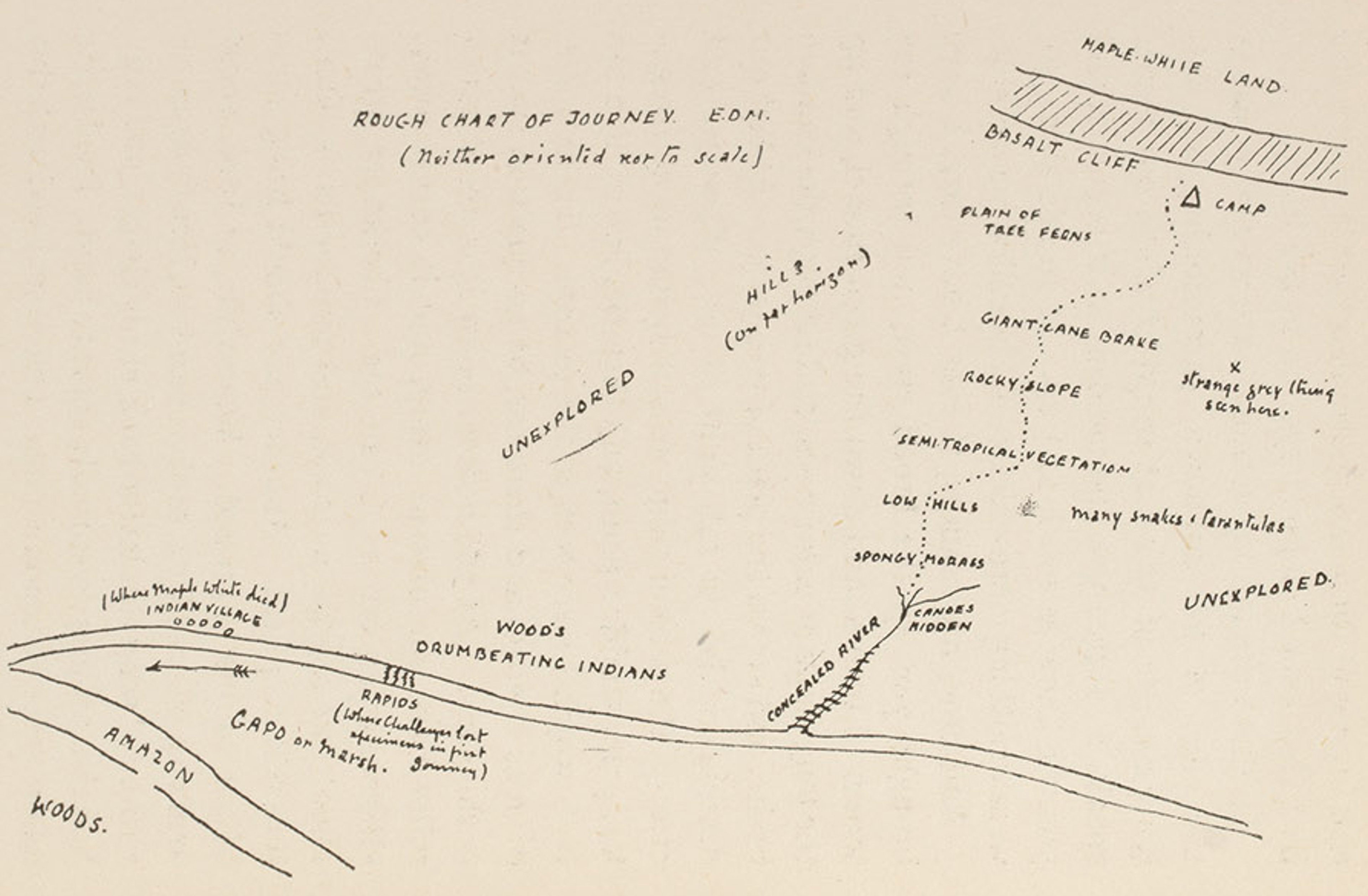
The first published visual representation of a map of Barsoom is actually glimpsed in one of the illustrations for the first book edition of A Princess of Mars (1917), which depicts Princess Dejah Thoris sketching a chart of the escape route from their imprisonment in Thark to her home city of Helium [11]:
“Is there no other way we might reach Helium?” I asked. “Can you not draw me a rough map of the country we must traverse, Dejah Thoris?” “Yes,” she replied, and taking a great diamond from her hair she drew upon the marble floor the first map of Barsoomian territory I had ever seen. It was crisscrossed in every direction with long straight lines, sometimes running parallel and sometimes converging toward some great circle. The lines, she said, were waterways; the circles, cities; and one far to the northwest of us she pointed out as Helium. There were other cities closer, but she said she feared to enter many of them, as they were not all friendly toward Helium.
However, it was not until the publication of The Reader’s Guide to Barsoom and Amtor in 1963 that fans of the series were provided with a clearer chart of the red planet. In fact, this amateur mimeograph, a copy of which is held by Ex Carta, grew directly out of the creation of its central fold-out map of Barsoom. It was published by science-fiction author Richard A. Lupoff (1935–2020), who provides some detail in his preface about how it came into being.
The project started life as an article on Barsoom for an unnamed periodical, written by Dave Van Arnam (1935–2002) – like Lupoff, an active science-fiction fan and author. A map was produced by artist and comic historian Larry Ivie (1936–2014) to accompany the article. As Lupoff writes [12]:
There was only one problem. The map did not illustrate the article … it differed from it on a number of irreconcilable points. The only solution now was for Larry to write an article supporting his views on the disputed locations.
The project began expanding far beyond the scope of its intended publication and involved several expert fans of the Barsoom series analysing the original novels for information they could glean about the planet, its topography, geography, and history. This was all in an effort to resolve conflicting evidence in the texts and produce an authoritative and synoptic overview of a planetary environment that never existed and had emerged in an ad hoc fashion over the course of Burroughs’s career.
This was retroactive world-building, done by enthusiasts undertaking the work that Burroughs might have done himself at the outset had he known how successful his Martian tales would be.
The exercise of charting Barsoom is undertaken with both scholarly seriousness and a knowing acknowledgment of the ultimate futility of the exercise. The attempt to reconcile what Burroughs writes of Barsoom with contemporary astronomical understanding of Mars itself is undertaken in a spirit akin to that of the Sherlockian ‘Great Game’: textual inconsistencies become problems to be solved while the participants maintain the playful fantasy that the imaginary world has an objective reality independent of its creator. The fun lies in the creative collaboration surrounding the continuation and elaboration of the conceit, regardless of the actual geographical and physical conditions on Mars itself.
As both The Reader’s Guide to Barsoom and Amtor and The Sherlockian Atlas (1984) in Ex Carta demonstrate, cartography is central to giving fictional worlds the coherence and apparent reality of actual places.
Enduring fictions of Mars
Barsoom continues to inspire and maintain a distinct presence in science fiction across different media. Burroughs’s Barsoomian races appeared in Alan Moore and Kevin O’Neill’s comic The League of Extraordinary Gentlemen in its second volume (2002–3), though with the twist typical of the series that they are at war with H. G. Wells’s invading ‘Mollusc’ beings from The War of the Worlds. The big-budget Hollywood film adaptation of Burroughs’s original novel, John Carter (Walt Disney Pictures, 2012), may have failed to find an audience on its release but has gone on to become an enduring cult favourite.
More recently, Star Trek: Strange New Worlds paid extended homage to Burroughs in the episode ‘Valles Marineris’ (2026), named after the (real) largest canyon system on Mars. The episode depicts a prehistoric conflict involving a ‘princess’ of Mars and a non-humanoid, insect-like race, before making the allusions to Barsoom explicit. Captain Christopher Pike, who has loved A Princess of Mars since childhood, keeps a copy in his ready room and quotes John Carter’s declaration that he has always been prone ‘to seek adventure’ and ‘to investigate and experiment, where wiser men would have left well enough alone’. Pike subsequently remarks upon how surprisingly accurate Burroughs’s novel has proved to be.
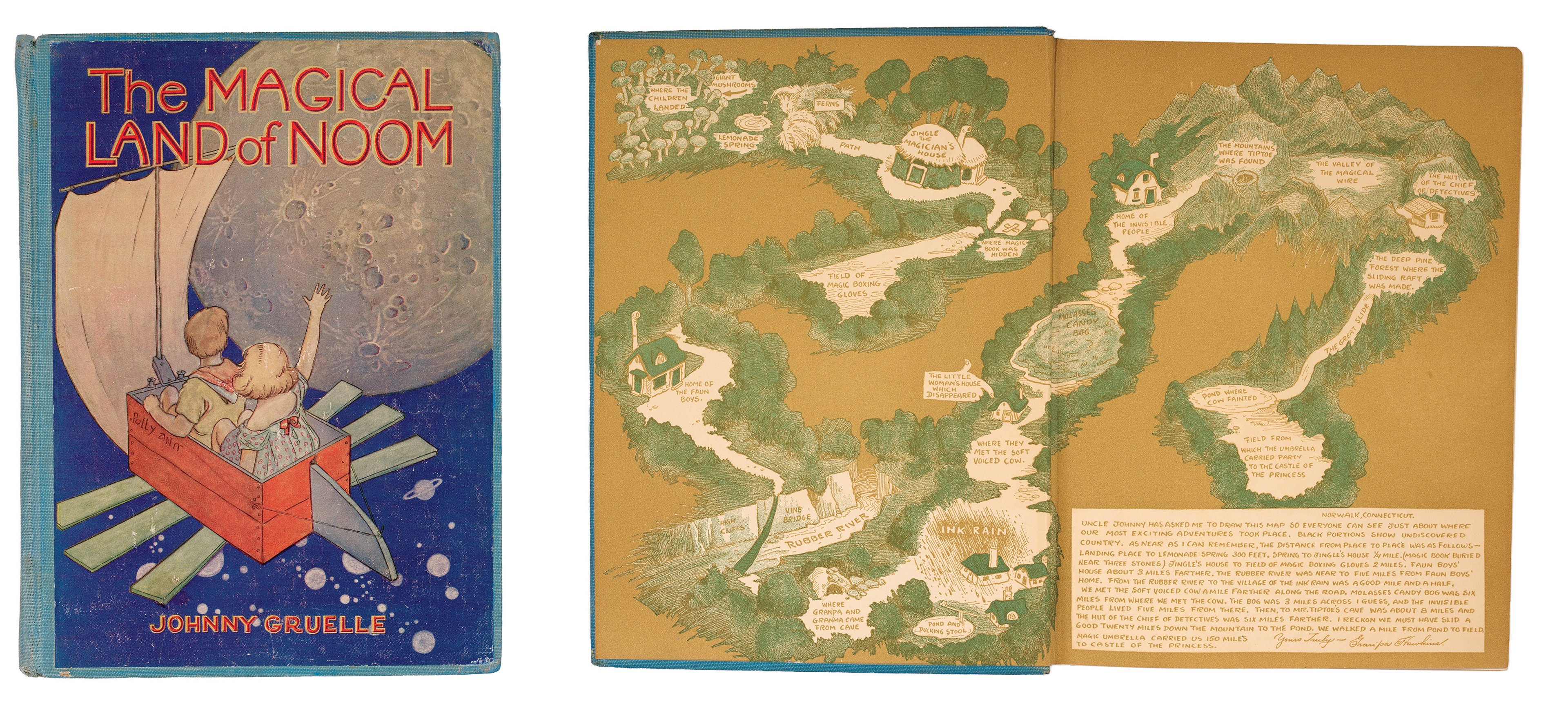
Gruelle’s The Magical Land of Noom ©Ex Carta
From the charming fantasy of The Magical Land of Noom (1922) to the more profound fables of Le Petit Prince (1943), the ‘blank spaces’ of other planets continued to provide settings in which writers could project their political and utopian aspirations, and present models of what other social systems might be possible.
This remains a theme of science fiction, as demonstrated by several items in Ex Carta, including Ursula K. Le Guin’s Hainish Novels (2017), in which alien societies represent different potential social and political systems, and Iain M. Banks’s Culture series (1987-2012), which explore the implications of living in a technologically enabled, post-scarcity utopia.
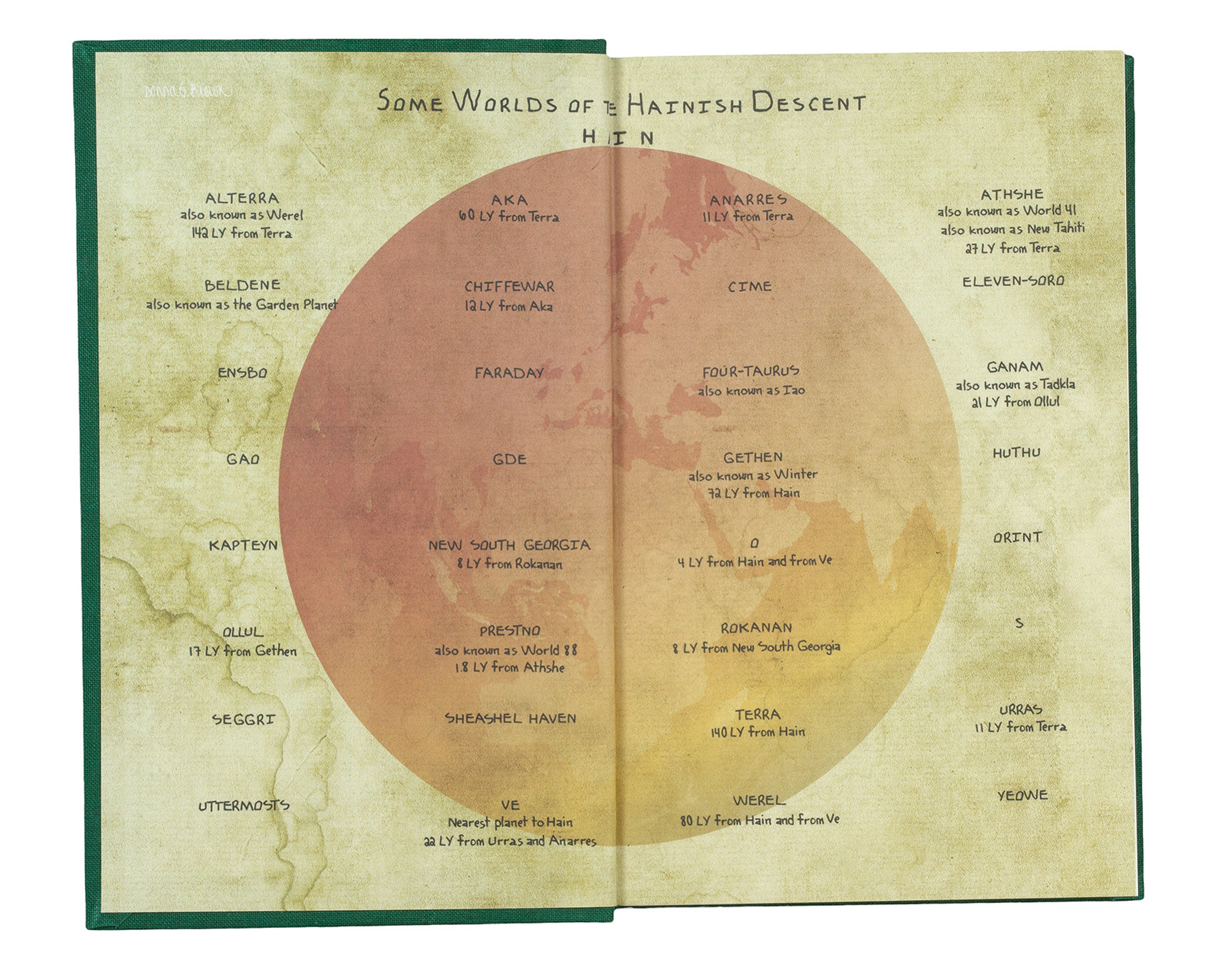
Maps from Ursula K. Le Guin’s Hainish Novels (2017)
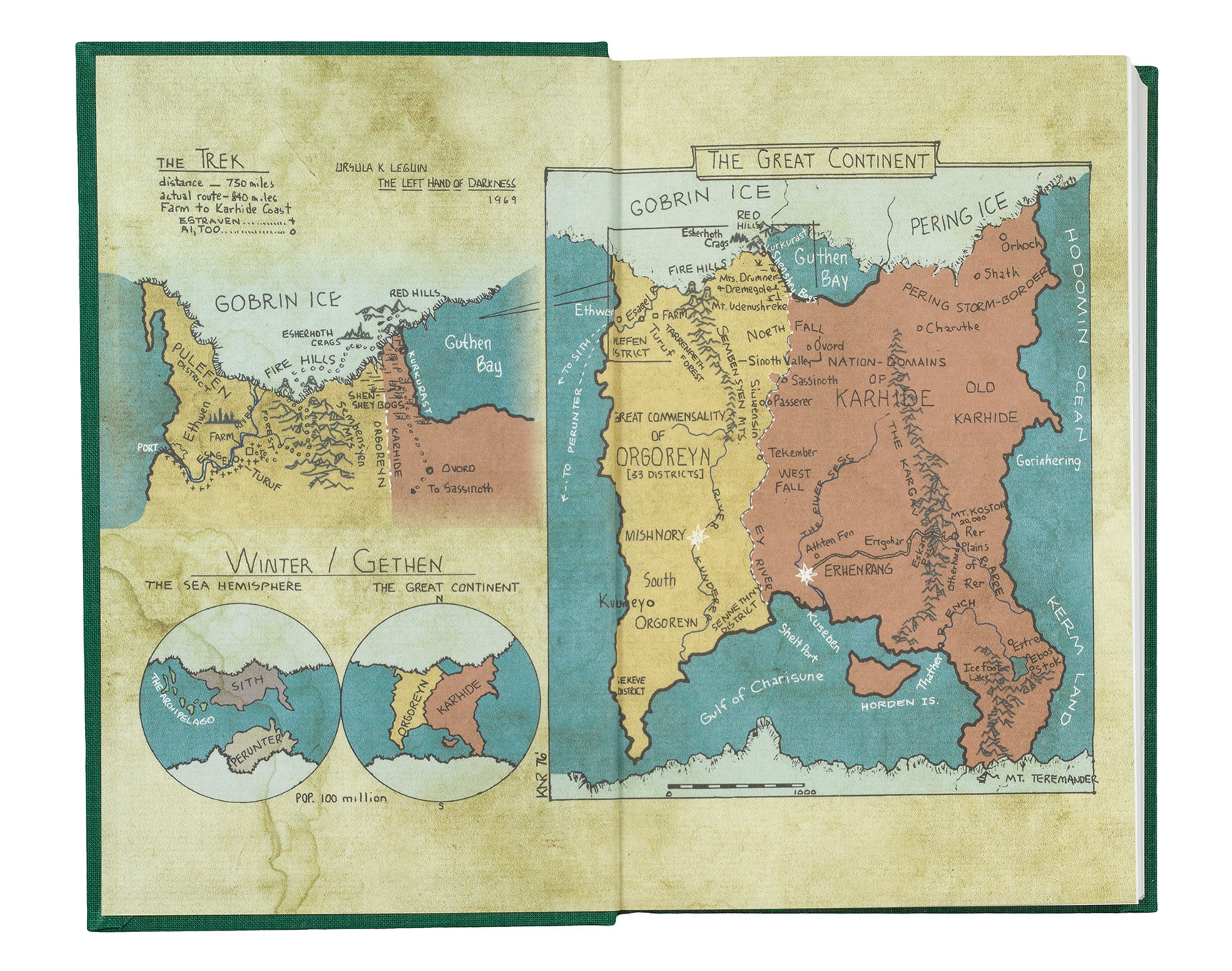
©Ursula K. Le Guin. Image courtesy of Ex Carta
As the early cosmological charts of The Sunderland Collection and the fictional star maps held by Ex Carta reveal, mapping the heavens has long involved a combination of empirical observation and imaginative, often metaphysical speculation. The line between the two has not always been easy to draw.
About James Machin

James Machin is a Visiting Research and Knowledge Exchange Fellow at Goldsmiths, University of London. He is a writer, researcher, editor, and archivist specialising in Gothic, weird, and fantastic literature of the long nineteenth and early twentieth centuries. James is also the cataloguer for Ex Carta.
He is the author of Weird Fiction in Britain 1880–1939 (Palgrave, 2018) and editor of Arthur Conan Doyle’s The Stark Munro Letters for Edinburgh University Press (2024), where he is also Technical Editor for the Edinburgh Edition of the Works of Arthur Conan Doyle.
James’ recent editorial work includes The Strange Stories of John Buchan for British Library Publishing (2025). He is a member of the Decadence Research Centre at Goldsmiths, University of London, and has taught at Birkbeck, University of London, the Royal College of Art, and the University of Bedfordshire.
His work often explores archives, imagined geographies, lost worlds, strange landscapes, and the material culture of fiction. A lifelong role-playing game enthusiast, he runs long-standing campaigns in Call of Cthulhu and Dungeons & Dragons.
More from James Machin
You may also like...
Footnotes
Max Weber, ‘Science as a Vocation’, in From Max Weber: Essays in Sociology, trans. and ed. by H. H. Gerth and C. Wright Mills (Oxford University Press, 1946), pp. 129–56 (p. 155).
Karl Siegfried Guthke, The Last Frontier: Imagining Other Worlds, from the Copernican Revolution to Modern Science Fiction (Cornell University Press, 1990), p. ix.
Arthur C. Clarke, The Exploration of Space (Harper, 1959), p. 4
Joshua Nall, News from Mars: Mass Media and the Forging of a New Astronomy, 1860–1910, Science and Culture in the Nineteenth Century (University of Pittsburgh Press, 2019), p. 9.
K. Maria D. Lane, Geographies of Mars (University of Chicago Press, 2010), p. 44.
Lucy Garrett, ‘Globe of Mars’, in Extinct: A Compendium of Obsolete Objects, ed. by Barbara Penner (Reaktion Books, 2021), pp. 137–39 (p. 138).
Garrett, ‘Globe of Mars’, p. 137.
Gerald Joseph Home McCall, Alan John Bowden, and Richard J. Howarth, The History of Meteoritics and Key Meteorite Collections: Fireballs, Falls and Finds, Geological Society Special Publications, No. 256 (Geological Society, 2006), p. 216.
Crossley, Robert, Imagining Mars: A Literary History (Wesleyan University Press, 2011) pp. 129-148; Aren Roukema, ‘The Esoteric Roots of Science Fiction: Edward Bulwer-Lytton, H. G. Wells, and the Occlusion of Magic’, Science Fiction Studies, 48.2 (2021), pp218-242
Clarke, The Exploration of Space, p. 3.
Edgar Rice Burroughs, A Princess of Mars (Grosset & Dunlap, 1917), p. 179.
David G. Van Arnam and others, The Reader’s Guide to Barsoom and Amtor (Richard Lupoff, 1963), p. 3.
Selected Bibliography
Burroughs, Edgar Rice, A Princess of Mars (Grosset & Dunlap, 1917)
Clarke, Arthur C., The Exploration of Space (Harper, 1959)
Crossley, Robert, Imagining Mars: A Literary History (Wesleyan University Press, 2011)
Garrett, Lucy, ‘Globe of Mars’, in Extinct: A Compendium of Obsolete Objects, ed. by
Barbara Penner (Reaktion Books, 2021), pp. 137–39
Guthke, Karl Siegfried, The Last Frontier: Imagining Other Worlds, from the Copernican Revolution to Modern Science Fiction (Cornell University Press, 1990)
Lane, K. Maria D., Geographies of Mars (University of Chicago Press, 2010)
McCall, Gerald Joseph Home, Alan John Bowden, and Richard J. Howarth, The History of Meteoritics and Key Meteorite Collections: Fireballs, Falls and Finds, Geological Society Special Publications, No. 256 (Geological Society, 2006)
Nall, Joshua, News from Mars: Mass Media and the Forging of a New Astronomy, 1860-1910, Science and Culture in the Nineteenth Century (University of Pittsburgh Press, 2019)
Roukema, Aren, ‘The Esoteric Roots of Science Fiction: Edward Bulwer-Lytton, H.G. Wells, and the Occlusion of Magic’, Science Fiction Studies, 48.2 (2021), pp. 218–42
Van Arnam, David G., and others, The Reader’s Guide to Barsoom and Amtor (Richard Lupoff, 1963)Weber, Max, ‘Science as a Vocation’, in From Max Weber: Essays in Sociology, trans. and ed. by H. H. Gerth and C. Wright Mills (Oxford University Press, 1946), pp. 129–56