Journey to the East

In Ex Carta’s collection there are two examples of recent fantasy novels which, while drawing deeply on East Asian cultural, historical, and aesthetic traditions, also inherit a map-making practice strongly associated with twentieth-century Anglophone fantasy.
The Dandelion Dynasty series by Ken Liu (1976–) - a four-volume ‘silkpunk’ epic beginning with The Grace of Kings (2015) - deliberately juxtaposes East Asian historical romance with Western epic fantasy.
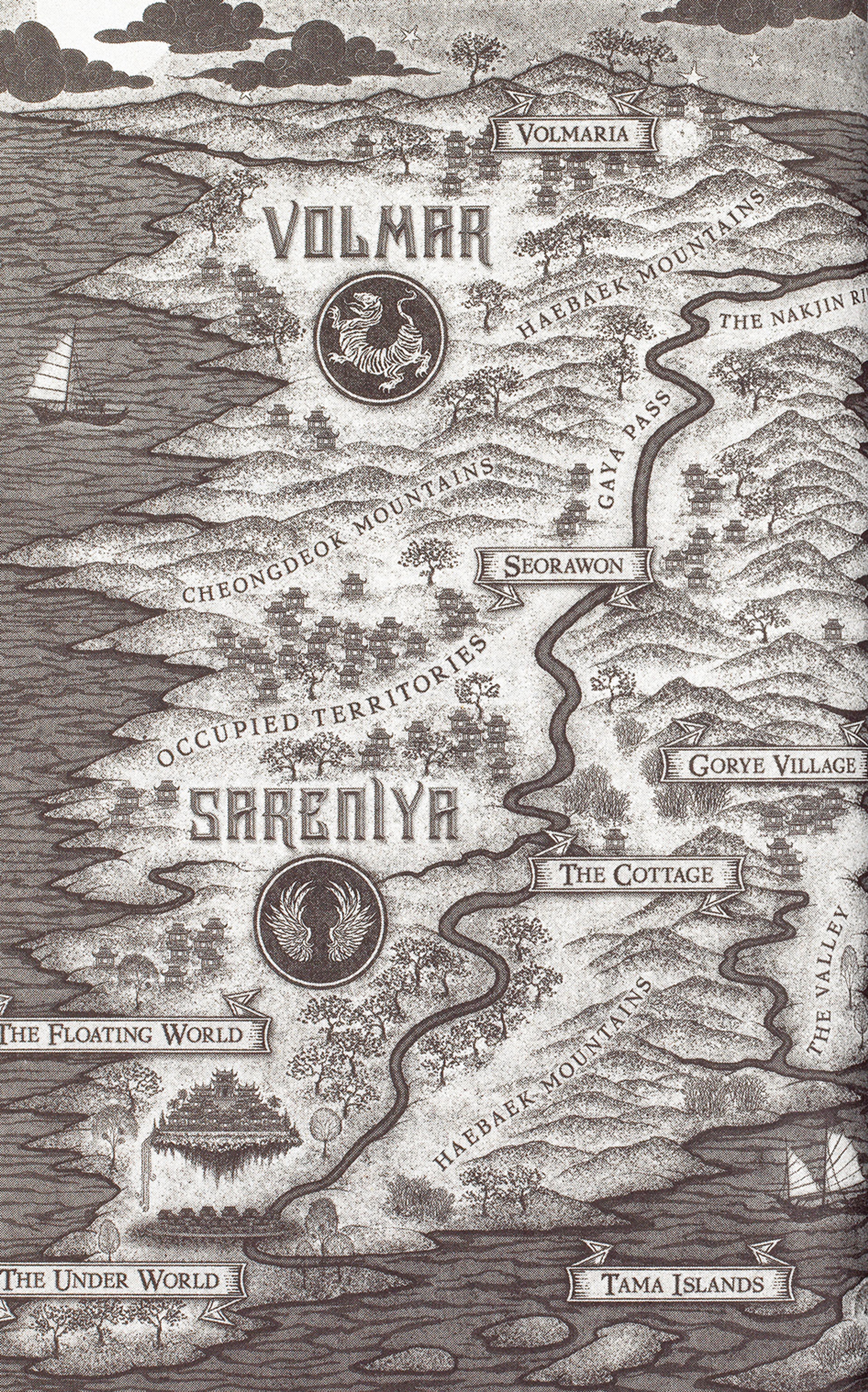
The Floating World (2025) by Axie Oh (c.1989–), meanwhile, draws on Korean mythology, steampunk, Studio Ghibli, and the Final Fantasy video-game series (1987–) to imagine the Floating World as a celestial plane inhabited by divine beings.
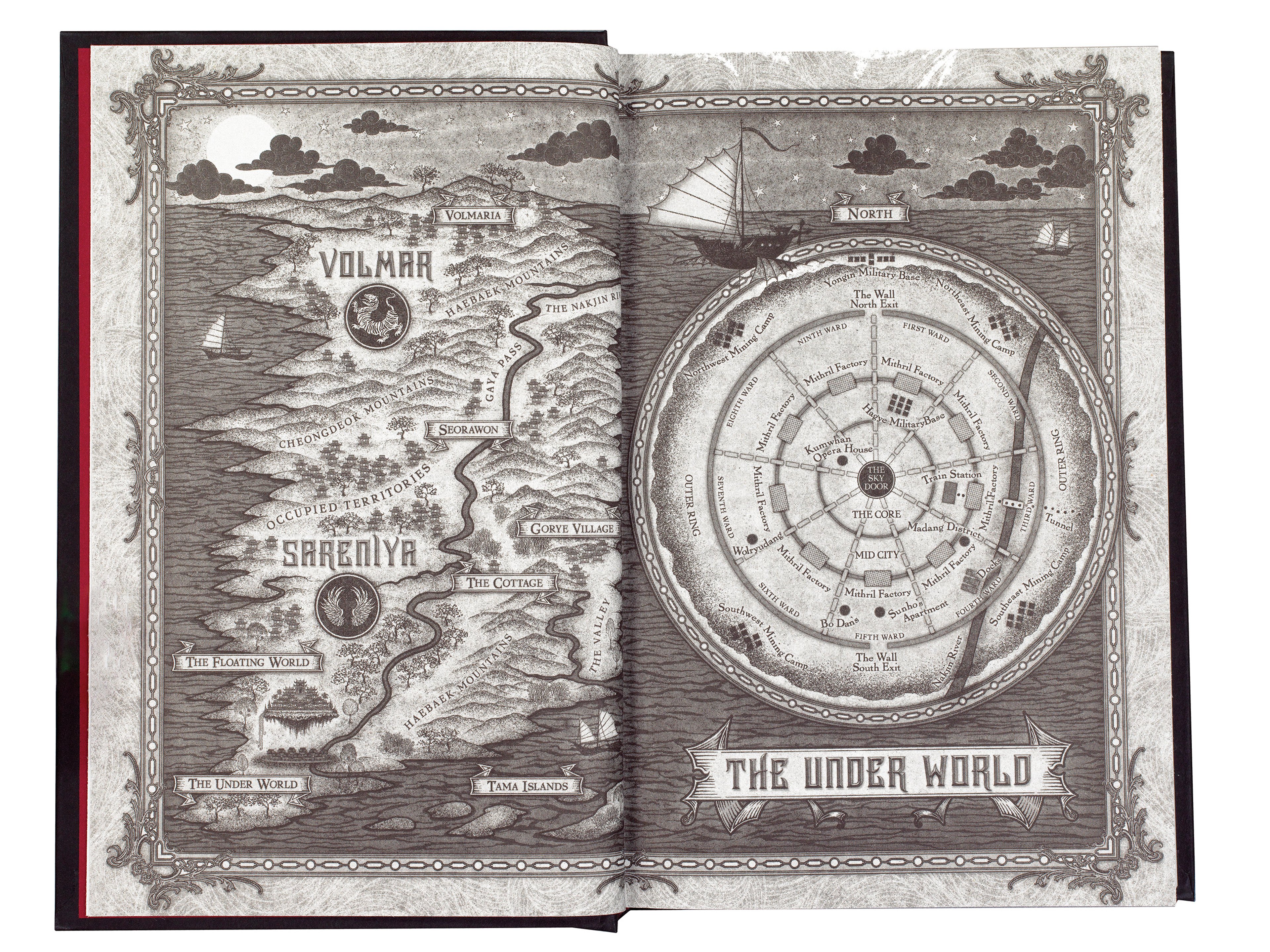
Map of The Under World from The Floating World (2025) ©Axie Oh. Map illustration by Virginia Allyn.
Both works use maps not merely as illustration but as instruments of fantasy world-building: Oh has said that, because the world of her novel ‘felt very big’, she began by drawing both a world map and a city map, later transformed by artist Virginia Allyn for the published book.
This provokes a question: why does this cartographic template feel so closely tied to modern Western fantasy, even when the worlds it maps are shaped by East Asian traditions? A possible answer lies in the very different ways fantasy developed in East Asian and Western literary traditions.
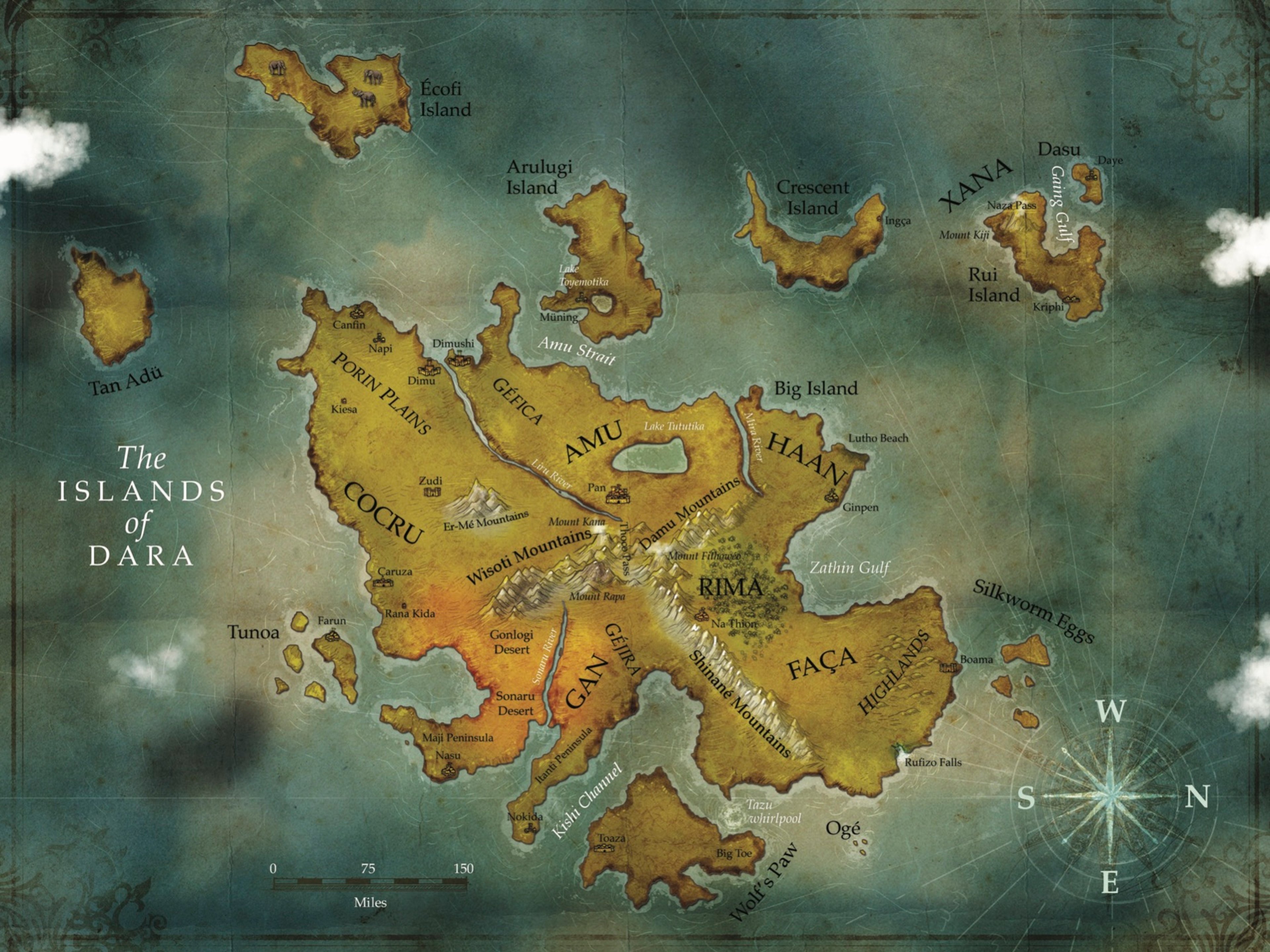
Map of the Islands of Dara by Robert Lazzaretti (2017) for The Dandelion Dynasty by Ken Liu ©Ken Liu/Robert Lazzaretti. Source: kenliu.name
Maps have certainly existed as paratextual objects in East Asian literature. From the late nineteenth century, editions of the classic Chinese novel Dream of the Red Chamber - first printed in 1791 - could include vividly detailed maps, such as the 1908 edition held by the Leiden University Library. [1]
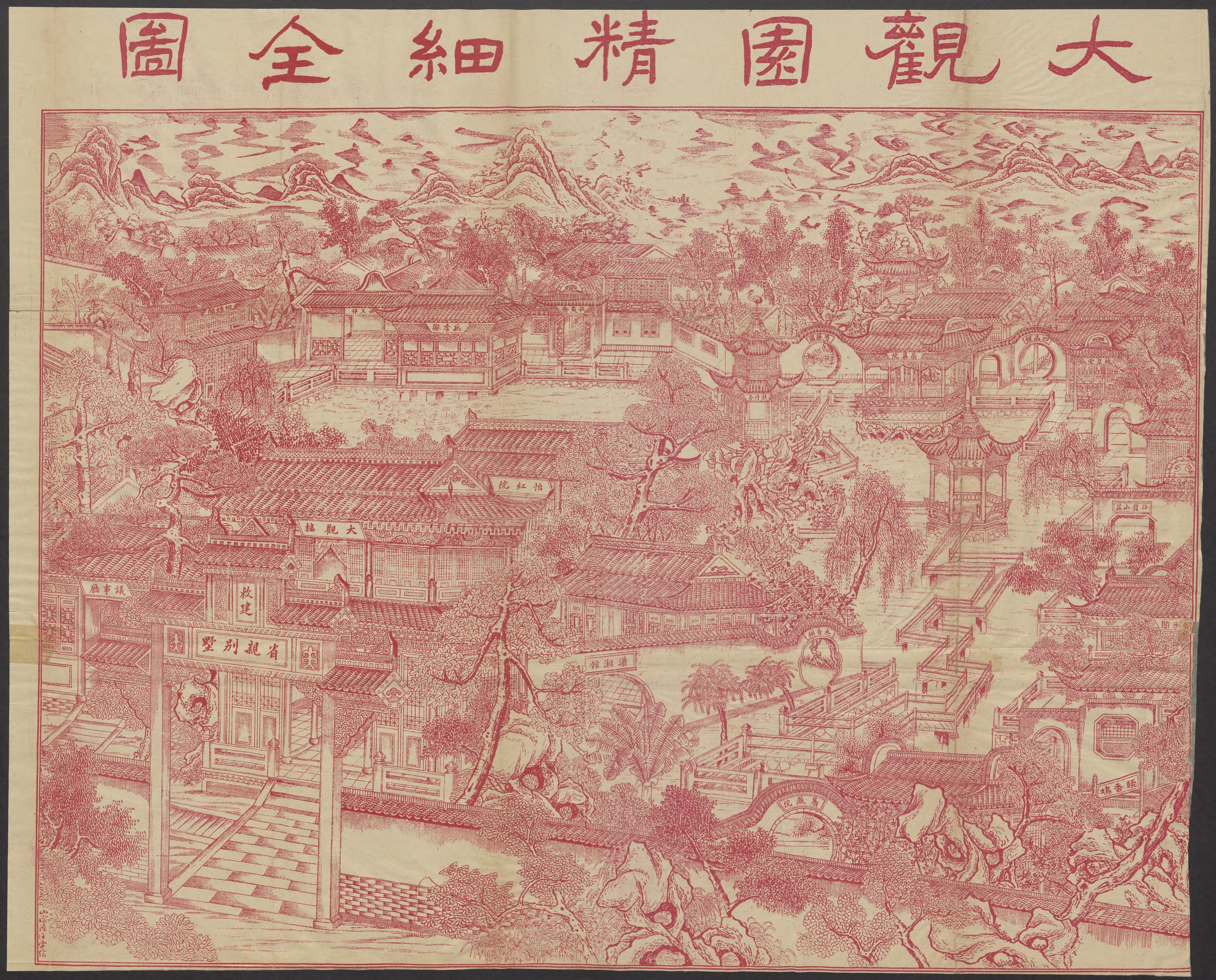
Map from Dream of the Red Chamber by 曹雪芹 Cao Xueqin (1908, 求不負齋 Qiubufu Zhai). University of Leiden Special Collections. Licensed under Public Domain Mark 1.0 License [SINOL. 5762.12.]
It is possible to find editions of other Chinese classics such as the fourteenth-century Romance of the Three Kingdoms with maps detailing the semi-historical geography of their narratives. But these are not exact analogues for the Secondary World map associated with the Tolkienian fantasy tradition in the English-speaking canon. They typically depict specific locales – a garden, a city, or a historicised real region – rather than a self-contained, invented world.
One striking and anomalous counter-example is Motoori Norinaga’s Hashihara-shi jōka ezu [Illustrated Map of the Hashihara Clan Castle Town] 1748. Norinaga (1730–1801), one of the leading Japanese intellectuals of the Edo period, created this imaginary castle town when he was only nineteen. The map sets out a fictional settlement surrounded by shrines, temples, rivers, bridges, and an encompassing landscape.
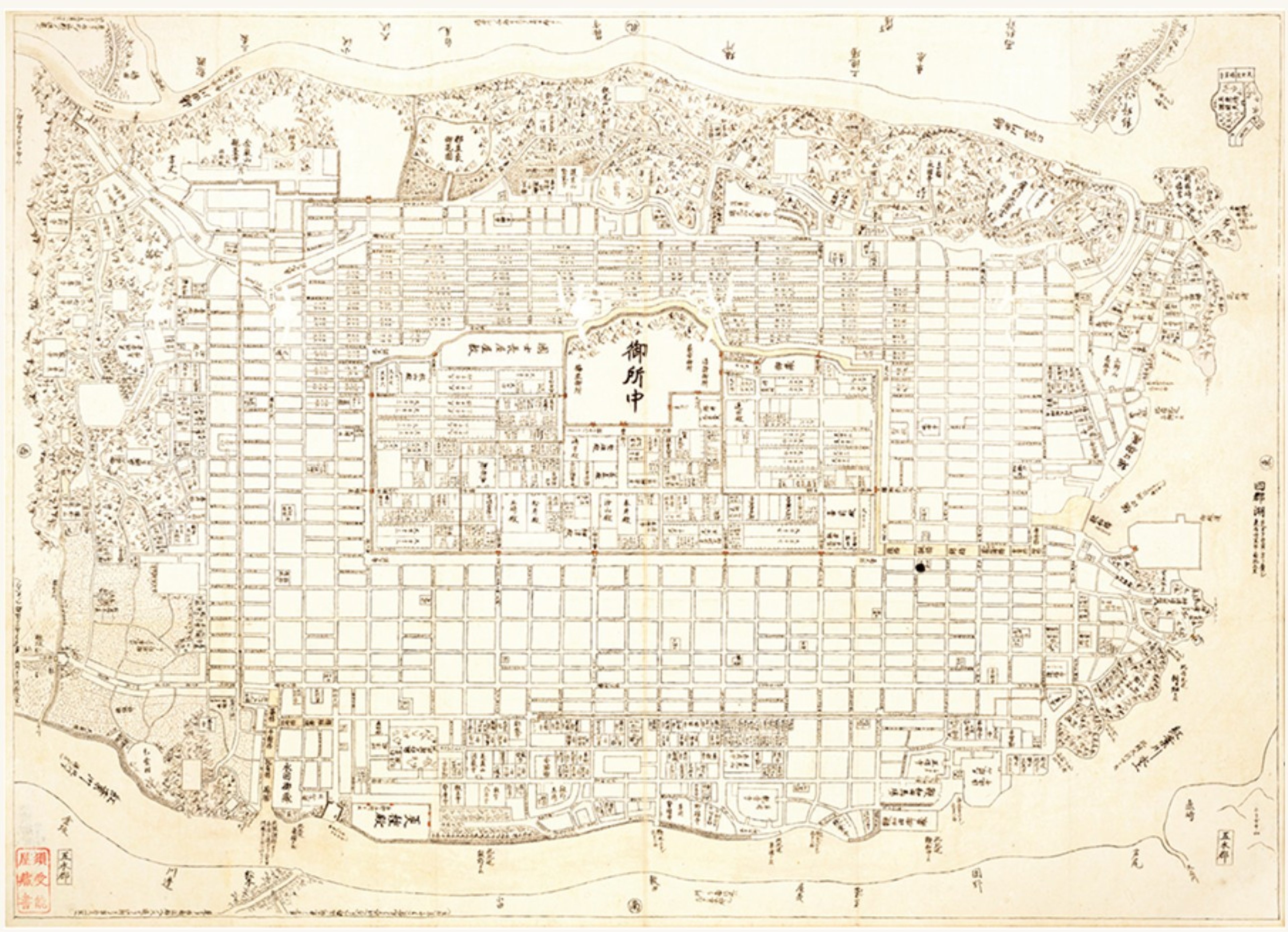
The Hashihara Castle Town Map 端原氏城下絵図, by Motoori Norinaga. Hashiharashi Joka Ezu (1749) Museum of Motoori Norinaga Collection ©OBAYASHI CORPORATION, All rights reserved.
It was drawn to accompany a fictitious family history of the Hashihara clan, complete with its mythological origins. The map is so intricate that for many years it was assumed to be a representation of a real place, rather than Norinaga’s creation. Its extraordinary scope was revealed in a recent project of ‘speculative reconstruction’ by the Obayashi construction company, reported on in 2025. [2]
One of the investigators in that project has cited circumstantial evidence to suggest that Norinaga created his castle town and family genealogies as preparation for writing a novel, remarking that ‘if Norinaga depicted a world other than the one in which he lived, I believe he had a story in mind.’ If this suggestion is correct, then Norinaga’s creative process of beginning with a map not only has remarkable parallels to Tolkien’s sub-creation of Middle-earth – with his maps, genealogies, and histories – but, in a wholly different cultural context, anticipates it by two centuries.
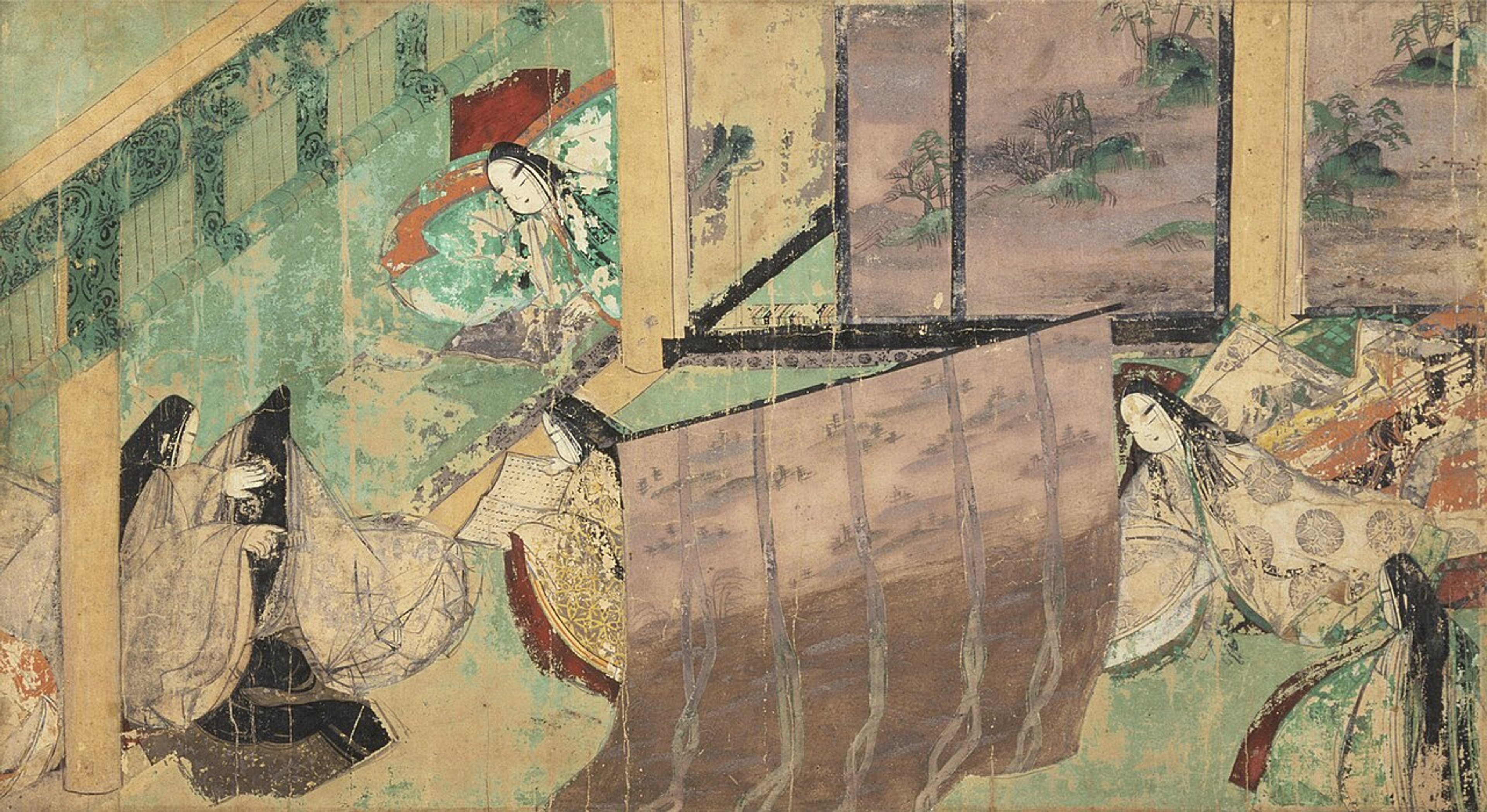
Manuscript scene of the Azumaya (Summer House) of the circa 1130 CE illustrated handscroll of Tale of Genji. Public Domain, via Tokugawa Art Museum in Nagoya, Japan.
It is known that Norinaga had been reading the eleventh-century Tale of Genji during the period in which he worked on the Hashihara map. If he had been planning a narrative of his own, it is posterity’s loss that the idea seems to have been abandoned
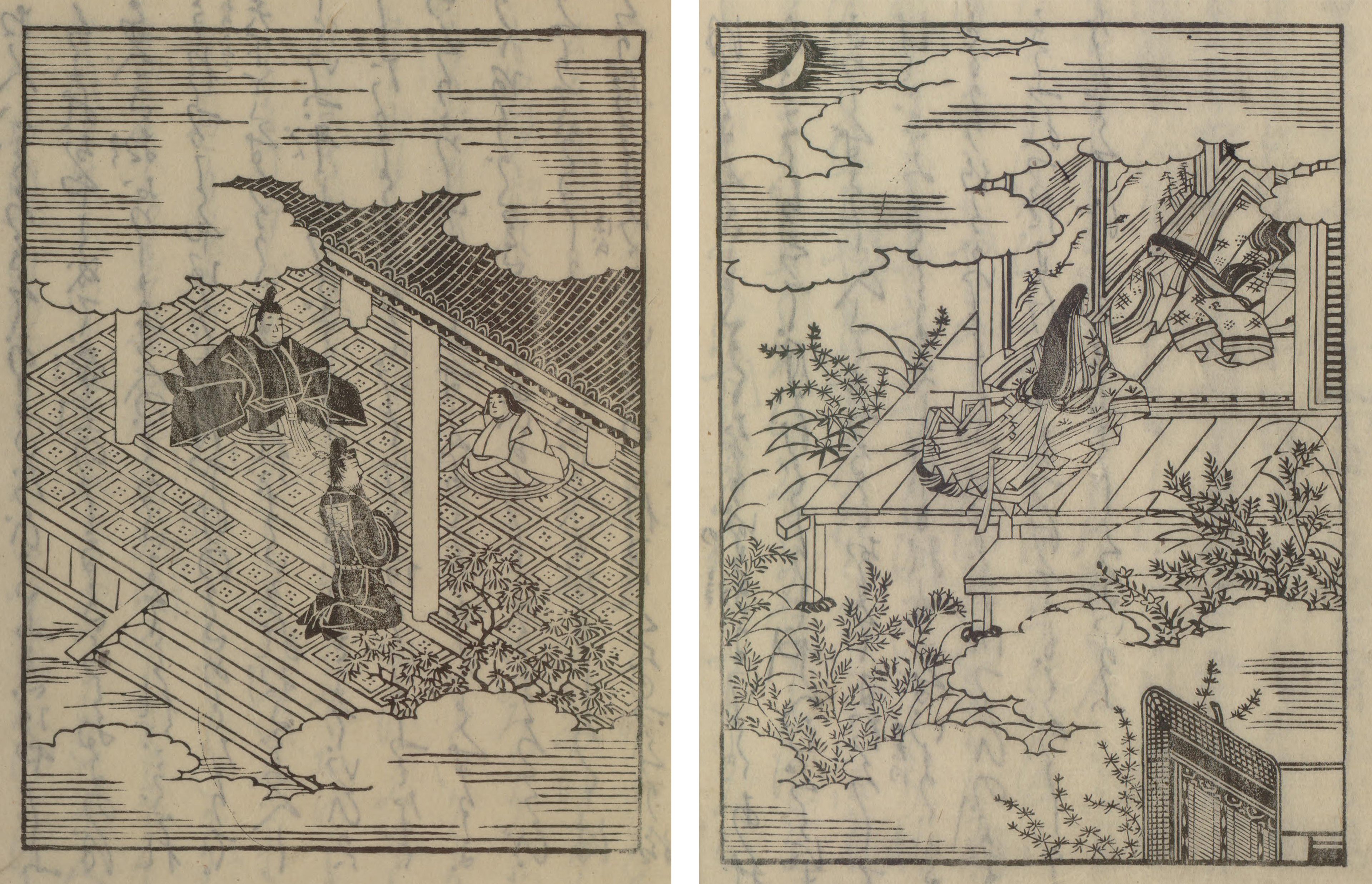
Images from the first illustrated edition of Murasaki Shikibu’s The Tale of Genji 源氏物語 (Genji monogatari) (1654) [PL788.4 .G4 1654 vol. 1-54]. Library of Congress, Asian Division. CC0 1.0
This exception, however, does seem to suggest a rule. Before manga, anime, video games, and modern fantasy publishing, it was very hard to find in East Asian literary history a fantasy map that presents a synoptic overview of an autonomous Secondary World. There are many possible reasons for this, but one is that, in Chinese and Japanese literary traditions at least, the fantastical often finds expression within this world, rather than through the creation of a separate one.
The leading Chinese iteration of fantasy as a modern genre has for over a century been wuxia. As academic Stephen Teo explains, the term derives from wu, meaning martial or military (also present in wushu, the Chinese term for martial arts generally), and xia, denoting chivalry, gallantry, knighthood, or heroism. It was originally coined in Japanese as a neologism in the late Meiji period at the turn of the twentieth century. [4]
The word was soon embraced by Chinese visitors to Japan, though in its earliest usage it connoted thrusting militarist modernity rather than historical drama. In China, these origins were soon forgotten with the success of Legend of the Strange Swordsmen, a hugely popular 1920s serial by Pingjiang Buxiaosheng (the pen name of Xiang Kairan, 1890–1957) that helped establish many of the tropes of this still-thriving genre.
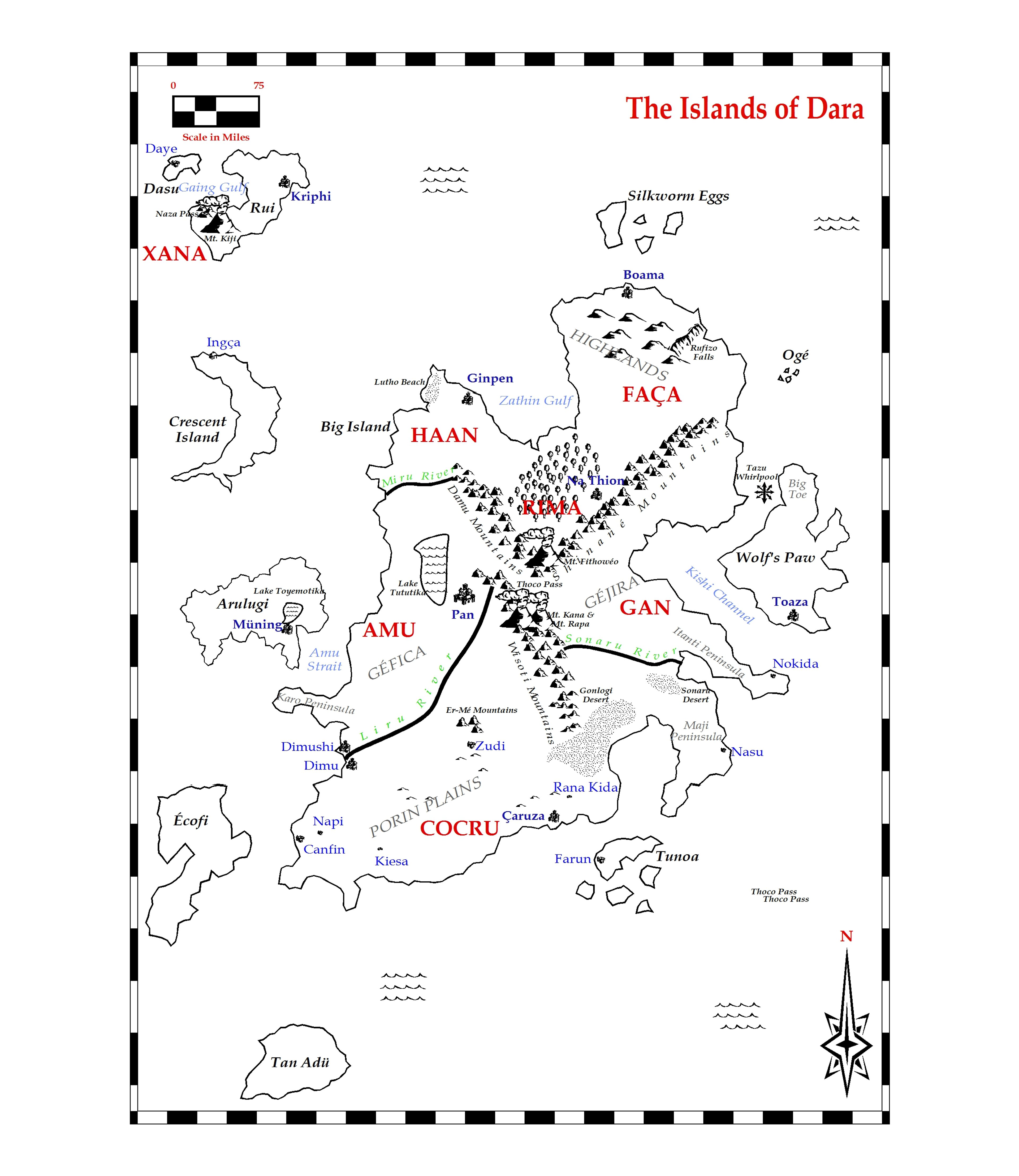
Map of the Island of Dara and Map of Ukyu and Gondé
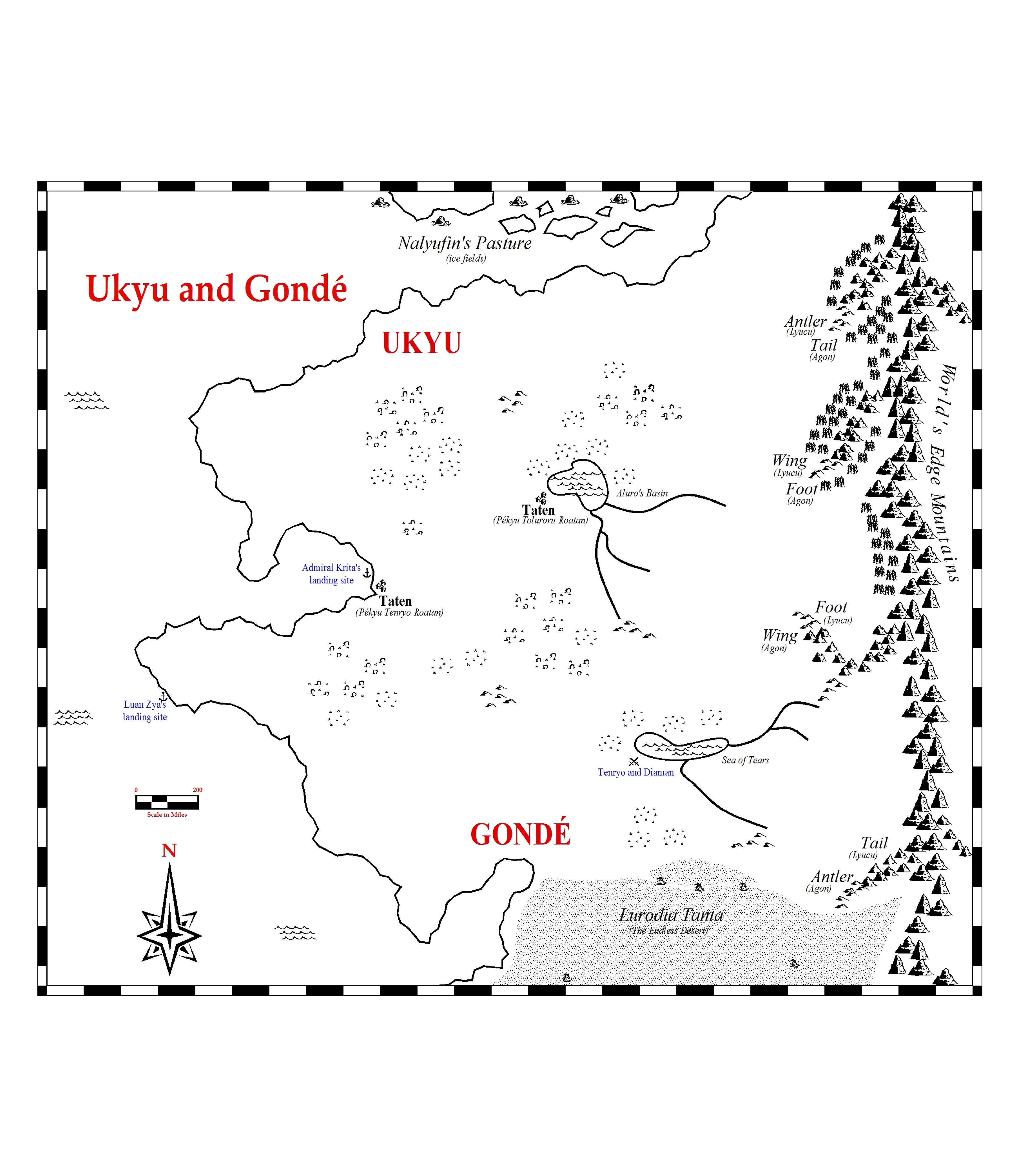
©Ken Liu. Source: kenliu.name
Like all genres, exact definitions of wuxia are contested and provisional. Central elements include a historical or quasi-historical setting, wandering protagonists pursuing righteous quests, and heroic conflict involving preternatural or superhuman martial abilities. It is this latter aspect that places wuxia in the realm of fantasy rather than realism. Its heroes may use qigong (the skill of manipulating qi, referring to vital energy or air) mastery to make weightless leaps across buildings or treetops, or to shatter an opponent’s weapon through physical and spiritual discipline.
Yet wuxia does not usually require the map in the way modern Western fantasy does because its marvels occur not in an autonomous Secondary World but in an intensified version of Chinese history and legend: a world of wandering heroes, righteous quests, arcane martial arts, corrupt officials, bandits, monasteries, rivers, roads, and mountains.
In this respect the wuxia tradition bears comparison with British legendary histories surrounding figures such as King Arthur or Robin Hood, or with contemporary American superhero comics and movies. It is the ‘real’ world, exaggerated and heightened by fantasy; being the one we are already in, there is less need for a map.
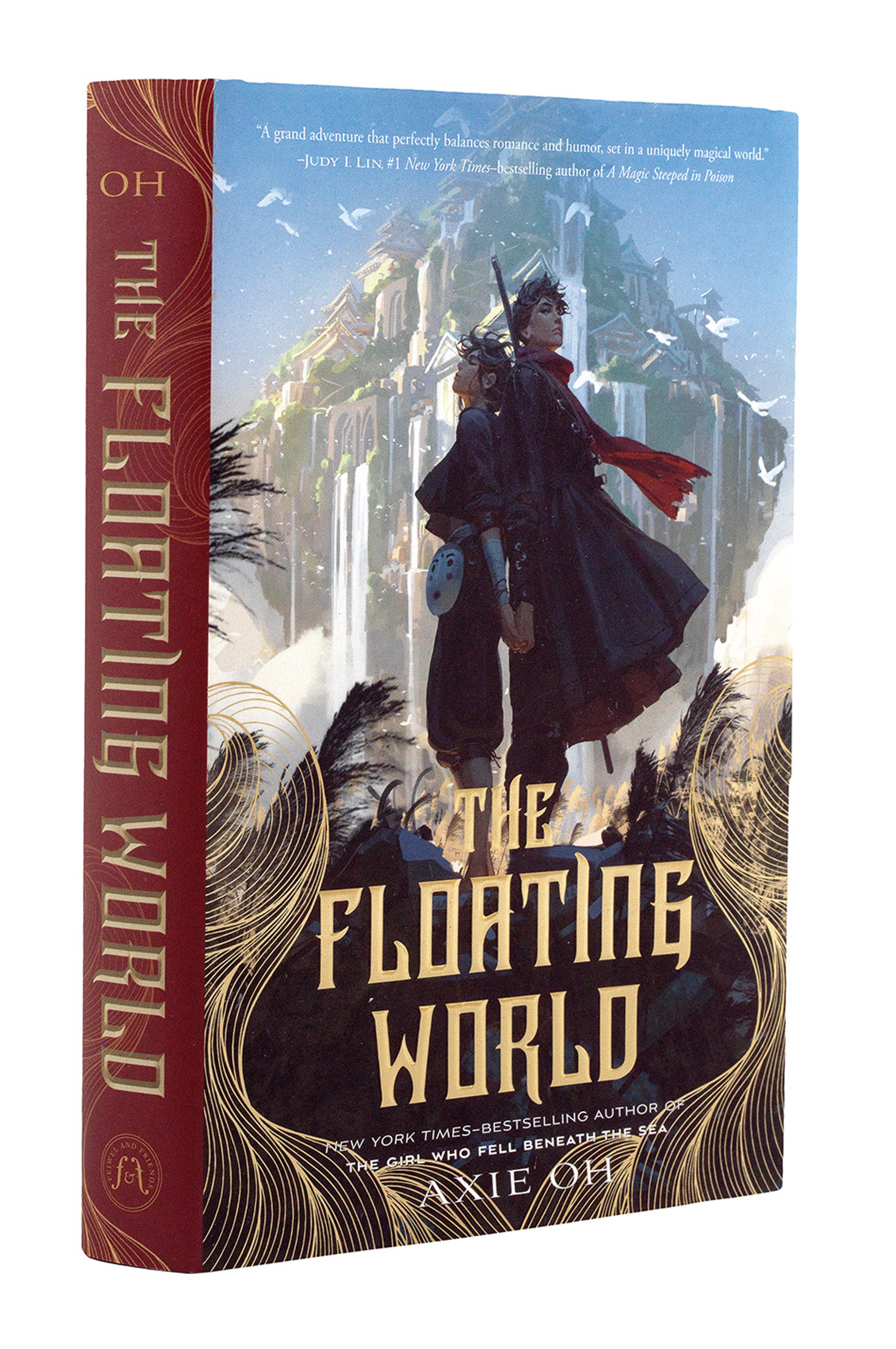
©2025 Axie Oh.
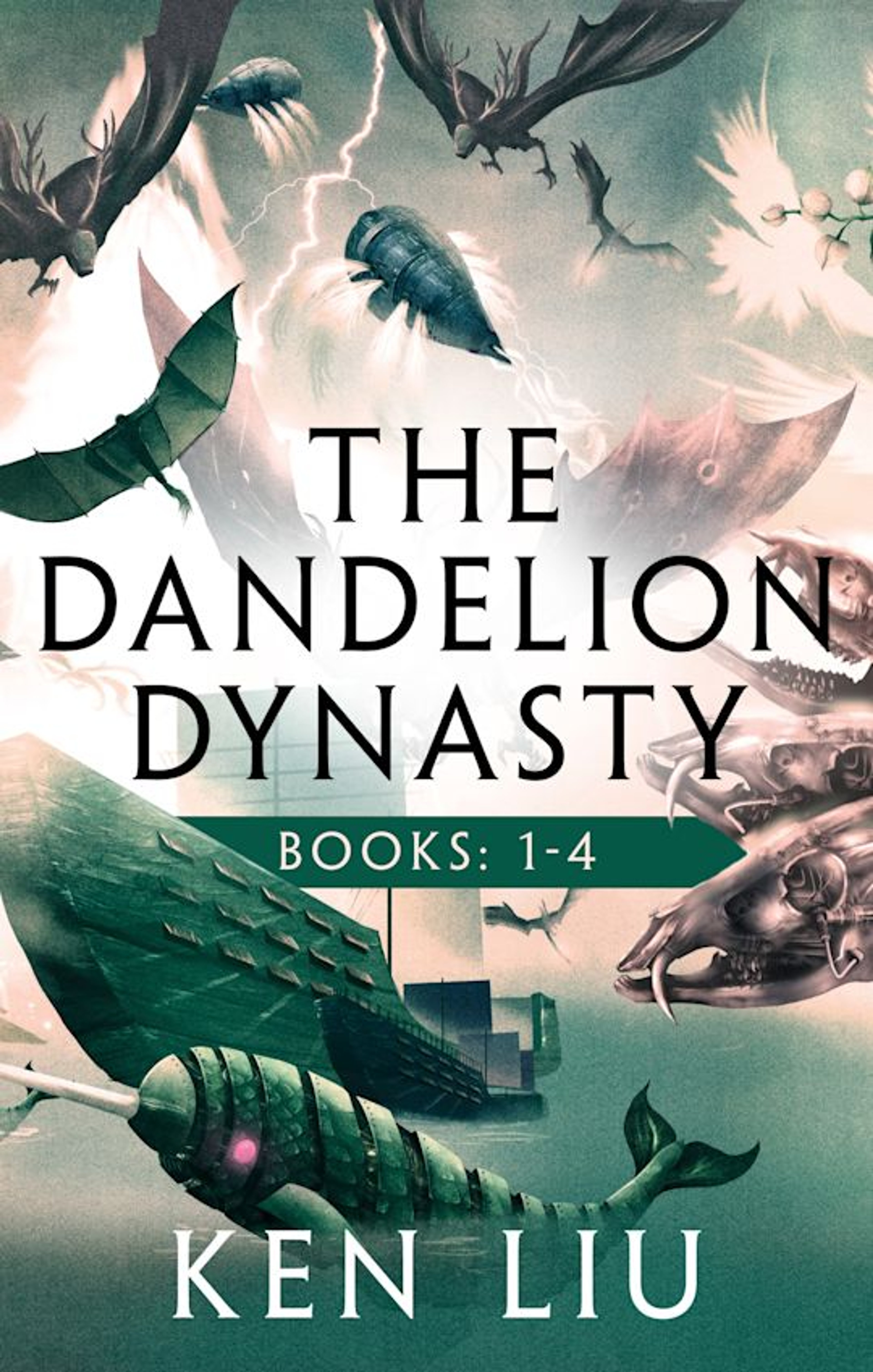
©2024 Ken Liu
This helps explain the significance of the two Ex Carta items with which this piece began. The maps in Liu’s and Oh’s novels reflect the complex circulation of fantasy forms in the twenty-first century. Tolkienian Secondary World fantasy, tabletop gaming, video games, manga, anime, and global fantasy publishing have all shaped the expectations of modern readers.
For writers of the Asian diaspora, this can produce rich hybrids: imagined worlds that draw deeply on East Asian history, myth, aesthetics, and philosophy, while also using the map as a recognisable signal of epic fantasy world-building. In this sense, the maps in The Dandelion Dynasty (2015) series and The Floating World (2025) are not signs of simple Western influence, but of a genuinely transnational fantasy language.
Note to the reader: If you know of specific examples of maps from wuxia or related East Asian fantasy traditions, Ex Carta would be delighted to hear about them: contact us.
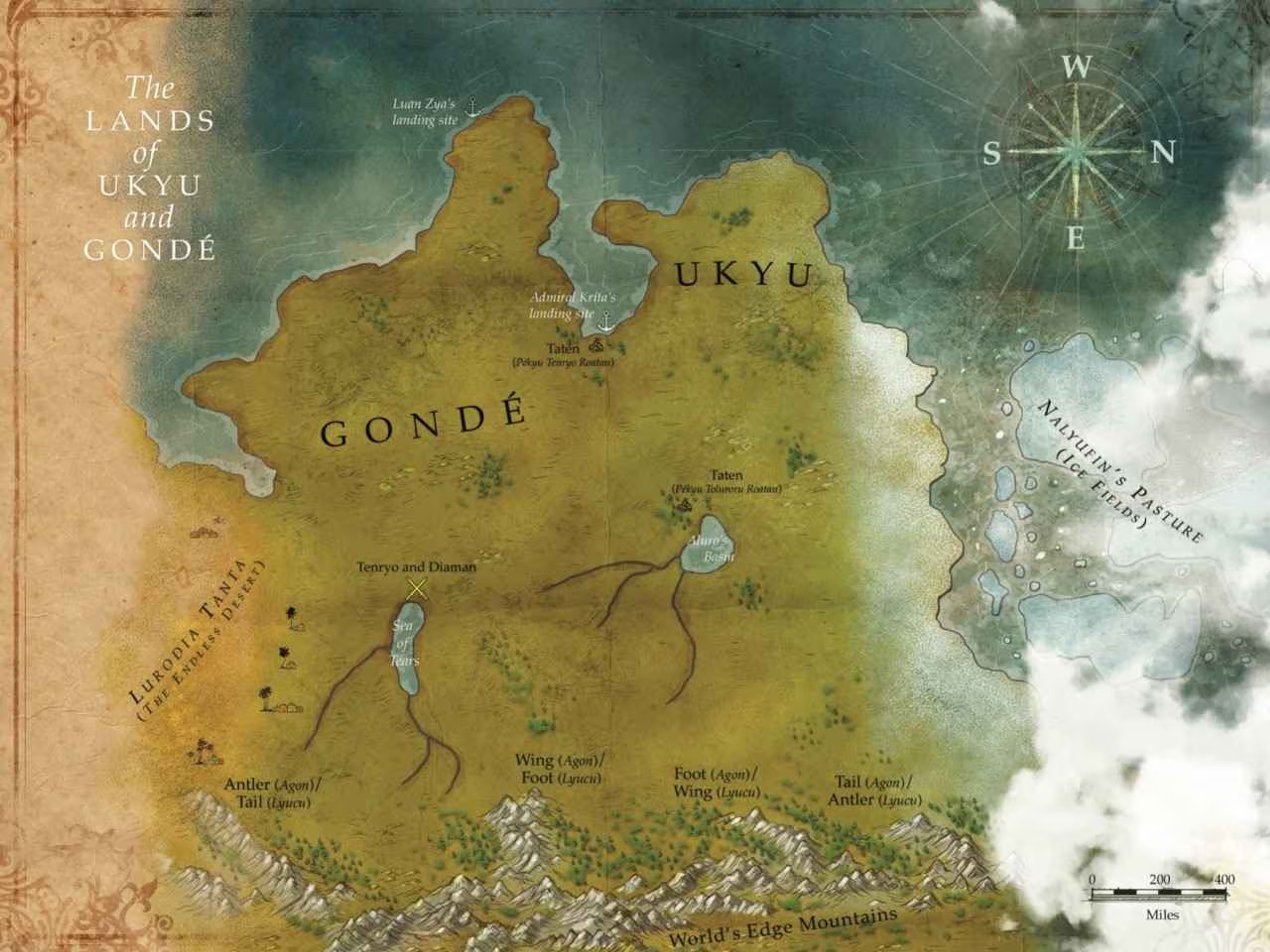
Map of Ukyu and Gondé ©Robert Lazzaretti for Ken Liu. Source: kenliu.name
About James Machin

James Machin is a Visiting Research and Knowledge Exchange Fellow at Goldsmiths, University of London. He is a writer, researcher, editor, and archivist specialising in Gothic, weird, and fantastic literature of the long nineteenth and early twentieth centuries. James is also the cataloguer for Ex Carta.
He is the author of Weird Fiction in Britain 1880–1939 (Palgrave, 2018) and editor of Arthur Conan Doyle’s The Stark Munro Letters for Edinburgh University Press (2024), where he is also Technical Editor for the Edinburgh Edition of the Works of Arthur Conan Doyle.
James’ recent editorial work includes The Strange Stories of John Buchan for British Library Publishing (2025). He is a member of the Decadence Research Centre at Goldsmiths, University of London, and has taught at Birkbeck, University of London, the Royal College of Art, and the University of Bedfordshire.
His work often explores archives, imagined geographies, lost worlds, strange landscapes, and the material culture of fiction. A lifelong role-playing game enthusiast, he runs long-standing campaigns in Call of Cthulhu and Dungeons & Dragons.
More from James Machin
Glossary
Secondary Worlds
The Primary World is simply ‘this one’ - the world we live in - while a Secondary World is an imagined world into which the mind of the reader can enter. Some imaginary worlds exist within a version of the Primary World, as with the island of Utopia; others, such as Narnia and Oz, exist in parallel. Both terms originate from J. R. R. Tolkien.
Some Secondary Worlds - such as Tolkien’s Middle-earth - exist independently of our Primary World. Other works, such as the Rivers of London series and His Dark Materials, combine Primary and Secondary Worlds in subtle and compelling ways.
Wuxia 武俠
Wuxia (pronounced woo-shyah) is a traditional genre of East Asian fiction and fantasy concerning the adventures of martial artists in ancient China. The term literally translates to mean 'martial arts’ and ‘chivalry' or ‘hero’. During the Ming and Qing Dynasties, wuxia works were banned for their anti-government rhetoric, and deemed responsible for inspiring rebellions.
You can find more definitions in our Glossary.
Footnotes
Anne Sytske Keijser, ‘Imagining a Garden: Lu Zichang’s Map of the Prospect Garden’, 22 March 2022
‘Deciphering the Hashihara Castle Town Map: The Imaginary Town of MOTOORI Norinaga’ | Public Relations “Obayashi Quarterly”, 2025
Ibid, p. 5
Stephen Teo, Chinese Martial Arts Cinema: The Wuxia Tradition, Traditions in World Cinema (Edinburgh University Press, 2009), p. 2.
Ibid, p. 4
Selected Bibliography
‘Deciphering the Hashihara Castle Town Map: The Imaginary Town of MOTOORI Norinaga | Public Relations “Obayashi Quarterly”’, 2025
Keijser, Anne Sytske, ‘Imagining a Garden: Lu Zichang’s Map of the Prospect Garden’, 22 March 2022
Teo, Stephen, Chinese Martial Arts Cinema: The Wuxia Tradition, Traditions in World Cinema (Edinburgh University Press, 2009)