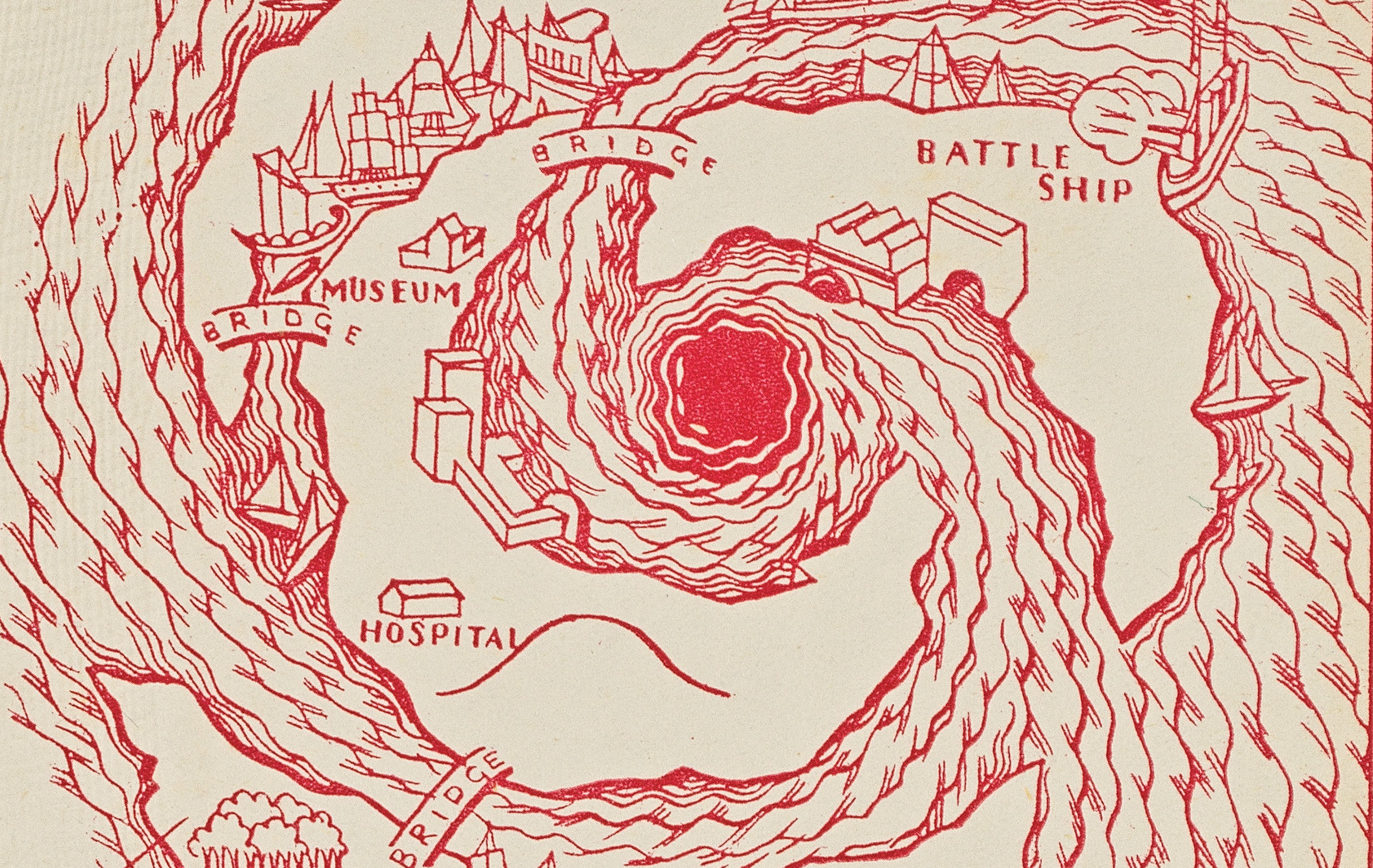
Drowned Worlds
Legendary lands lost beneath the sea

As Ex Carta demonstrates, maps have long made room for places that are not quite real: speculative islands, vanished continents, symbolic geographies, and worlds lost beneath the sea. One of the most persistent of these traditions - the Drowned World – follows from the earliest accounts of Atlantis through to the lost kingdoms of Lemuria and Mu, to theosophy, pulp fiction, popular pseudoarchaeology, and modern environmental anxiety.
Drowned Worlds Origins
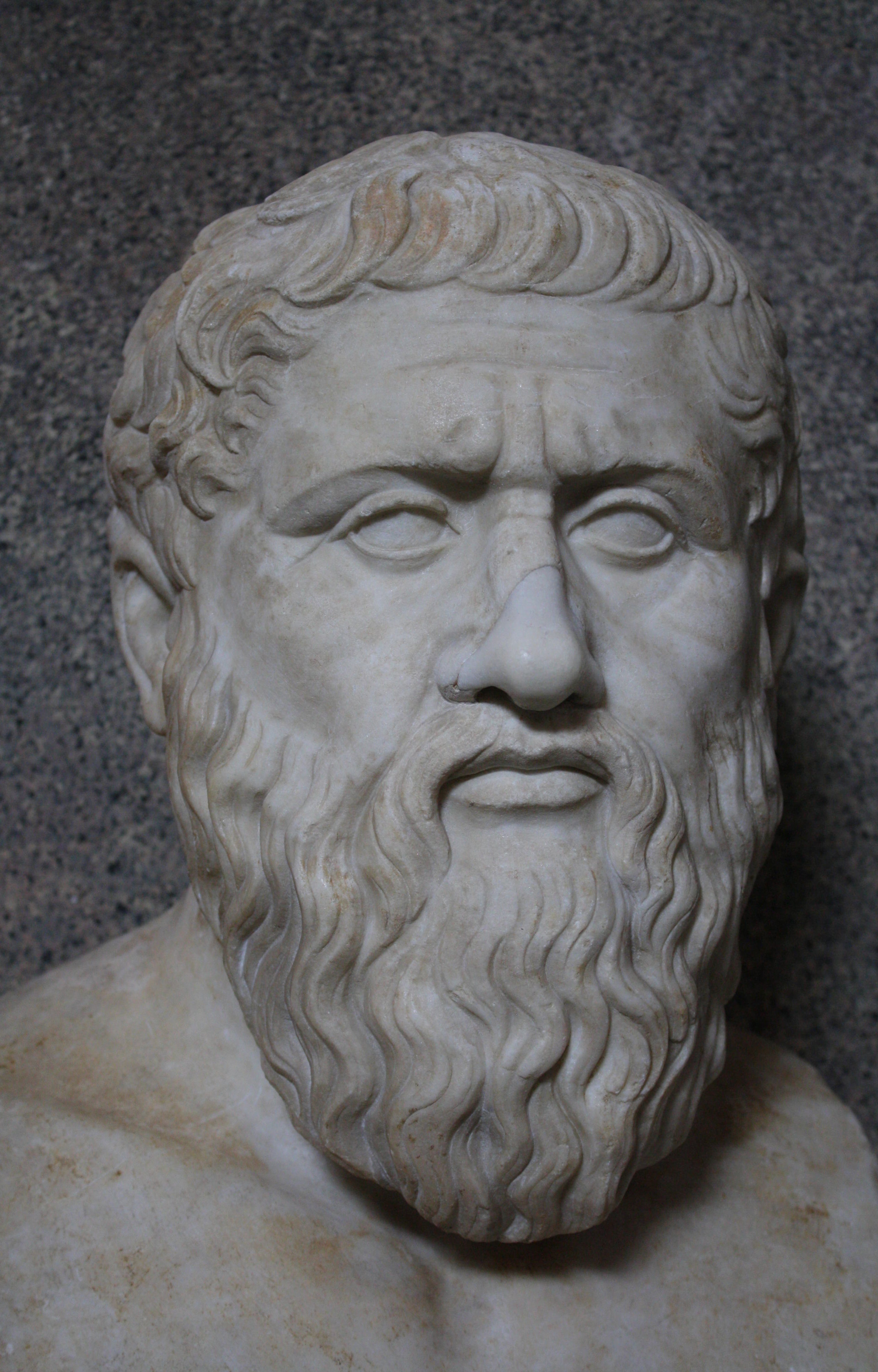
Bust of Plato. Mark Cartwright via World History Encyclopedia
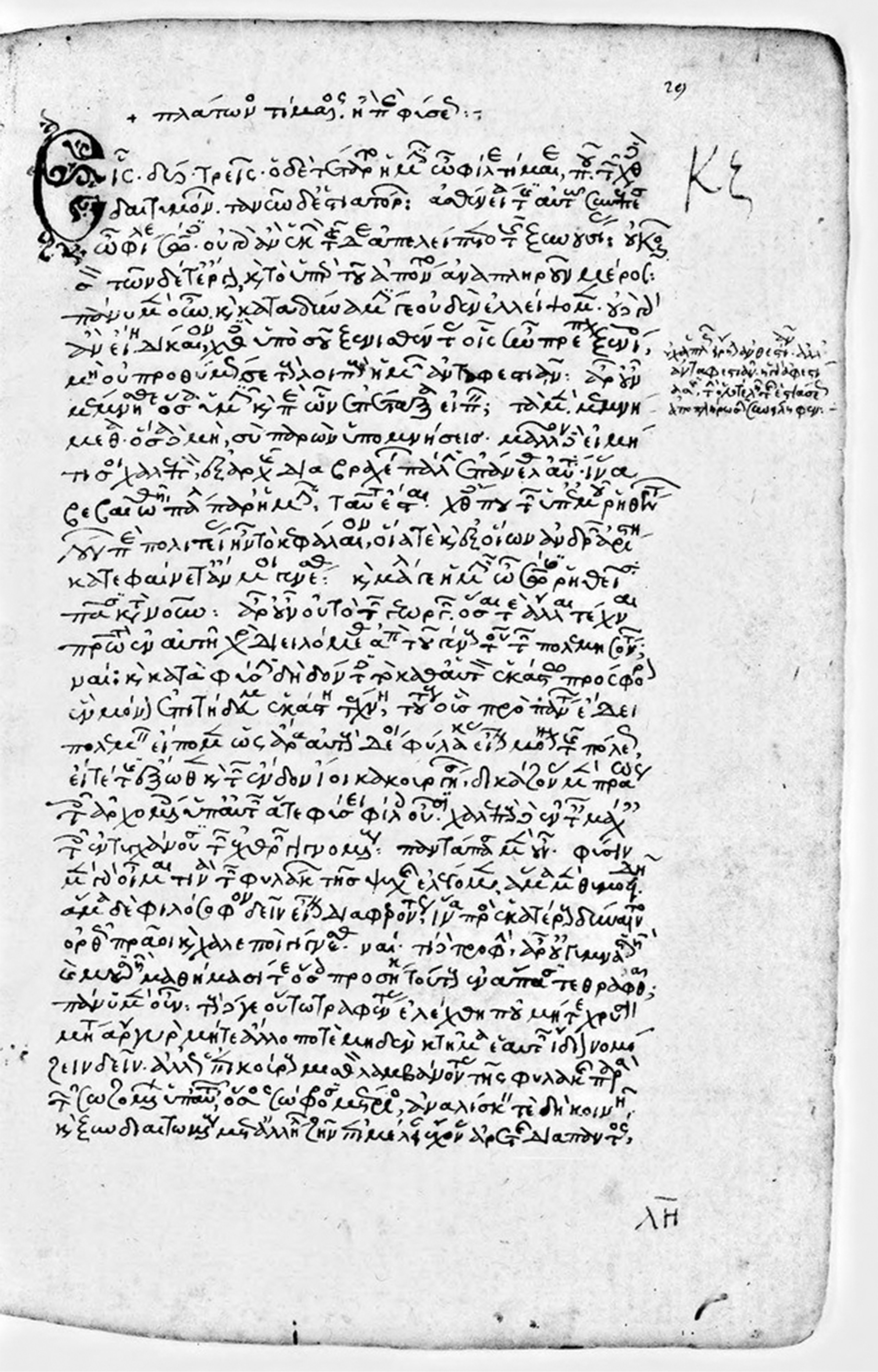
Fourteenth-century Greek manuscript featuring Timæus. Public domain, via Bibliothèque nationale de France.
But afterwards there occurred violent earthquakes and floods; and in a single day and night of misfortune all your warlike men in a body sank into the earth, and the island of Atlantis in like manner disappeared in the depths of the sea. For which reason the sea in those parts is impassable and impenetrable, because there is a shoal of mud in the way; and this was caused by the subsidence of the island. [1]
This passage, from Timæus (c.360 BCE) by the ancient Greek philosopher Plato (c.428/7–348/7 BCE), establishes with great economy a narrative that has persisted for two and a half millennia. The lost-continent conceit itself has various iterations - the land masses of Atlantis, Lemuria, and Mu - the key story remains the same: a utopian, technically and spiritually advanced, island civilisation achieved a cultural apotheosis before being washed away in a terrible cataclysm.
Why has this idea gripped the human imagination so tightly and for such a long time?
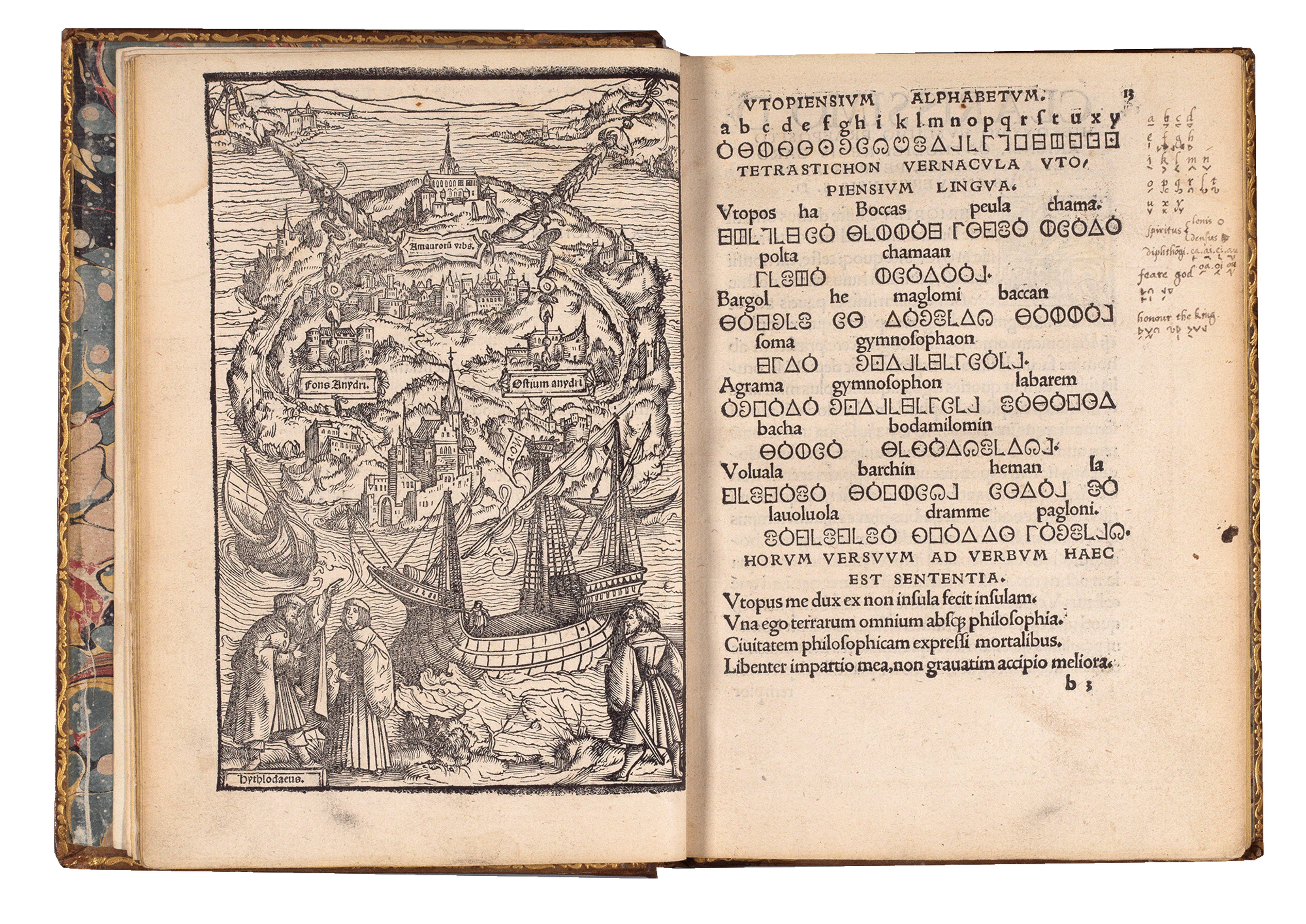
Utopia (1516) by Thomas More ©Ex Carta
The idea of Atlantis has always been a nebulous one, and it has often been pointed out that ‘whatever Plato’s virtues, literary accuracy was never one of them.’ [2] There were many reasons for Plato to find the notion of a virtuous city-state destroyed by its own hubris useful in illustrating hypothetical questions of statecraft, ethics, and philosophy, aside from the prima facie intention of recording an allegedly real history. Atlantis has therefore, since its recorded inception, always been a symbolic geography more than a real one.
It was certainly absorbed into the wider tradition of imaginary island commonwealths to which Utopia (1516) by Sir Thomas More (1478–1535) also belongs. When the English philosopher Francis Bacon (1561–1626) set down his vision for a new utopian colony in the Americas, he named the work New Atlantis (1627). Bacon’s choice of titles reflected two contradictory beliefs regarding the ill-fated island: that it was an ideal rather than a real place; and the identification of its actual geographical location as the New World was ‘discovered’ by Europeans in the fifteenth century.
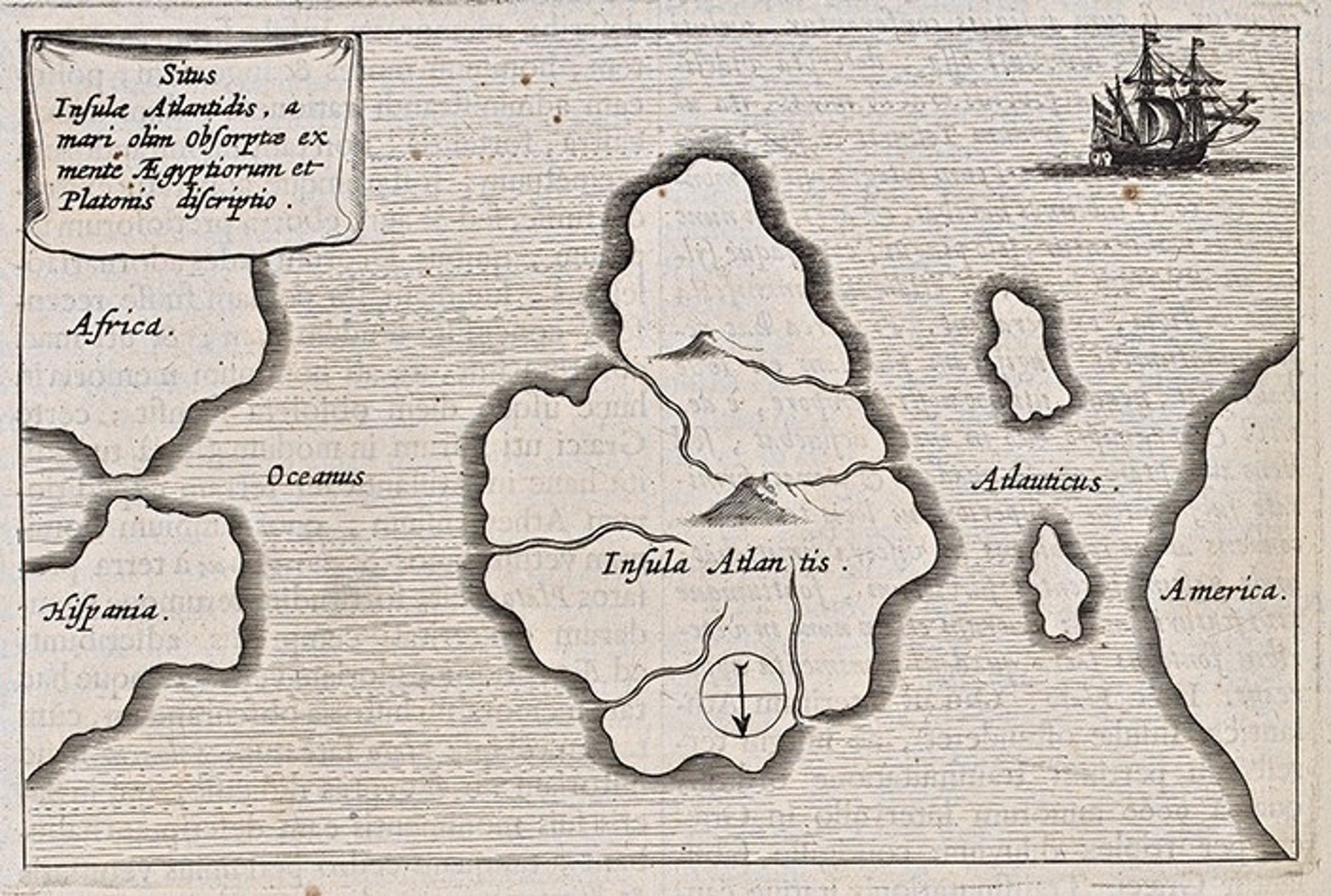
Athanasius Kircher’s map of Atlantis, from Mundus Subterraneus (1665) ©Ex Carta
This unstable status is reflected in cartographic history, with Atlantis appearing in early works of geography and geology such as Mundus Subterraneus (1665) by Athanasius Kircher (c.1601–1680), as an island in the mid-Atlantic.
It is important to understand such speculations in the context of the emerging scientific understanding of the European world, without the privilege of centuries of research and development of the relevant scientific disciplines since. Such works can only unfairly be assessed according to our contemporary assumptions about discrete categories of objective truth, spiritual truth, and imaginative supposition.
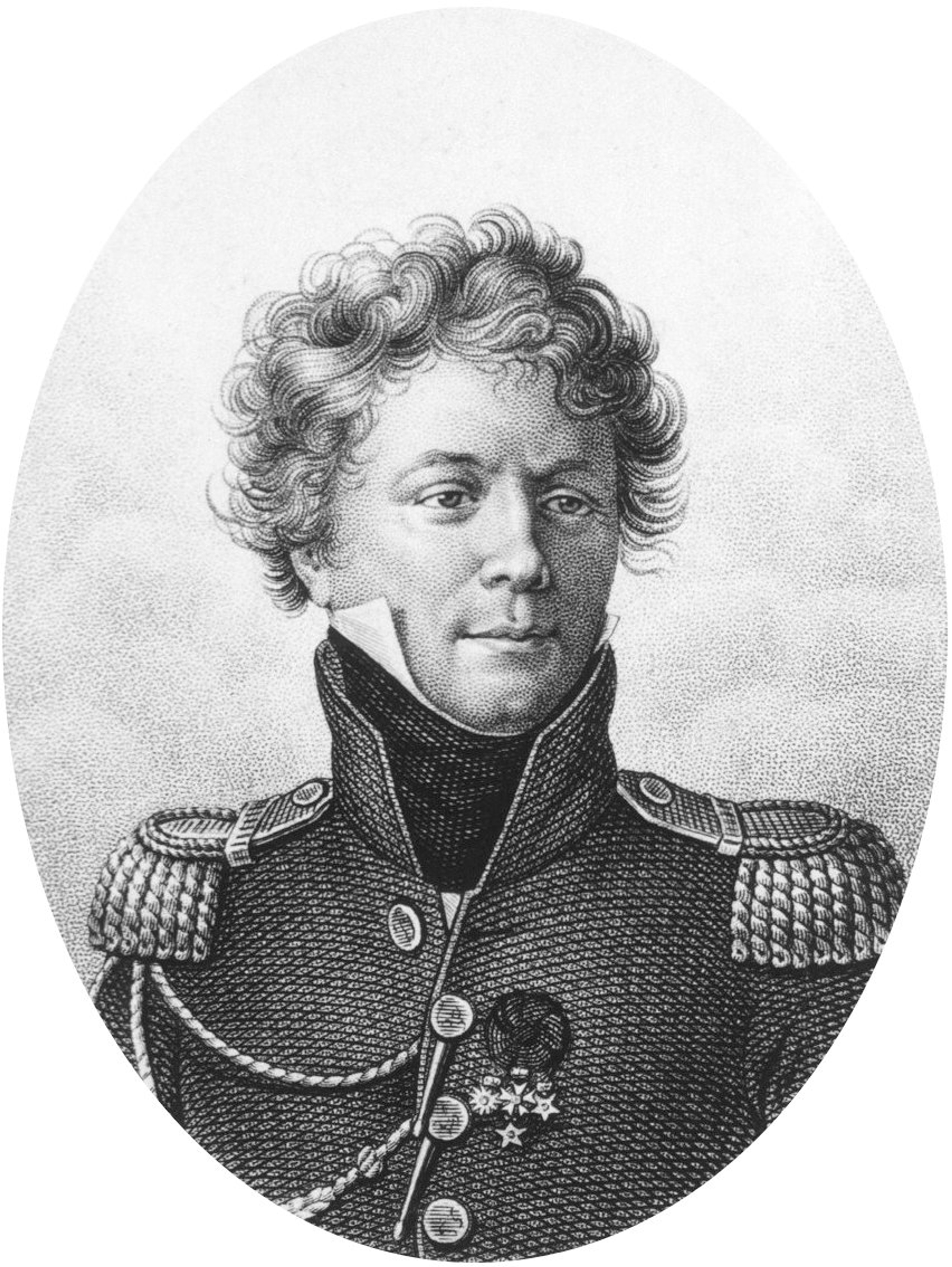
Public domain, via Wikimedia Commons
A more recognisably modern scientific approach to Atlantis is more discernible in Ex Carta in Essais sur Les Isles Fortunées et L'Antique Atlantide (1803) by Jean-Baptiste Bory de Saint Vincent (1778–1846).
A French polymath and soldier, Bory based his theories on direct observation. He suggested that the Canary Islands were remnants of a larger land mass which he identified as Atlantis.
Moreover, he speculated that the original indigenous inhabitants of the islands, the Guanches – a people extinguished or assimilated during Spanish colonisation in the fifteenth century – were the last vestiges of the lost Atlantean civilisation.
From Speculation to Pseudohistory
The literary possibilities of such romantic conceits were not lost on authors such as Jules Verne (1828–1905), whose Twenty Thousand Leagues Under the Seas (1870) is in Ex Carta. In this novel featuring Captain Nemo and his submarine, the Nautilus, among the strange sights encountered by the protagonists in the depth of the Atlantic Ocean are ‘some picturesque ruins’ on the periphery of a still-active underwater volcano:
There indeed under my eyes, ruined, destroyed, lay a town—its roofs open to the sky, its temples fallen, its arches dislocated, its columns lying on the ground, from which one would still recognise the massive character of Tuscan architecture. Further on, some remains of a gigantic aqueduct; here the high base of an Acropolis, with the floating outline of a Parthenon; there traces of a quay, as if an ancient port had formerly abutted on the borders of the ocean, and disappeared with its merchant vessels and its war-galleys. Farther on again, long lines of sunken walls and broad, deserted streets—a perfect Pompeii escaped beneath the waters. Such was the sight that Captain Nemo brought before my eyes!
Where was I? Where was I? I must know at any cost. I tried to speak, but Captain Nemo stopped me by a gesture, and, picking up a piece of chalk-stone, advanced to a rock of black basalt, and traced the one word:
ATLANTIS
What a light shot through my mind! Atlantis! the Atlantis of Plato […]
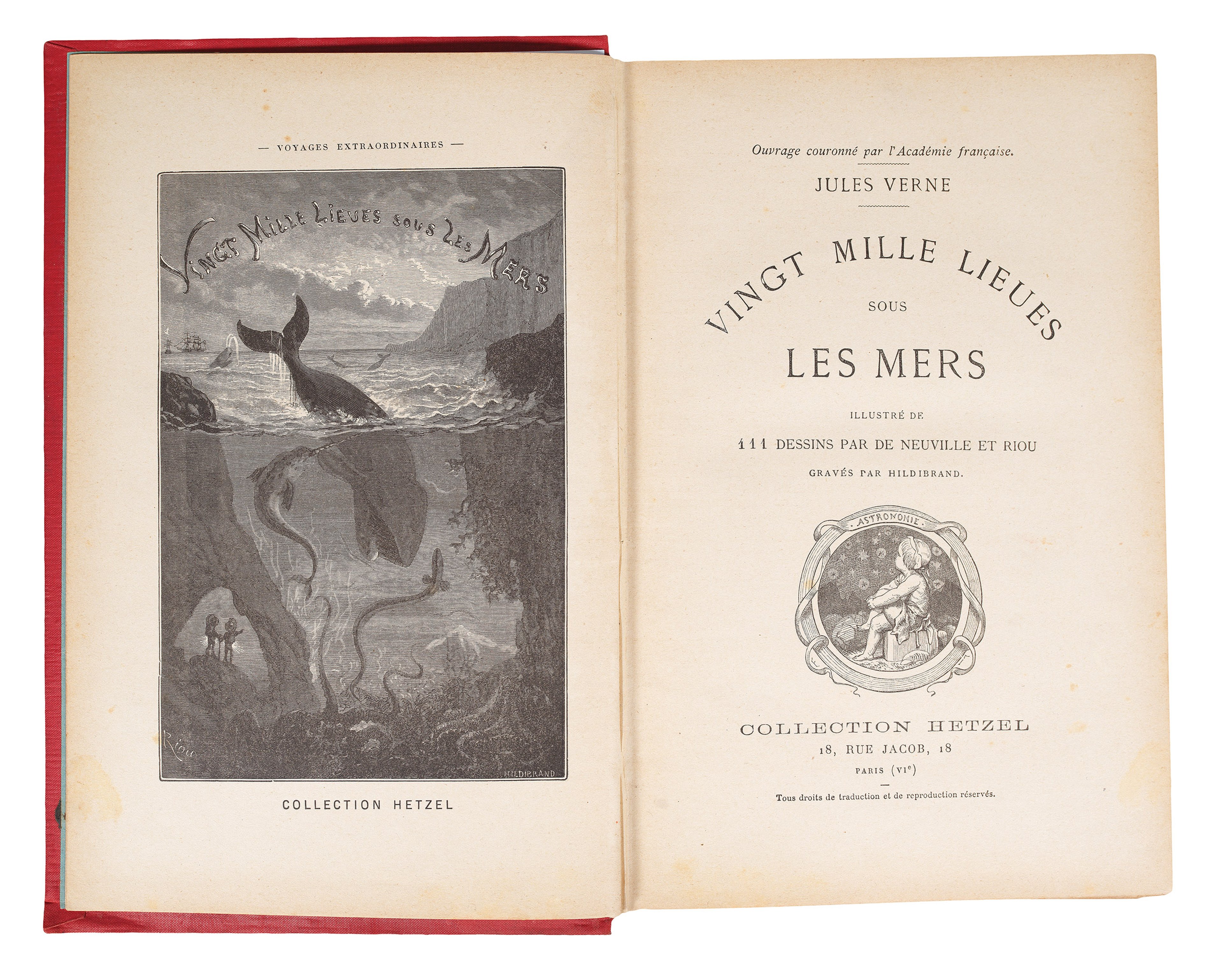
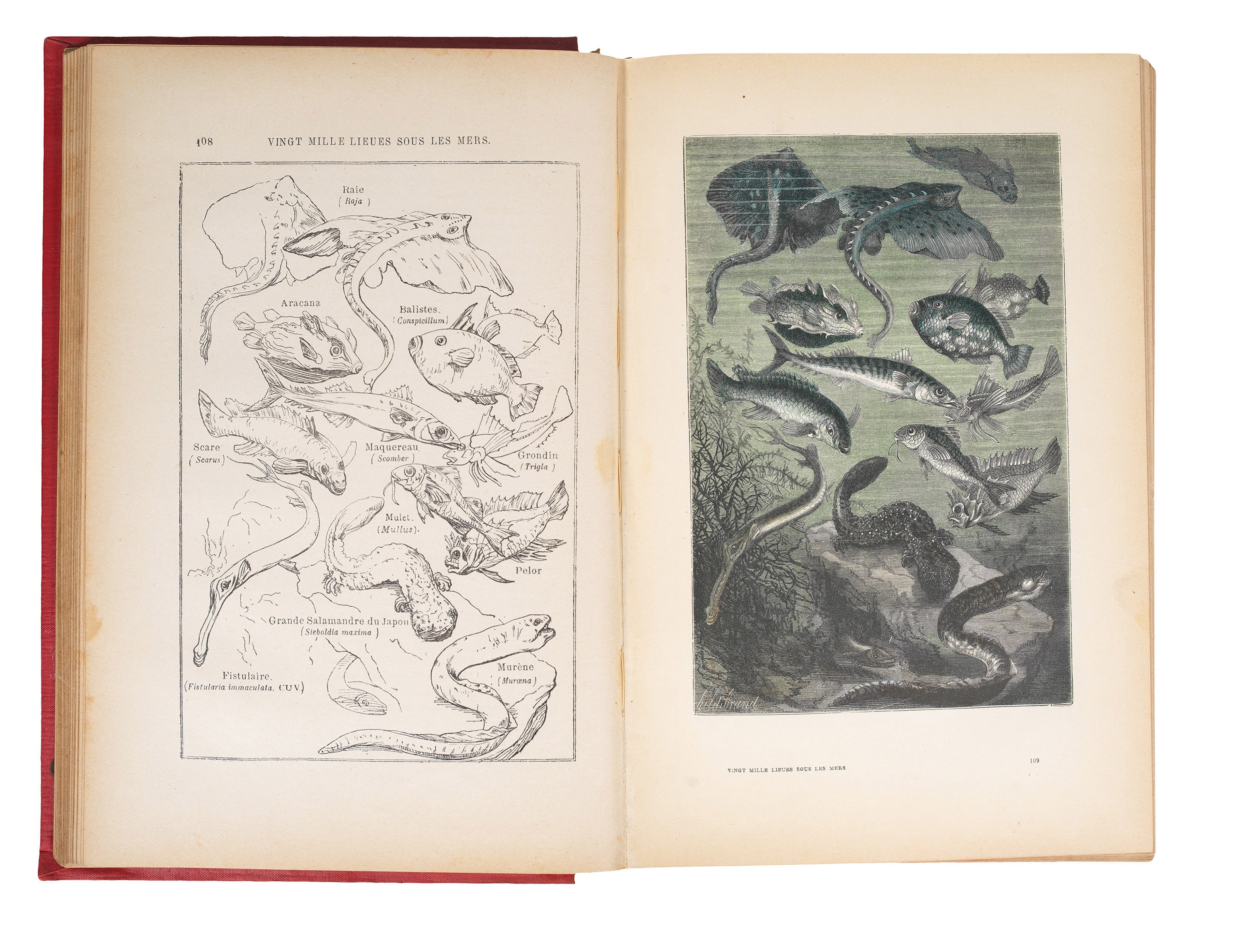
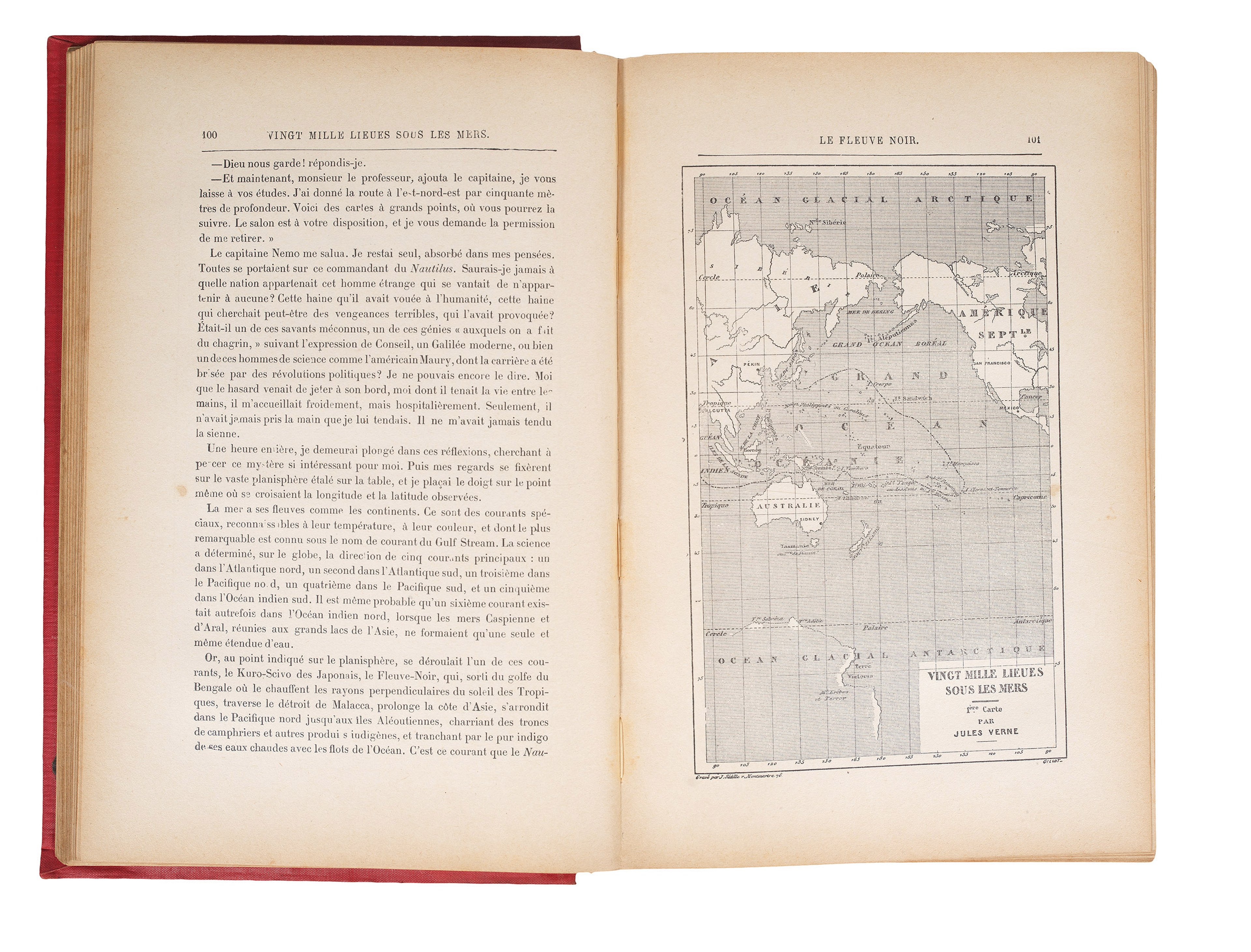
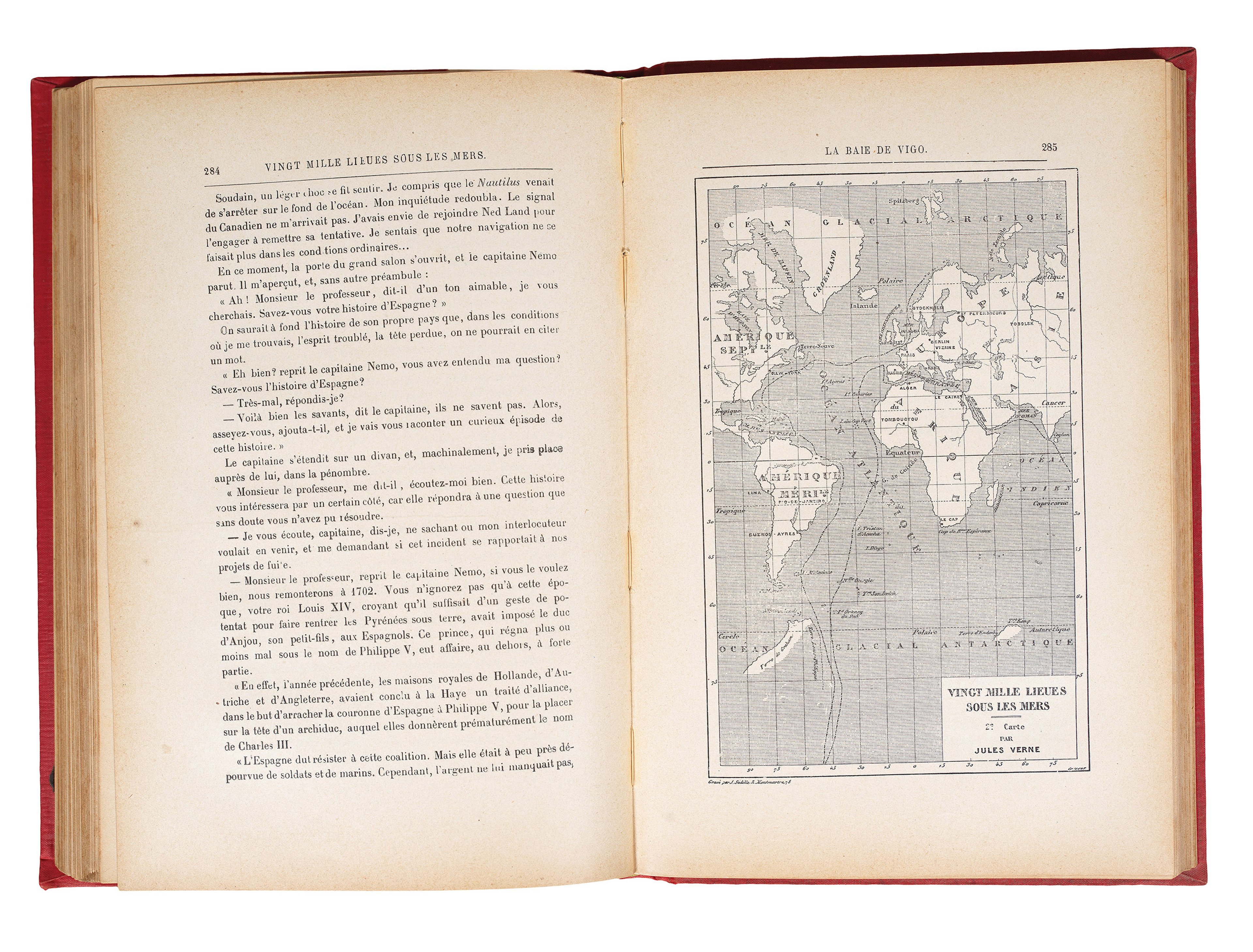
The vivid immediacy of Verne’s evocation of this doomed realm established a trope that has persisted ever since - not least in the ruin decorations popular today in tropical fish tanks. Verne is also said to have inspired the American politician and amateur scientist Ignatius L. Donnelly (1831–1901) who, after his final congressional electoral defeat in 1870, ‘retired to his rambling mansion to write the first of several very successful books’: Atlantis: The Antediluvian World (1882).
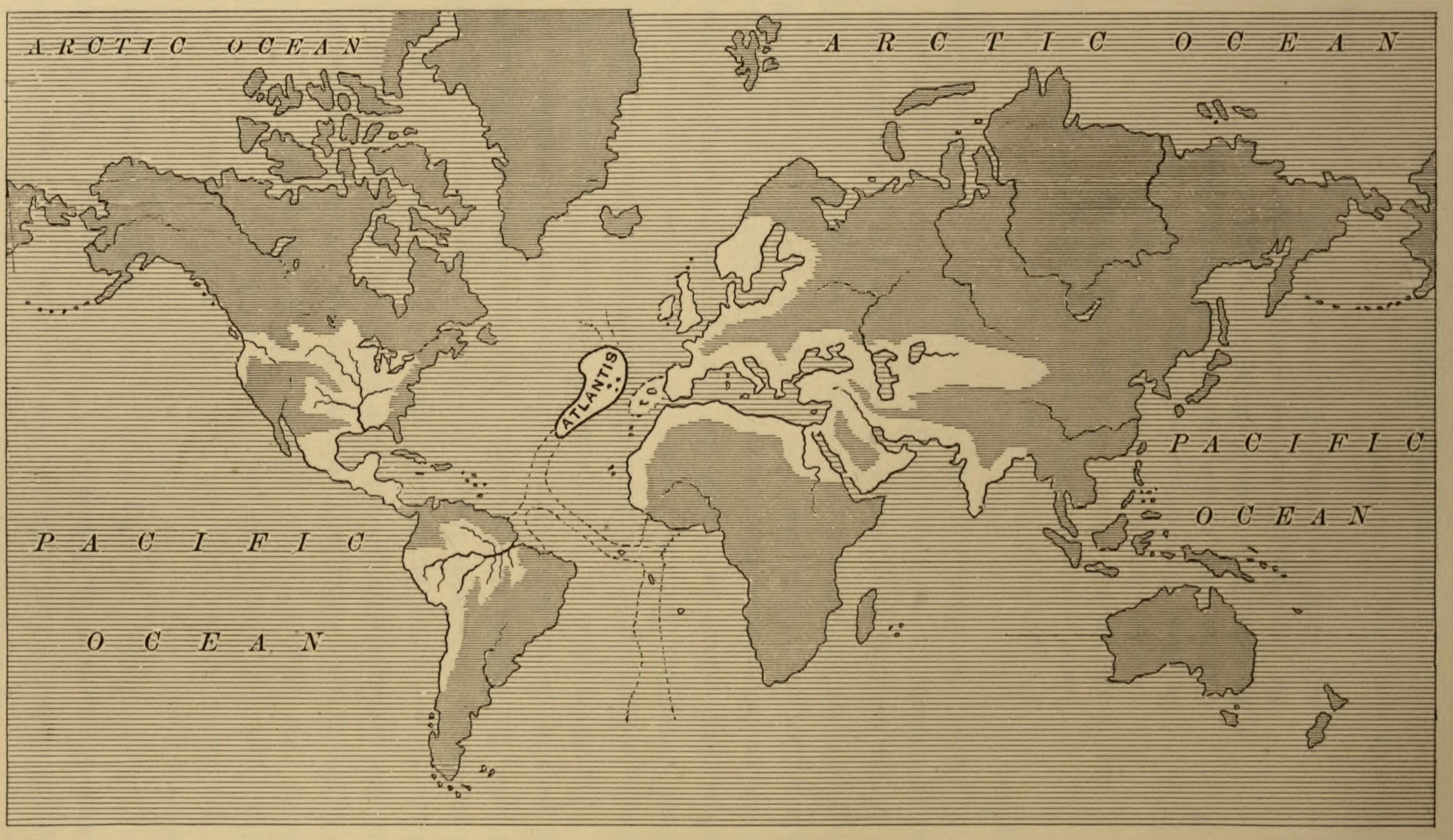
Map of the Atlantean Empire from Ignatius Donelly's Atlantis: The Antediluvian World (1882). Public Domain, via Archive.org
Donnelly’s Atlantis was the result of years of energetic research into what was then understood of the ancient cultures linked by both the Mediterranean and the Atlantic. He was working in a tradition that sought to identify links between the languages, technologies, and cultures of the ancient world that would demonstrate a connection between them – or rather, a shared foundational influence: Atlantis.
Donnelly’s specific concern was the connections between the Old and the New Worlds. He alleged shared linguistic, technological, and racial culture-traits between Incas, Aztecs, and Mayans on the one hand, and Egyptians, Greeks, and Phoenicians on the other – for example, the shared qualities of Mexican ziggurats and Egyptian pyramids.
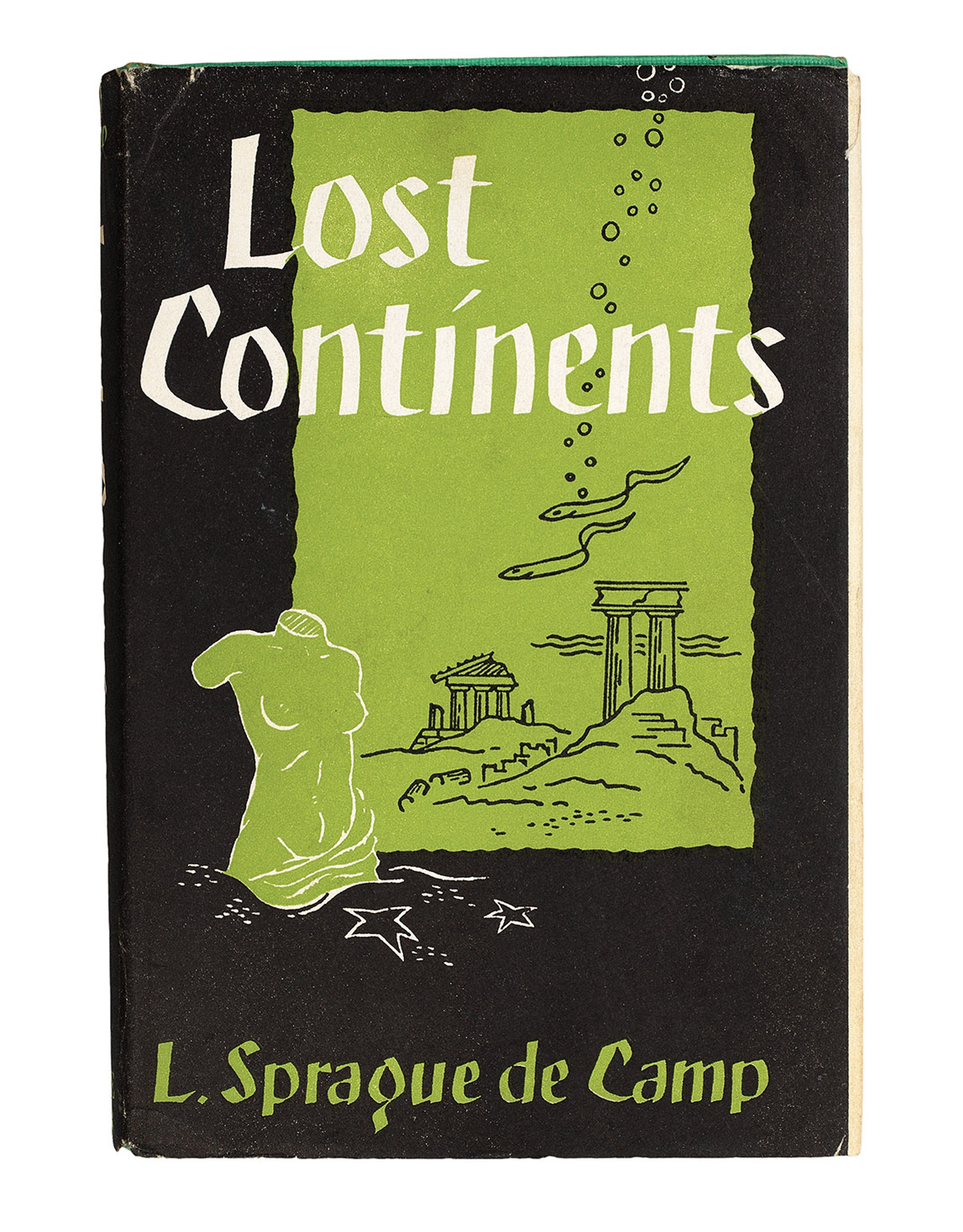
Donnelly’s speculations were never accepted by the academy of his day and remain pseudoscientific.
In his sceptical study of the cultural history of the Atlantis myth, L. Sprague de Camp (1907–2000) remarks: ‘Since Donnelly’s formidable learning is likely to stun the average reader into taking his statements at face value, a close look at his book is needed to show how careless, tendentious, and generally worthless it is.’
Nevertheless, the story Donnelly told of humanity’s foundational, antediluvian mother culture was immediately compelling and remains so to this day. As archaeologist Jeff Shanks has argued, the popular pseudoarchaeology and ‘ancient civilisation’ theories of authors such as Graham Hancock (1950–) all have their source in Donnelly’s work of over a century ago.
Theosophy and the Lost Continents
One of those impressed by Donnelly’s work was Helena Petrovna Blavatsky (1831–1891, often styled Madame Blavatsky), co-founder, in 1875, of the Theosophical Society. Blavatsky’s self-mythologising makes it difficult to ascertain firm details about her early life; what seems certain is that she was widely travelled and involved with the Spiritualist movement from the 1860s. [6]
Theosophy is an esoteric system that seeks to uncover a universal spiritual wisdom underlying all religions, combining ideas from Eastern religions, Western occultism, mysticism, and spiritual evolution. It generated an enormous body of associated literature and extremely convoluted claims involving secret sages who had attained enlightenment, immortality, and a semi-corporeal existence, imparting ancient, esoteric spiritual wisdom to those who seek it.
In 1888, Blavatsky published The Secret Doctrine, a Theosophical account of human history. Donnelly’s theories concerning Atlantis gave her an off-the-peg framework upon which to draw. Whereas Donnelly had presented Atlantis as a sophisticated yet mundane pre-classical civilisation, Blavatsky imbued her iterations of it with layers of metaphysics and mysticism.
She also heavily racialised the narrative, her theories on ‘root races’ with hierarchical offshoots feeding directly into the subsequent pseudoscientific theories that gave rise to Nazism in the twentieth century. Blavatsky claimed, among other things, that an original ‘root race’ of ethereal beings in an antediluvian realm named Hyperborea gradually acquired materiality through civilisations spanning Lemuria and then Atlantis.
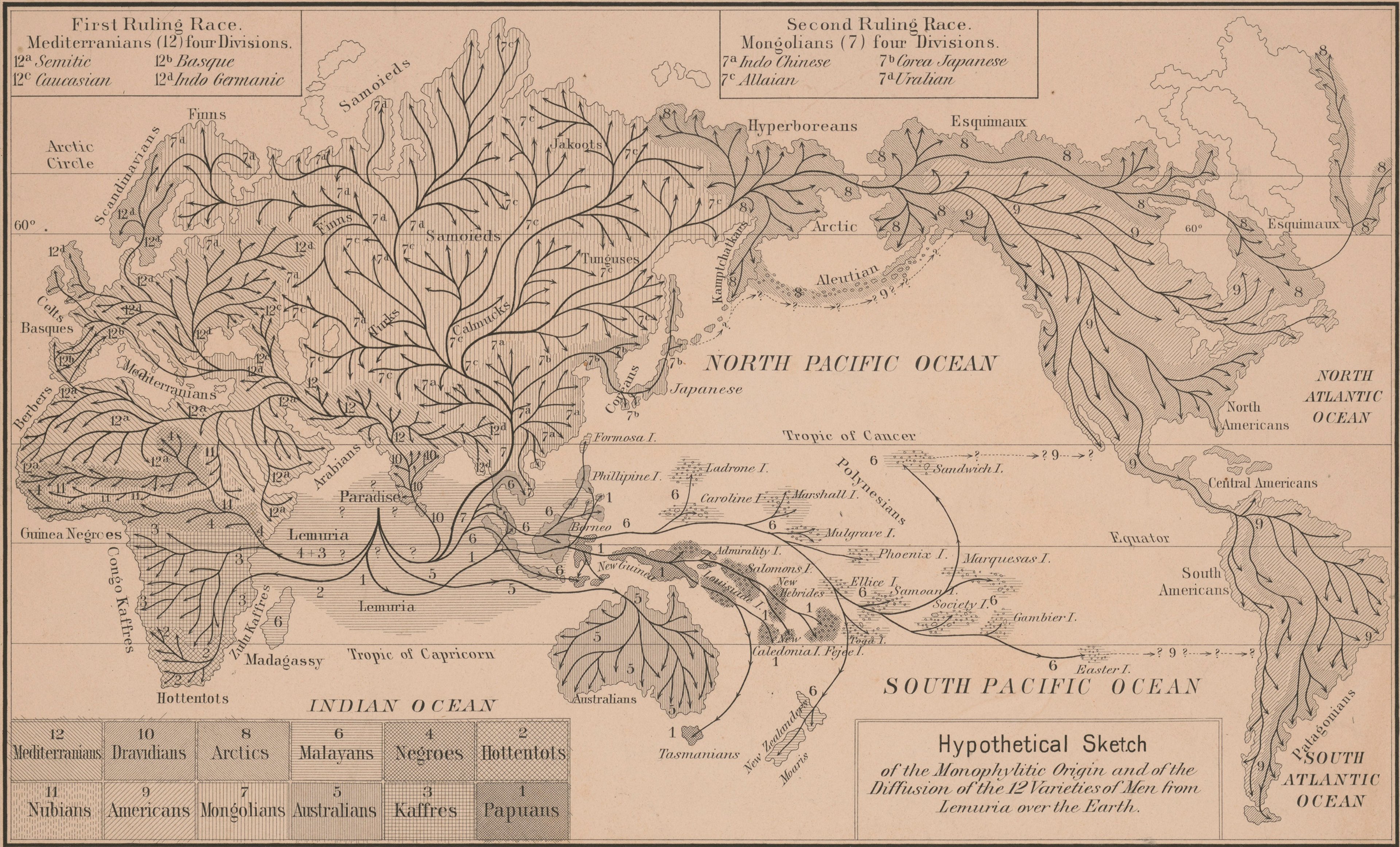
Map illustrating the supposed location of Lemuria and the hypothetical dispersal routes of the ‘12 varieties of men’ from their alleged Lemurian origin across the globe (1876). Public Domain, via Library of Congress.
Hyperborea and Lemuria, as well as Atlantis, were territories borrowed from earlier writings.
Lemuria was by far the most recent. It was invented only a couple of decades before the publication of The Secret Doctrine, by an English zoologist named Philip Sclater (1829–1913).
Sclater was attempting to solve a problem in biogeography: the distribution of lemurs and related primates across Madagascar, Africa, and Asia. True lemurs are native to Madagascar, while Sclater’s broader grouping also drew in related primates from elsewhere. Sclater proposed that a land mass connecting these regions had once existed at some point in the Earth’s history, explaining this historical distribution of the animal group.
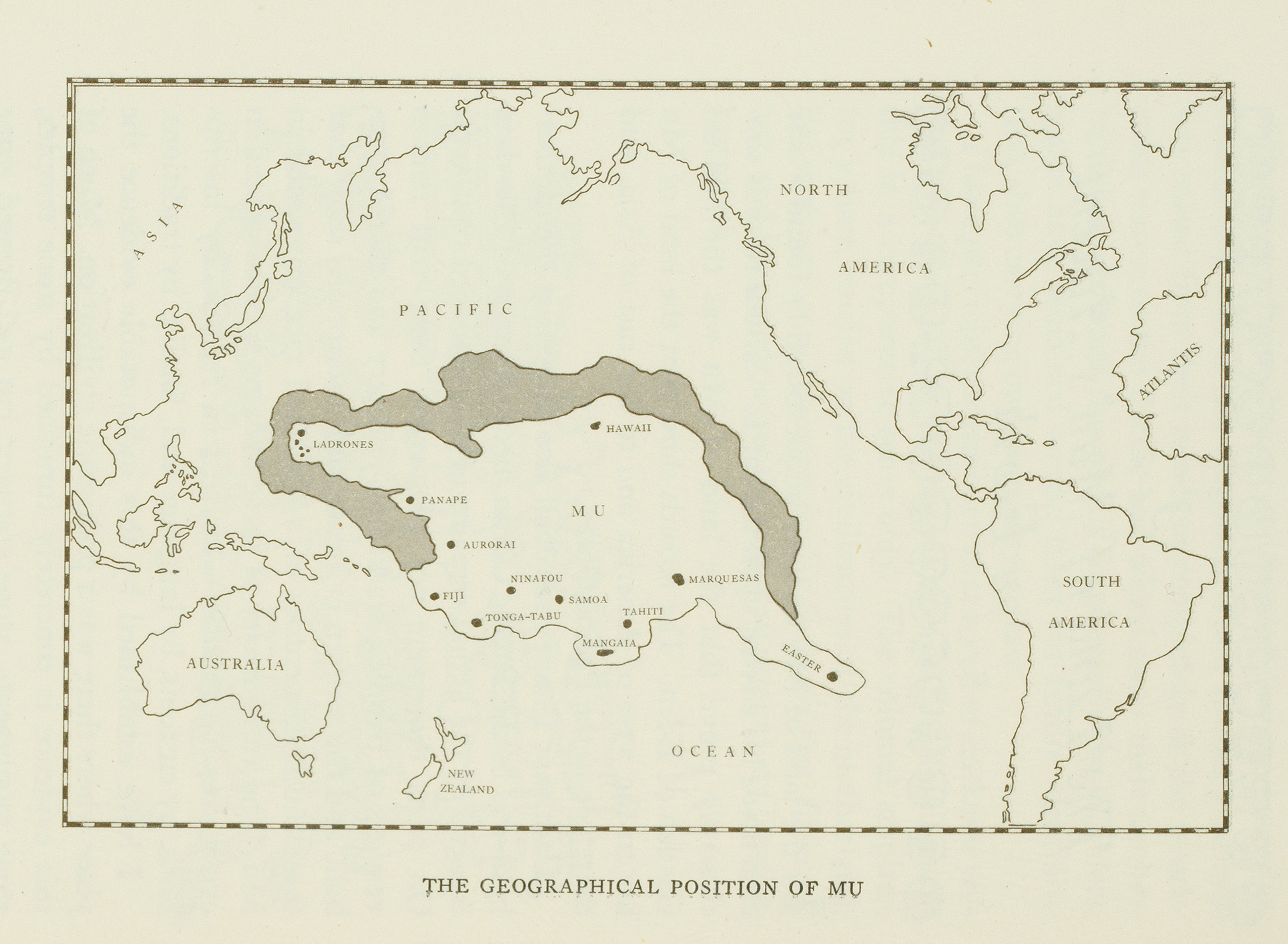
Map of Mu from The Lost Continent of Mu, the Motherland of Men (1926) by James Churchward (1851–1936). ©Ex Carta
By coincidence, the third and fourth letters of ‘Lemuria’ formed the name of another lost land proposed by some interpreters of Mayan texts, including the antiquarian Augustus Le Plongeon (1825–1908): Mu. The idea that pre-Columbian American civilisations preserved a memory of a region called Mu, destroyed in a cataclysm, has since been shown to rest on mistranslations of the relevant texts.
This conception of Mu was further extrapolated into a vast Pacific landmass, whose surviving vestiges supposedly included Hawaii and Samoa, in works such as The Lost Continent of Mu, the Motherland of Men (1926) by James Churchward (1851–1936). [7]
Churchward further claimed that Mu was the original Garden of Eden, and the source from which all historical civilisations descended. Churchward only began actively developing his theories in his seventies.
Hyperborea, like Atlantis, has a history dating back to classical times, with Herodotus (c.484–c.425 BCE) identifying it as an unknown region lying far in the north-east. References to ‘Hyperborea’ subsequently became used to describe a speculative Arctic land mass of the type indicated in maps such as the 1531 double-cordiform world map by Oronce Fine (1494–1555) in The Sunderland Collection.
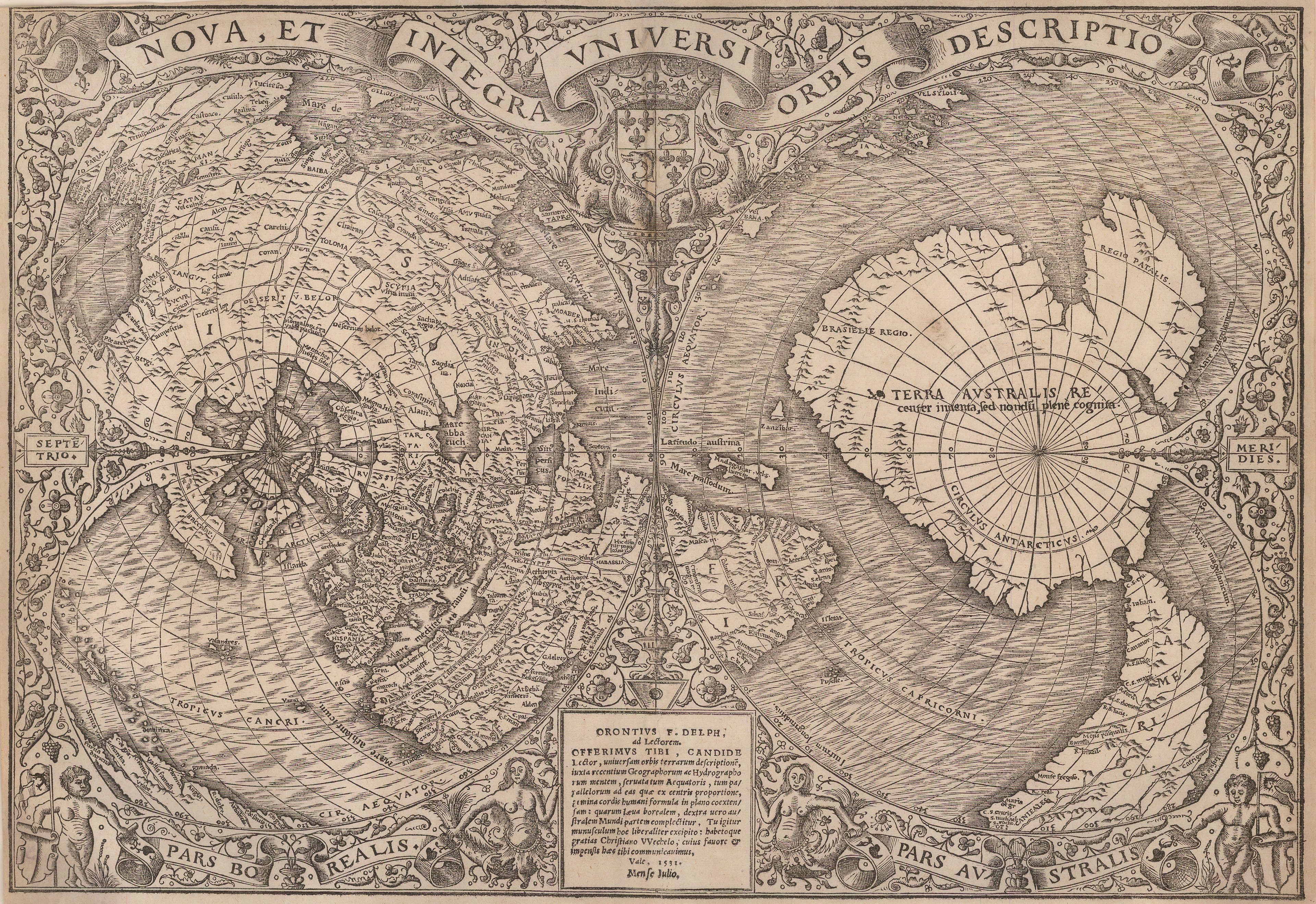
Orone Fine’s double-cordiform world map (1531) ©The Sunderland Collection
Theories abounded regarding its exact location and Hyperborea has been identified with places as varied as the British Isles and the Alps, as well as the Arctic. It is also associated with ultima Thule – a term in Classical literature and geography suggesting an abstract idea of the North beyond the borders of the known world. Blavatsky’s Hyperborea was home to the second of her ‘root races’ in the remote past; after the Polarian race, and before the Lemurian race and the Atlantean races.
Blavatsky’s Theosophical theories about distant mystical epochs and humanity’s emergence may have been fantastical pseudoscience but they quickly gained traction. They were developed in works such as The Story of Atlantis (1896) and The Lost Lemuria (1904) by William Scott-Elliott (1849–1919) and Man: Whence, How and Whither, a Record of Clairvoyant Investigation (1913) by Annie Besant (1847–1933).
Like Blavatsky before them, these authors claimed that their writings were based on information received via ‘astral clairvoyance’. Regardless of its veracity or credibility, this Theosophical ‘lost continent’ discourse provided fertile source material for the literary imagination. Just as Donnelly had been influenced by Verne, so a generation of writers in the early twentieth century were influenced by Donnelly’s speculations, via Theosophy.
Drowned Worlds in Pulp and Fantasy
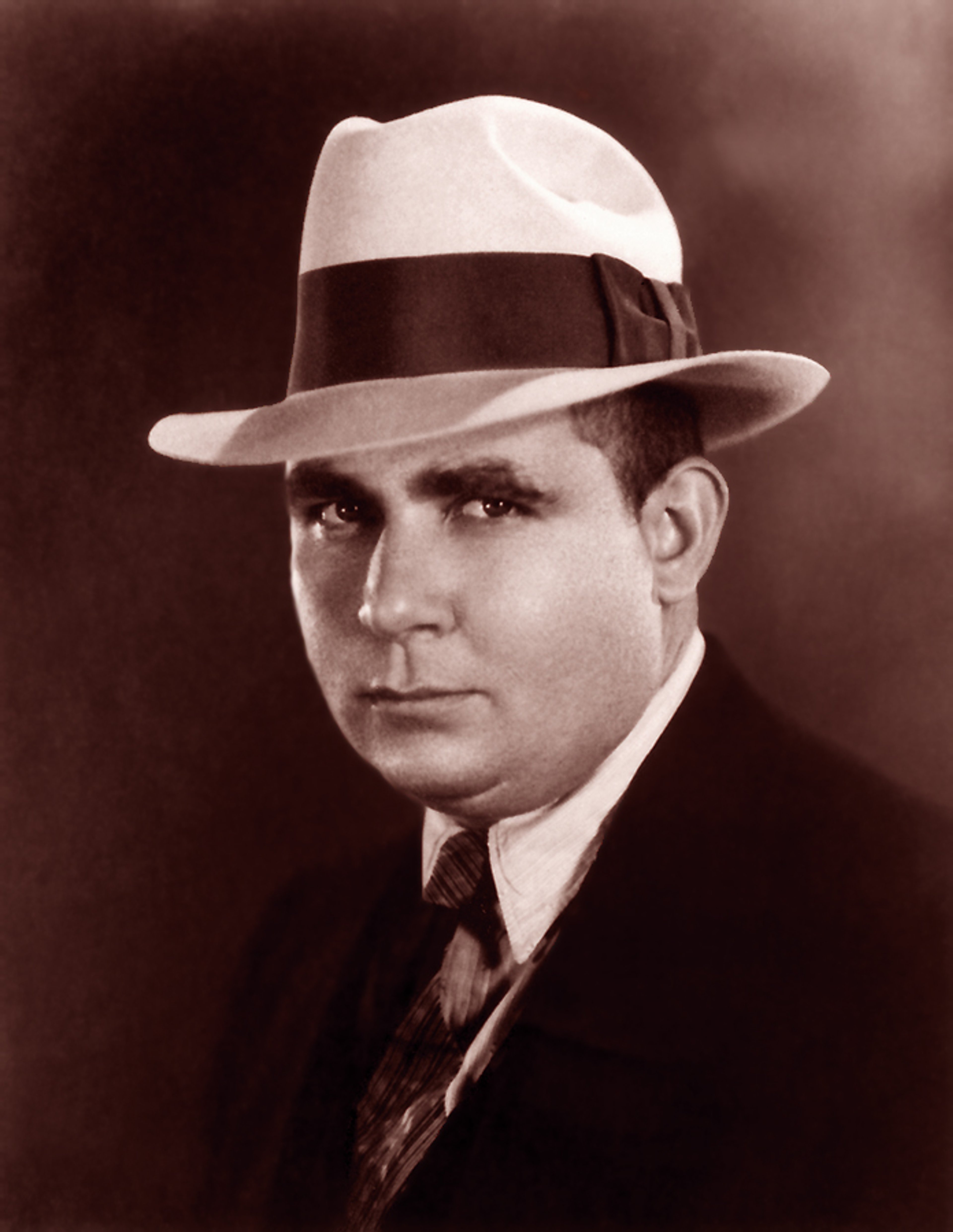
Robert E. Howard. Public Domain, via Wikimedia Commons.
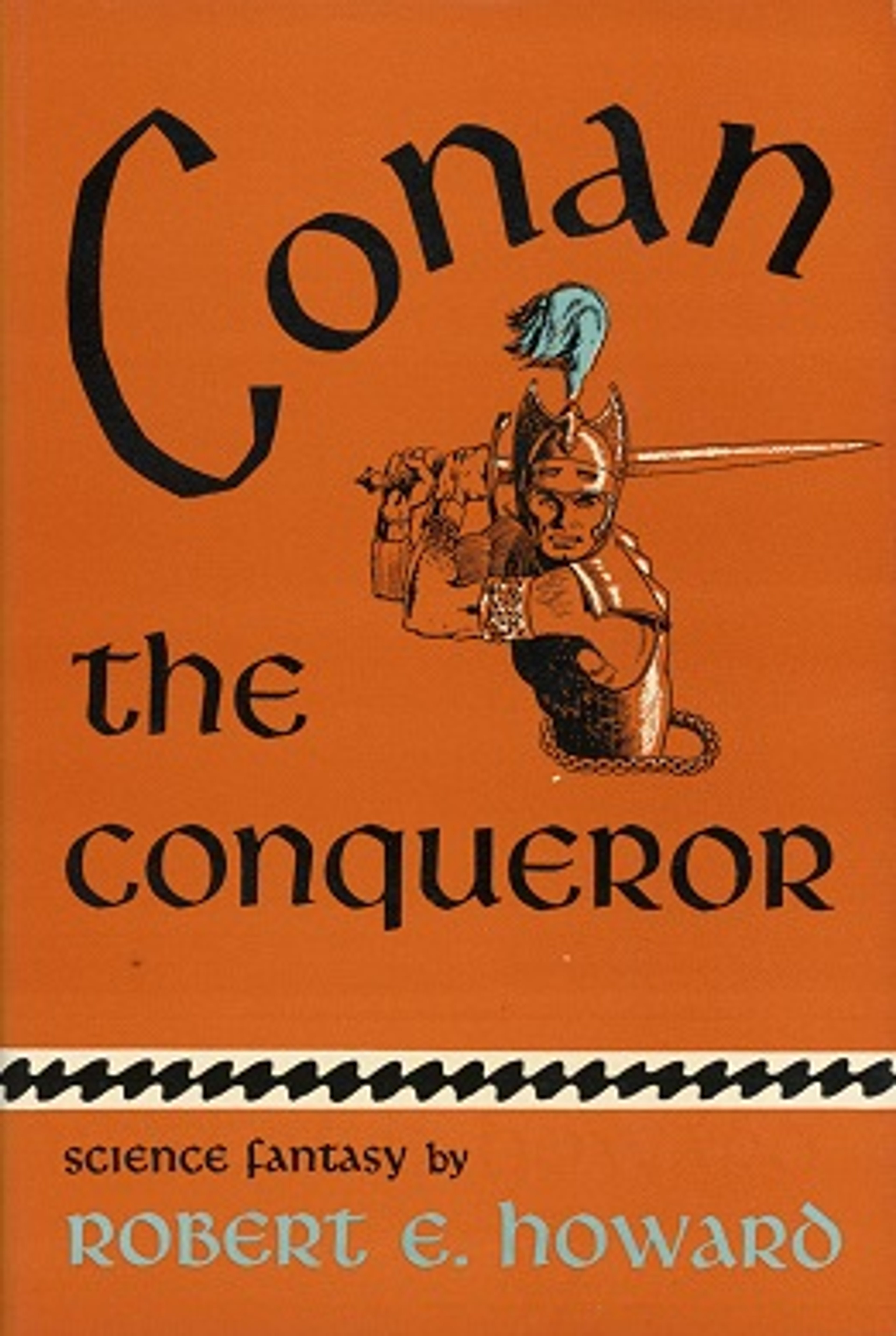
First Edition of Conan the Conqueror (1950). Fair Use, via Wikipedia Commons.
Principal among these was Robert E. Howard (1906–1936), the Texan author now most remembered for his tales of Conan the Barbarian. Before Conan, there was Kull the Conqueror, an Atlantean king who first appeared in The Shadow Kingdom, published in Weird Tales magazine in 1929. Kull apparently ruled in Antediluvian Atlantis at around 100,000 BCE. Howard retroactively accommodated Kull’s Atlantis into the timeline he created for Conan in his The Hyborian Age (published complete in 1938).
Hyboria was the prehistoric setting for his visceral tales of sword and sorcery, and derived from Hyperborea. Confusingly, however, Howard used the name ‘Hyperborea’ itself for a specific northern kingdom within the Hyborian setting.
Although Howard was sceptical of the more outré claims of the Theosophists, he did think it pausible that there was a shared cultural inheritance between old and new worlds – as presented in The Problem of Atlantis by the British folklorist Lewis Spence (1874–1955). Accordingly, Howard describes his antediluvian Atlantis and prehistoric Hyboria as essentially Bronze-Age cultures rather than pristine, advanced civilisations imagined by other authors. [8]
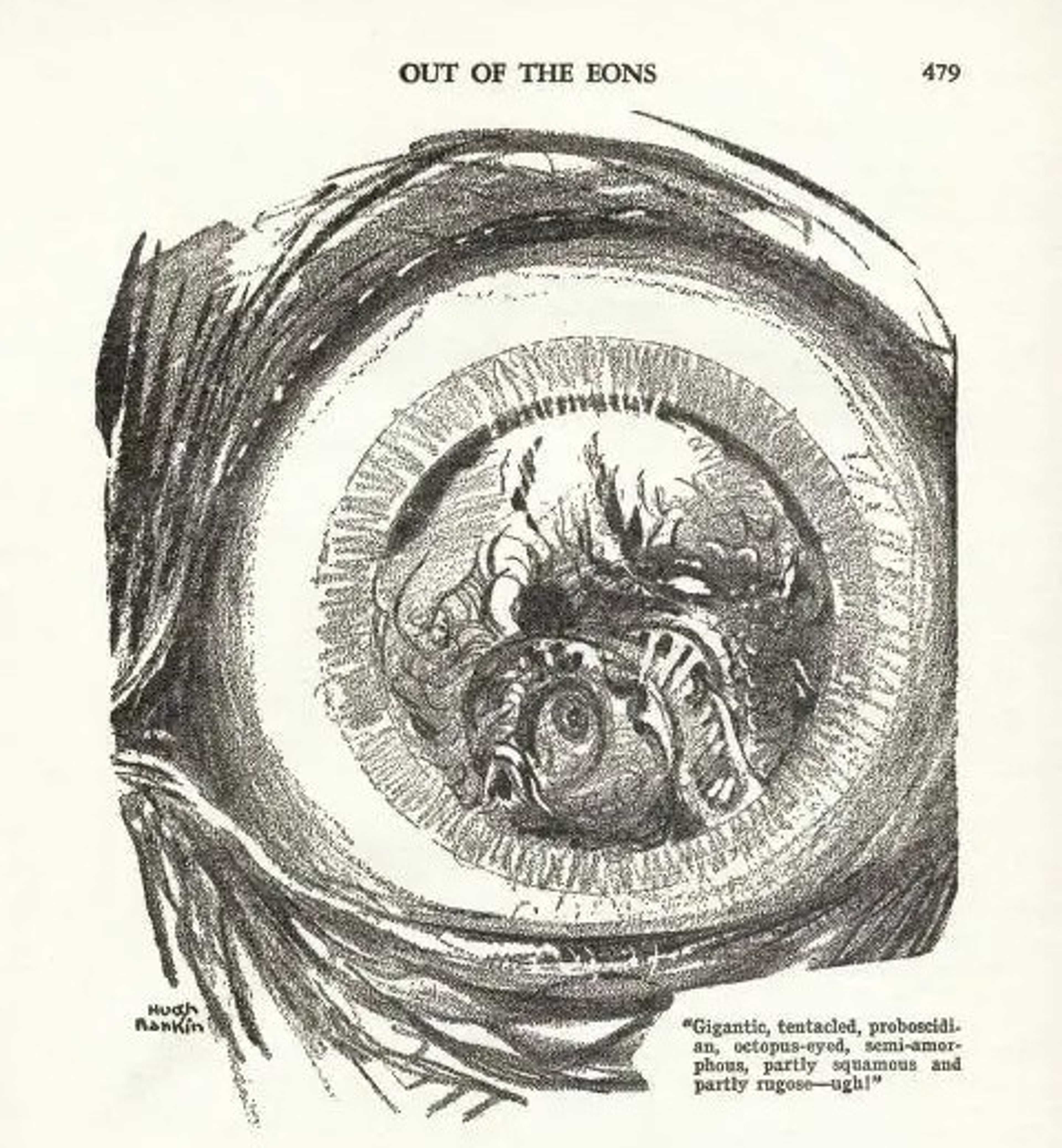
Illustration by Hugh Rankin from Out of the Æons (1935) by Hazel Heald & H. P. Lovecraft. Source: Deep Cuts in a Lovecraftian Vein
Fellow pulp writers of the period were similarly inspired. H. P. Lovecraft’s (1890–1937) most famous creation, the terrifying alien entity Cthulhu, dwelt in lost R’lyeh, a sunken realm hidden in the depths of the South Pacific; clearly inspired by the Atlantis legend but given a nightmarish spin.
In ‘Out of the Aeons’ (1935), Lovecraft imbues antediluvian Mu with his brand of weird horror, explicitly citing the Theosophical and associated literature in doing so, referring to ‘theosophical lore’ and ‘the speculations of such writers as Colonel Churchward and Lewis Spence concerning lost continents and primal forgotten civilisations’.
The story concerns a mummy retrieved from the depths of the Pacific Ocean and its origins in the strange culture and gods of ancient Mu. The Call of Cthulhu RPG World Map in Ex Carta shows how this mythology was translated into a playable cartography, marking the approximate location of R’lyeh and hinting darkly at a Pacific replete with occult survivals, tentacled monstrosities, and horrors from the deep.
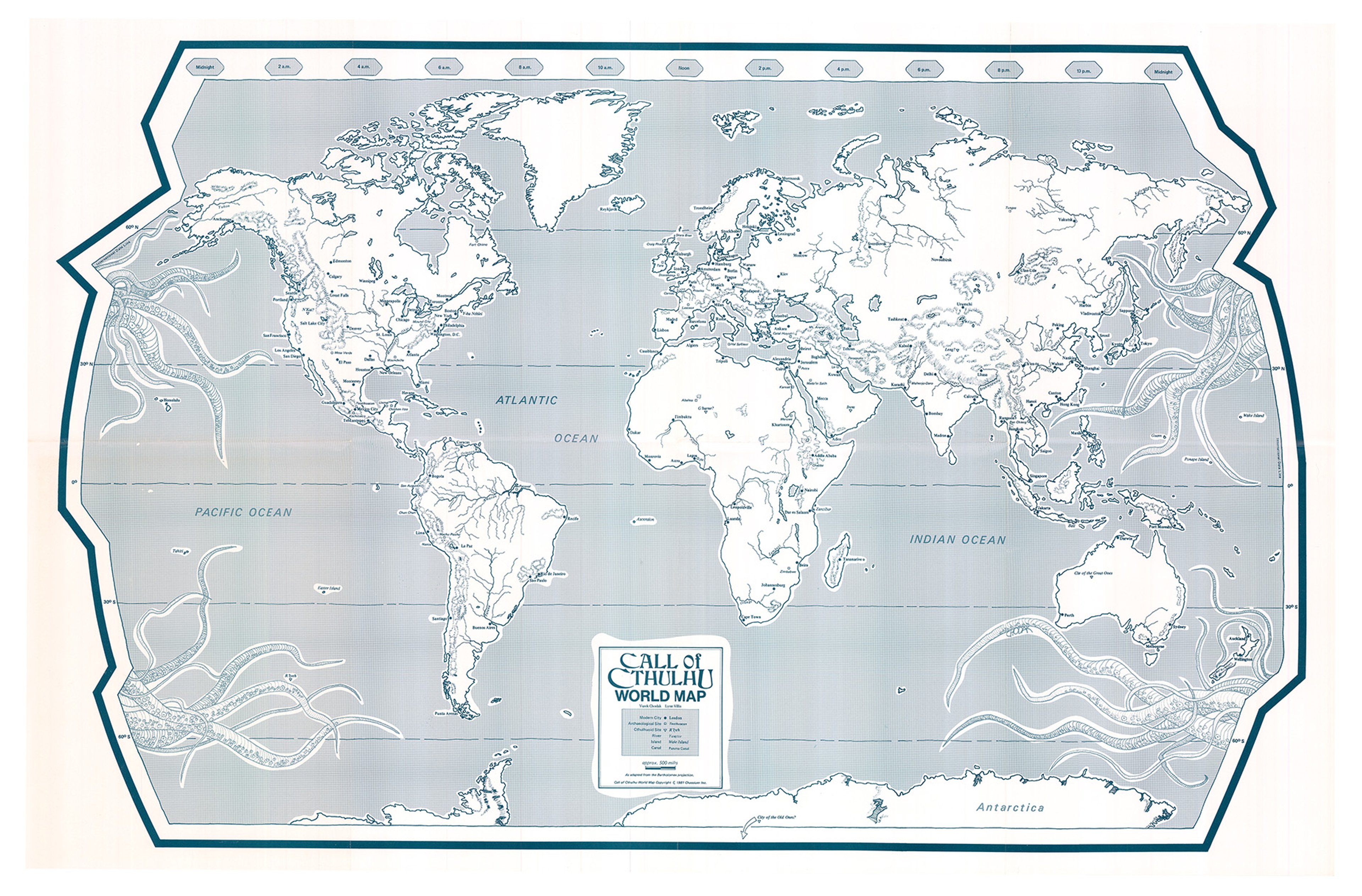
Map from Call of Cthulhu (1981) game by Sandy Petersen (World map by Yurek and Lynn Willis) ©Chaosium, Inc. Image courtesy of Ex Carta
While remaining sceptical of the more outlandish assertions of Theosophy and associated literature, Lovecraft, Howard, and other authors of pulp fiction were enthusiastically using these same claims to inspire their fantastical narratives. Atlantis also enjoyed a renewed vogue in British popular fiction during the interwar period. In Lance Sieveking’s (1896–1972) The Ultimate Island: A Strange Adventure (1925) near-future transatlantic air travel leads to the discovery of a mysterious archipelago concealed by fog and dangerous whirlpools, at the centre of which Atlantis has survived as an isolated civilisation.
One of Arthur Conan Doyle’s (1859–1930) final novels, The Maracot Deep (1929), similarly imagines the rediscovery of Atlantis, in this case by Professor Maracot and his team of explorers, who encounter a relict population surviving through advanced subaquatic technologies. Conan Doyle – a devoted Spiritualist – also drew upon his deep knowledge of Theosophy to weave into the novel a subplot concerning a metaphysical battle between ancient spiritual forces of good and evil.
J.R.R. Tolkien (1892–1973) was also drawing on the broader imaginative tradition of drowned lands in his creation of Beleriand, as described in The Silmarillion (1977), much of which is destroyed in the cataclysmic War of Wrath at the end of the First Age.
One of Tolkien’s major influences, William Morris (1834–1896), had earlier, in The Sundering Flood (1897), envisioned a mythical realm divided by torrential waters depicted in a frontispiece map by H. Cribb - widley regarded as the earliest example of the modern secondary world fantasy map. Atlantis was also the acknowledged model for Tolkien’s Númenor, the island kingdom drowned at the end of the Second Age, though a remnant of its people escaped to Middle-earth.
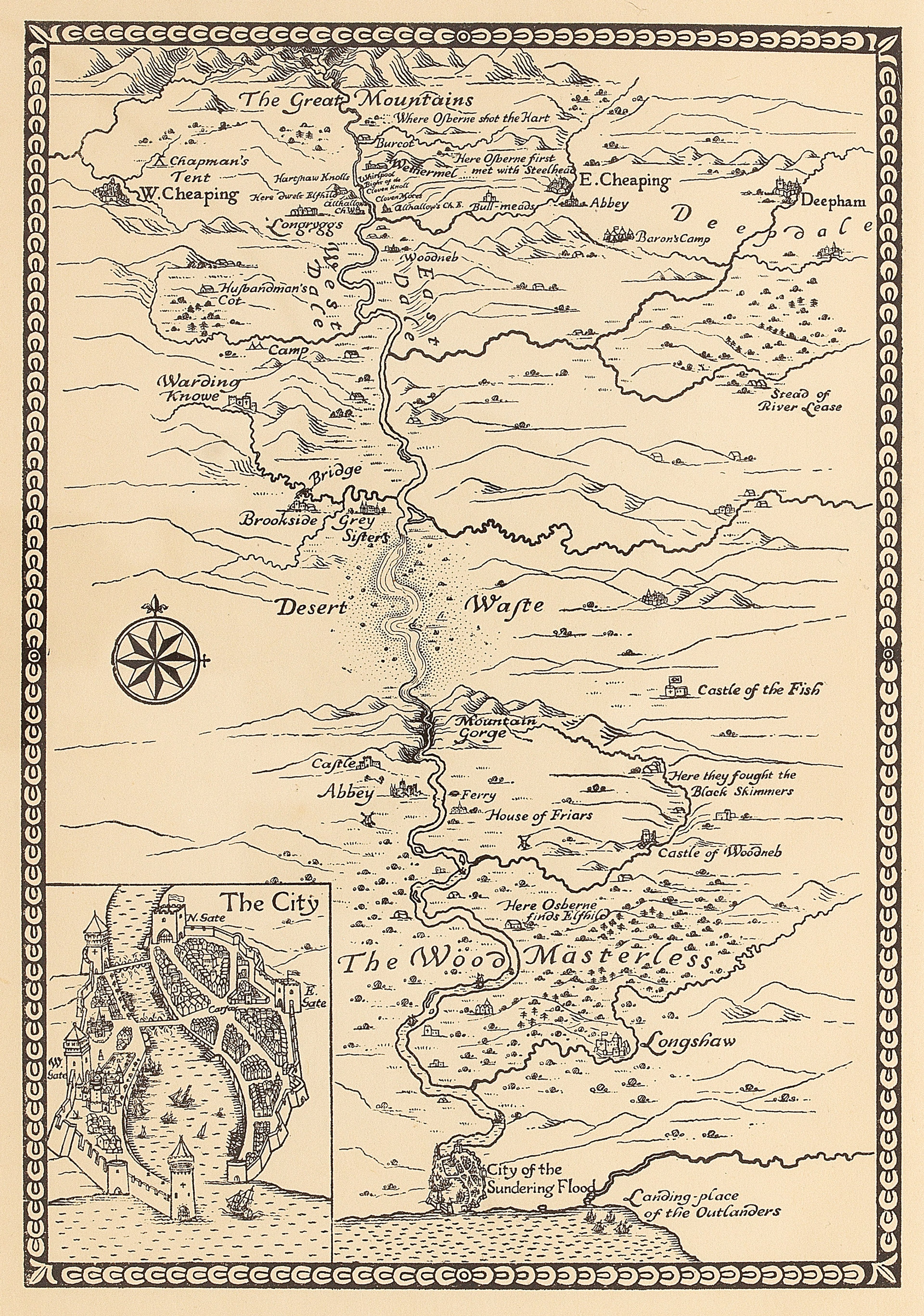
William Morris’ map from The Sundering Flood (1897) ©Ex Carta
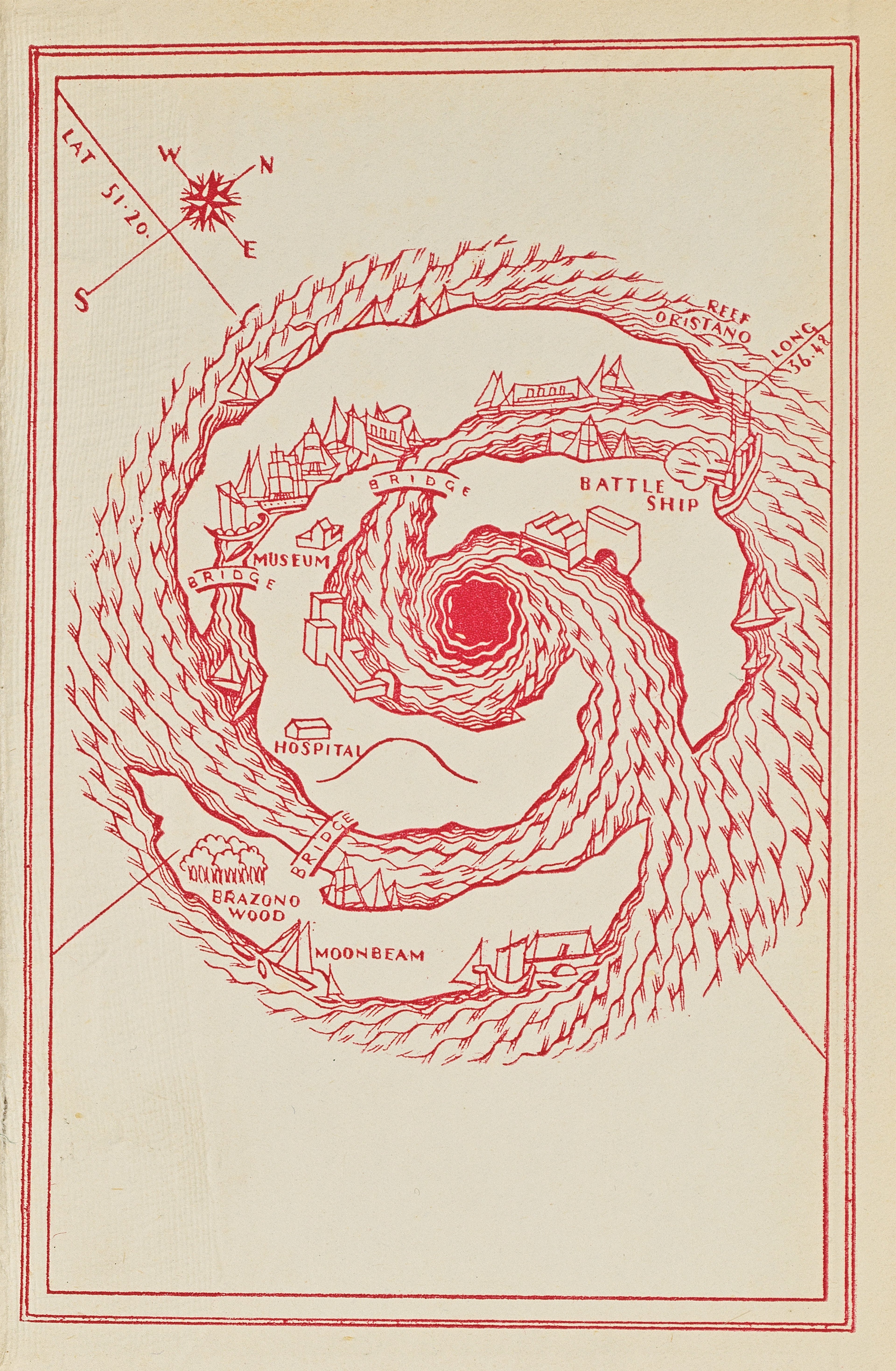
Map from Lance Sieveking’s The Ultimate Island (1925) ©Ex Carta
The End of the Lost Continent?
By the late 1960s and early 1970s, the new scientific understanding of continental drift, seafloor spreading, and plate tectonics had put paid to the notion that there were feasible ‘gaps’ in the earth’s land mass that could accommodate a recently vanished continent.
It had been demonstrated that the continents had once formed part of earlier supercontinents such as Gondwana and Pangaea, and that today’s continents had emerged slowly over millions of years, like pieces of a puzzle being slowly pulled apart. As with the narrative of the fantasy genres Imperial Romance and Lost Worlds, the drowned worlds of Atlantis, Mu, Lemuria, and Hyperborea continued to persist in popular culture, but usually in nostalgic, historicised forms, such as films set in the Victorian era based on Verne’s Captain Nemo.
One of Corto Maltese’s final adventures was to the Land of Mu in 1925 (Mu, The Lost Continent, 1988–89). In Astérix and Obelix All at Sea (1996), the eponymous Gauls wind up in Atlantis, where the locals have discovered the secret of eternal youth – in a wonderful tribute to Bory’s theory, Atlantis in this tale is clearly the present-day Canary Islands.
Elsewhere, Donnelly’s legacy remains strikingly visible in the pseudoarchaeology of Graham Hancock’s Netflix series Ancient Apocalypse (2022–), which presents a version of the same essential argument: that an advanced Ice Age civilisation was destroyed in a global cataclysm, and that its survivors transmitted knowledge to later ancient cultures.
The details have changed – comet impact has replaced Plato’s earthquake and flood, and an ‘Ice Age civilisation’ now stands in Atlantis as such – but the structure remains recognisably Donnellyan: a lost mother-culture, a catastrophic destruction, scattered survivals, and alleged traces in the monuments and myths of later civilisations. Moreover, Hancock also echoes Blavatsky’s esoteric Theosophy in his claims regarding the lost psychic powers of the ancients. The lost continent, then, did not disappear when its geological basis collapsed. It migrated instead into mass-market pseudoarchaeology, documentary television, podcasts, and online counter-histories.
While such speculative excess may test both credulity and patience, one interesting counterexample has emerged in recent decades: a real drowned world, but not an Atlantean one. Doggerland, the now-submerged landscape beneath the southern North Sea, once connected Britain to continental Europe and supported Mesolithic human communities before rising post-glacial seas gradually transformed Britain into an island.
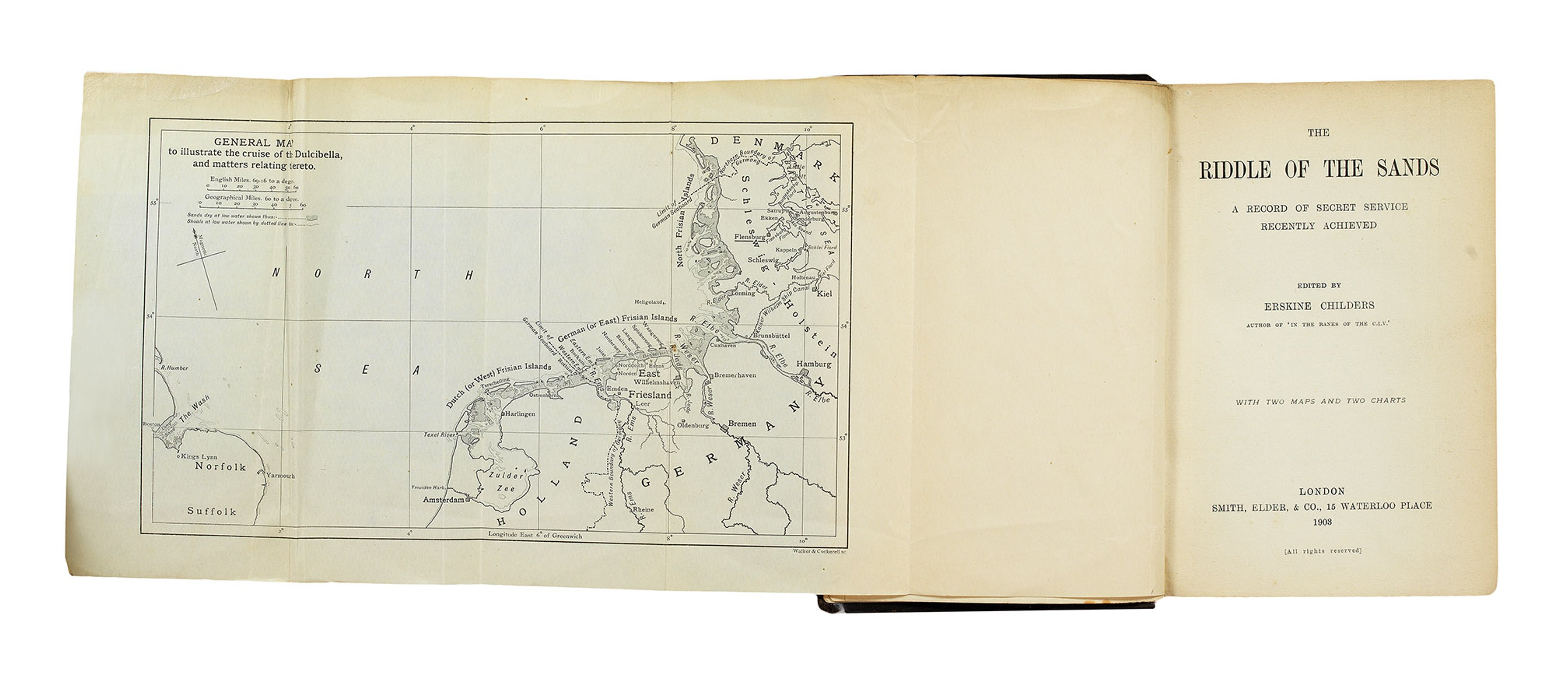
The Riddle of the Sands (1903) by Erskine Childers (1870–1922) ©Ex Carta
Its inundation was not the sudden disappearance of an advanced civilisation, but a long environmental process, perhaps punctuated by catastrophic events such as the Storegga tsunami around 6200 BCE. While lacking the epic melodrama of the Atlantis legend or grandiose claims of a diffusionist mother-culture, Doggerland is just as compelling, arguably more so in its quieter yet more tangible way: a Mesolithic landscape of hunter-gatherers following herds, fishing its rivers and wetlands, and leaving only traces of worked flint, antler, and bone now languishing on the ocean floor.
In The Riddle of the Sands (1903), Erskine Childers (1870–1922) offers a literary analogue for this North Sea liminality, turning the Frisian coast and German Bight into a place where land and sea blur into one another.
Drowned Futures
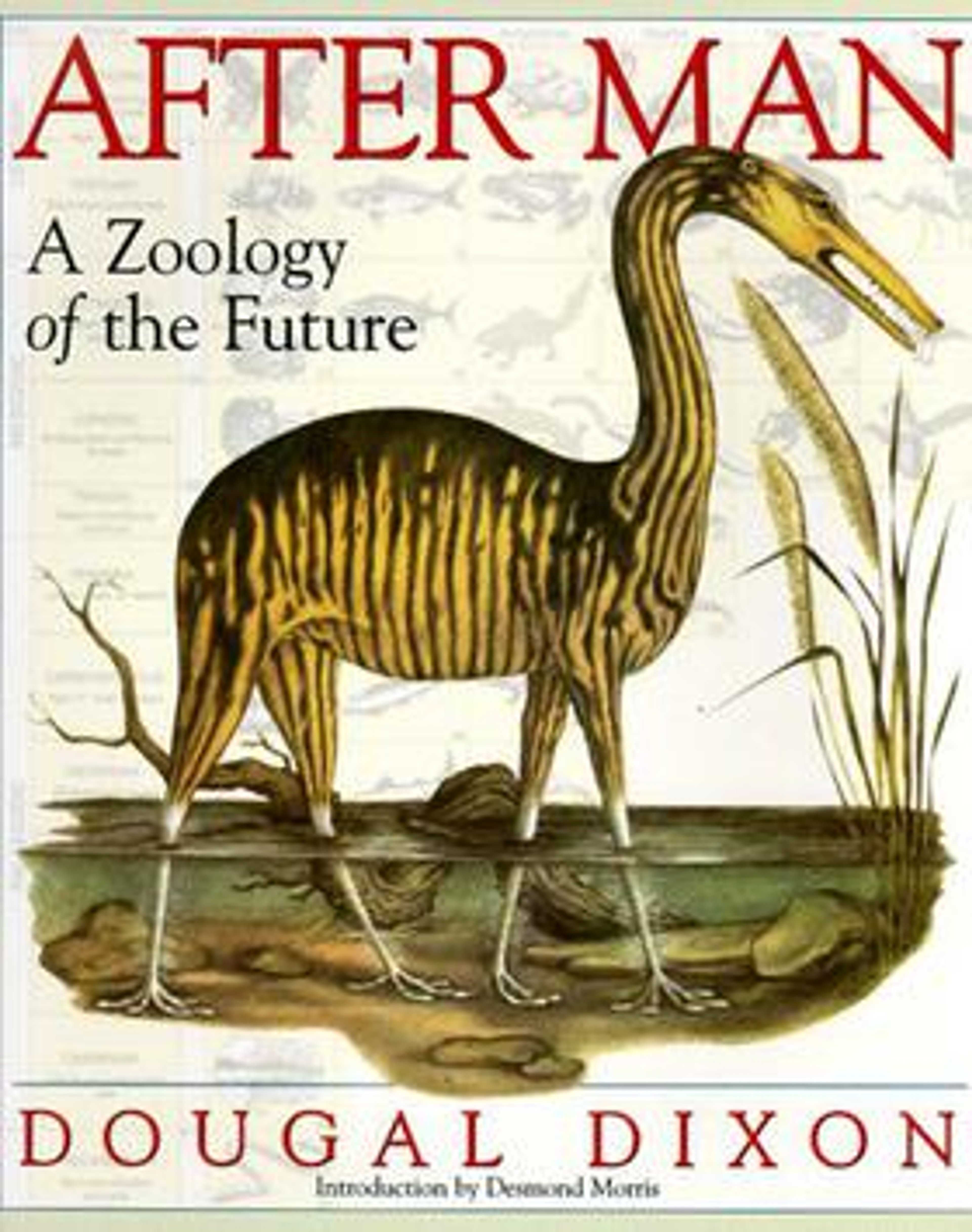
Cover for After Man (1981) by Dougal Dixon. Fair use, via Wikimedia Commons.
In After Man (1981), the Scottish geologist and speculative zoologist Dougal Dixon (1947–) projects the Drowned Worlds conceit forwards rather than backwards. His map of the far-future Earth imagines the familiar land masses of the present transformed by immense spans of geological time.
Continents drift, climates alter, seas advance and retreat, and the world we know becomes as strange to Dixon’s imagined future as Pangaea, the supercontinent that existed some 250 million years ago.
Here the drowned world is no longer a memory of some supposed prehistoric catastrophe, but a reminder that the present arrangement of land and sea is itself provisional. Today’s continents, with their swarming human populations, are tomorrow’s drowned worlds; in the far future it is our civilisation that will become the lost one.
Twentieth-century science fiction has also adapted the Drowned World trope as a vision of future entropy, reflecting the pessimism of the atomic age. In The Drowned World (1962) by J. G. Ballard (1930–2009), London has become a tropical lagoon, its architecture slowly collapsing in the heat, silt, and humidity: not Atlantis recovered, but the disintegration of modernity.
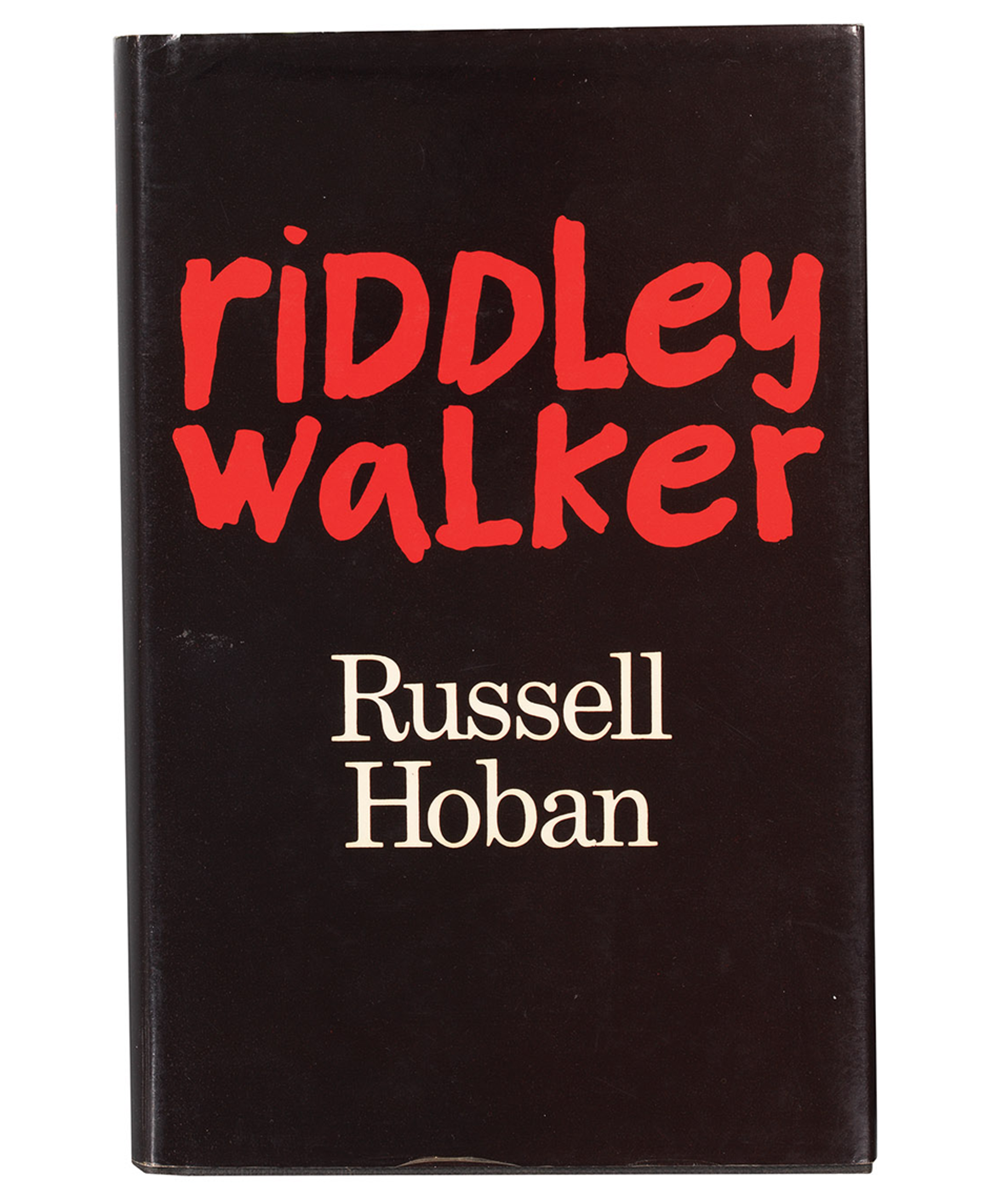
Russell Hoban’s Riddley Walker (1980)
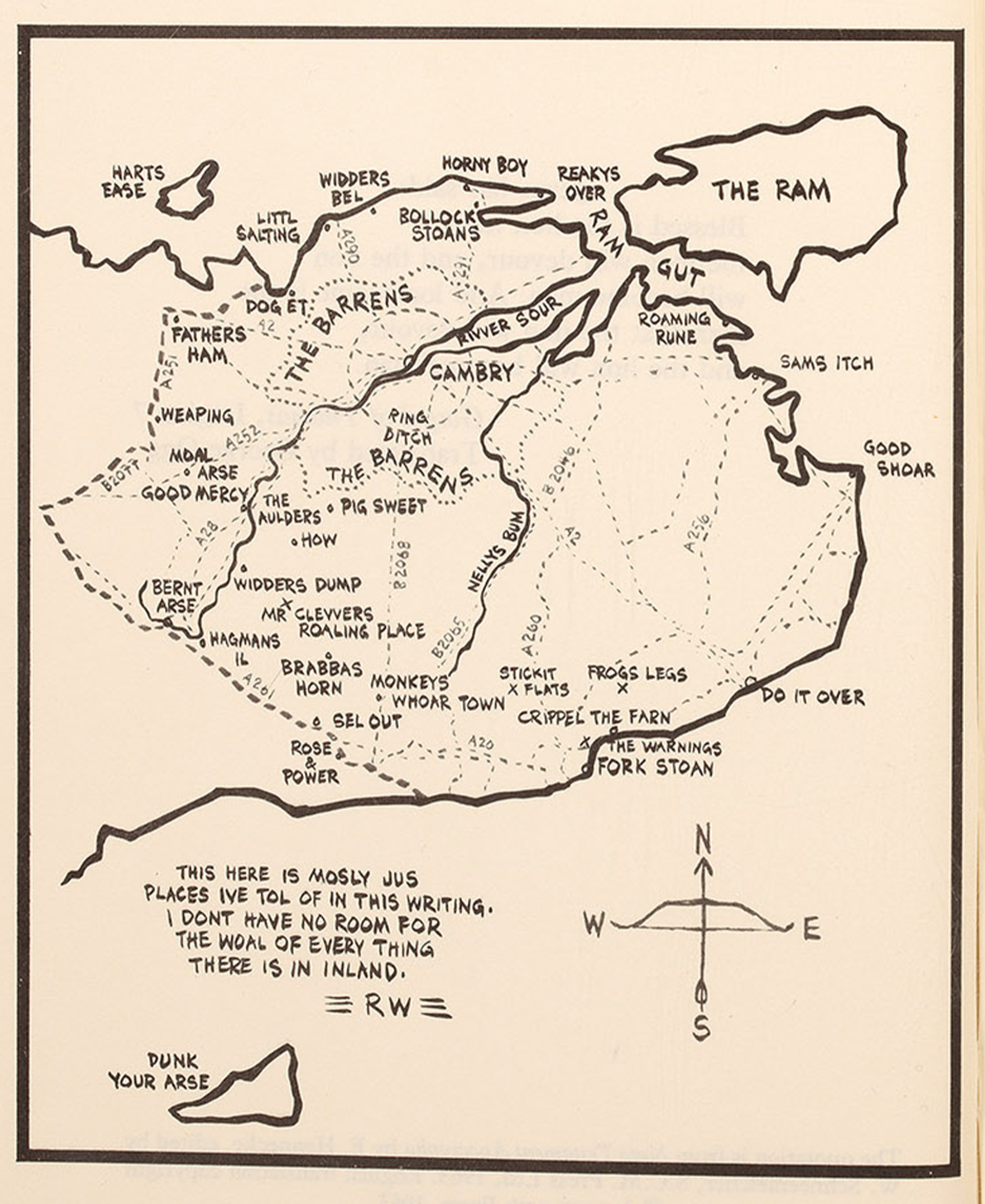
©Russell Hoban/Penguin
Russell Hoban’s (1925–2011) Riddley Walker (1980) offers a still more fragmentary post-catastrophic geography. Its map shows the shattered coastlines, flooded regions, and broken place-names of what was once Kent - a future Britain half-remembered through distorted myth, linguistic decay, and submerged history.
A still more oblique version of the drowned world appears in The Sunken Land Begins to Rise Again (2020) by influential British writer of speculative fiction M. John Harrison (1945–). The protagonist is haunted by rumours and portents concerning a theory of a lost aquatic region and a ‘sea-dwelling species’ which played ‘a decisive role in human spatial memory’.
Harrison’s very twenty-first-century lost continent is unstable, fragmentary, and lurks just beyond synoptic comprehension. In one passage, an old and discoloured map on the wall seems to undermine the notion of cartographic certainty itself:
The land was in grey, the sea white. If you looked at it long enough, there before you was a brand-new planet. It featured a sea shaped like the Americas, another sea like the eastern half of Russia. In between them, in the centre of the map, stretched this vast new continent which didn’t even have a name. Blink and it was gone.
Here, perhaps, we see the drowned world finally detached from the confident empirical imagination that sustained so many nineteenth- and early-twentieth-century lost-continent fantasies. Harrison’s map does not reveal the location of a vanished mother-culture, restore a missing historical inheritance, or offer any grand unifying theory of human origins.
It does not even provide geographic certainty. Instead, it becomes symbolic of a very contemporary sense of existential uncertainty: the instability of the present, and a more general environmental anxiety.
About James Machin

James Machin is a Visiting Research and Knowledge Exchange Fellow at Goldsmiths, University of London. He is a writer, researcher, editor, and archivist specialising in Gothic, weird, and fantastic literature of the long nineteenth and early twentieth centuries. James is also the cataloguer for Ex Carta.
He is the author of Weird Fiction in Britain 1880–1939 (Palgrave, 2018) and editor of Arthur Conan Doyle’s The Stark Munro Letters for Edinburgh University Press (2024), where he is also Technical Editor for the Edinburgh Edition of the Works of Arthur Conan Doyle.
James’ recent editorial work includes The Strange Stories of John Buchan for British Library Publishing (2025). He is a member of the Decadence Research Centre at Goldsmiths, University of London, and has taught at Birkbeck, University of London, the Royal College of Art, and the University of Bedfordshire.
His work often explores archives, imagined geographies, lost worlds, strange landscapes, and the material culture of fiction. A lifelong role-playing game enthusiast, he runs long-standing campaigns in Call of Cthulhu and Dungeons & Dragons.
More from James Machin
Glossary
Atlantis
First described by Plato in the fourth century BCE, as a Utopia, Atlantis is the archetypal lost civilisation: an island state of remote antiquity, remarkable for its technological and cultural sophistication, destroyed by a sudden natural catastrophe. While the essential legend has remained the same, the supposed location of Atlantis has been debated ever since, with the mid-Atlantic the primary candidate. Many historical peoples and regions have also been suggested as vestiges of Atlantean civilisation, from the Maya of Central America to the mysterious pre-Spanish inhabitants of the Canary Islands.
Theosophy
Theosophy is an esoteric system that seeks to uncover a universal spiritual wisdom underlying all religions, combining ideas from Eastern religions, Western occultism, mysticism, and spiritual evolution. It generated an enormous body of associated literature and extremely convoluted claims involving secret sages who had attained enlightenment, immortality, and a semi-corporeal existence, imparting ancient, esoteric spiritual wisdom to those who seek it.
Footnotes
Plato, The Collected Dialogues of Plato, ed. by Edith Hamilton, trans. by Benjamin Jowett, Bollingen Series, 71 (Princeton University Press, 1989), pp. 1159–60.
L. Sprague De Camp, Lost Continents: The Atlantis Theme in History, Science, and Literature (Gnome Press, 1954), p. 208.
De Camp, Lost Continents: The Atlantis Theme in History, Science, and Literature, p. 37.
De Camp, Lost Continents: The Atlantis Theme in History, Science, and Literature, p. 42.
Jeff Shanks, The History of Atlantis - Ignatius Donnelly (2026)
Richard Davenport-Hines, ‘Blavatsky, Helena Petrovna (1831–1891), Founder of Theosophy’, Oxford Dictionary of National Biography, 6 January 2011, doi:10.1093/ref:odnb/40930
De Camp, Lost Continents: The Atlantis Theme in History, Science, and Literature, p. 47.
Jeff Shanks, Robert E. Howard, Graham Hancock and the Lost Civilization of the Ice Age (2026)
H. P. Lovecraft, ‘Out of the Aeons’, in The Horror in the Museum: Collected Short Stories (Wordsworth Editions Ltd, 2011), pp. 328–52 (p. 333). The story was originally published in Weird Tales as co-written with Hazel Heald (1896–1961), though authorship is now generally attributed to Lovecraft, working from a conceit suggested by Heald.
William Wertenbaker, Explorer—III: Some Great Overriding Process, Profiles, The New Yorker, 11 November 1974
Jeff Shanks, Robert E. Howard, Graham Hancock and the Lost Civilization of the Ice Age.
M. John Harrison, The Sunken Land Begins to Rise Again (Gollancz, 2020), p. 120.
Selected Bibliography
Davenport-Hines, Richard, ‘Blavatsky, Helena Petrovna (1831–1891), Founder of Theosophy’, Oxford Dictionary of National Biography, 6 January 2011, doi:10.1093/ref:odnb/40930
De Camp, L. Sprague, Lost Continents: The Atlantis Theme in History, Science, and Literature (Gnome Press, 1954)
Harrison, M. John, The Sunken Land Begins to Rise Again (Gollancz, 2020)
Lovecraft, H. P., ‘Out of the Aeons’, in The Horror in the Museum: Collected Short Stories (Wordsworth Editions Ltd, 2011), pp. 328–52
Plato, The Collected Dialogues of Plato, ed. by Edith Hamilton, trans. by Benjamin Jowett, Bollingen Series, 71 (Princeton University Press, 1989)