Orientation
Orientation
Welcome, fellow traveller!
Here you can find information about the key features of Oculi Mundi — the Eyes of the World.
Information
Are you curious to know how The Sunderland Collection started, or what Oculi Mundi is all about? Click here
If you would like to find out more about The Sunderland Collection Art Programme and its talented roster of artists, click here.
Want to tune in to our award-winning podcast WHAT's YOUR MAP? hosted by Jerry Brotton? Listen here.
Have you attended a Sunderland Collection event and want to know what is coming soon? Click here.
Did you know there is a newsletter to stay up-to-date with all of the latest news and highlights from Oculi Mundi? Sign up here.
Accessibility
Oculi Mundi is for everyone and aims to be as accessible as possible. You can find full accessibility information here.
It should run smoothly on different Internet speeds and has been designed to be used on mobile phones, tables, laptops, and PCs. Accessibility toggles, buttons and captions have been built into the entire platform, for users who prefer varying sizes of fonts, contrast, less animation, voiceovers, and Alt Text.
The Oculi Mundi Team reviews the website regularly: we work closely with our technical partners to make all webpages, functionalities, and content accessible and compliant to international access standards. Oculi Mundi recognises that parts of the platform are not yet fully accessible but strives to offer alternative solutions until they becomes available in the near future.
If you experience any problems accessing Oculi Mundi or would like to suggest improvements, please contact us. We would love to hear from you!
Collection
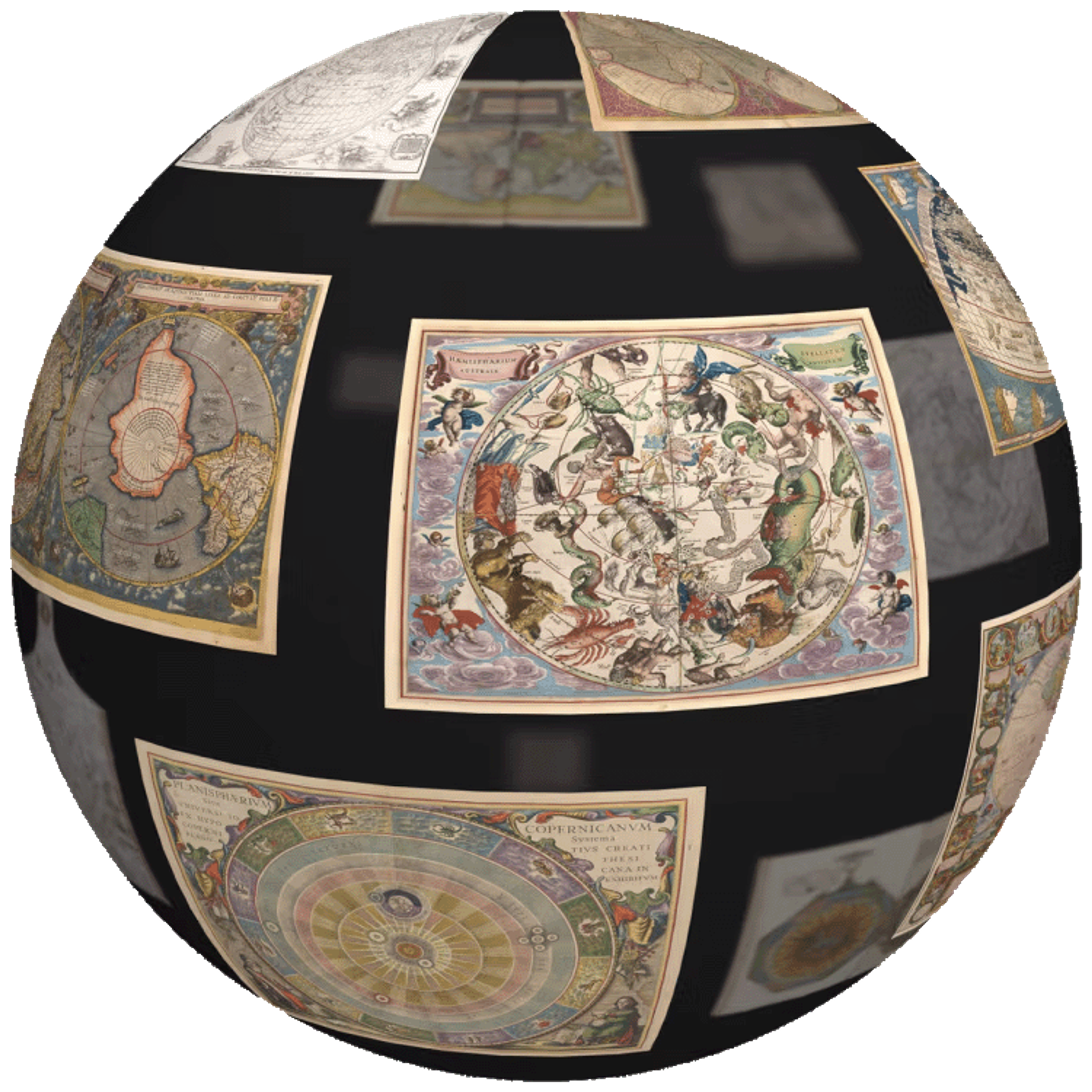
Oculi Mundi is the online home of The Sunderland Collection, a private curation of maps, atlases, globes, and books of knowledge.
We want to make the Collection as accessible as possible for study or the simple joy of browsing. For that reason, you will find two environments for exploring the Collection: Explore and Research.
Explore mode presents beautiful images in a cluster, where you can browse and filter. You can peek inside the atlases and books to see internal maps and book plates which are presented in a carousel; you can view maps and more at scale, and you can zoom in at super high resolution. A detailed overview of each object is provided in text which you can find in a pop out panel which will appear on the right by clicking 'Information'. Scroll down to view more and find out about related items in the Collection.
In Research mode, the Collection's objects are displayed in a more traditional way - but the functions are the same. You can filter or browse, view internal pages, and see items to scale. In this mode, full catalogue information is provided about each object. For books and atlases, a pop out panel on the left will contain thumbnail images of the pages you can view.
In Research mode you can expand the panels to increase the size of them width-ways for easier reading. Click the inner-most edge of the panel to expand or collapse it, and if you need more space, drag toward or away from the edges of the screen for a customised view.
Need more information, such as a text page from an atlas? Contact Us.
Stories
Here, we feature articles and videos of different lengths, on all kinds of themes relating to ancient cartography, Collection Highlights, Limited Editions, and the Art Programme. Scroll through the universe of Stories and click on a tile to find out more.
To begin, why not check out How to Read a Map, How Maps Were Made and our interactive timelines in Mapmaker Matrices!
If you have a great idea for a story or would love to know about a specific topic or item from the Collection, please let us know by contacting us.
Exhibitions and Events
You can find details of future and past exhibitions and event, institutional loans, panel discussions, conferences, and much more right here on Oculi Mundi.
You can switch between the Online and Physical using the toggle at the bottom of the screen when looking at the Exhibitions and Events menu, and view more by clicking the image thumbnail.
This is also where we will be sharing the programmes and registration links for upcoming conferences, so keep an eye on this part of the platform, and sign up to the Oculi Mundi Newsletter to be notified.
Oculi Mundi has also a special interactive digital gallery spaces for online exhibitions. These are hosted in parallel to physical exhibitions for each artist participating in the Art Programme and other curations.
These gallery spaces are easy to move through by using the navigational toggles in the lower part of the screen, and you can use your cursor to explore each curated space, click on artworks, text panels and videos for a larger view.
If you would like an accessible static view of the gallery space, which contains all of the imagery and information but lacks the animation, click 'Overview' and this will present the exhibition in a simple, scrollable layout.
A pause button will soon be added to these spaces to stop the animation.
Podcast
You can find every episode to our award-winning podcast, WHAT'S YOUR MAP? on Oculi Mundi.
Explore this endlessly fascinating world in our podcast which is hosted by historian, writer and map expert Jerry Brotton. Immerse yourself in the world of maps and mapping, as Jerry meets a range of guests from around the world who share their stories and the maps that inspire them.
Each episode has a dedicated page so as you listen, you can zoom in to explore each of the maps discussed, learn all about our incredible and eclectic guests, and find even more rabbit-holes to go down here on Oculi Mundi.
At the top of each page, there is a handy player so you can listen to each episode as you read, or click on the platform icons for a specific app.
References
The ancient map world is huge! We have provided a References area that presents helpful background information and context.
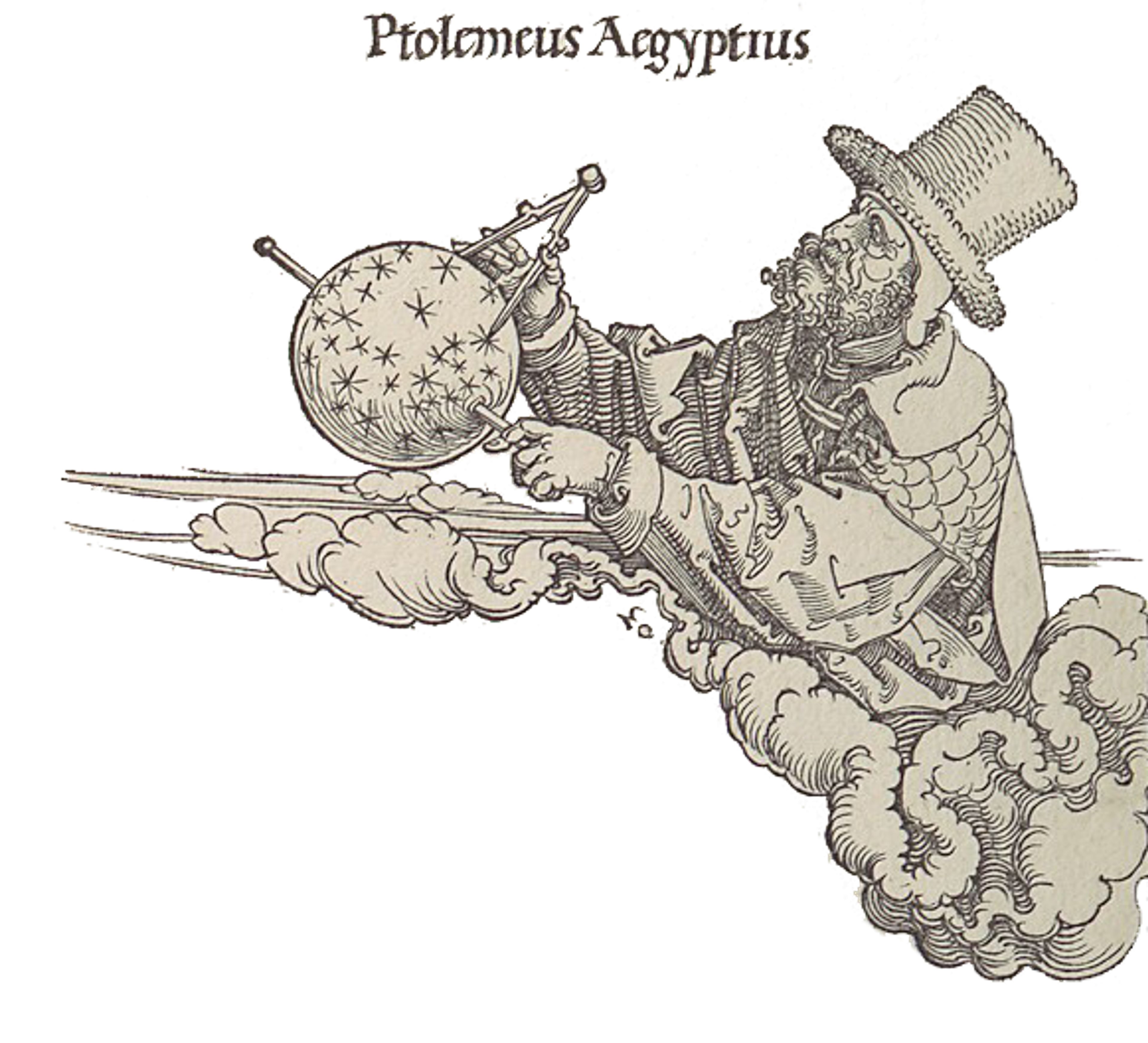
In this section, you can find biographies of map-makers and other characters, look up terms in the Glossary, and explore our Timeline, which shows the items from The Sunderland Collection in order of time, alongside famous historical events. You can use the 'Tab' button on your keyboard to scroll through the items / people in these references pages.
More features and content will be rolled out over time — sign up to our Newsletter to be the first to know!