Welcome behind the curtain! This immersive exhibition traces Oculi Mundi’s daring evolution from a spark of an idea to a ground-breaking and award-winning digital cultural heritage experience.
Discover the ethos and aspirations of The Sunderland Collection in opening a curation of early cartographic material to the public; learn about the research and conceptualising done by real-world architects to translate cultural heritage into an online experience; and meet the talented web developers and designers who turned it into a (virtual) reality.
Here, you will find an exclusive look at concept art, hear from the team about successes and challenges throughout the development process, and catch a glimpse of the future of Oculi Mundi - the Eyes of the World!
For a more accessible viewing of this exhibition, please enter the exhibition by clicking here and then click 'Overview.'
Questions? Contact: info@sunderland-collection.com
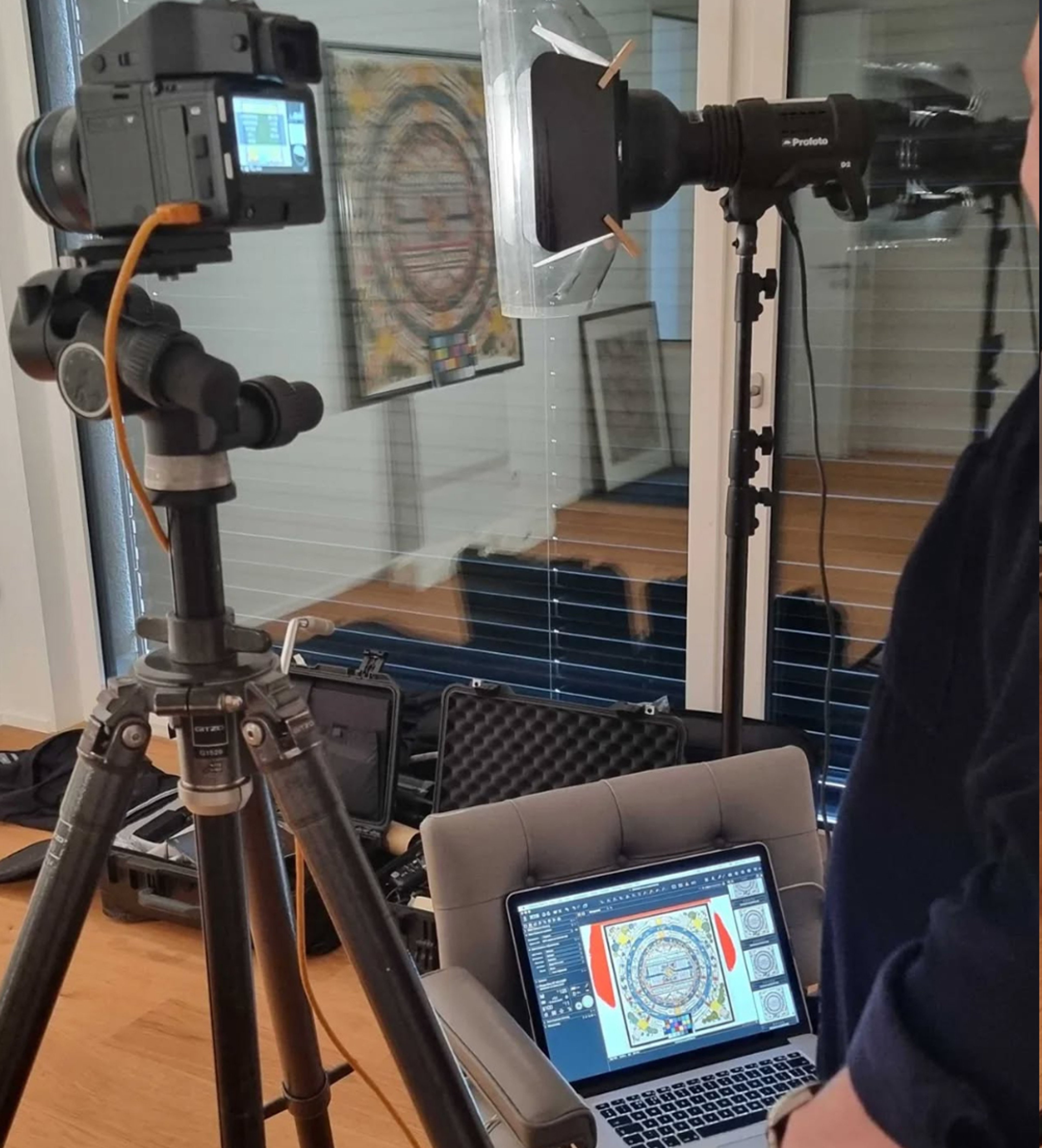
To start this ambitious project, the entire map and atlas collection required comprehensive digitisation and cataloguing - high-resolution scanning, academic scholarship, and metadata capture. This was done with the help of numerous dedicated map experts, the imaging team from the British Library and Factum Arte, photographer Louie Fasciolo and multi-spectral imaging specialist Dr. Kathryn Piquette.
Unlike other institutional collections, The Sunderland Collection is not attached to a specific space. So while physically the maps and atlases reside in Switzerland and London, this granted freedom from physical architectural boundaries. A limitless museum.
Real world studies of how people interacted with the Collection were also conducted to learn about how items could be presented and identify what audiences may access the platform. For the latter, the test was inconclusive, resulting in a more universal approach.

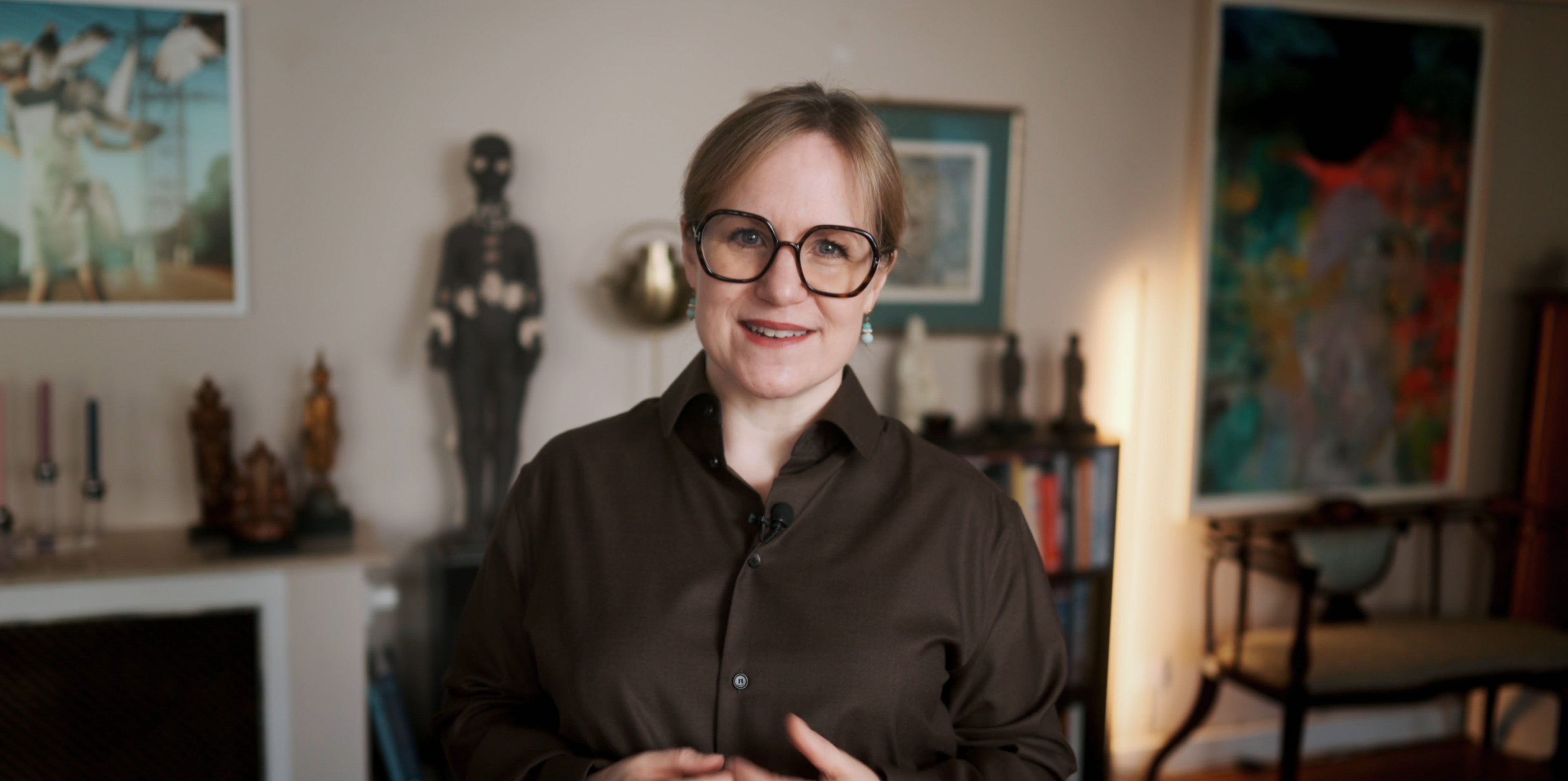
An introduction to Oculi Mundi from Director Helen Sunderland-Cohen. Credit: Eric de Broches des Combes / Haych Digital.

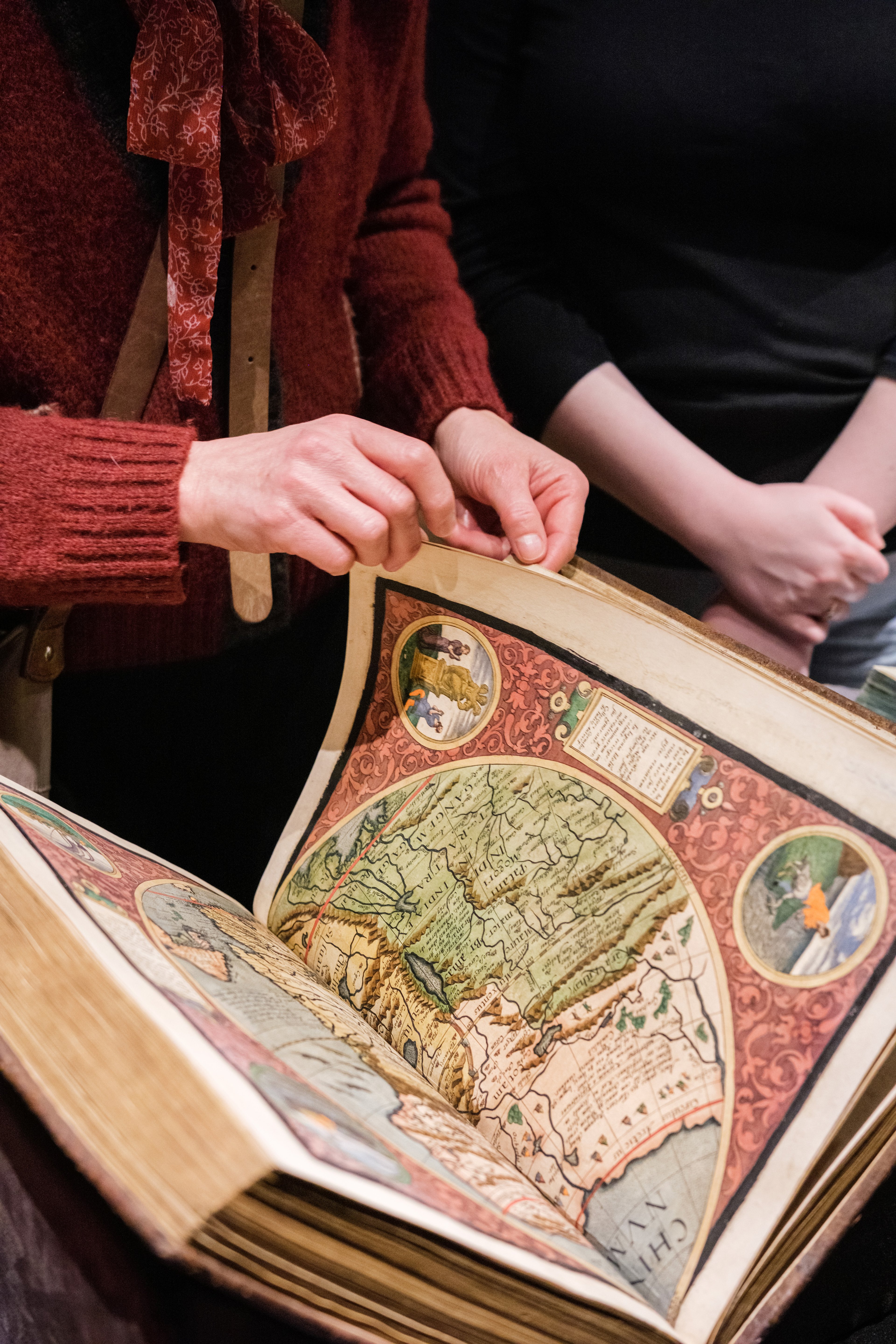
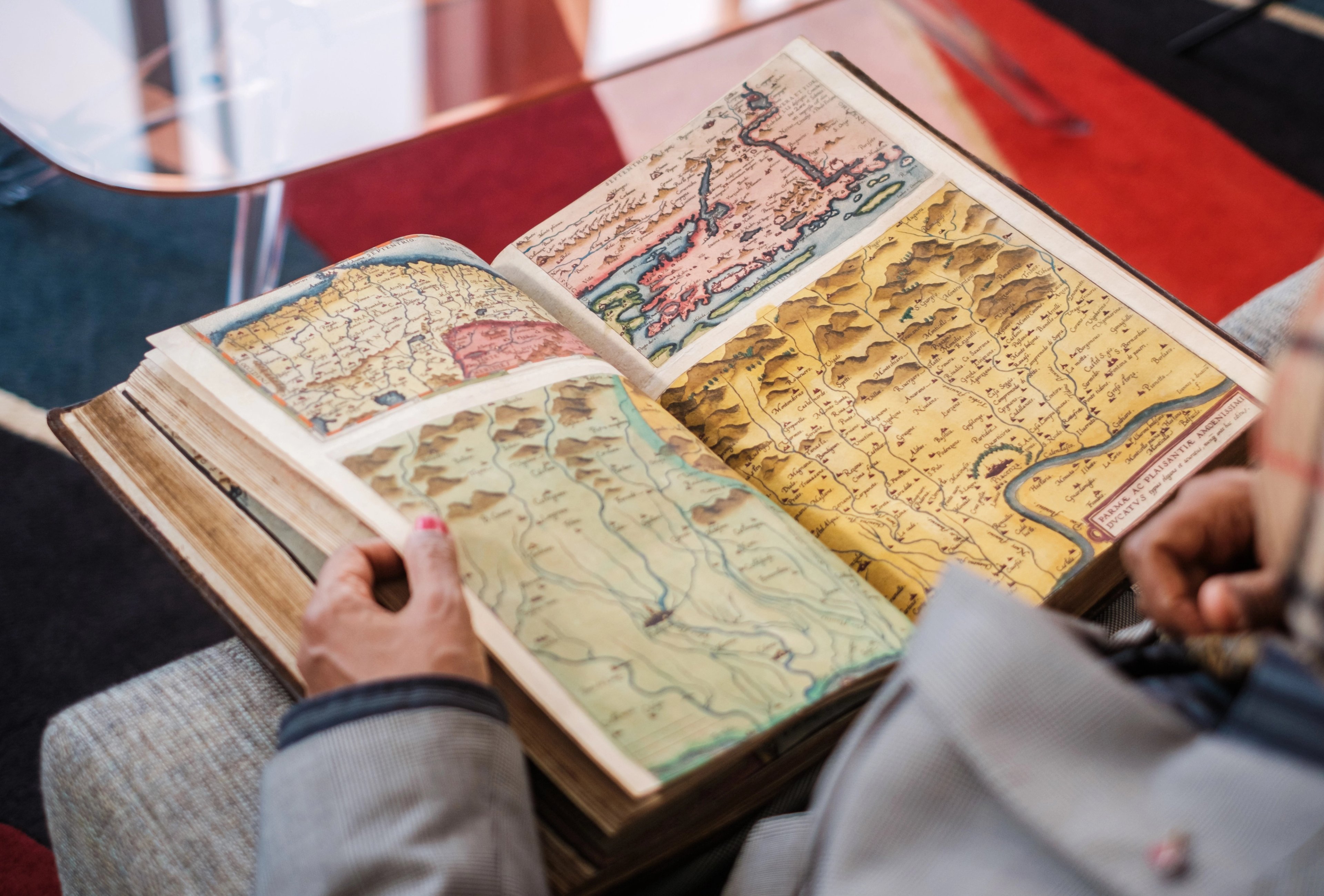
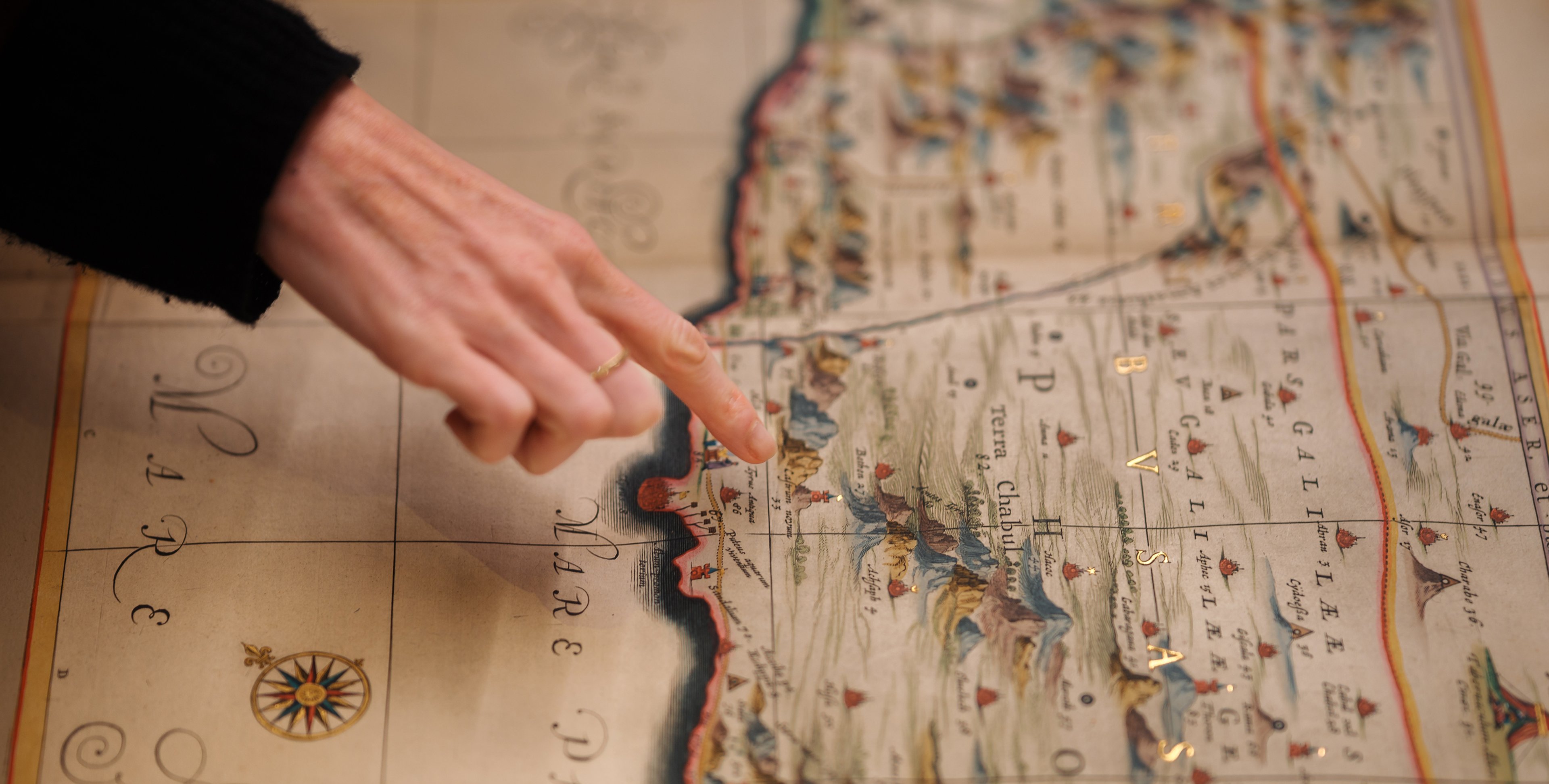
A visiting academic views the map of China from Cornelis de Jode's 'Speculum Orbis Terrarum' (1593)
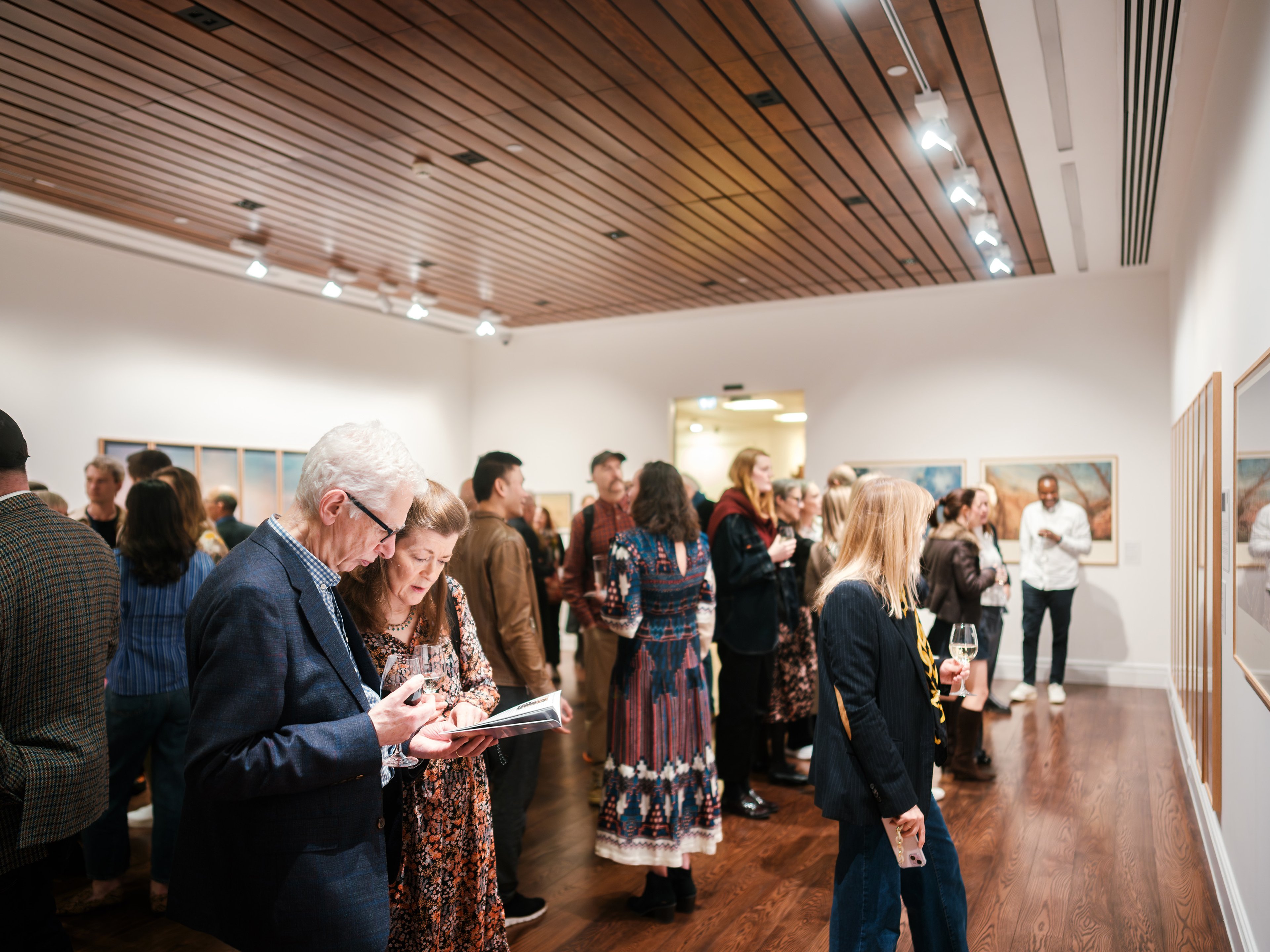
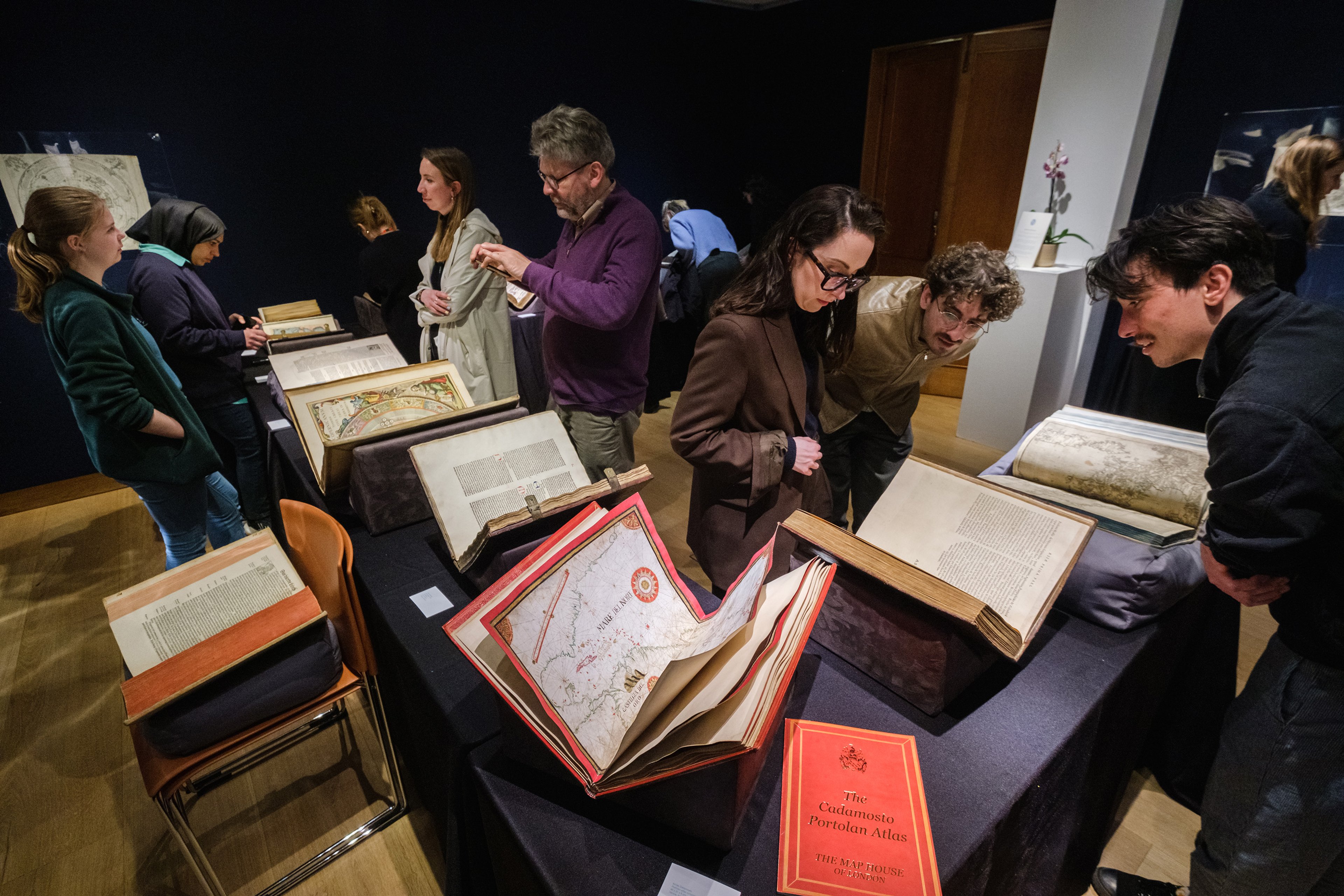
An exhibition was held at Christie's London in 2024 to observe how a diverse audience viewed and interacted with the cartographic collection.

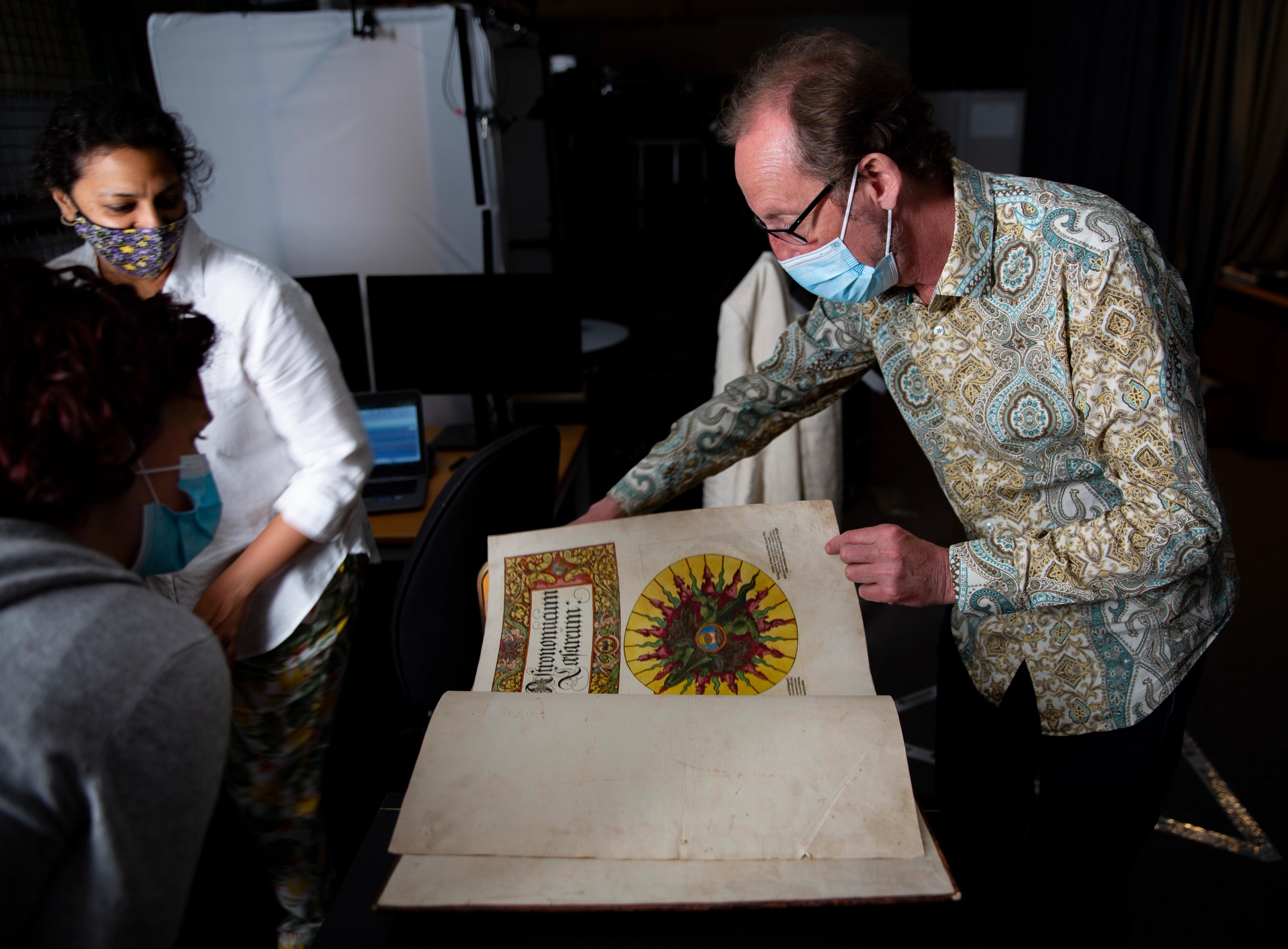
Philip Curtis (The Map House) and the team at the British Library conduct a condition check of Petrus Apianus's 'Astronomicum Caesarium' (1540)
The first selection of objects from The Sunderland Collection arrive at the British Library to be condition checked and digitised shortly after the pandemic in 2022.

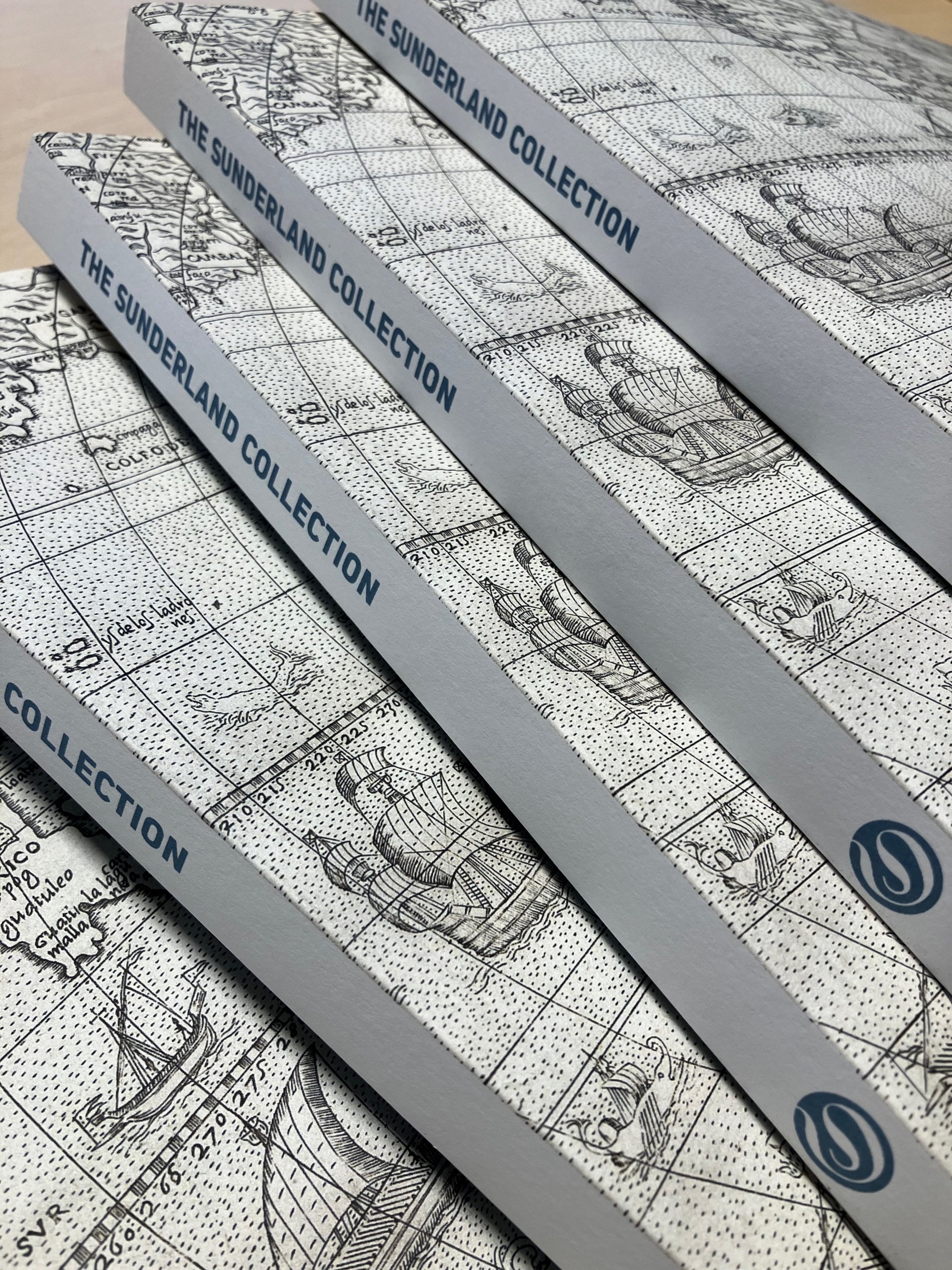
The Sunderland Collection Image Catalogue
As Oculi Mundi was being built, The Sunderland Collection produced a lovingly-made image catalogue of its contents. You can purchase a copy of the catalogue from the Oculi Mundi Shop.

Here, you can see Nubian artist Fathi Hassan poring over a work from the Collection in preparation for his participation in The Sunderland Collection Art Programme.
Fathi took inspiration from Cornelis de Jode’s ‘Speculum Orbis Terrarum’ (1593) to produce some of the works in ‘Shifting Sands’. You can find out more about his artistic response to the maps and atlases in the Collection by viewing the his online exhibition, and watching the artist panel using the links below.

Imaging specialist Dr. Katherine Piquette used multispectral and RTI imaging to inspect the Cadamosto Codex (1597)
Through imaging and analytical techniques, The Sunderland Collection is just beginning to investigate its objects to uncover hidden layers and gain deeper insights into the history and life of each work.

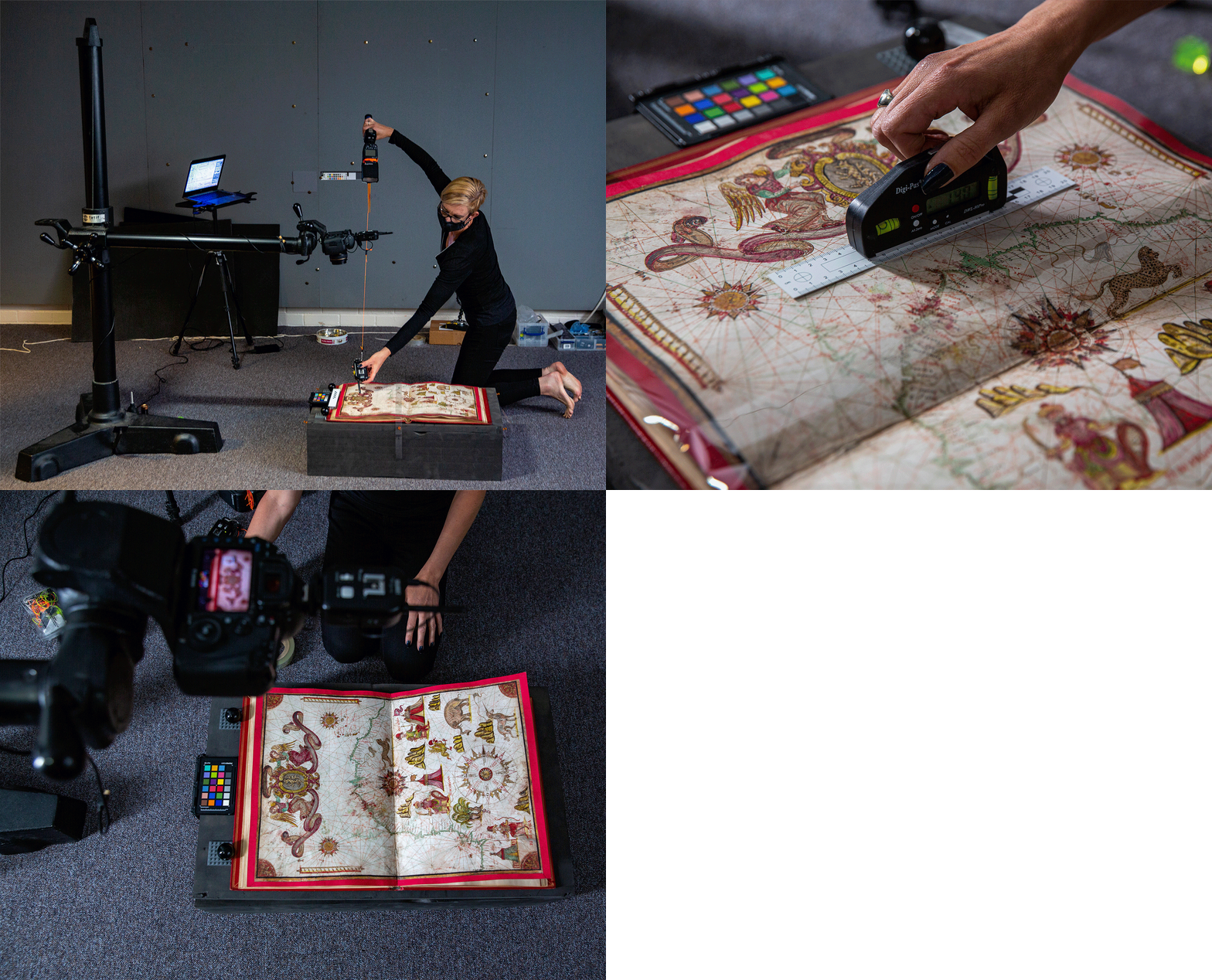
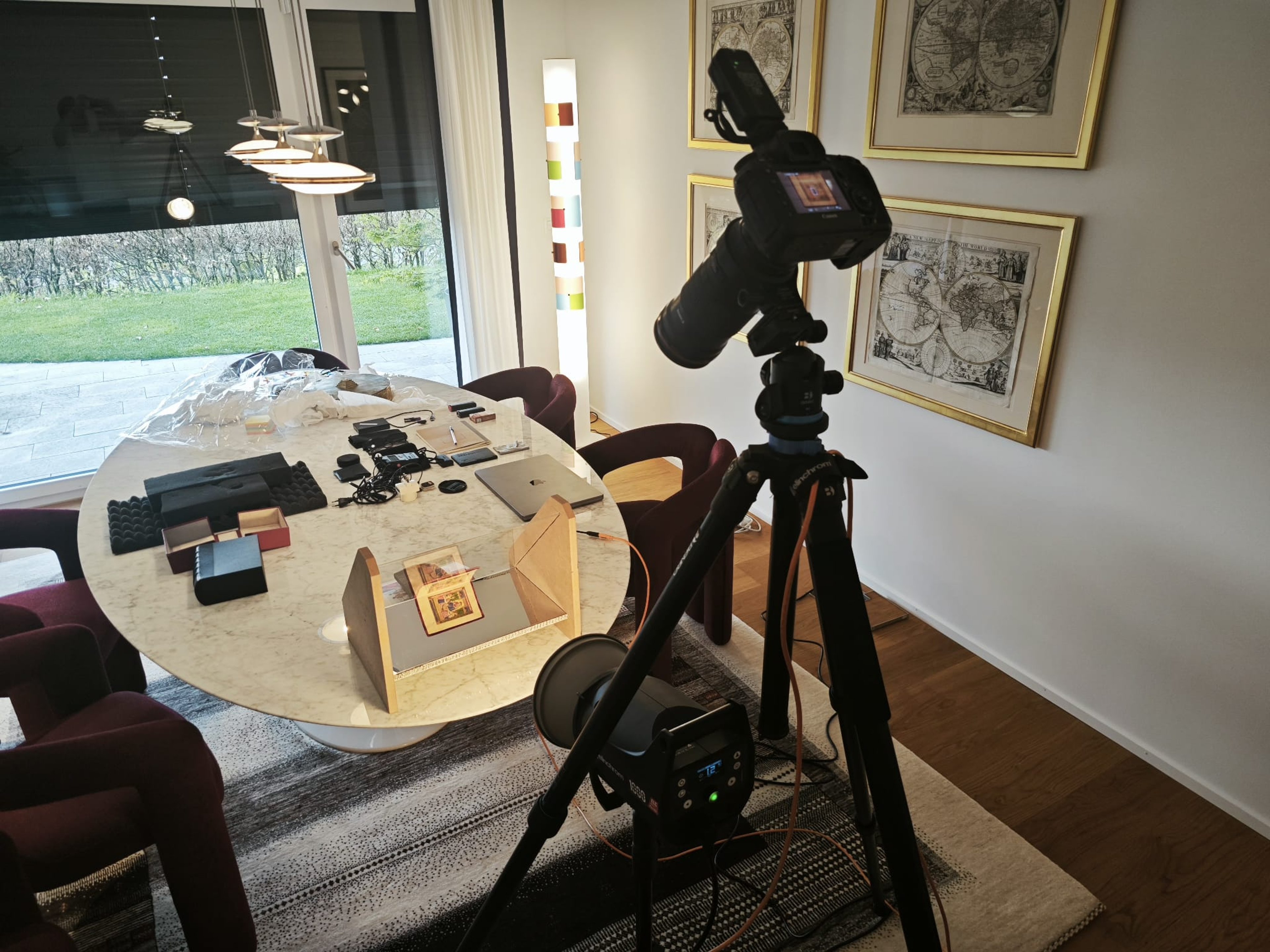
In order to capture some of the more delicate or framed objects in the collection, a specialist photographed them on location at The Sunderland Collection's Swiss offices.
A digitisation expert carefully recorded and photographed the Jain Cosmological Map (c1770) and other fragile or framed works in the Collection that required specialist imaging. This way it avoided the need for unnecessary unframing and handling.

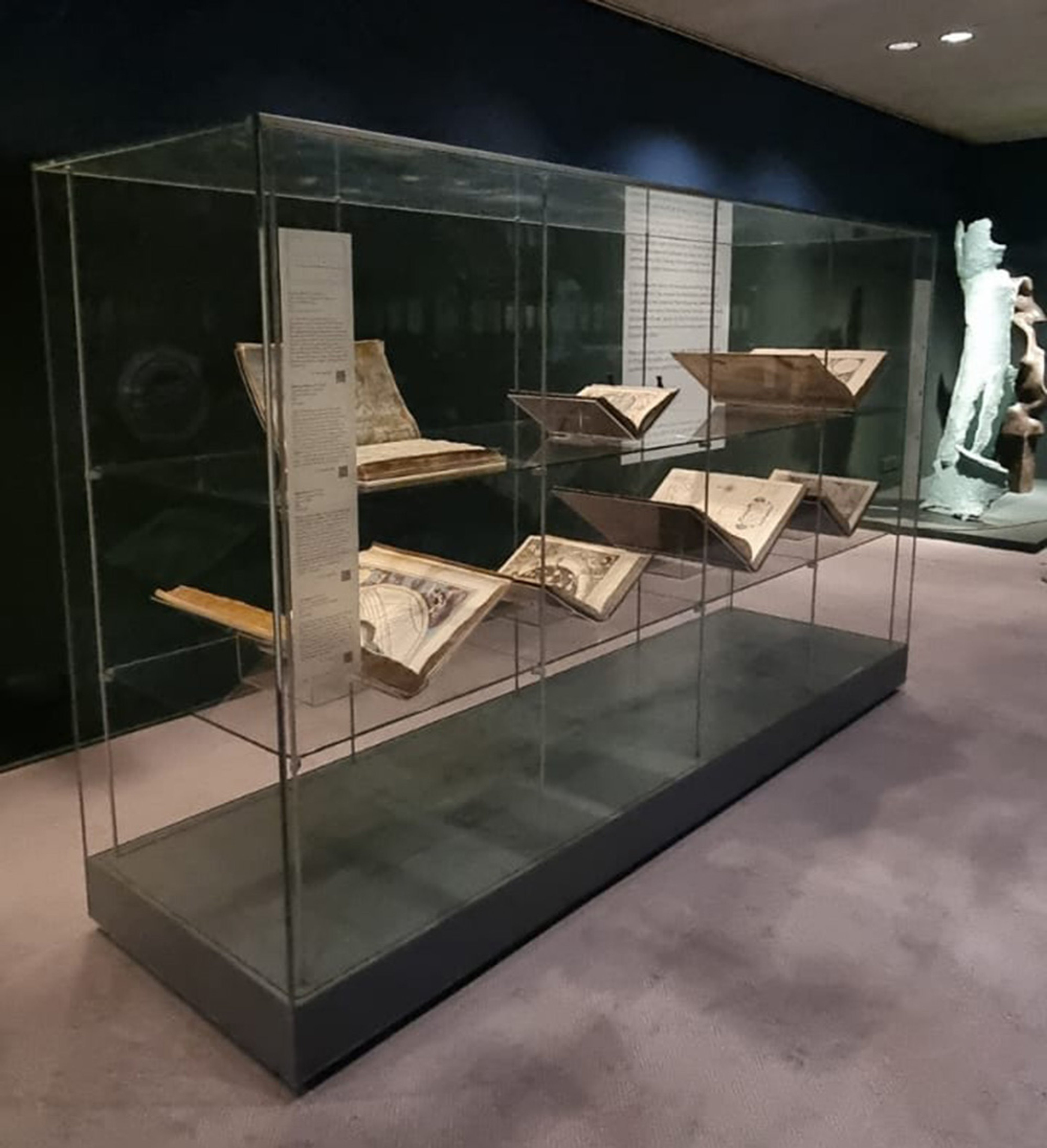
In 2025, The Sunderland Collection made it's first institutional loan to the Sainsbury Centre for Visual Arts
Among the selection were Abraham Goos’ ‘Zee-Atlas’ (1675), Robert Dudley’s ‘Dell’Arcano del Mare’ (1647), and John Speed’s ‘The Theatre of the Empire of Great Britain’ (1676). A selection of eight atlases from The Sunderland Collection were featured in ‘A World of Water’ Exhibition in 2025. This was one of three special exhibitions held as part of the Sainsbury Centre’s programming for ‘Can The Seas' Survive Us?’ which examined humankind’s relationship with the oceans.

Digitisation experts Factum Arte visit the Swiss offices of the Collection to photograph a selection of specialist cartographic objects, 2025.

A Collection preview was held to test object interactions at Christie's London, 2022
In 2022, The Sunderland Collection held a private exhibition of objects for a wide audience of artists, academics, map enthusiasts and conservation students. Here, visitors spent time up close with these precious objects.

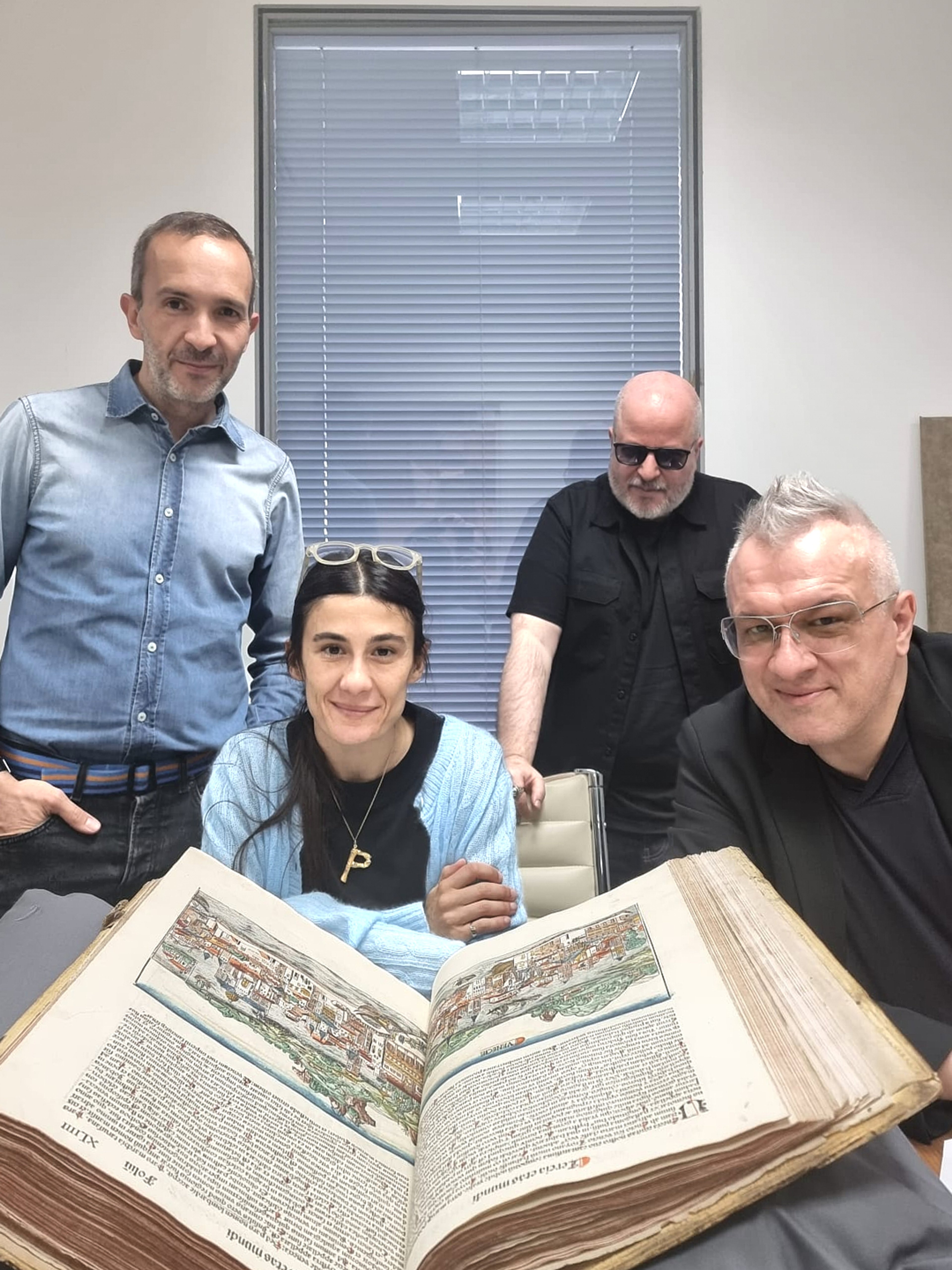
A photograph taken during an intimate viewing of Jan Jansson's Historical Atlas (1657) in London, October 2025.

The Oculi Mundi branding was designed by Eric de Broche des Combes

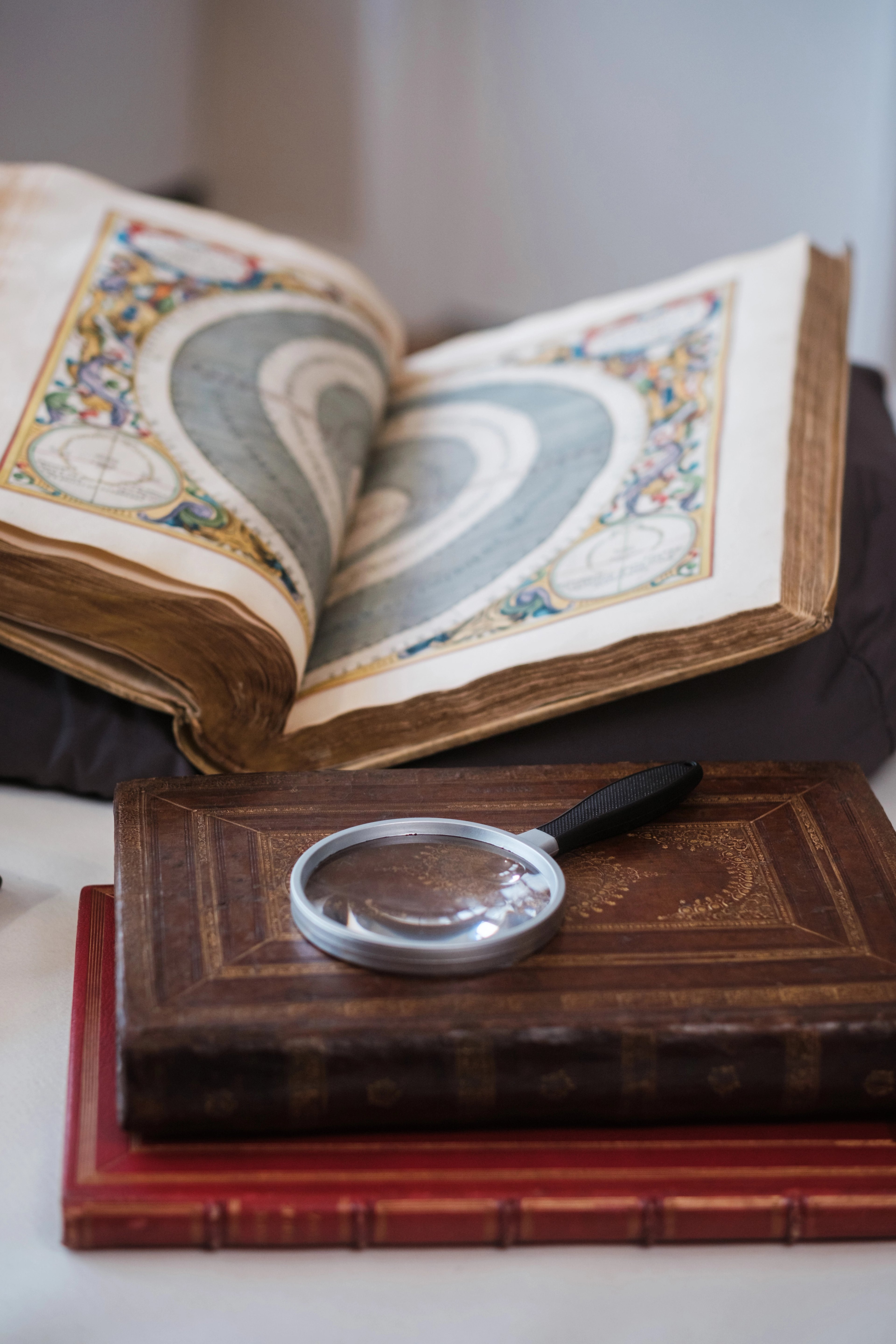
The grand star atlas 'Harmonia Macrocosmica' (1661) by Andreas Cellarius (1596-1665)
The structure of Oculi Mundi was developed as a direct response to the maps, the Collection database, and the audience. It fosters a system of interconnected experiences between the content and the social and curatorial spaces. This approach resulted in a cohesive, virtual universe, complete with design motifs and fun wayfinding placeholders drawn directly from the Collection.
The design of Oculi Mundi was informed by extensive research and multitudes of experience working in architecture and spatial practice, as well as the attention to the display of three-dimensional objects and archival workflows. A significant challenge lay in how to display the inherently two-dimensional maps in order to avoid a 'flat' presentation. The team envisioned leveraging innovative technology to deliver a dynamic, high-quality, and customisable experience suitable for a modern audience.
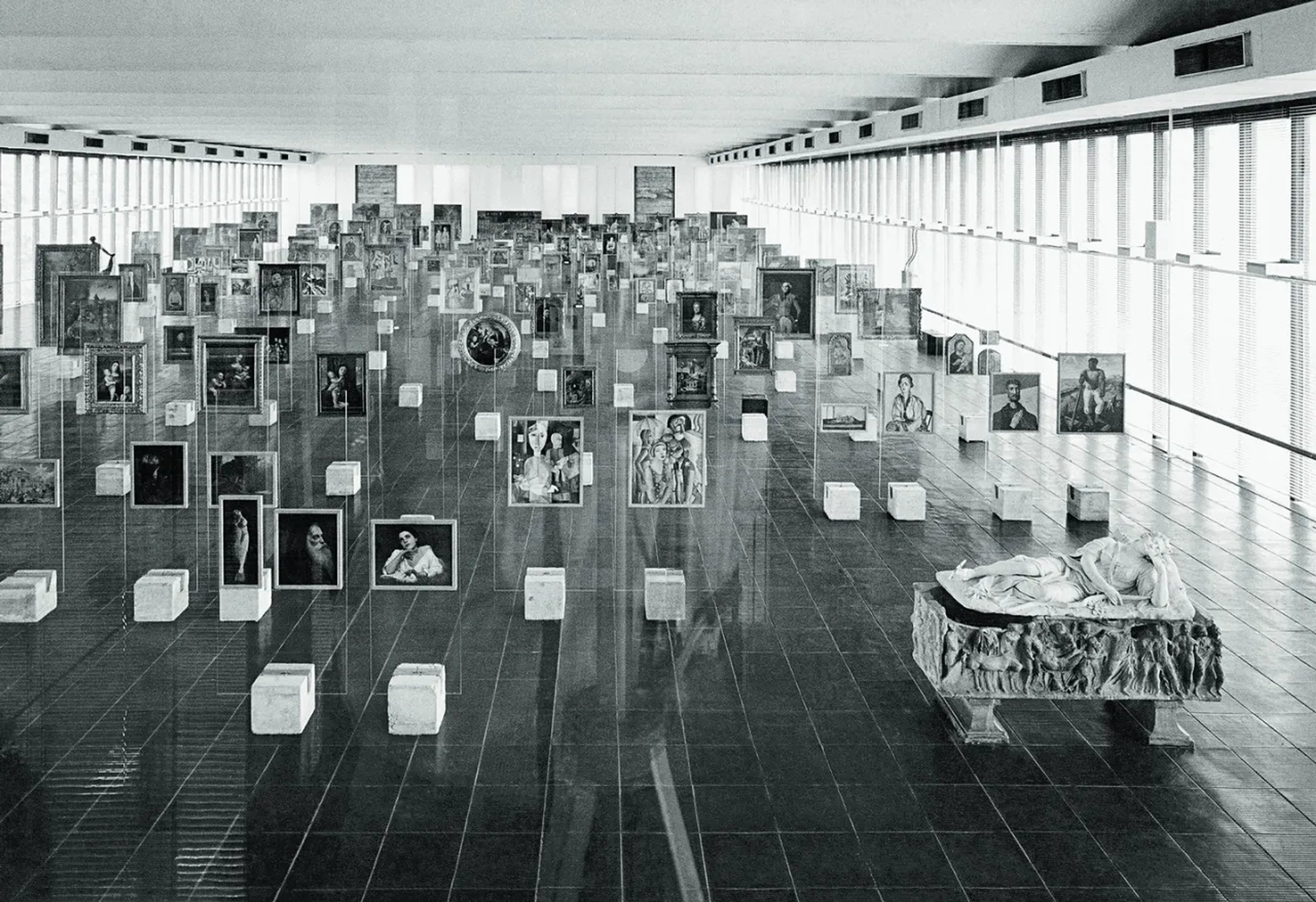
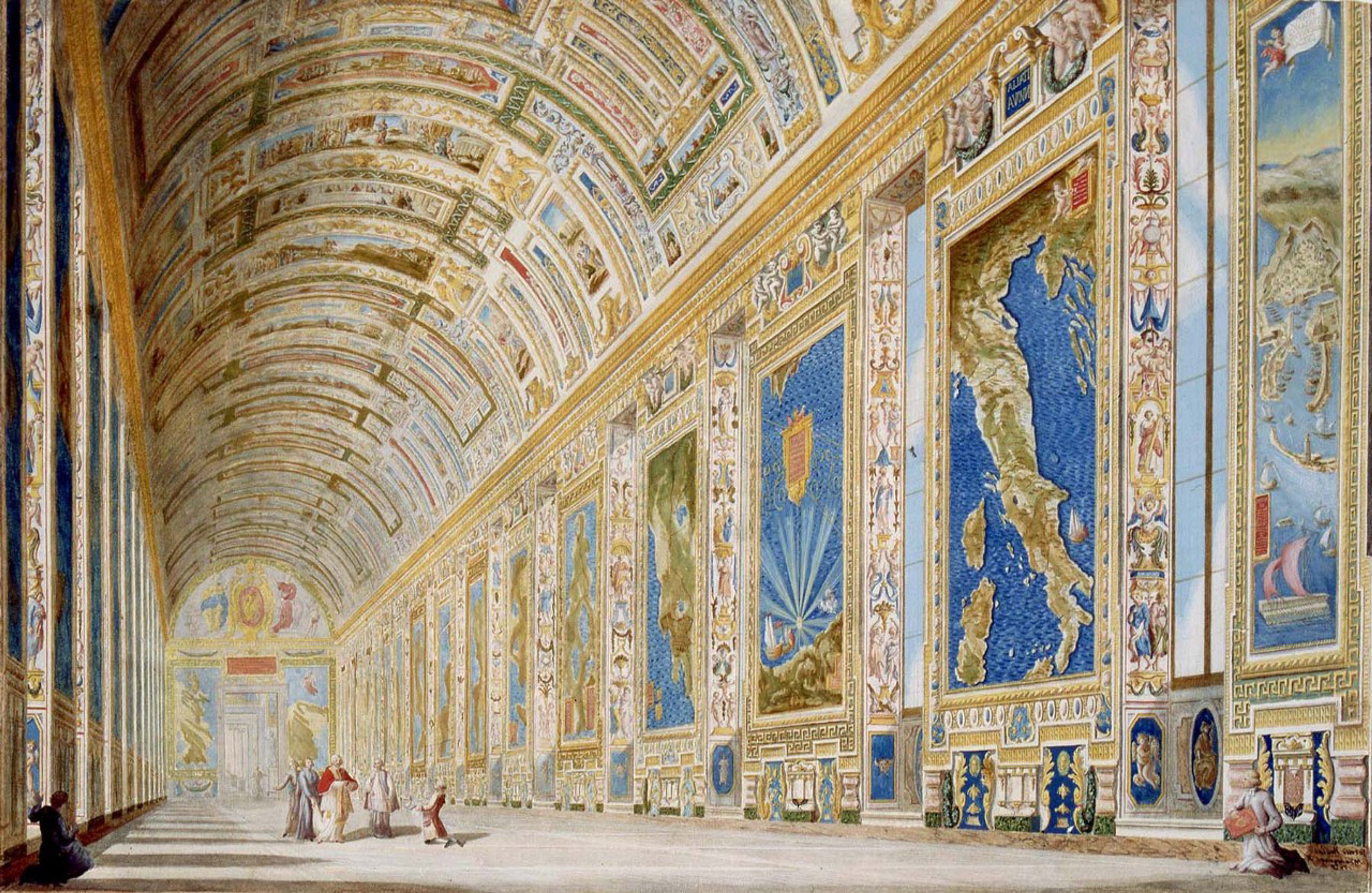
An example of this is the stunning ‘Gallery of Spaces’ navigation, and the Collection environment, which was developed as a revolutionary gallery using a multitude of inspirations - from the Ignazio Danti’s Gallery of Maps in the Vatican to Lina Bo Bardi's Exhibition Room in the Sao Paulo Museum of Art (1968). Today it can be accessed in either Research or Explore mode.
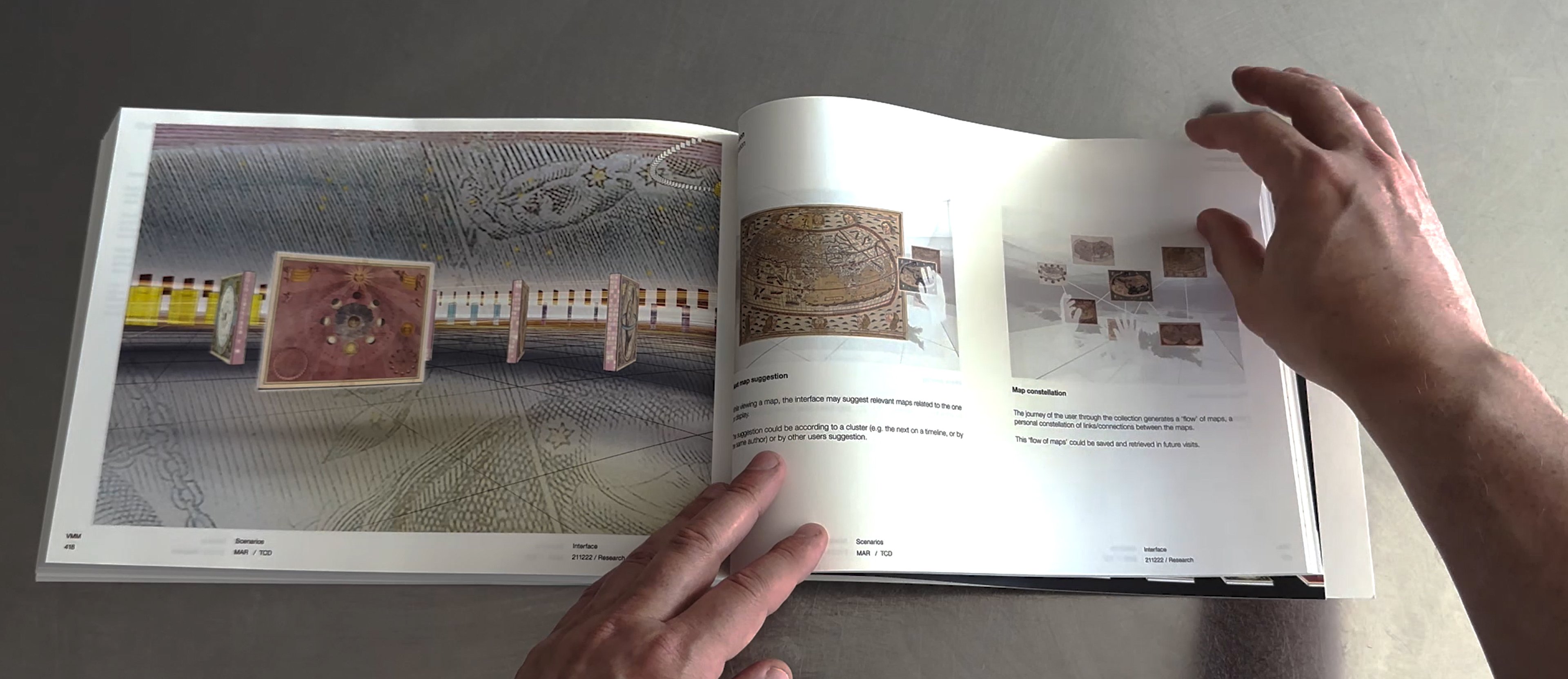
Along their journey in 2021 and 2022, the team created two books to document their research, which you can enjoy in this virtual gallery.

The team took inspiration from Architect Lina Bo Bardi's 'Exhibition Room', Sao Paulo Museum of Art (1968)

Final presentation of the research phase (22 December 2021)

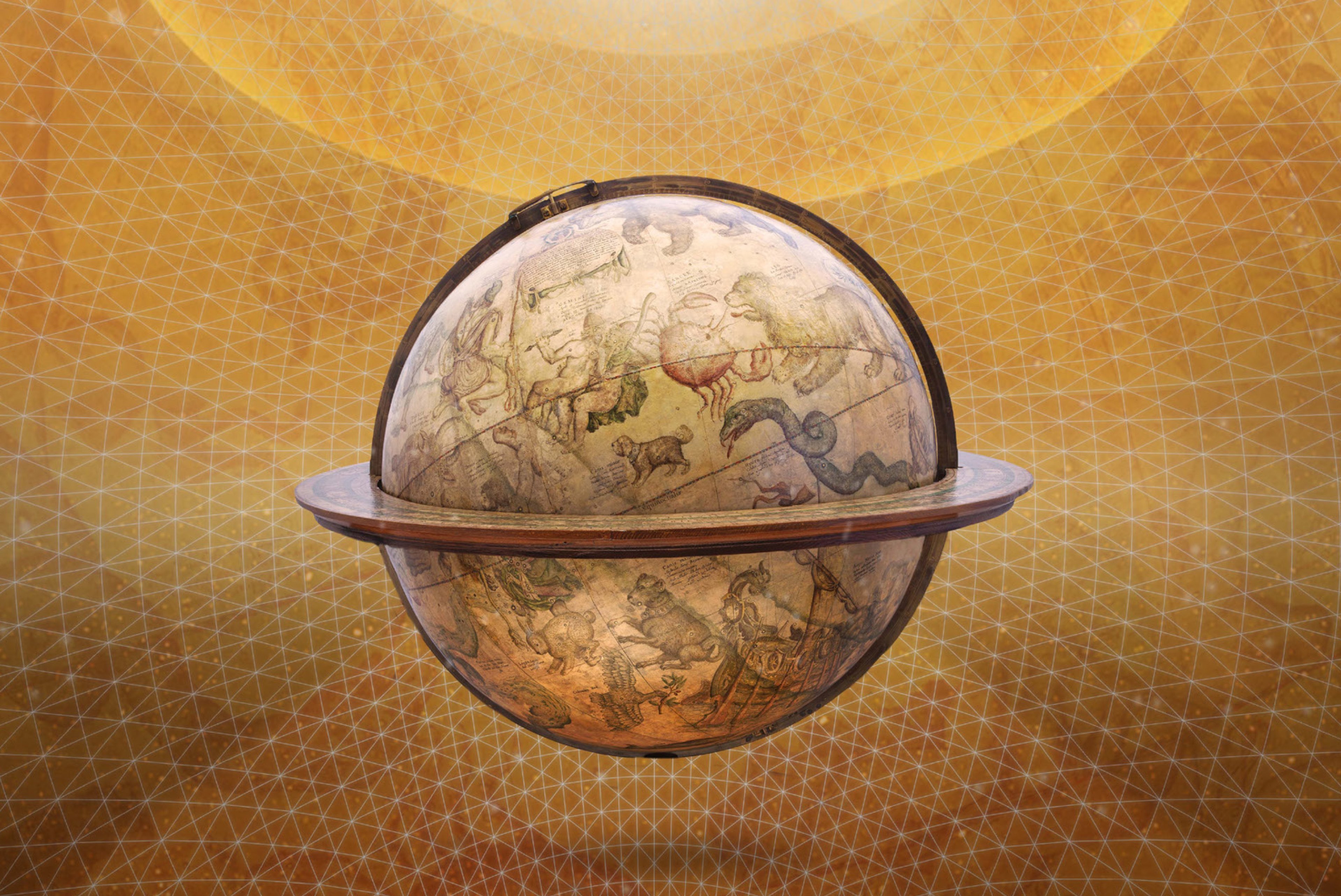
Early concept visualisations of a globe in an immersive Collection environment.
©Multiple Architecture and Research / Thecreativedestruction

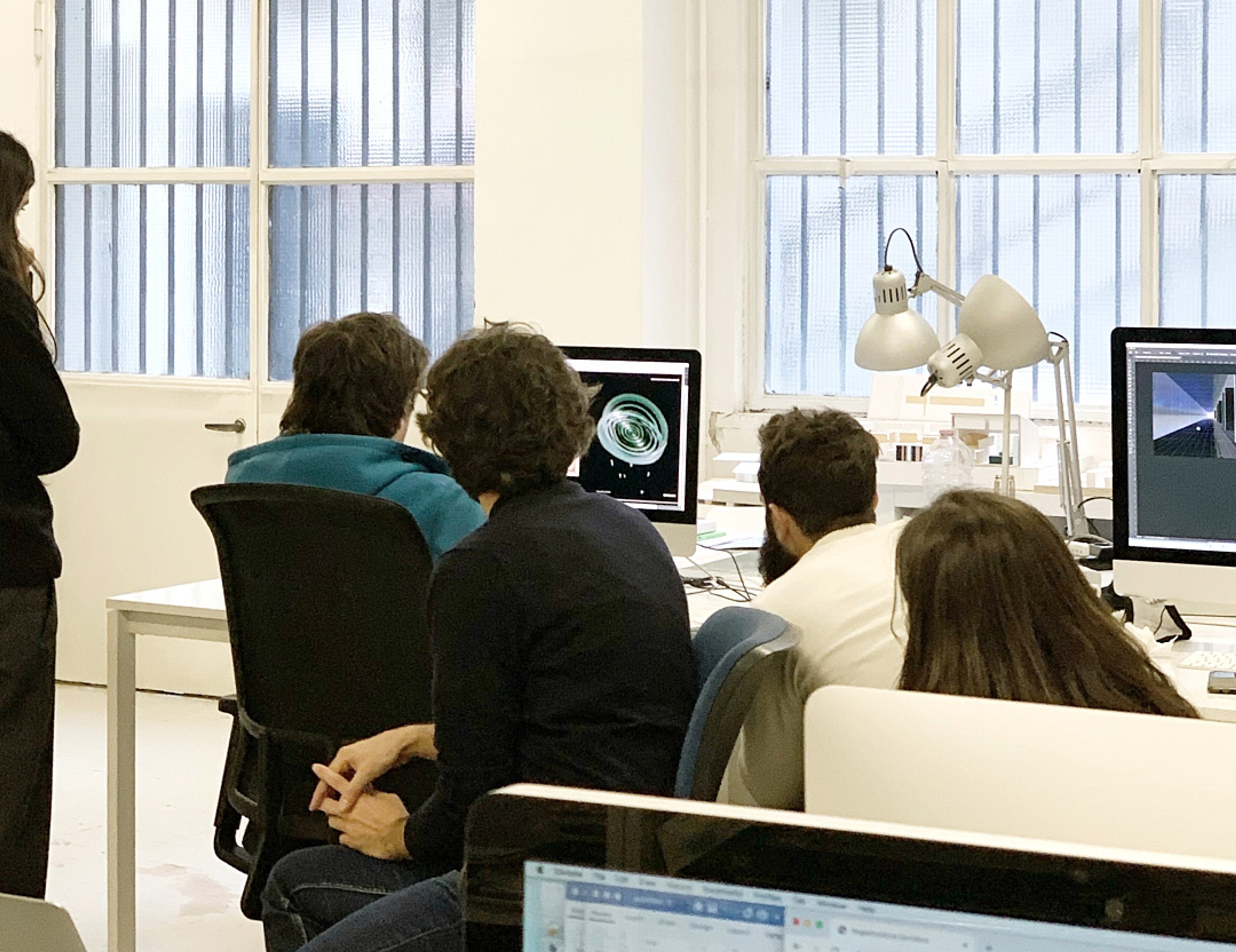
The team working together on visualisations using cartographic elements at the Multiple Architecture and Research offices in Milan.
©Juarez Corso / Multiple Architecture and Research

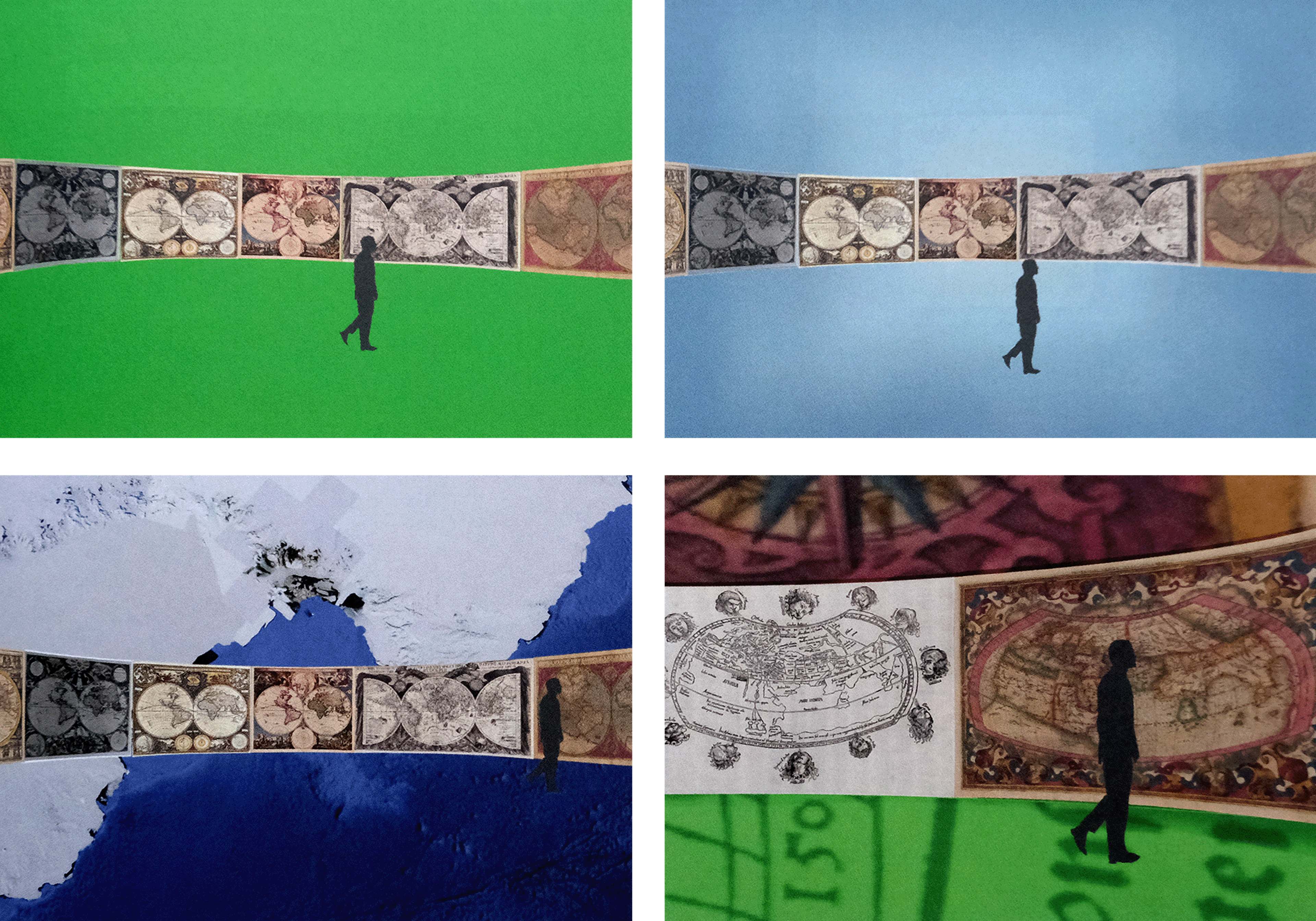
In a virtual gallery setting, these initial concept illustrations visualise a reimagined physical-digital engagement between a person and a curated series of maps.
©Multiple Architecture and Research / Thecreativedestruction

Architect and polymath Timothy Archambault from Thecreativedestruction (Miami) introduces the concept phase of Oculi Mundi. Credit: Eric de Broches des Combes.

Juarez Corso and Paola Mongiu from MAR (Multiple Architecture and Research). Credit: Eric de Broches des Combes / Haych Digital.

Final presentation of the concept phase (25 April 2022)

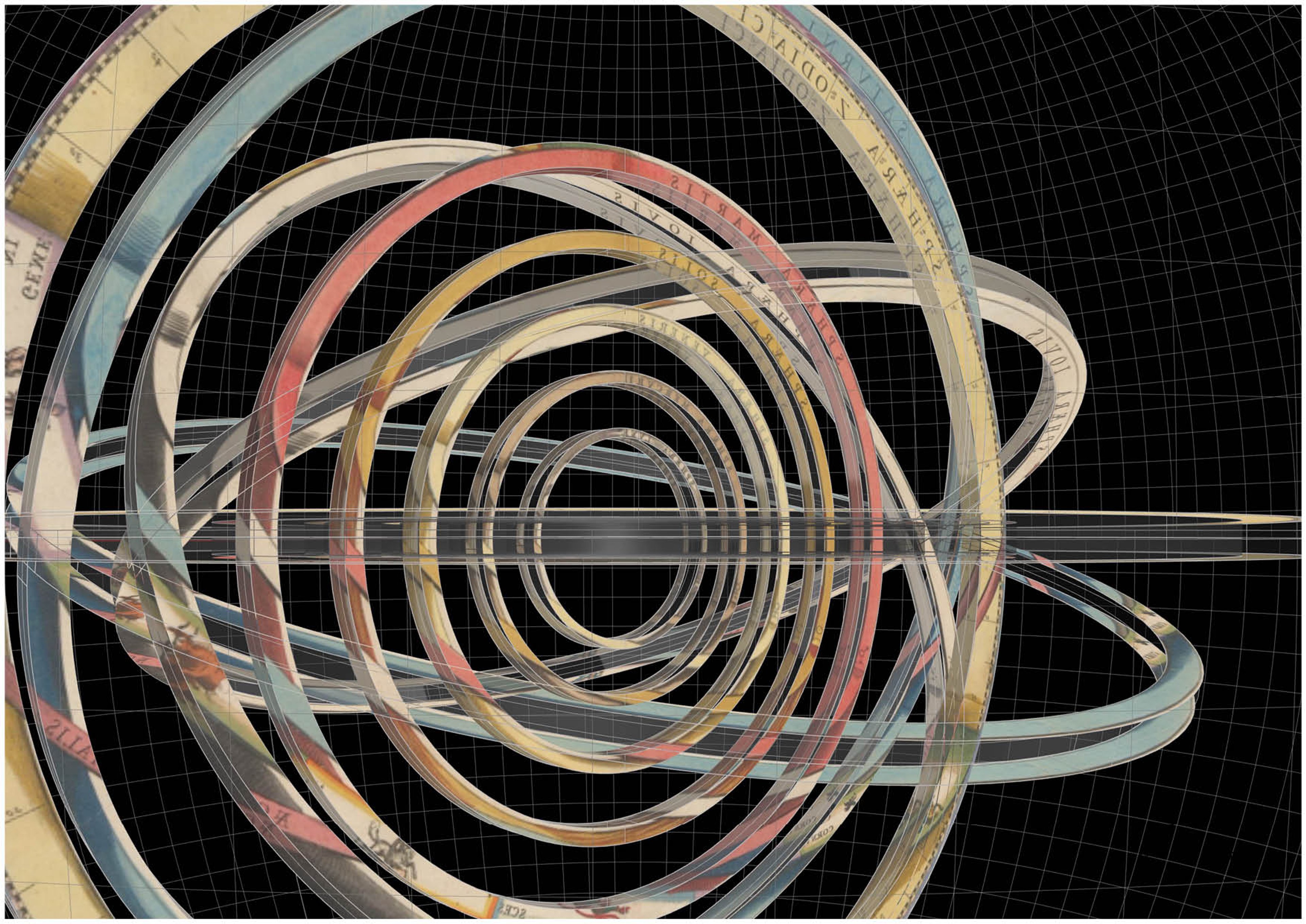
This is an early visualisation for Oculi Mundi using elements from a depiction of the Cosmos as an armillary sphere from Andreas Cellarius' 'Harmonia Macrocosmica' (1661)
©Multiple Architecture and Research / Juarez Corso

Concept visuals produced during Categorisation and Display testing. The team developed a 'cluster' collection view and tested how the full Collection might inhabit digital space.
©Multiple Architecture and Research / Thecreativedestruction

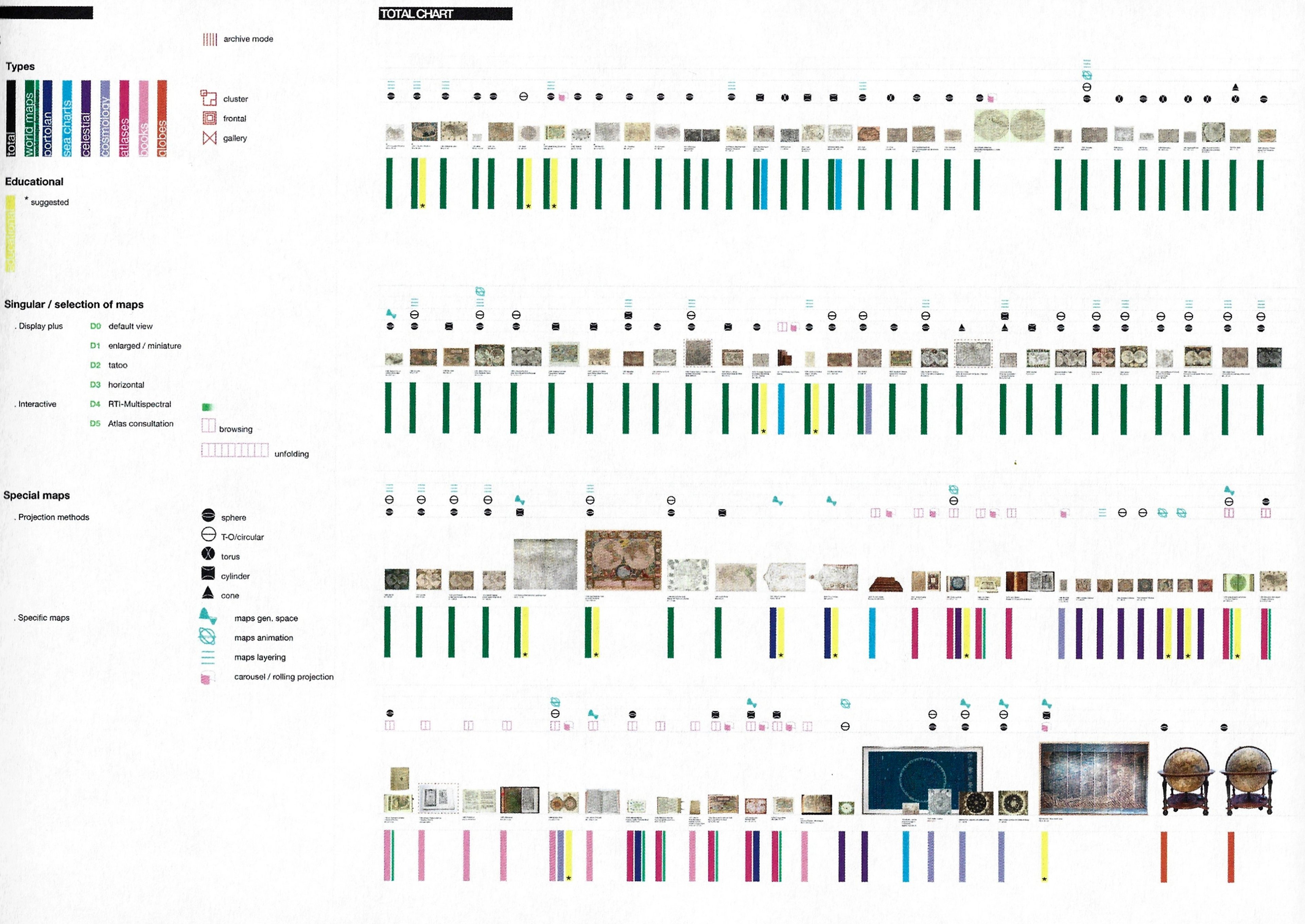
During the concept phase, the Collection was examined from various different angles including date, size and medium.
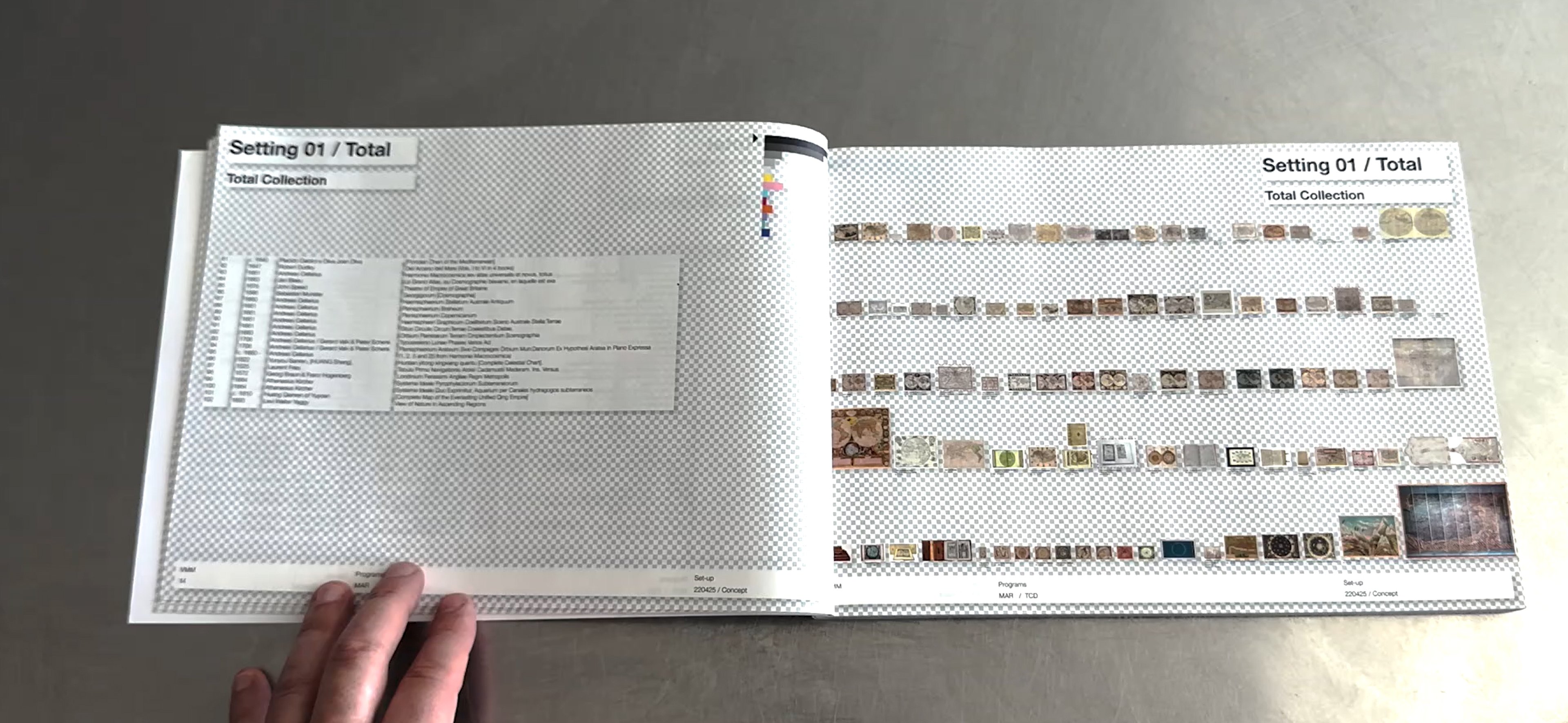
In this leaf from the concept document, MAR and Thecreativedestruction present the entire collection categorised according to how they might be displayed.

Juarez Corso, Paola Mongiu, Eric de Broche des Combes and Tim Archambault

During the research phase, the team examined how maps have been presented historically and how people have interacted with them.

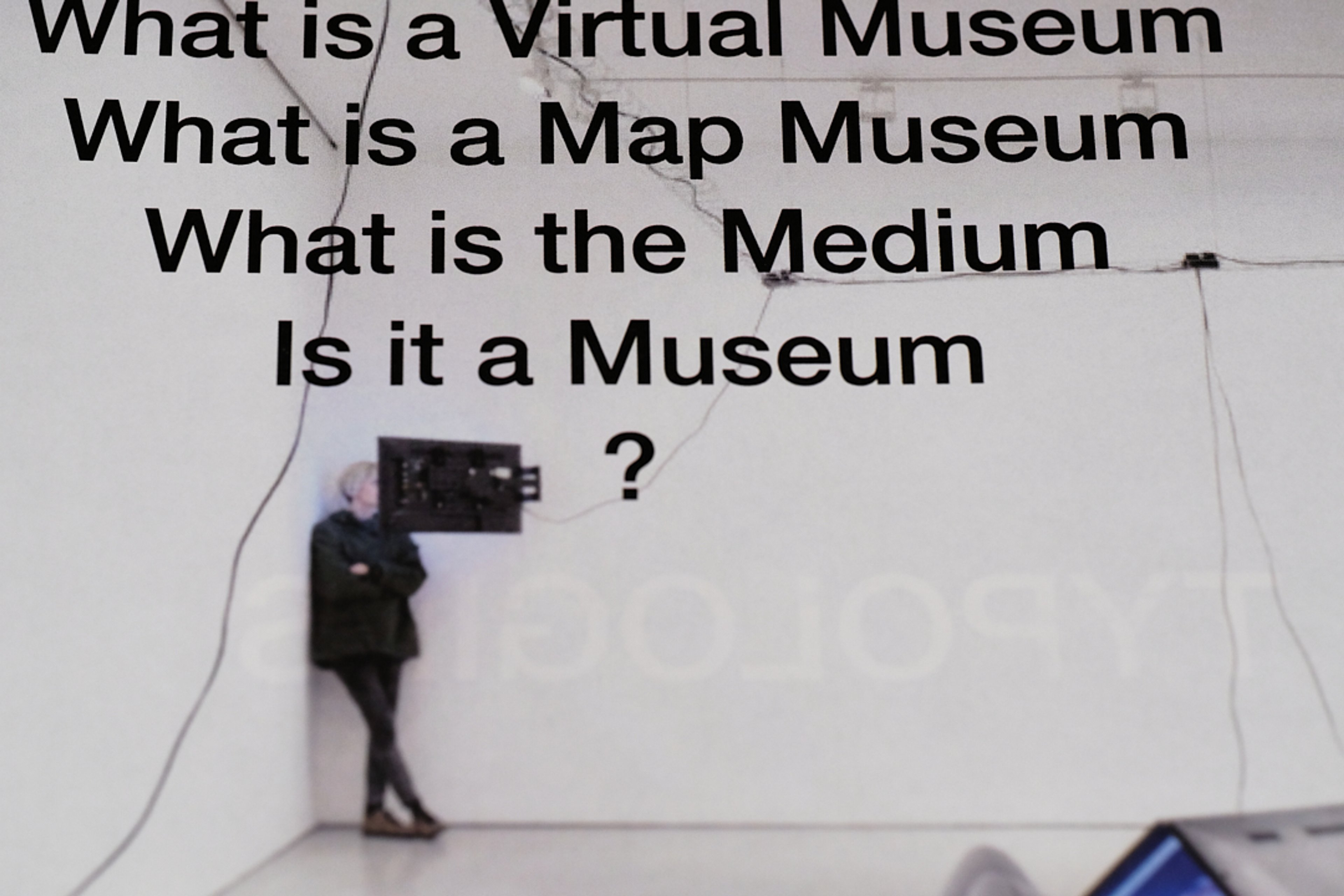
The team asked themselves 'What is a Virtual Museum?'
©Multiple Architecture and Research / Thecreativedestruction

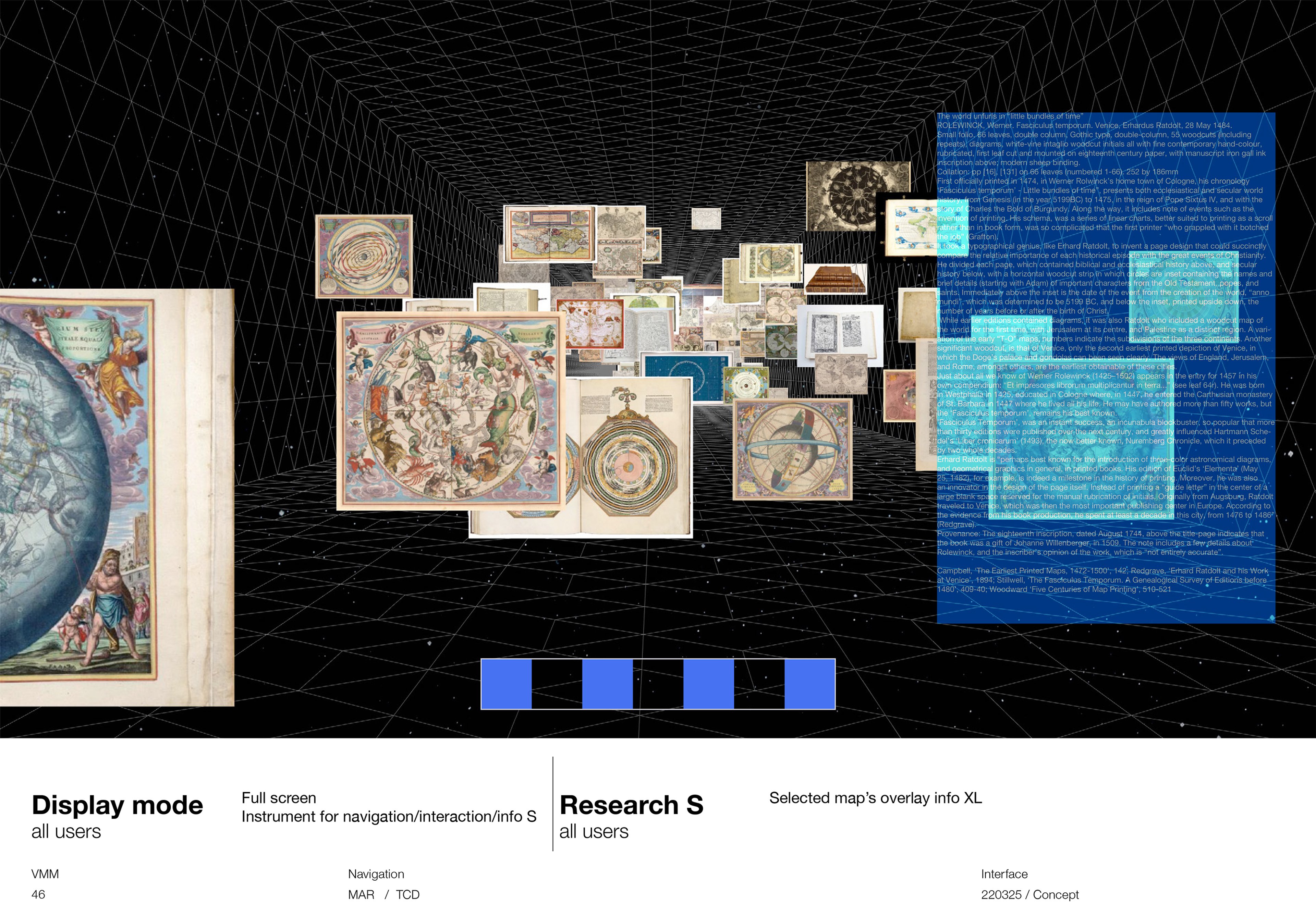
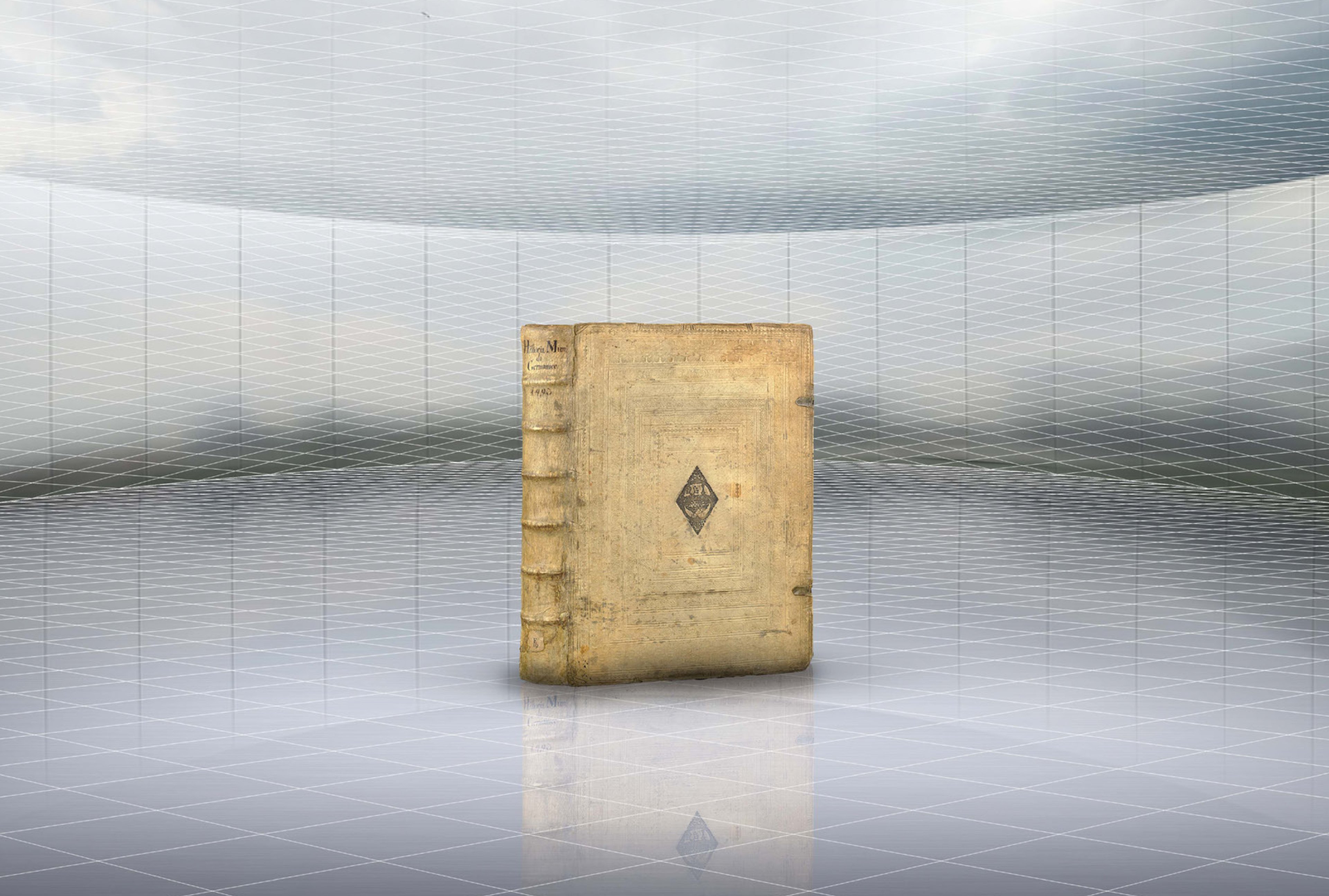
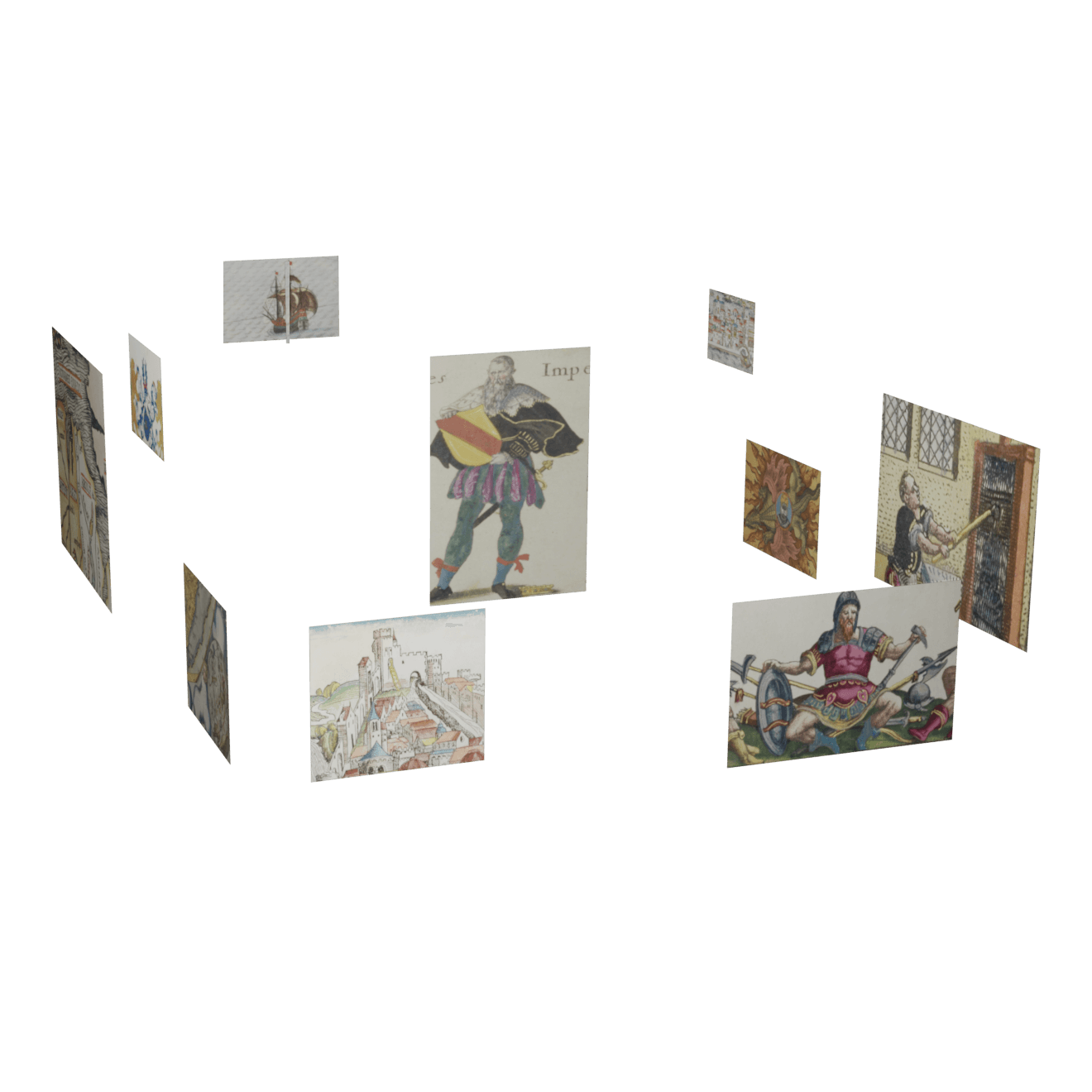
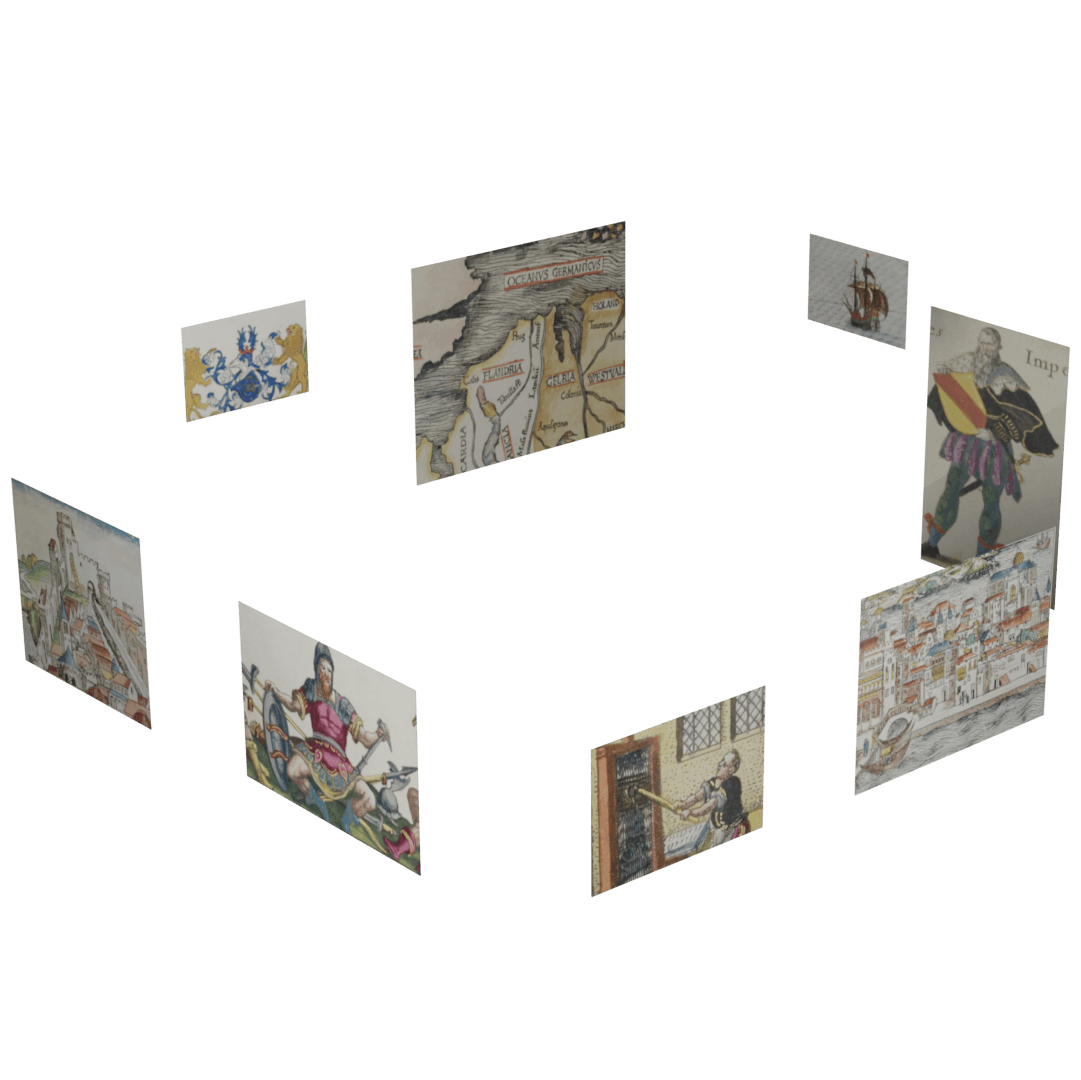
Visualisation of a collection environment in Oculi Mundi from the research and concept phase, showing how a three-dimensional object such as an atlas may be presented.
©Multiple Architecture and Research / Thecreativedestruction
Web design studio Fabrique and their sister company, web developers Q42 based in Amsterdam, were engaged to turn the conceptual dreams of Oculi Mundi into a (virtual) reality.
Following the remit “Not Your Mama’s Website”, Fabrique and Q42 pushed the limits of technology and coding but balanced this against the need for smooth user experience and functionalities in order to create a full immersive environment.
Testing was done both internally and with real life audiences. The team also built a bespoke content management system to manage the website.
The initial visualisations conjured by M A R and Thecreativedestruction were brought to life by Fabrique, and coded, animated, and tested by Q42. The development process involved rigorous testing to determine the technical feasibility of the project - specifically, what could and could not be coded. Between them, Q42 and Fabrique were able to establish the most effective ways for users to navigate the Oculi Mundi universe.

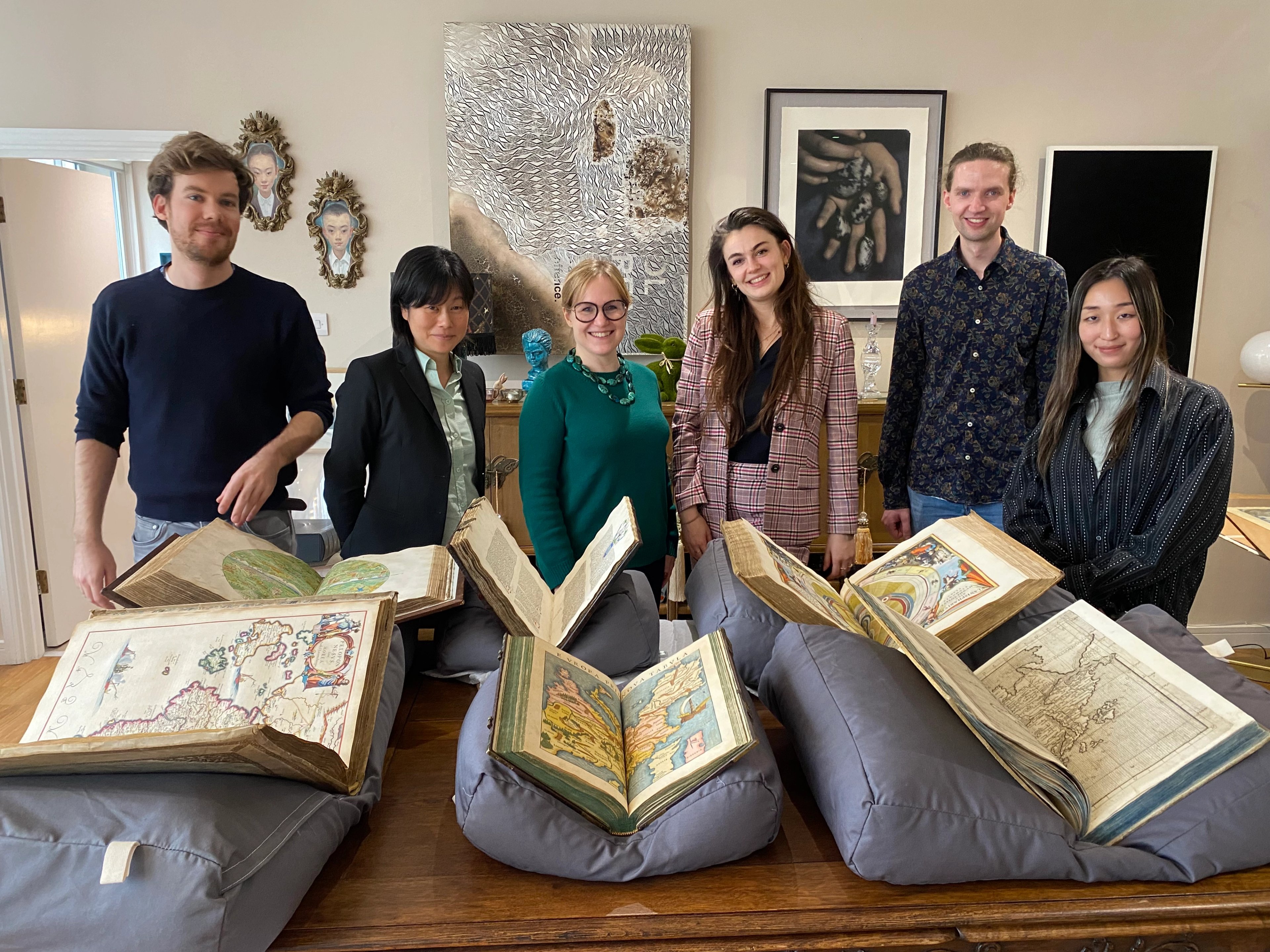
Part of the Q42 and Fabrique team visited Helen Sunderland-Cohen in London to engage with physical items from the Collection as part of process of designing an immersive digital experience.
Sander Vanheste, Chin-Lien Chen, Helen Sunderland-Cohen, Mara Polak, Ruben Bimmel and June Park.
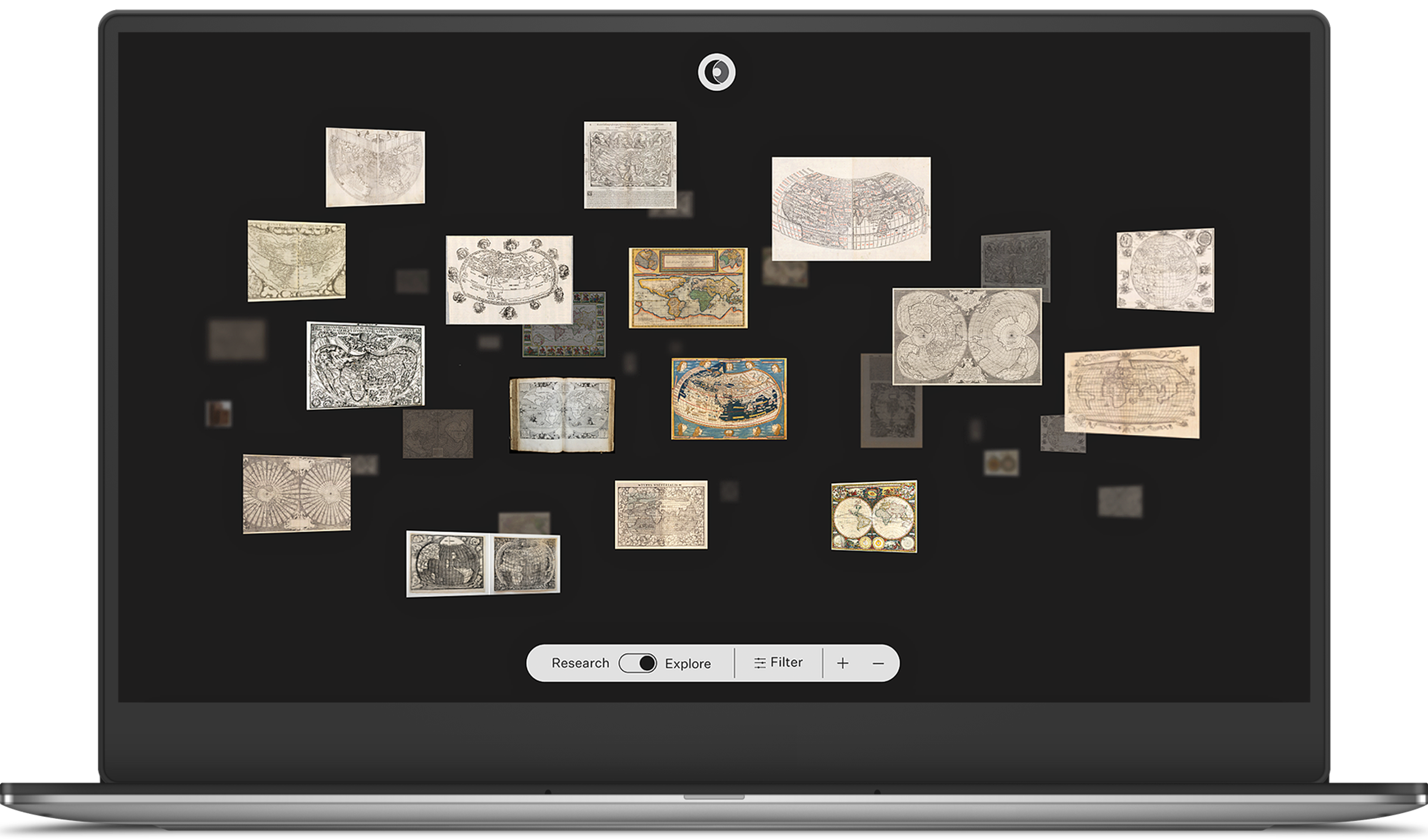
The final coding of the Collection environment in Oculi Mundi has two modes: Explore and Research.
Here, you can see this environment shown in Explore Mode: a universe of maps to swim through!

Oculi Mundi has a complete unique menu area. Known internally as the 'Gallery of Spaces', the navigation is made of a set of globes that float in digital space.
This is part of The Sunderland Collection's ambitions to embrace a digital volume of space and environment to present the Collection. This is an early navigational model.
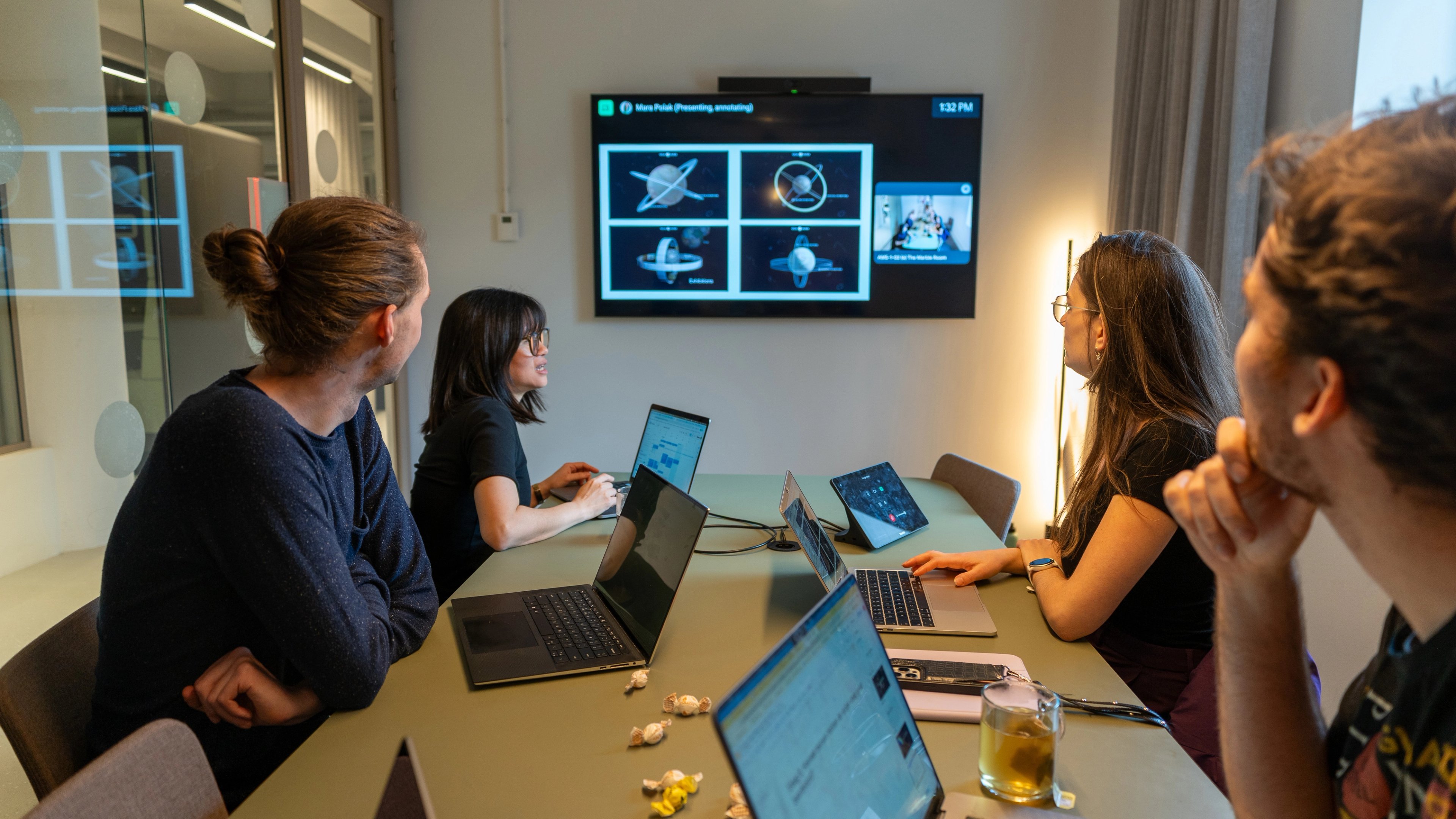
Q42 and Fabrique adopt an agile development technique where teams meet in 'scrums' and 'stand ups' to test ideas, exchange progress and work through challenges together. .
Here, colleagues from the design and development teams meet for a stand up.
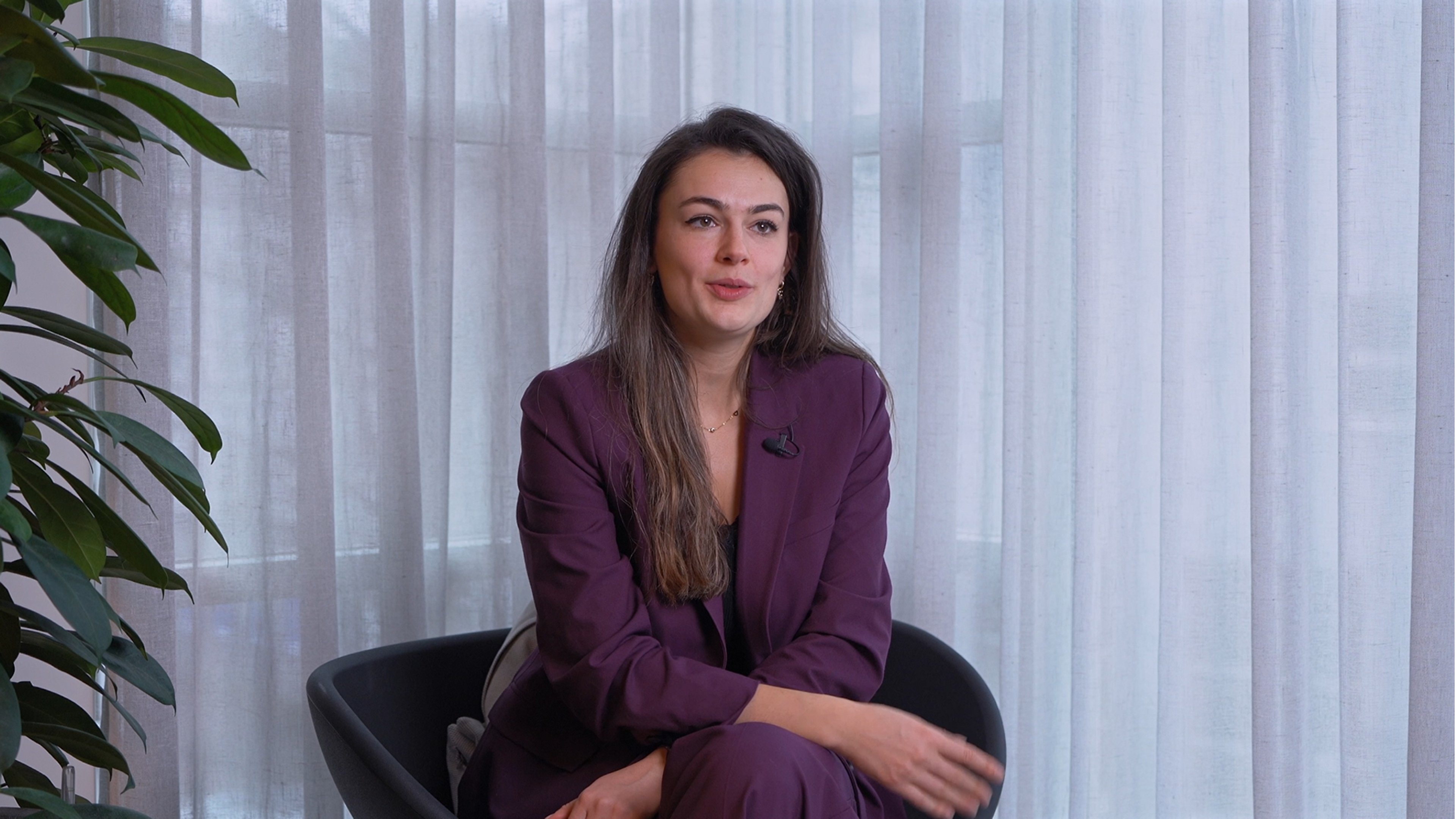
An introduction to the Deisgn and Development phases by Q42 and Fabrique

An early rendition of the online exhibition space in Oculi Mundi: a highly innovative way of presenting cultural heritage items in an online environment.
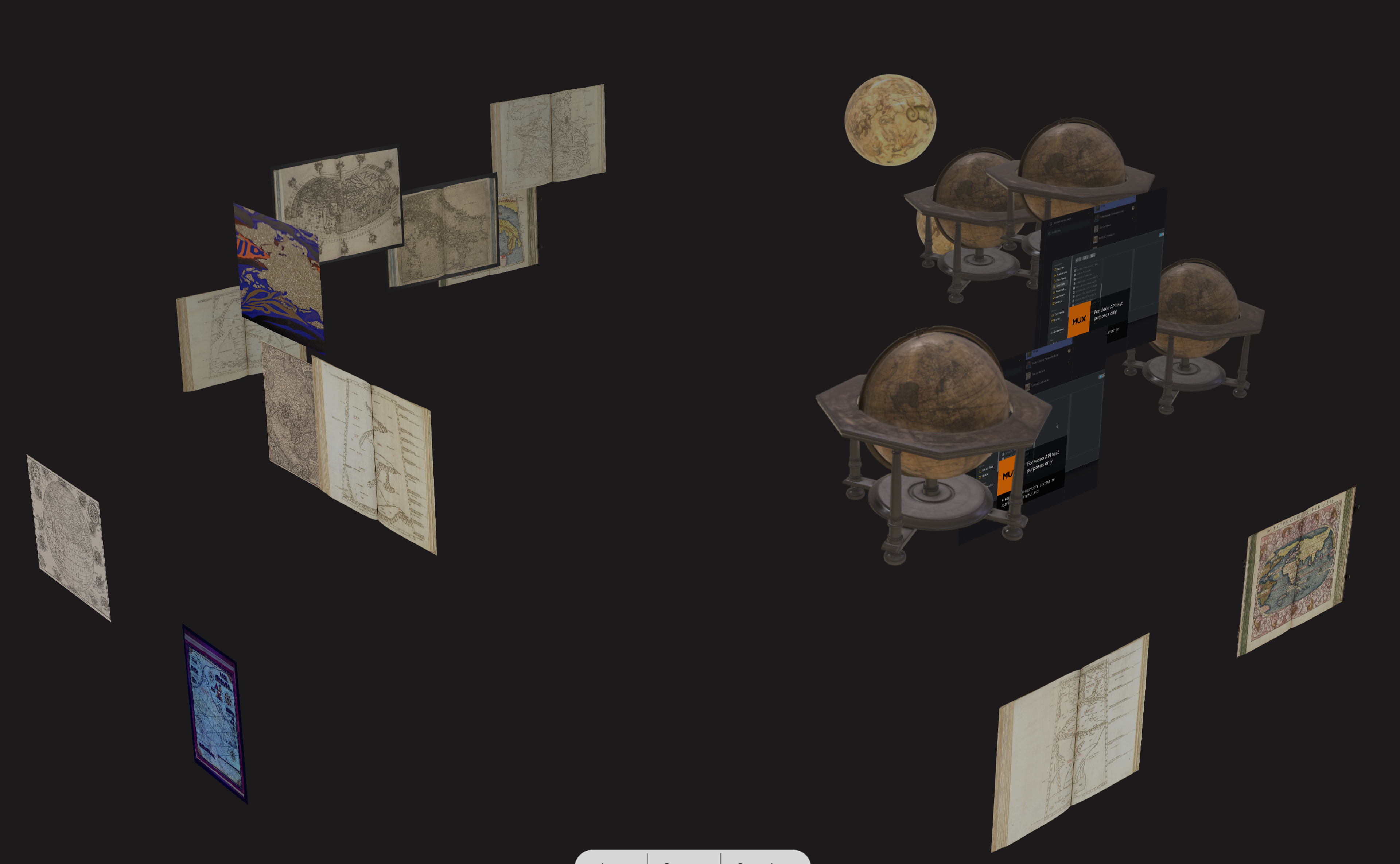
Here, testing maps and three-dimensional globes in the digital exhibition space
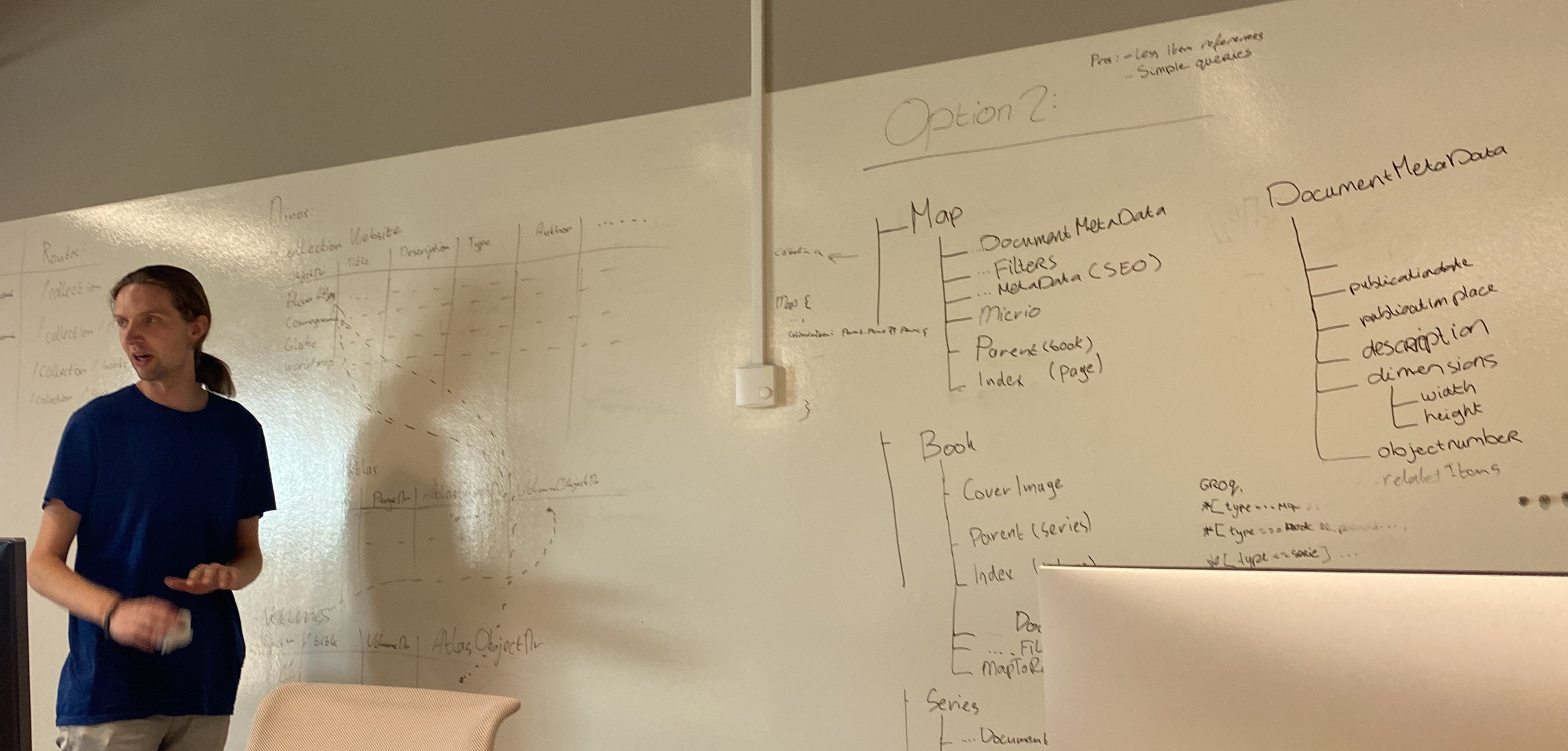
Ruben Bimmel, lead coder, presenting cataloguing and display options in the Q42 offices, June 2023
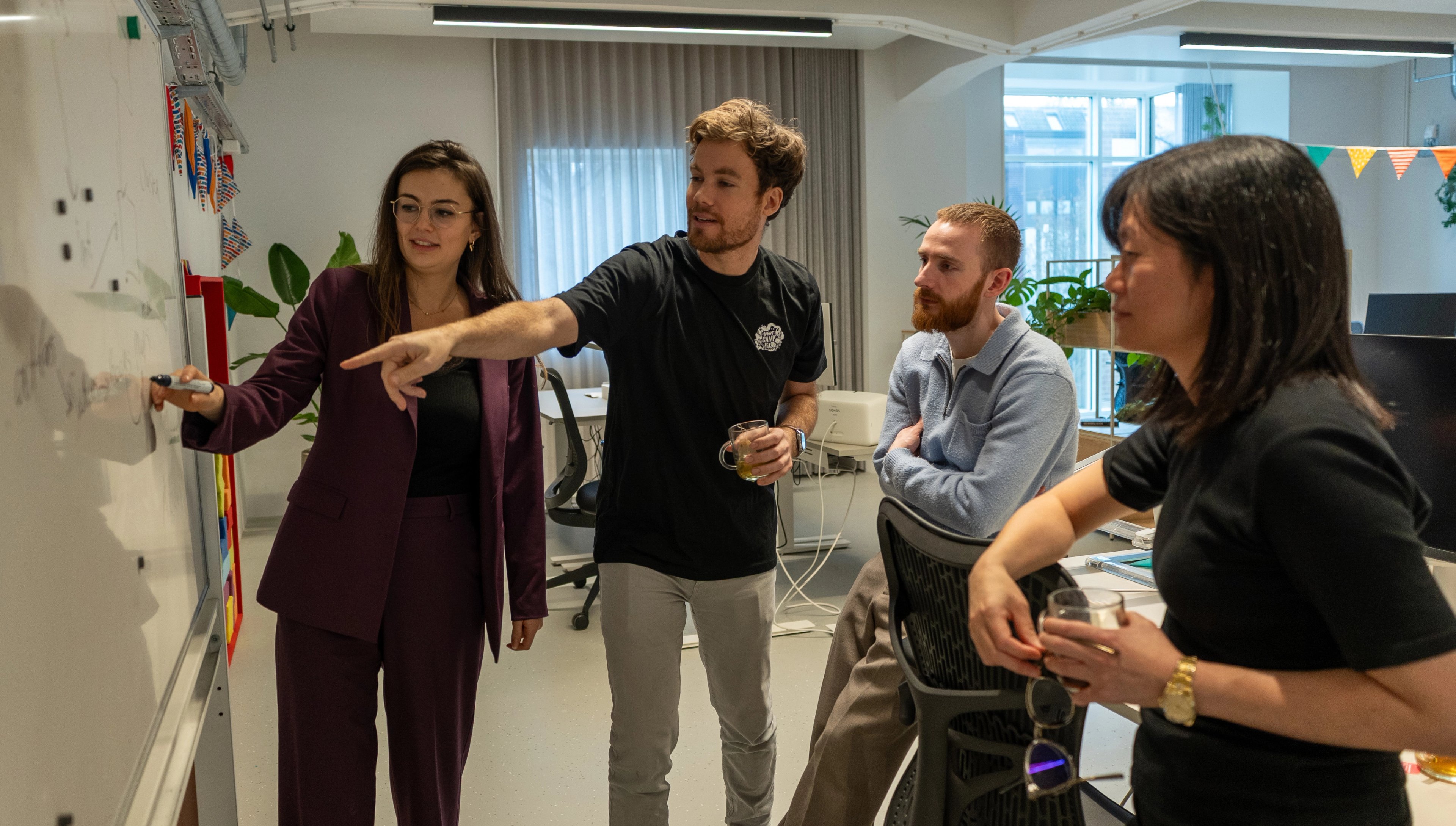
Mara Polak, Sander Vanheste, Marvin Sernee and Chin-Lien Chen discuss development in the Q42 offices, Amsterdam.
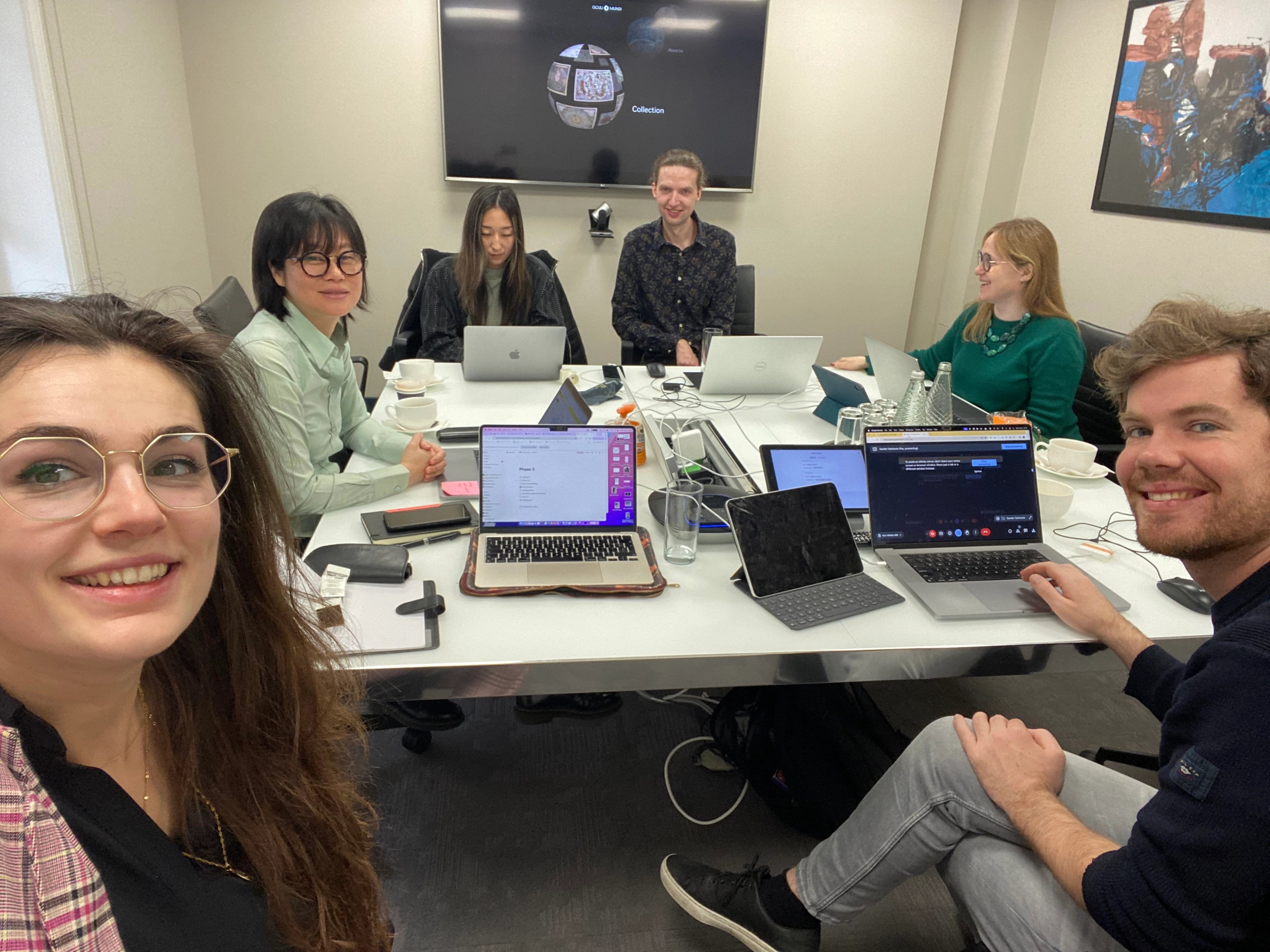
A 'stand up' meeting with Helen Sunderland-Cohen during a development sprint, in Amsterdam
From left, Mara Polak, Chin-Lien Chen, June Park, Ruben Bimmel, Helen Sunderland-Cohen and Sander Vanheste.
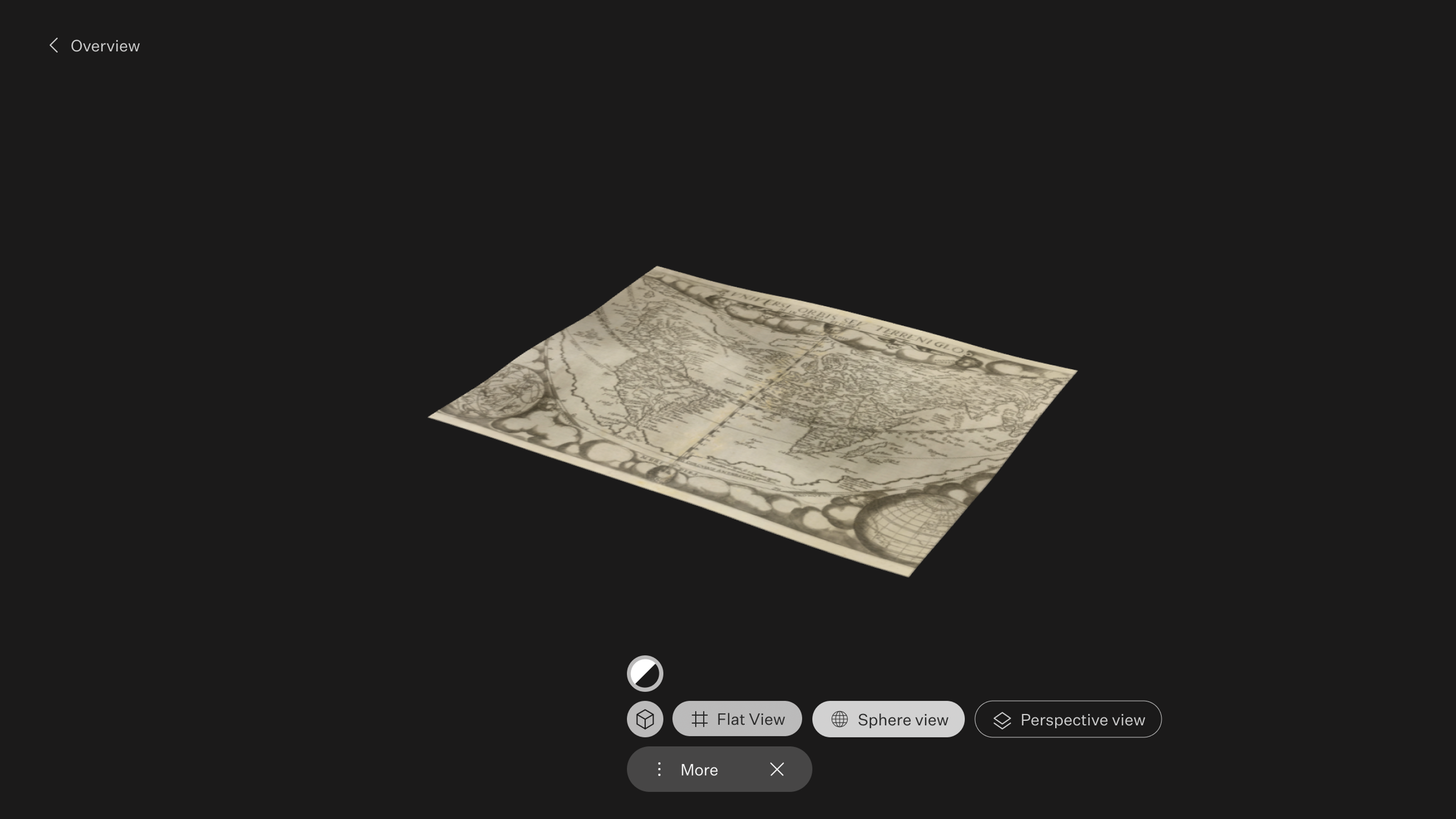
An early test of an individual object from The Sunderland Collection displayed in the collection environment on Oculi Mundi
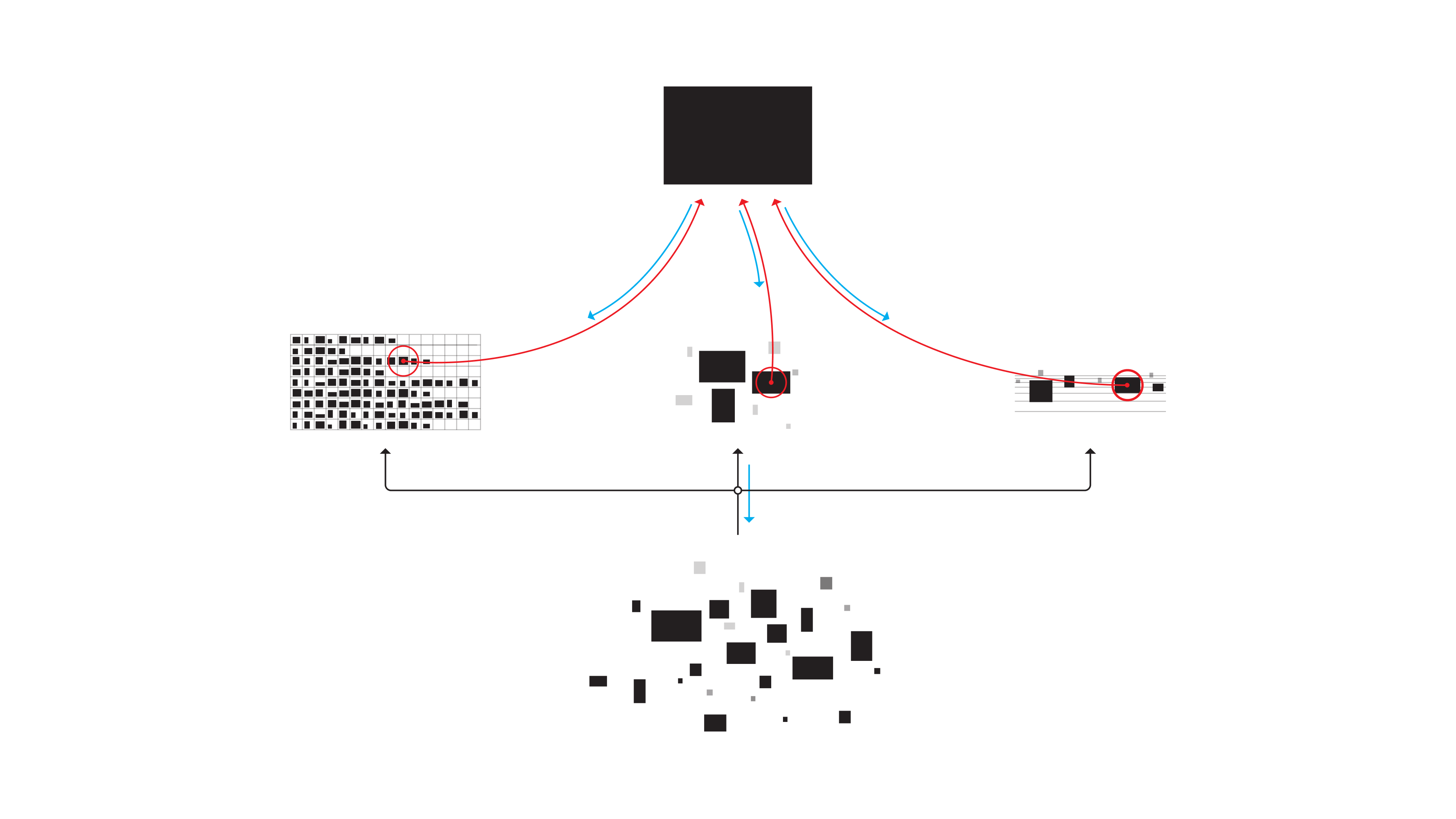
This is a workflow diagram created by the web development team to analyse the user experience of moving from the view of the full collection to a detailed view of an individual object.
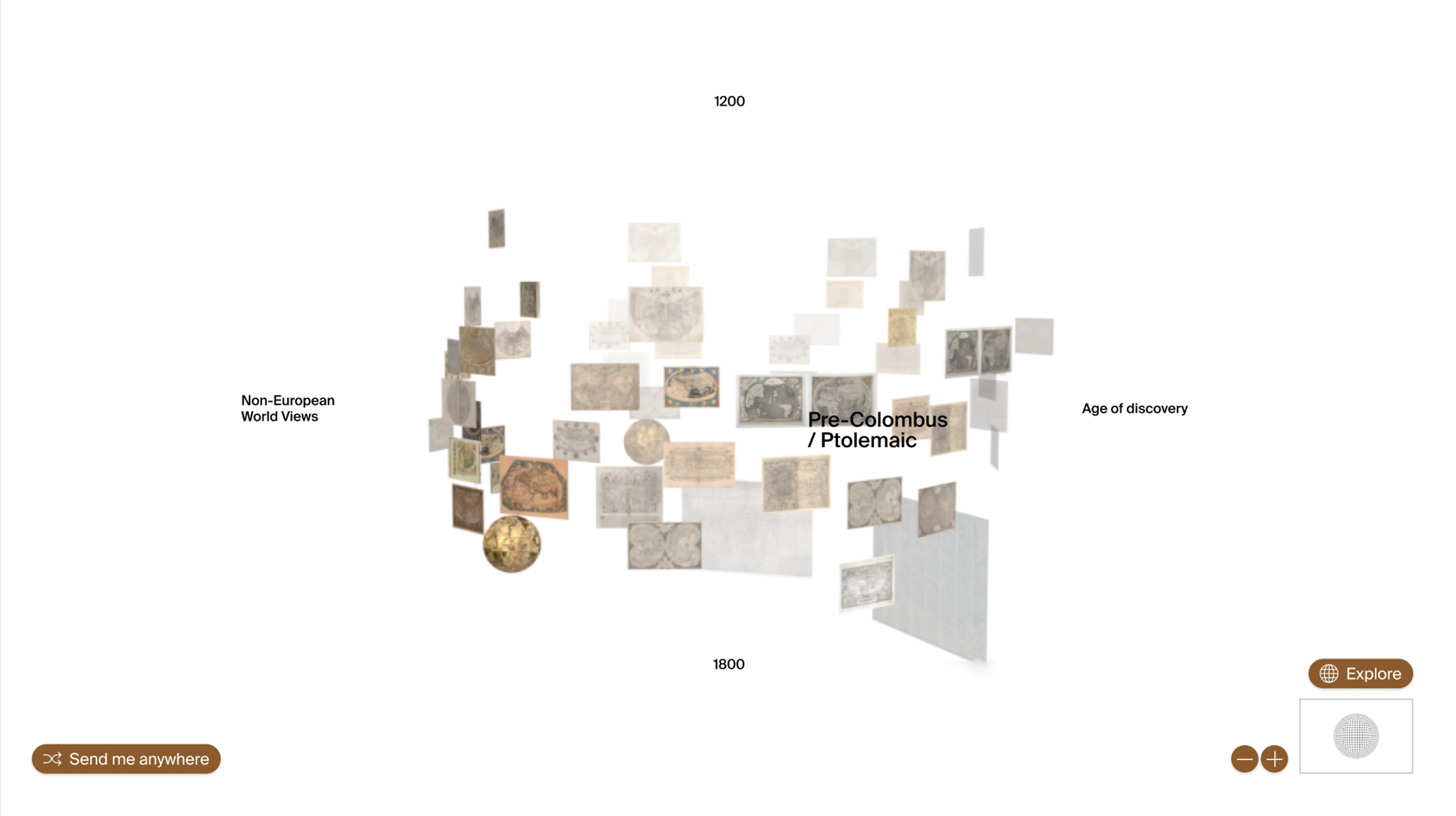
An early test of the 'cluster' presentation of the Collection in digital space might work.
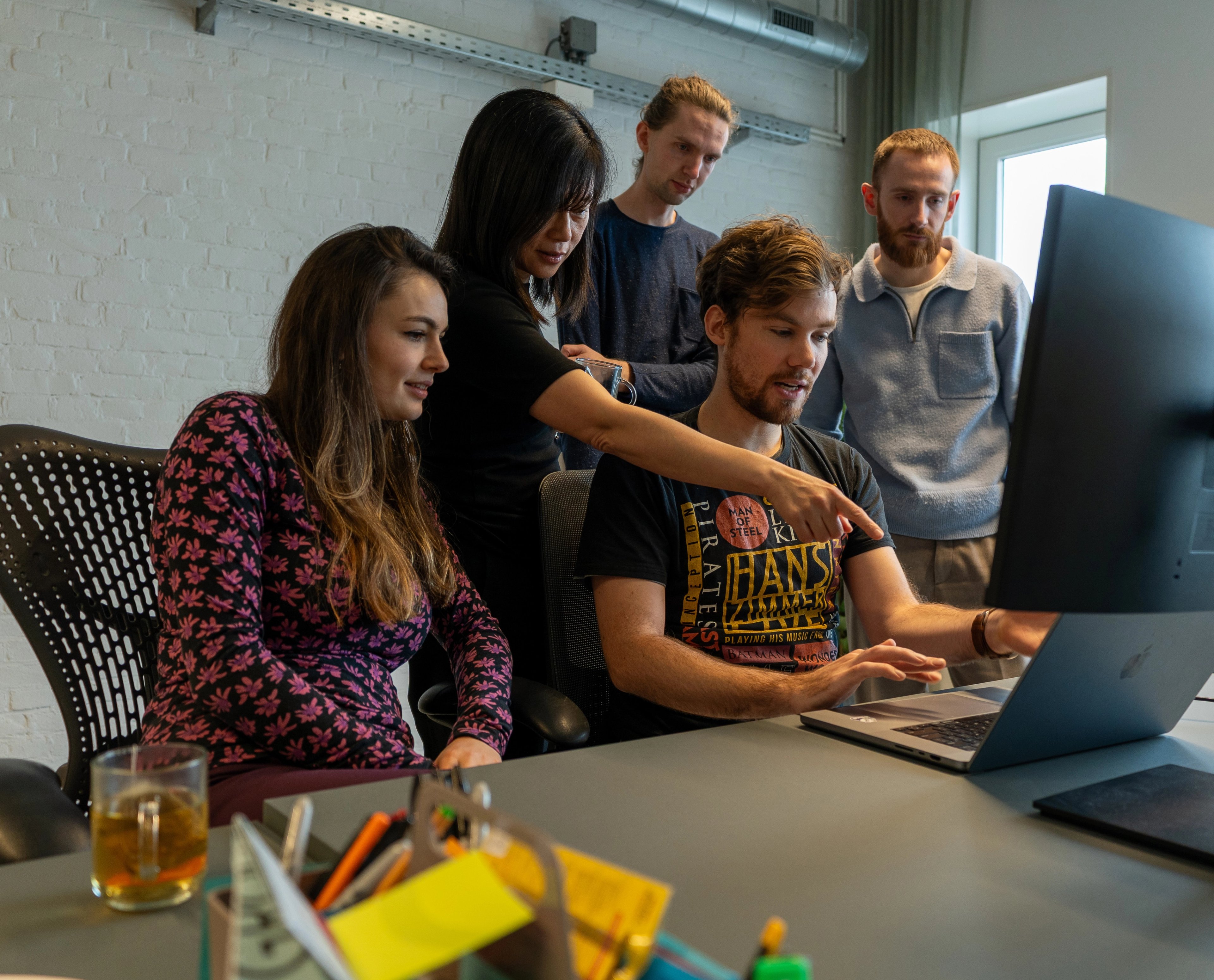
Mara Polak, Chin-Lien Chen, Ruben Bimmel, Sander Vanheste and Marvin Sernee from Q42
We are honoured that in its short lifetime Oculi Mundi has been recognised for its innovation and design.
In 2023, the beta of Oculi Mundi received the Bronze Award in Art & Design at the European Design Awards. A year later, we received the Gold Jury Award and Gold Popular Vote Award in the Arts & Culture category at The Lovie Awards 2024.
In 2025, the Oculi Mundi podcast WHAT'S YOUR MAP? won Gold in Education category at the British Podcast Awards.

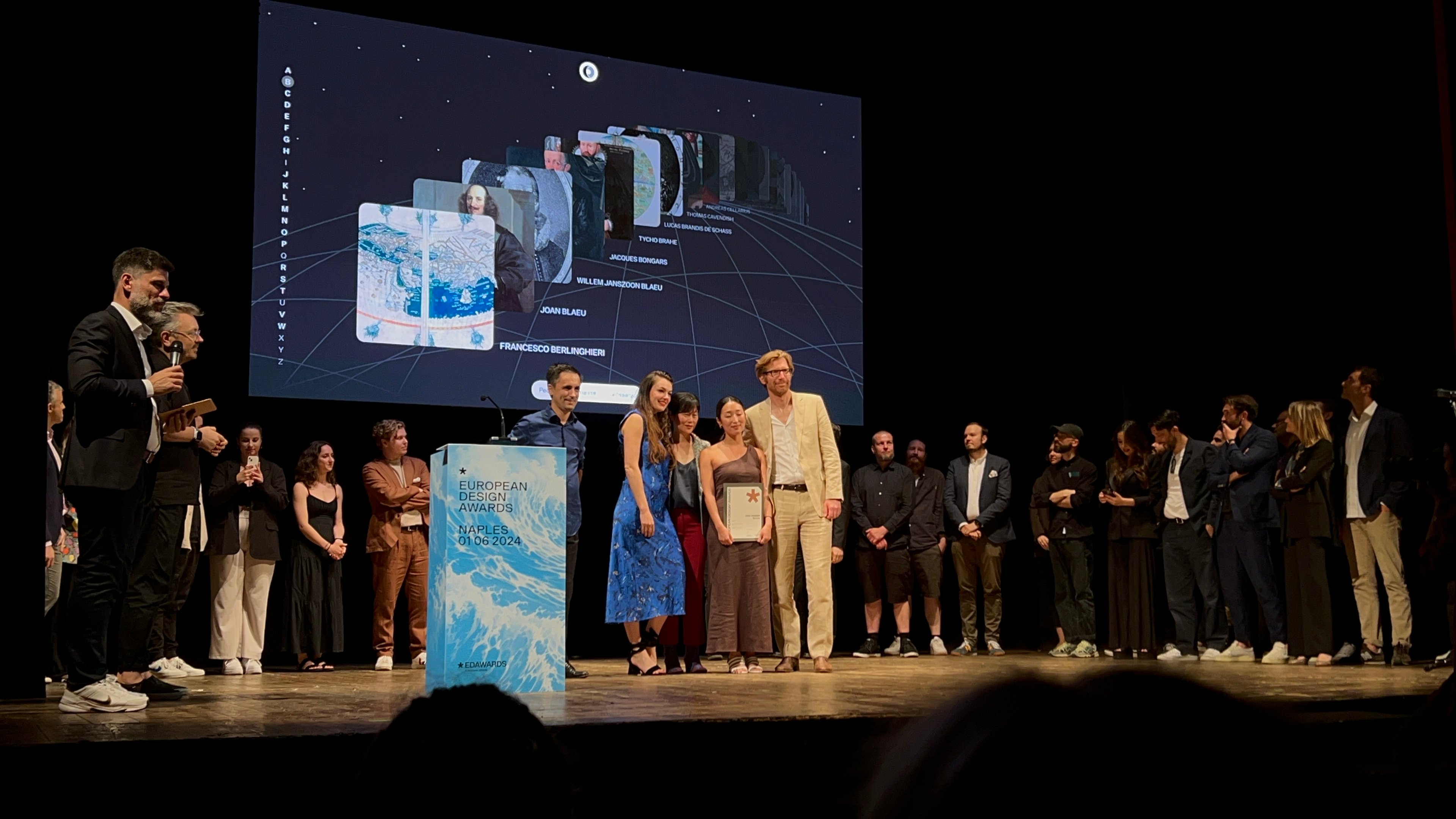
Oculi Mundi won Bronze in the Art & Design category at the European Design Awards 2023
Here is a picture of the collaborative team from Q42 and Fabrique accepting the award at the European Design Awards.

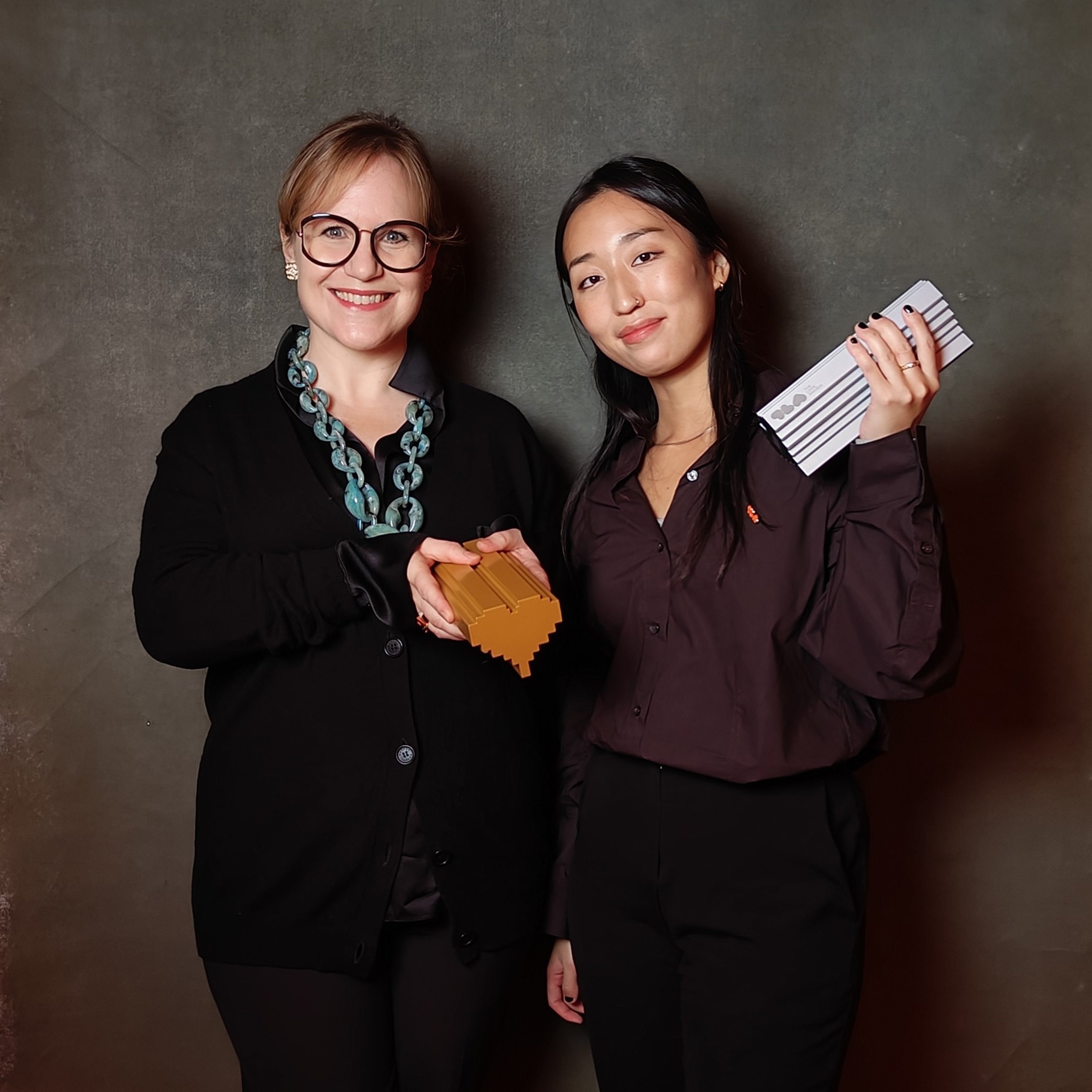
Oculi Mundi won the Gold Jury Award and the Gold Popular Vote Award in the Arts & Culture category at The Lovie Awards 2024
Helen Sunderland-Cohen and June Park (Fabrique) celebrating at The Lovie Awards

WHAT'S YOUR MAP? won the Gold Award in the Educational Podcast category at the British Podcast Awards 2025
Whistledown's David Prest (second left) and Emily Uchida Finch (centre) celebrate with the ceremony hosts at the British Podcast Awards 2025 in London

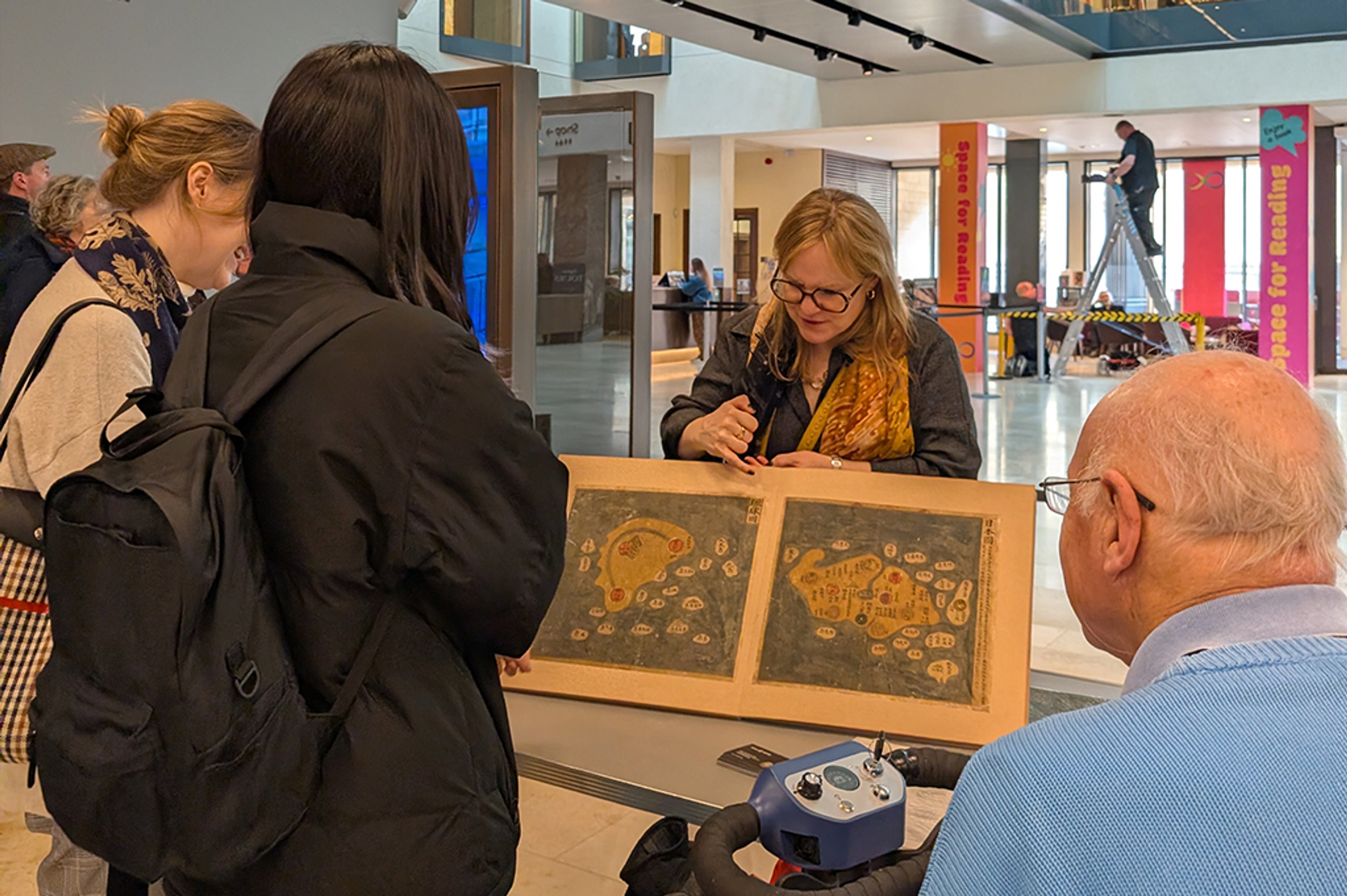
Helen Sunderland-Cohen showing visitors the ‘Ch'onha Chido’, a 1780 Korean atlas, during the Maps: Digital | Analogue Conference at the Bodleian Library in Oxford, February 2026
The conference featured a presentation on the colouring on Early East Asian Maps by Drs. Diana Lange and Oliver Hahn.

The logo of Ex Carta, a curation of iconic literary and world building maps from 1506 to the present day, and the sister collection to The Sunderland Collection.

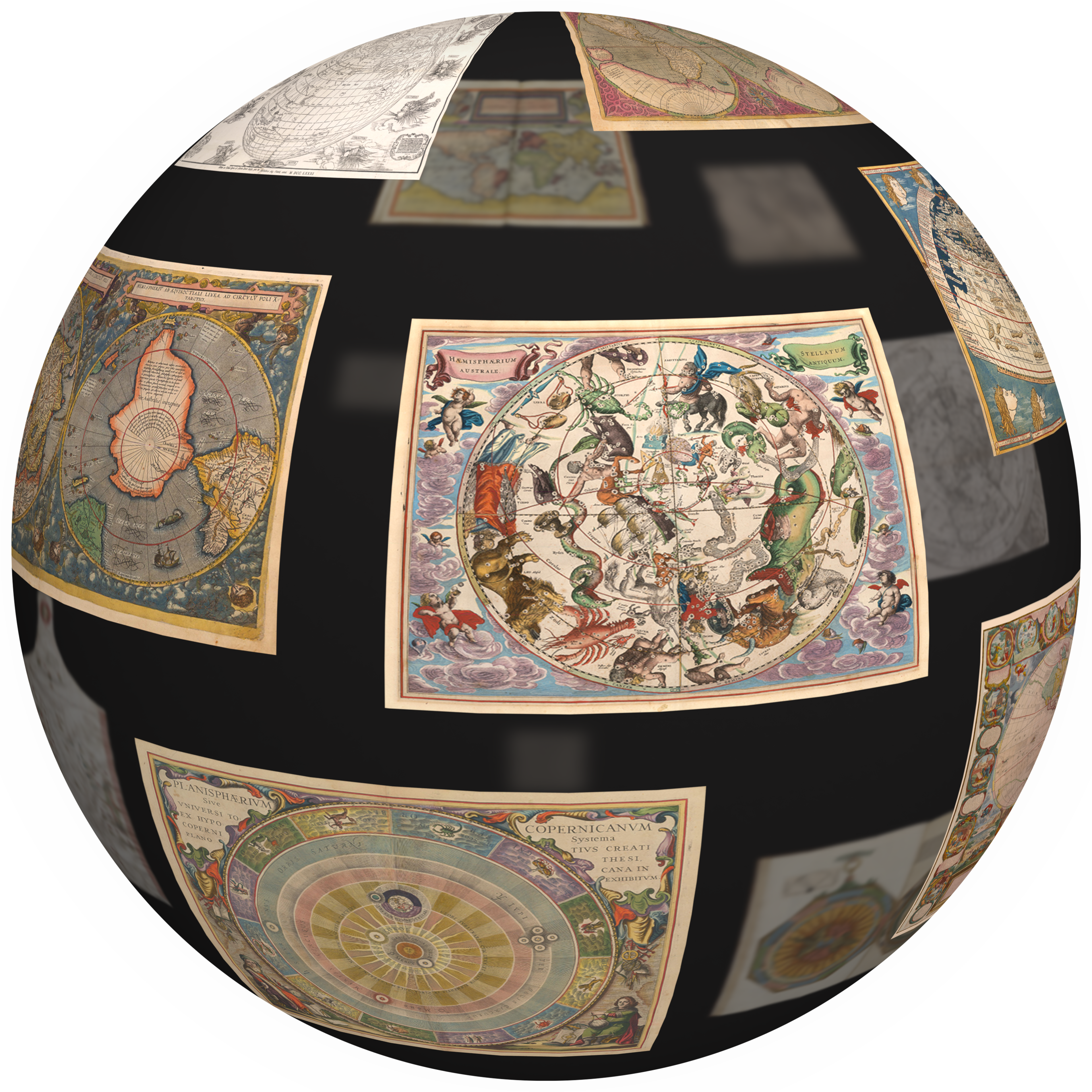
The three-dimensional 'Collection' globe icon from the 'Gallery of Spaces' navigation menu

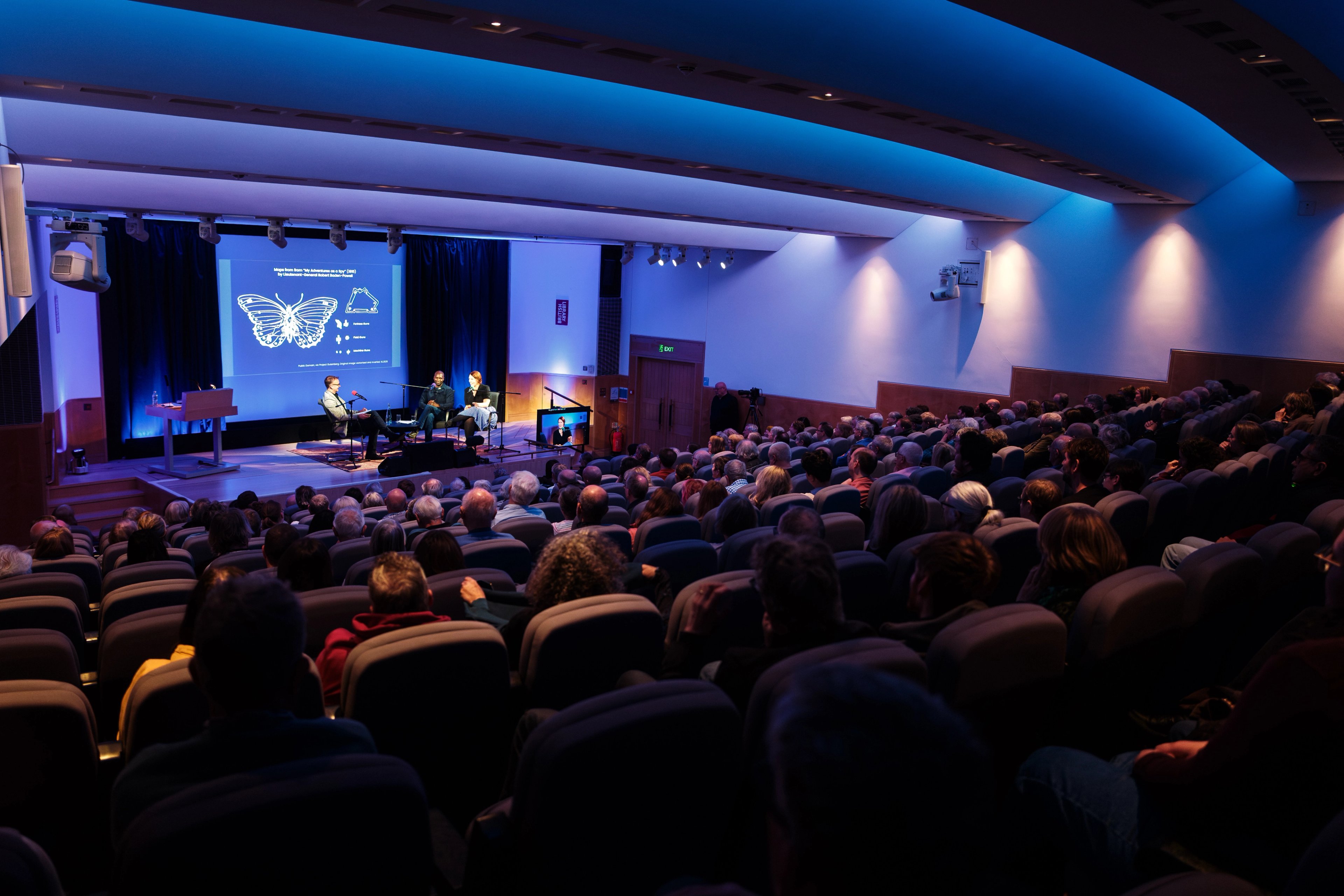
The debut episode of WHAT'S YOUR MAP? LIVE was held at the British Library in London, October 2025
Host Jerry Brotton spoke to guests Dwayne Fields and Caroline Pantling for one of two special live episodes of the award-winning podcast.

Each area of the website has been thoughtfully designed with a variety of users in mind.
Here, you can see a view of a Collection item - Jan Blaeu's 1663 'Atlas Major' - in 'Explore Mode' which provides super high resolution images of page spread for people to scroll through and enjoy, with the option to open information panels.

Private View for Kristina Chan's 'Habitable Climes' at Canada House in London, 2025
The second artist to take part in the Art Programme was Canadian artist Kristina Chan. He exhibition 'Habitable Climes' took place at Canada House in London 12 March - 30 April 2025.
Oculi Mundi has partnered with the World History Encyclopedia - wherever you see the WHE logo on Oculi Mundi, you can click on it to learn about the people and historical events behind our maps and atlases.
An incredible resource for history-lovers worldwide, World History Encyclopedia is a non-profit that covers a wide range of historical figures and events from around the world, reaching back thousands of years into human history. You can search thousands of articles and explore the annals of time!

Oculi Mundi has created a suite of useful resources including a timeline of historical events to provide context, a dictionary of mapmakers and publishers and a glossary of useful terms.

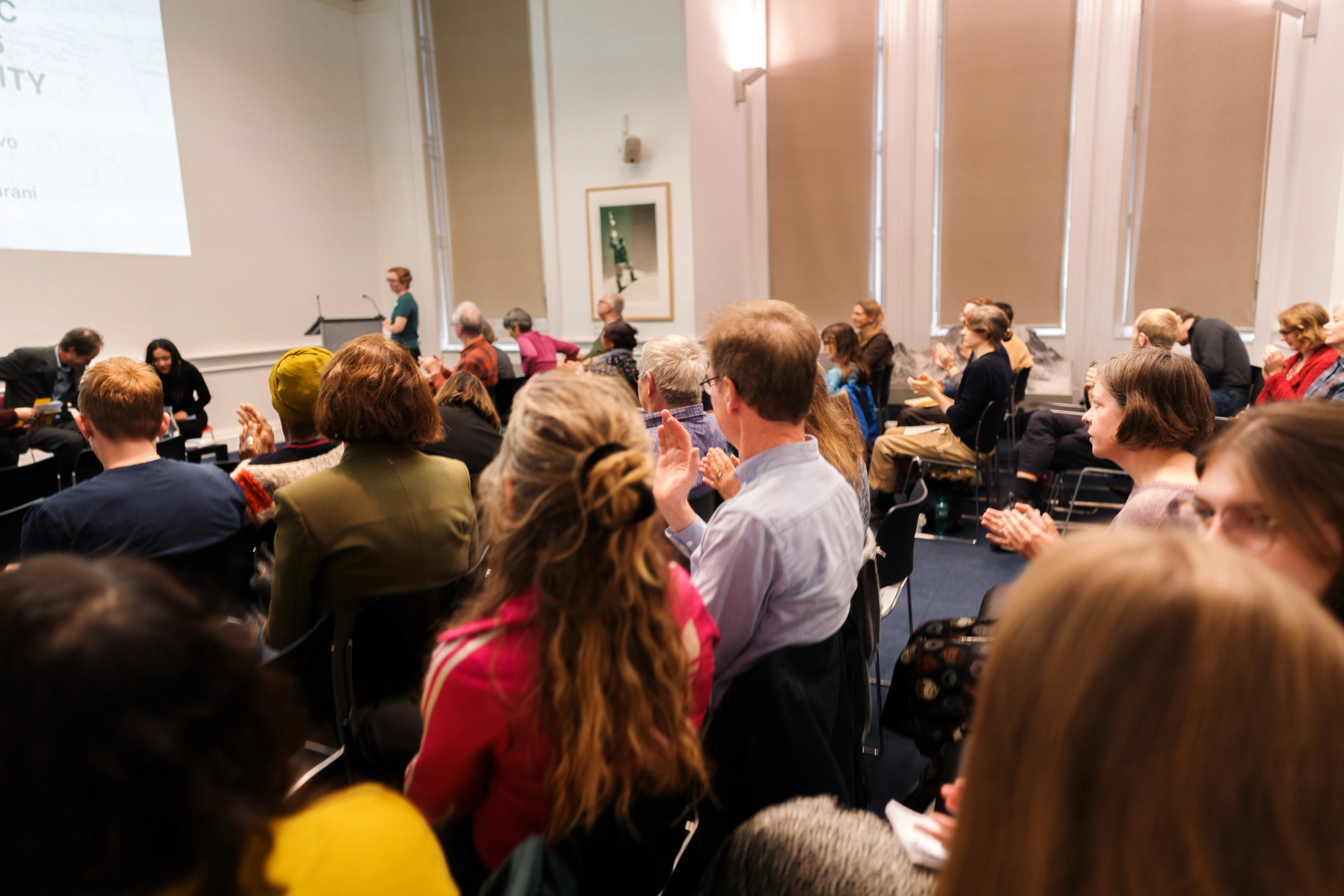
A view from the audience during 'Challenging Maps and Exploration', a Sunderland Collection Conference held in partnership with the Royal Geographical Society, October 2025
The Sunderland Collection holds a diverse series of free-to-attend conferences and symposia dedicated to maps and the map community. Sign up to the Oculi Mundi newsletter to join us for the next conference!

The Mapmaker Matrices on Oculi Mundi show the connections and relationships between cartographers, philosophers, scientists and publishers in a vast network of cultural exchange.

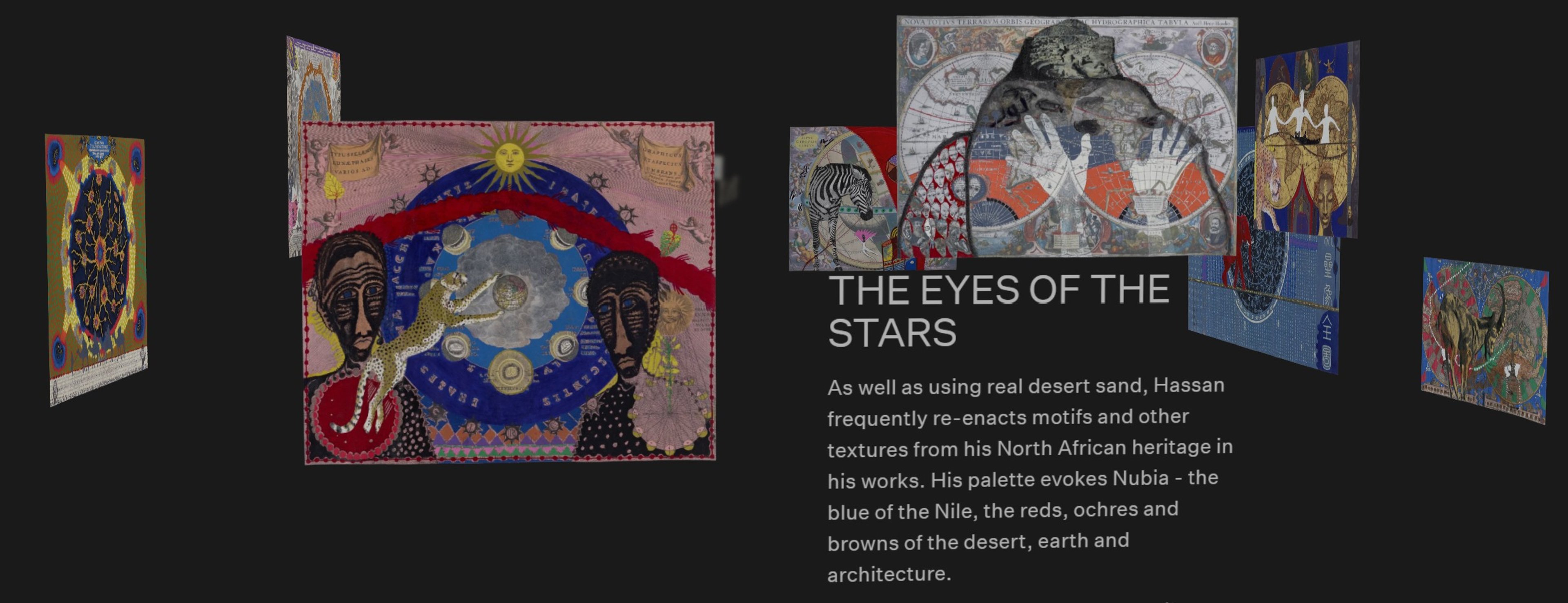
Online Exhibitions run in parallel with physical Art Programme exhibitions. Here, you can see the series space for 'The Eyes of the Stars' in Fathi Hassan's online exhibition for 'Shifting Sands' (2024)
Fathi Hassan was the first artist to participate in the Art Programme. His physical exhibition, of the same name, was held at 9 Cork Street London from 31 May to 15 June 2024


Web design studio Fabrique and their sister company, web developers Q42 based in Amsterdam, were engaged to turn the conceptual dreams of Oculi Mundi into a (virtual) reality.
Following the remit “Not Your Mama’s Website”, Fabrique and Q42 pushed the limits of technology and coding but balanced this against the need for smooth user experience and functionalities in order to create a full immersive environment.
Testing was done both internally and with real life audiences. The team also built a bespoke content management system to manage the website.
The initial visualisations conjured by M A R and Thecreativedestruction were brought to life by Fabrique, and coded, animated, and tested by Q42. The development process involved rigorous testing to determine the technical feasibility of the project - specifically, what could and could not be coded. Between them, Q42 and Fabrique were able to establish the most effective ways for users to navigate the Oculi Mundi universe.
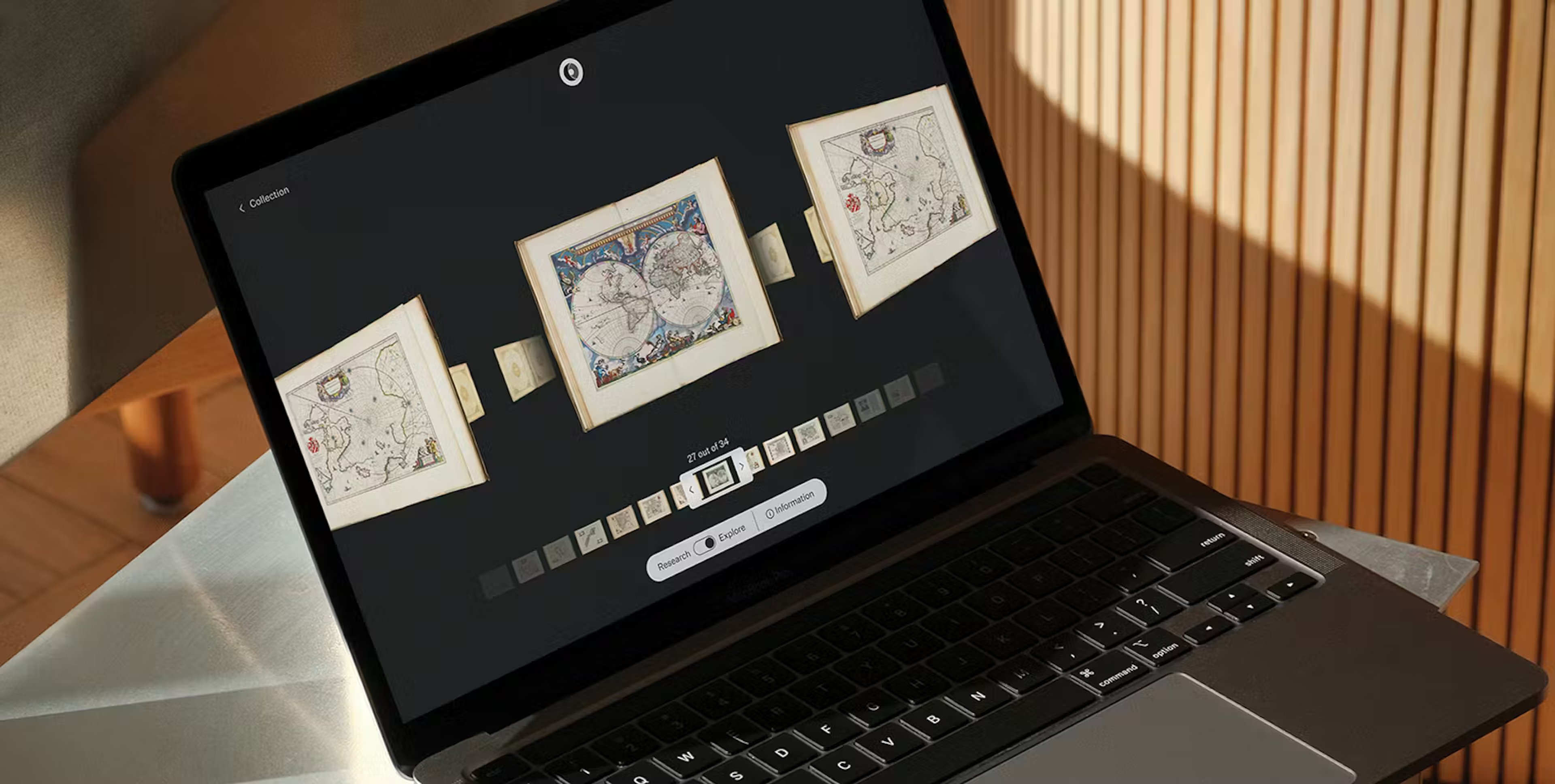


This project presented major challenges in the areas for user experience, performance, and, importantly, accessibility. Oculi Mundi is under regular review to ensure all features and presentations meet international accessibility standards. The platform has been designed to operate effectively across various internet speeds, the site is optimised for use on the latest laptops, mobile devices, and even clunky public library computers! You can find out more about the access features on the site here.
Oculi Mundi has been designed to be iterated and expanded; as The Sunderland Collection evolves, so does it’s digital home.