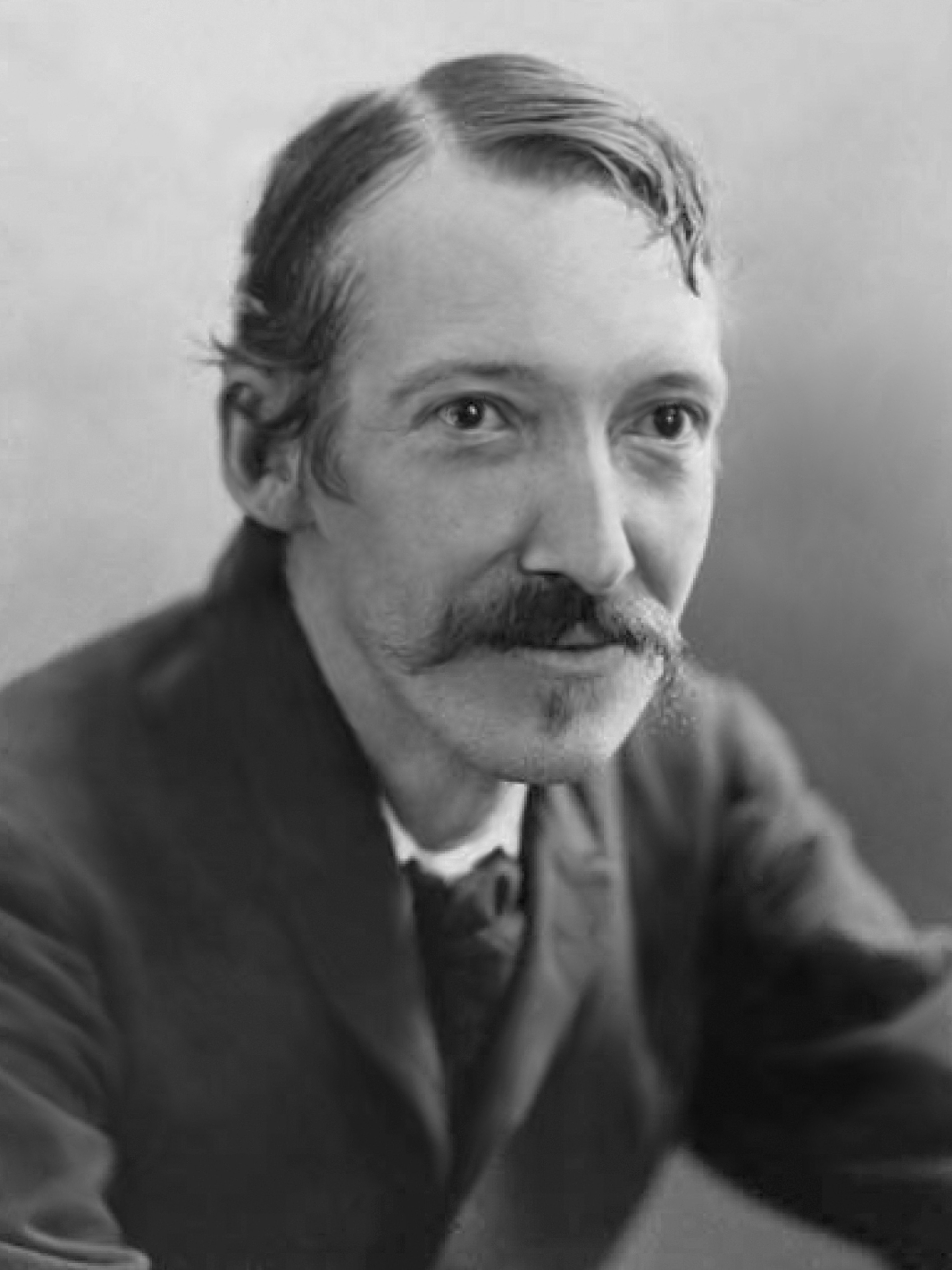
Robert Louis Stevenson
Back to people overviewRobert Louis Stevenson (1850–1894) was a Scottish author whose work had a profound influence on popular fiction in the twentieth and twenty-first centuries.
Born and raised in Edinburgh, he was a sickly child and plagued throughout his short life by recurrent ill health. Despite this, he had a happy childhood and enjoyed journeys around Scotland, including the isles, resulting from his father’s work as a lighthouse engineer. It was the romance of travel rather than his father’s profession that inspired his subsequent career.
As a young man, Stevenson led a somewhat bohemian lifestyle within limited means, and became involved in London literary life when not travelling in Europe. He met his future wife and later collaborator, Fanny Van de Grift Osbourne, in France. His romances Treasure Island (1883) and Kidnapped (1886) helped shape pirate fiction and adventure writing for younger readers, while Strange Case of Dr Jekyll and Mr Hyde (1886), famously conceived during a period of illness and nightmare, remains one of the key texts of the late-Victorian Gothic. By the close of the 1880s he was a celebrated and best-selling author, admired internationally.
Partly because of ill health, he spent his final years in Samoa, where he immersed himself in local culture and politics. Known there as Tusitala, the teller of tales, he was popular with the islanders, and news of his sudden death at the age of forty-four was received with shock and grief.
Image ©State Library of New South Wales