Globe
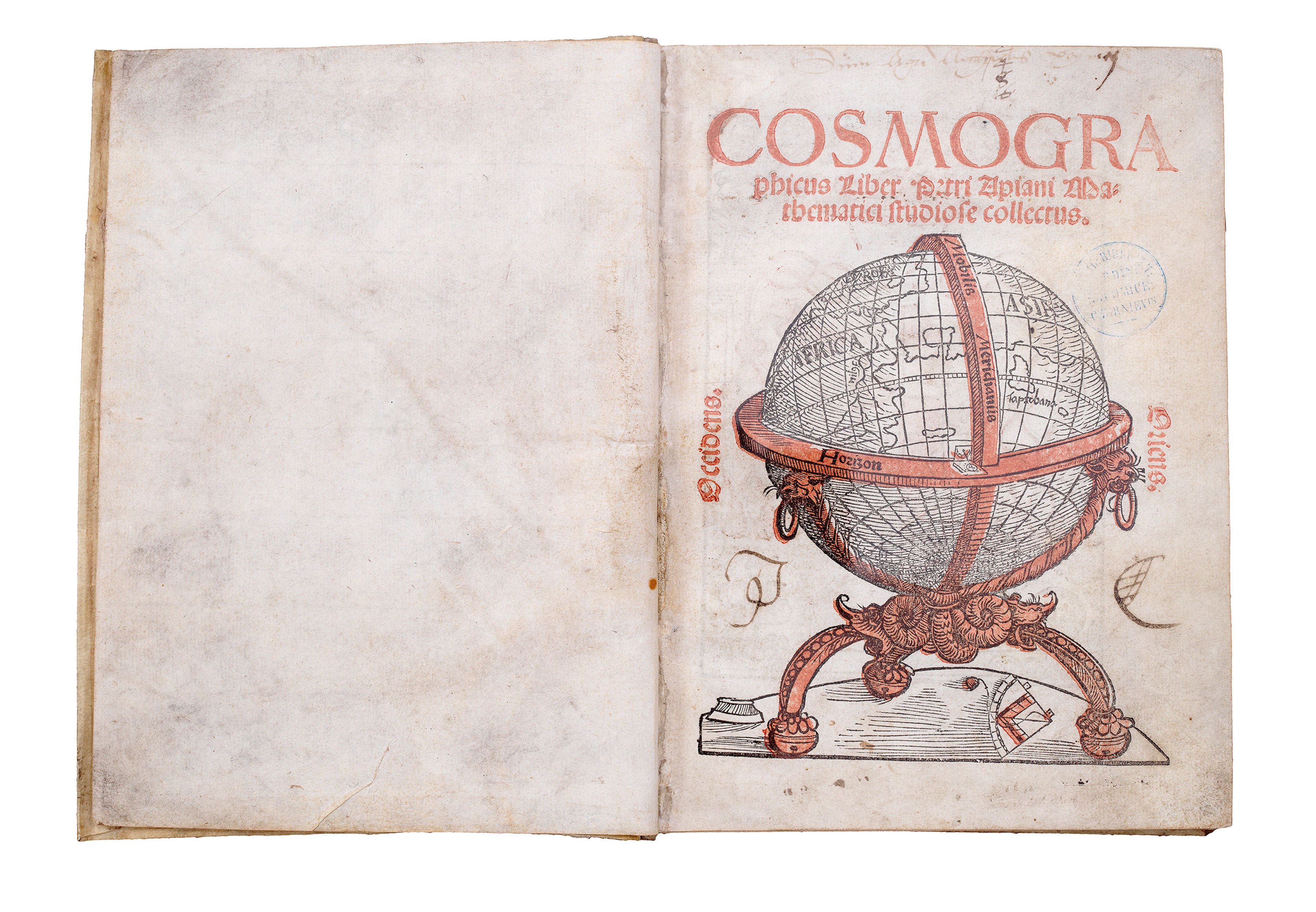
Back to people overviewA model or the earth or the heavens, in which a map is pasted on to a sphere.
Globes turn on their axis mimicking the movement of the Earth or heavens. They were often made from plaster on a wood and paper frame, or from metal. The map pasted onto this sphere was usually painted. Globes can be used for navigation, for determining one's position relative to a place or time, and to make many other calculations. They come in a huge range of sizes, from pocket globes to table globes, to huge floor globes. The Sunderland Collection contains a beautiful pair of floor globes by Joan Blaeu.
The printed segment of a globe is known as a globe gore. A map is incised in wood or engraved in a copperplate as a series of connected segments, such as Jodocus Hondius’ Globe gores of c. 1620. The image is then printed on a single sheet, which can be cut out and pasted directly onto a sphere. Gores can be scaled larger or smaller, resulting in an increase or decrease in the size of the globe.