John Romero
Series 6 Episode 4
At Doom’s Gate with John Romero
Series 6 Episode 4
Available on all major podcast platforms: click the icons or hit 'play' to listen now.
In this episode, Jerry will be joined by a pioneer of the video game industry John Romero. John is best known as a co-founder of id Software, and responsible for designing over 130 games, including the iconic Wolfenstein 3D (1992), DOOM (1993) and Quake (1996) - to name but a few!
Together, Jerry and John will be stepping into the map of ‘E1M1: Hangar’, the legendary opening level from his iconic 1993 first-person shooter DOOM. John's ground-breaking cartographic creations and level design principles for the game represented a pivotal gamechanger for digital spatial mapping.
They discuss how introducing non-linear layouts, intricate floor plans and even the access through to other in-game environments, John’s work fundamentally shifted game design away from simple two-dimensional mazes, resulting in the vastly increased architectural complexity and immersive spatial design seen in modern 3D video games.
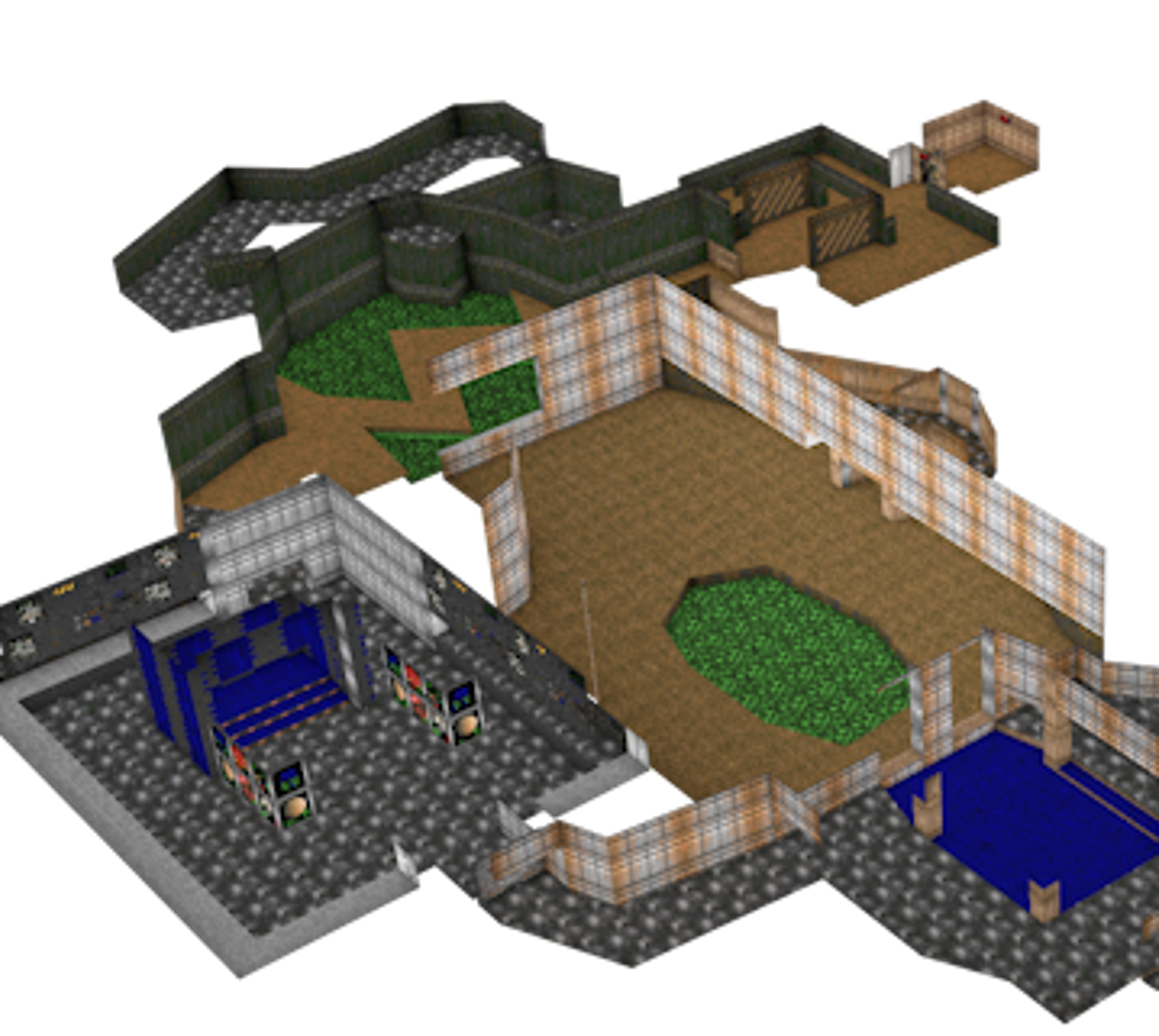
To explore the map as you listen to the episode, click the image below:
‘E1M1’ Hangar Map from Doom (1993) ©id Software/John Romero
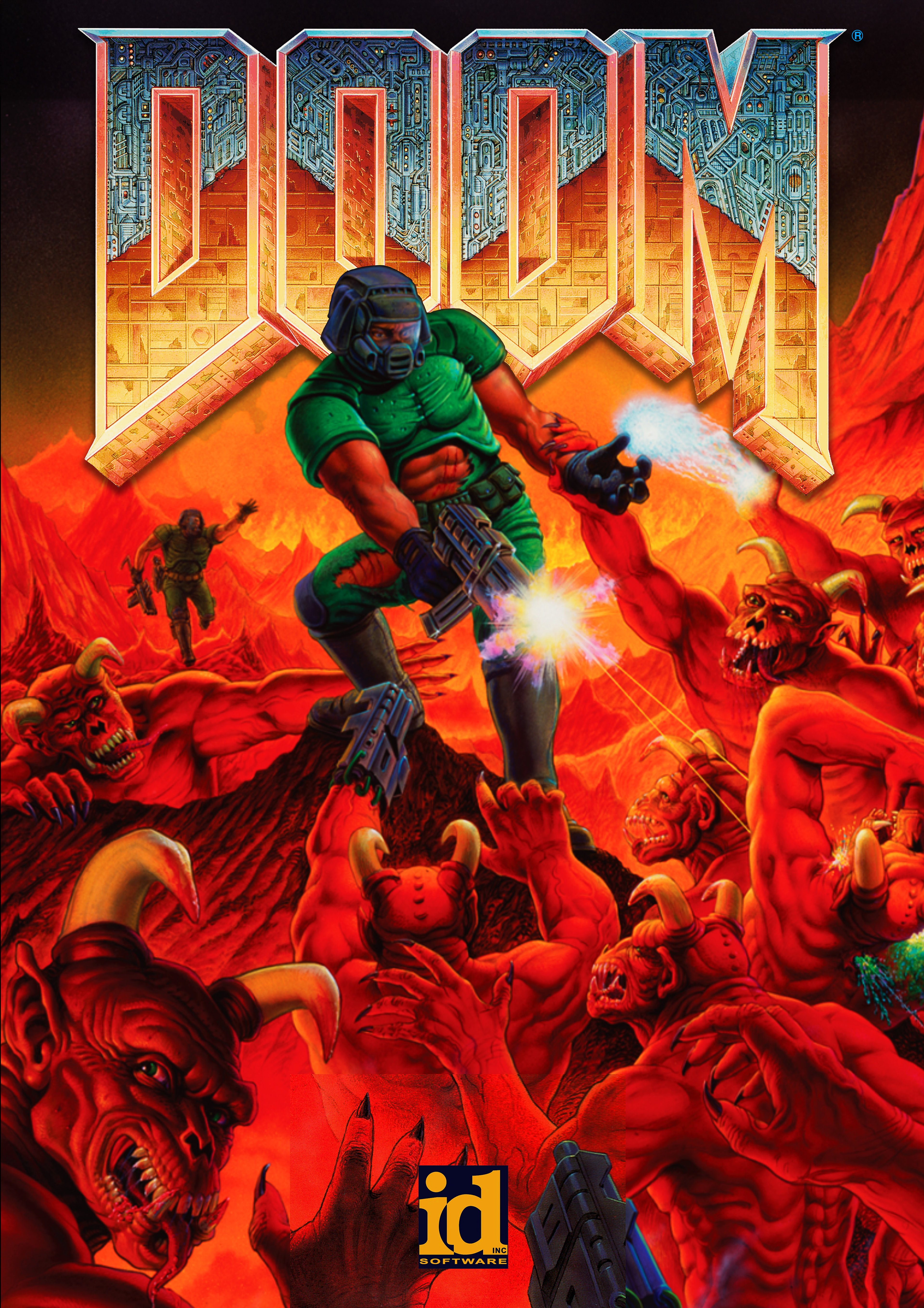
Familiar to millions of players around the world, this is a map of E1M1 Hangar, the first level of the iconic video game DOOM (1993, id Software). Set on the Martian Moon of Phobos, the game tasks players with guiding a space marine - commonly known as "Doomguy" - on his mission through levels of hellish battle arenas, each infested with demons.
©id Software
Founded in Texas in February 1991 by a group of former Softdisk employees, id Software initially made its mark developing engaging platform games like Commander Keen (1990).
DOOM was co-created by game designer John Romero alongside his id Software colleagues; programmer John Carmack, artist Adrian Carmack, concept developer Tom Hall, and artist Kevin Cloud.
During the summer of 1993, game designer Sandy Petersen joined the team, bringing valuable expertise from his time working on Civilization (1991, MicroProse), and for tabletop game publisher Chaosium, Inc., where he contributed to RuneQuest (1978) and created the seminal horror RPG Call of Cthulhu (1981).
The map reveals the three-dimensional layout of this first episode of the game, titled ‘Knee-Deep in the Dead’. The deceptively simple digitally-rendered map shows the variety of environments one might encounter; rooms, passageways, dead ends, windows and doors, zig-zag walkways and radioactive slime, and a selection of other curious objects you might find along the way.
During a guided walkthrough of the map, John illustrates the player's initial perspective upon starting DOOM to Jerry - who identifies as a non-gamer. John explained that when players first booted up the original DOOM and ‘stepped’ into its opening level, they looked out over a brand new digital landscape unlike anything seen before. It was quite literally a game-changer!
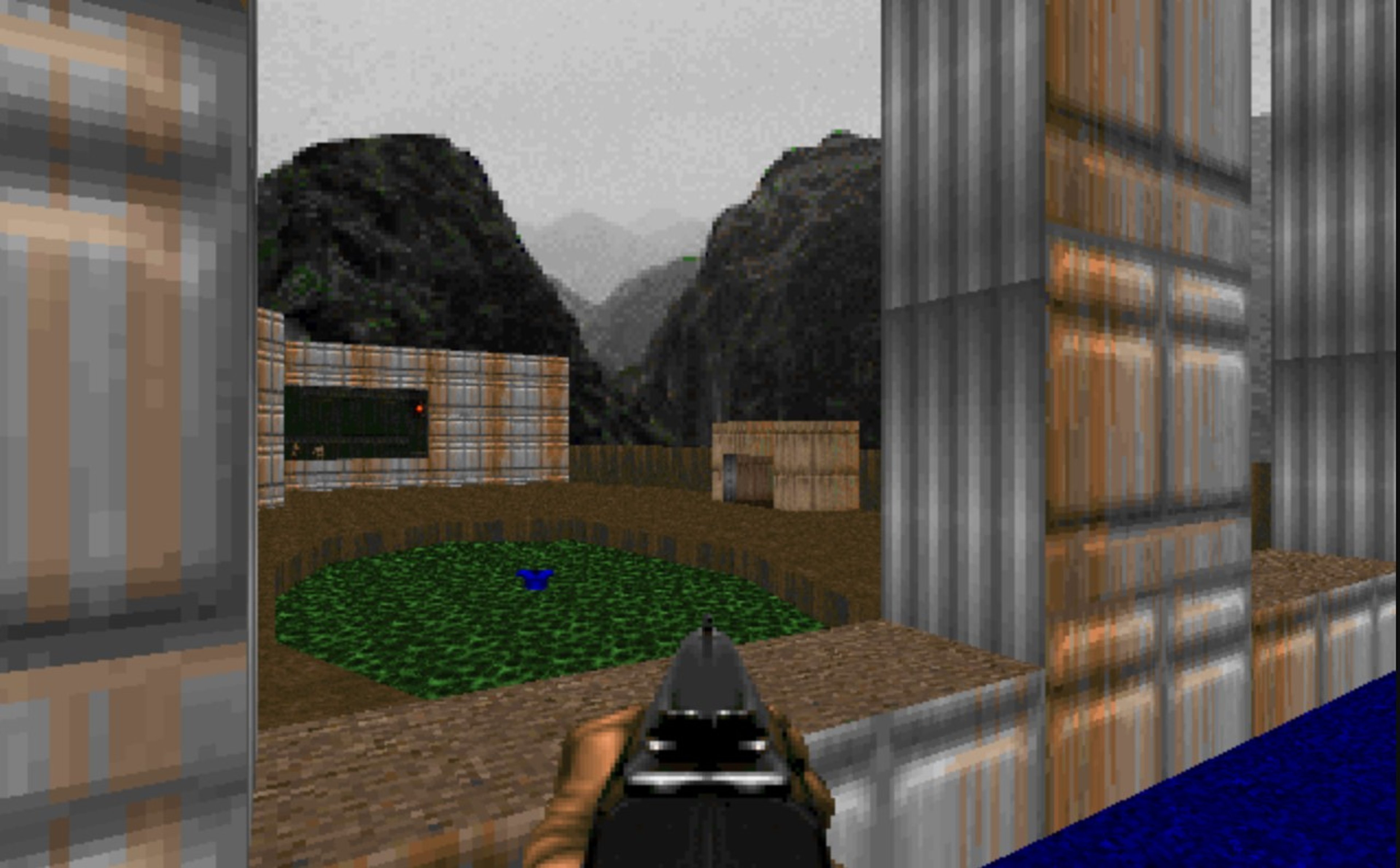
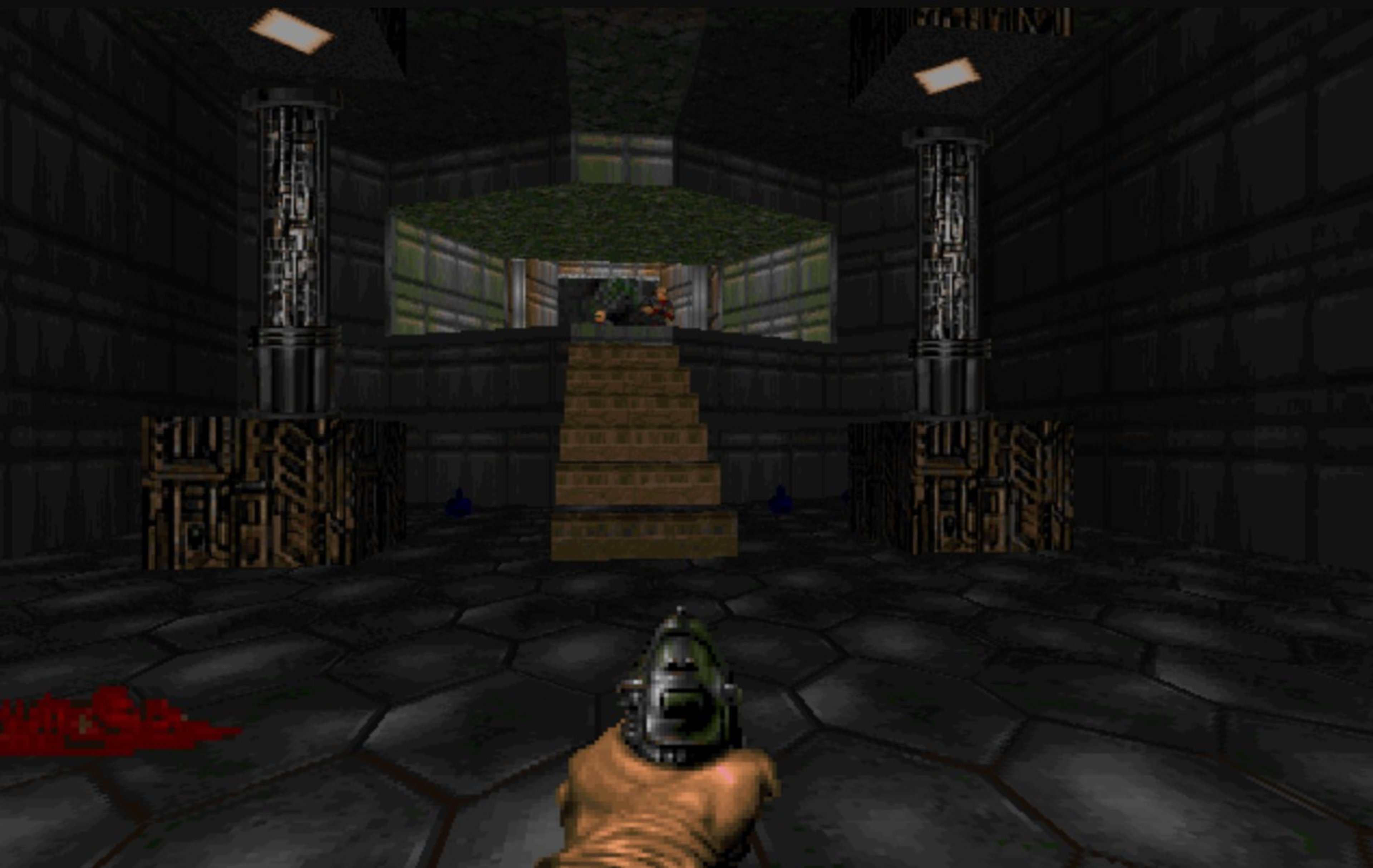
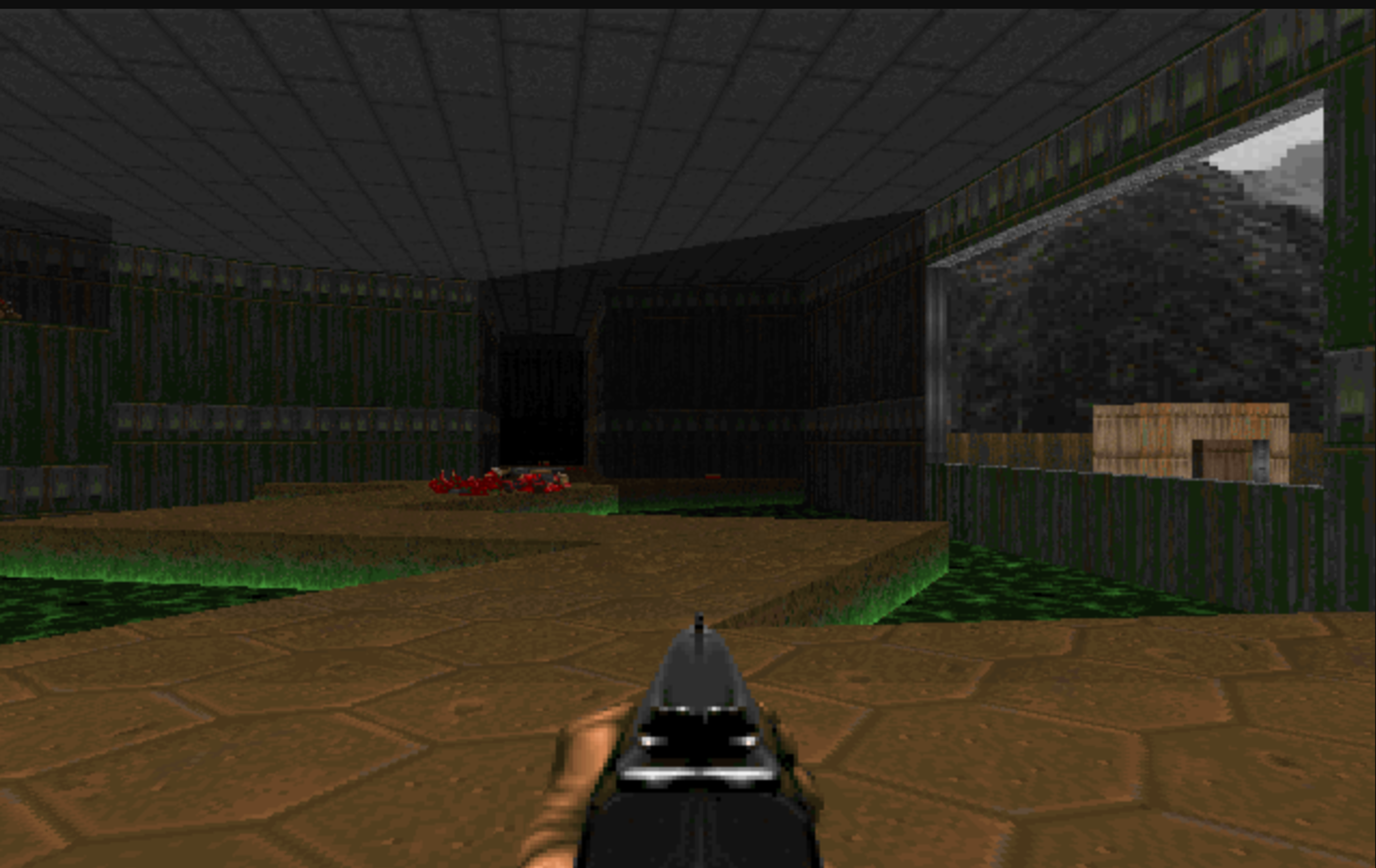
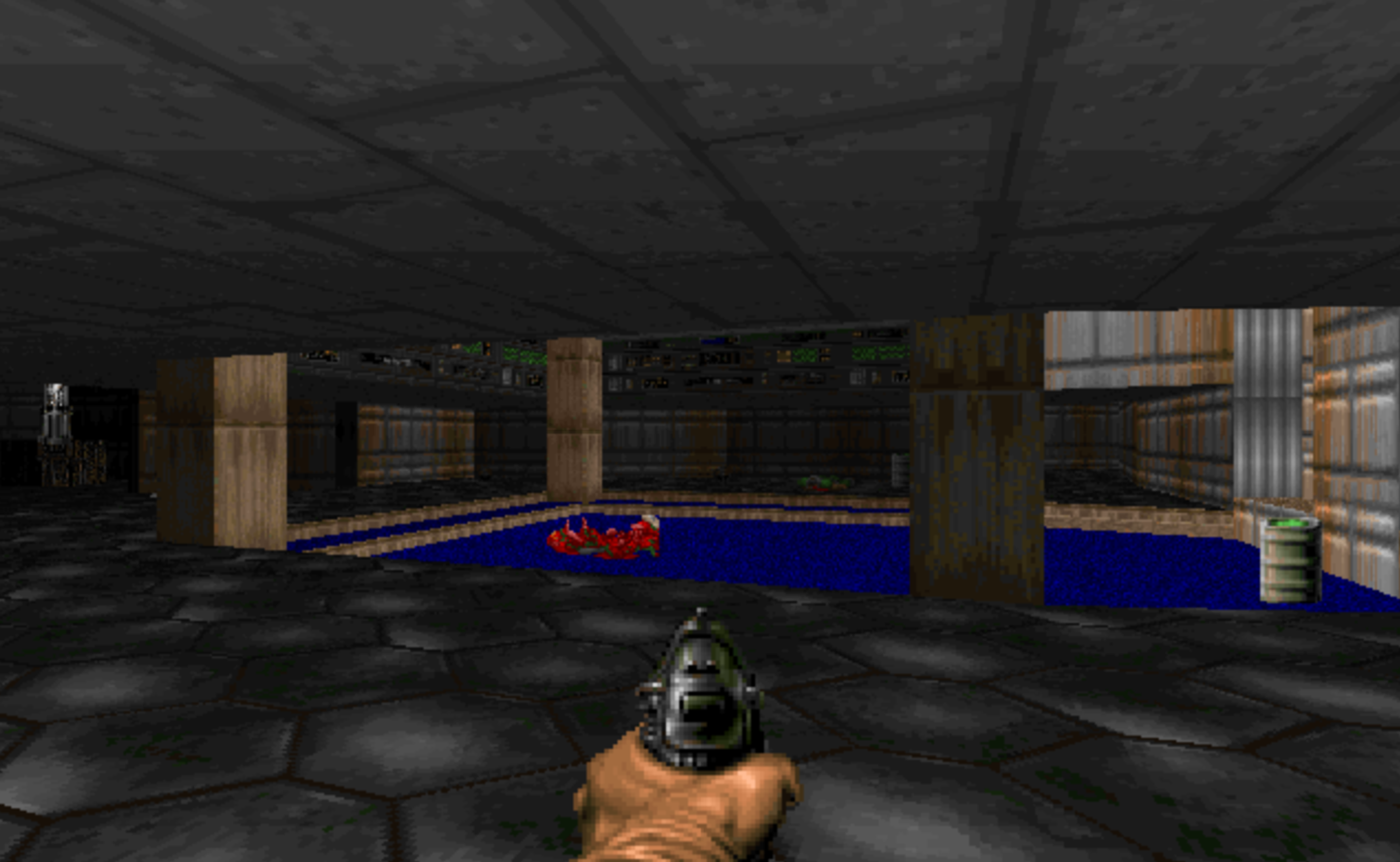
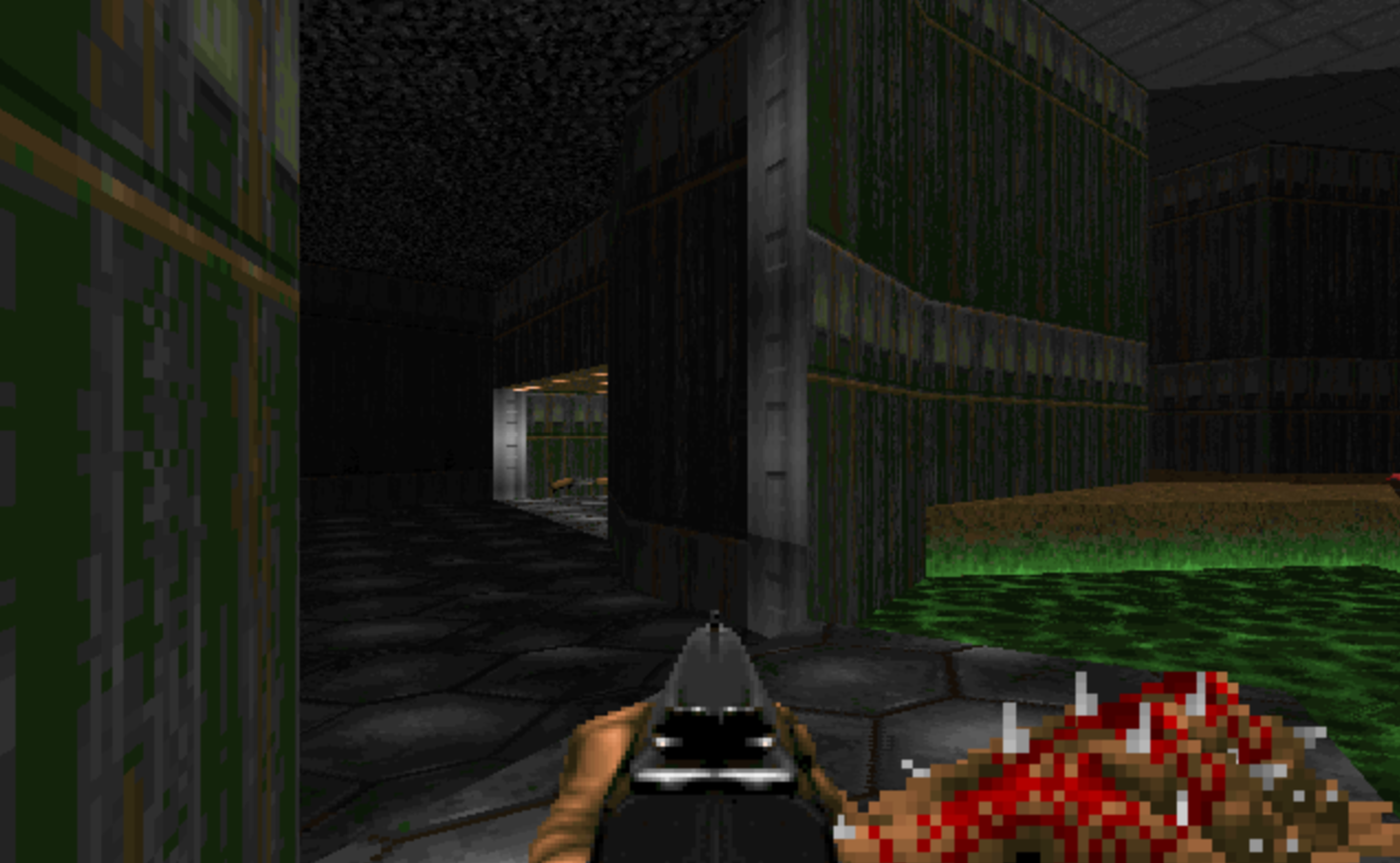
DOOM significantly expanded the complexity of 3D gaming environments through its use of varied heights, dynamic lighting, diverse textures, and fresh perspectives. With clever environmental storytelling, the map guides the player through the space to access the different spaces it has to offer, to collect gameplay rewards, dodge hazards and engage in combat with enemies along the way.
John and his colleagues at id Software used these spatial mechanics to teach players how to navigate and explore the map, and play the game all at the same time! Utilising layout strategies - like the "golden horseshoe" John cites during the episode - they were able to craft a level that allowed sightlines across multiple zones. This clever spatial design served a dual purpose: it guided the player intuitively through the space using distinct landmarks for memory making, and established a more immersive narrative.
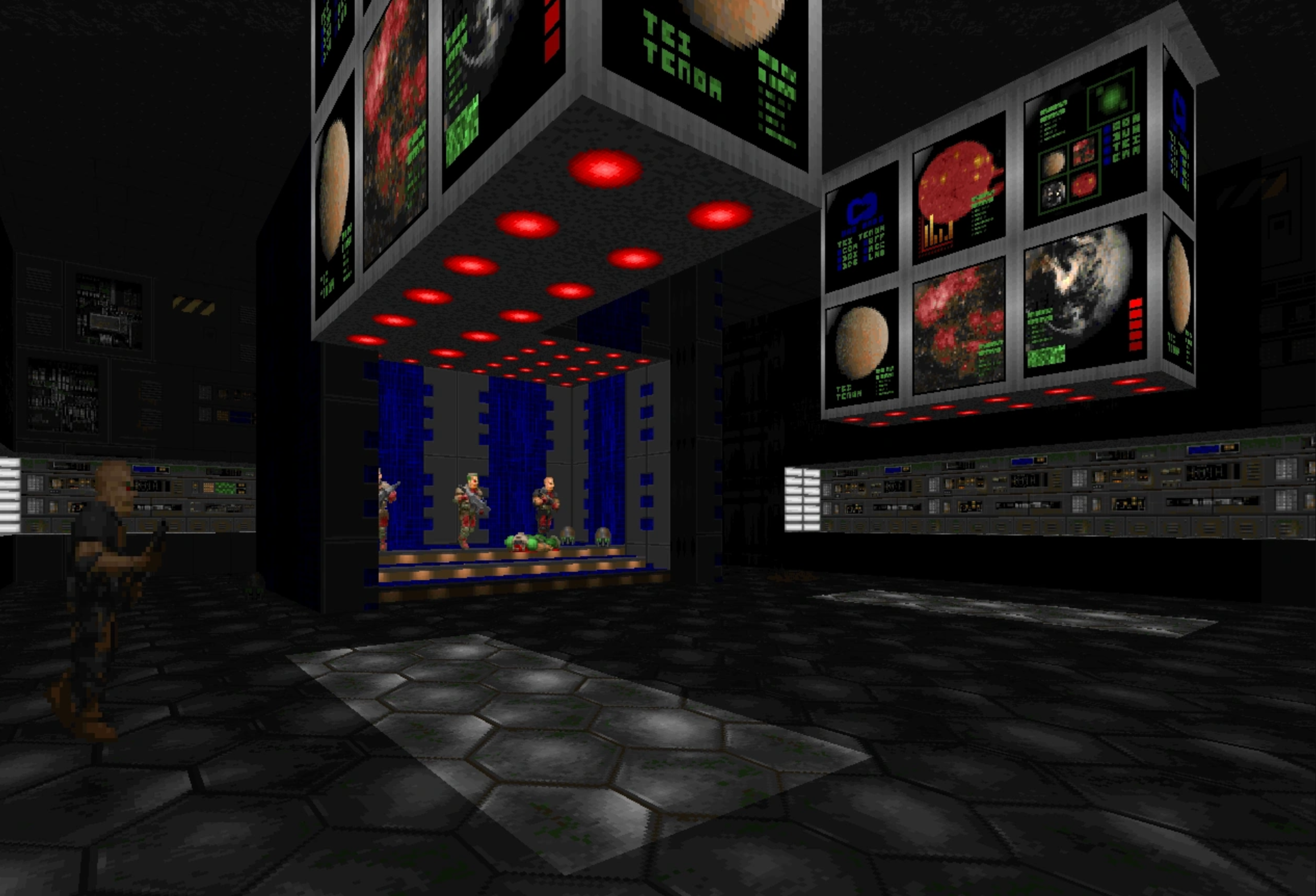
Gameplay details from DOOM (1993) ©id Software, via Doom Wiki
The underlying technology of DOOM was technically ‘2.5D’ - a rendering that created 3D perspectives from 2D map layouts - creating a rich mental map for players.
To help navigate these uncharted spaces, the developers included an "Automap”, which players could launch by hitting the ‘tab’ key. This handy in-game overview map would show where you had been, and indicate where you had yet to reveal. It also would highlight the position of any enemies approaching. As John explains, you could even play the game through the “Automap”! This device provided a familiar connection point, bridging the gap between traditional 2D map comprehension and 3D space exploration.
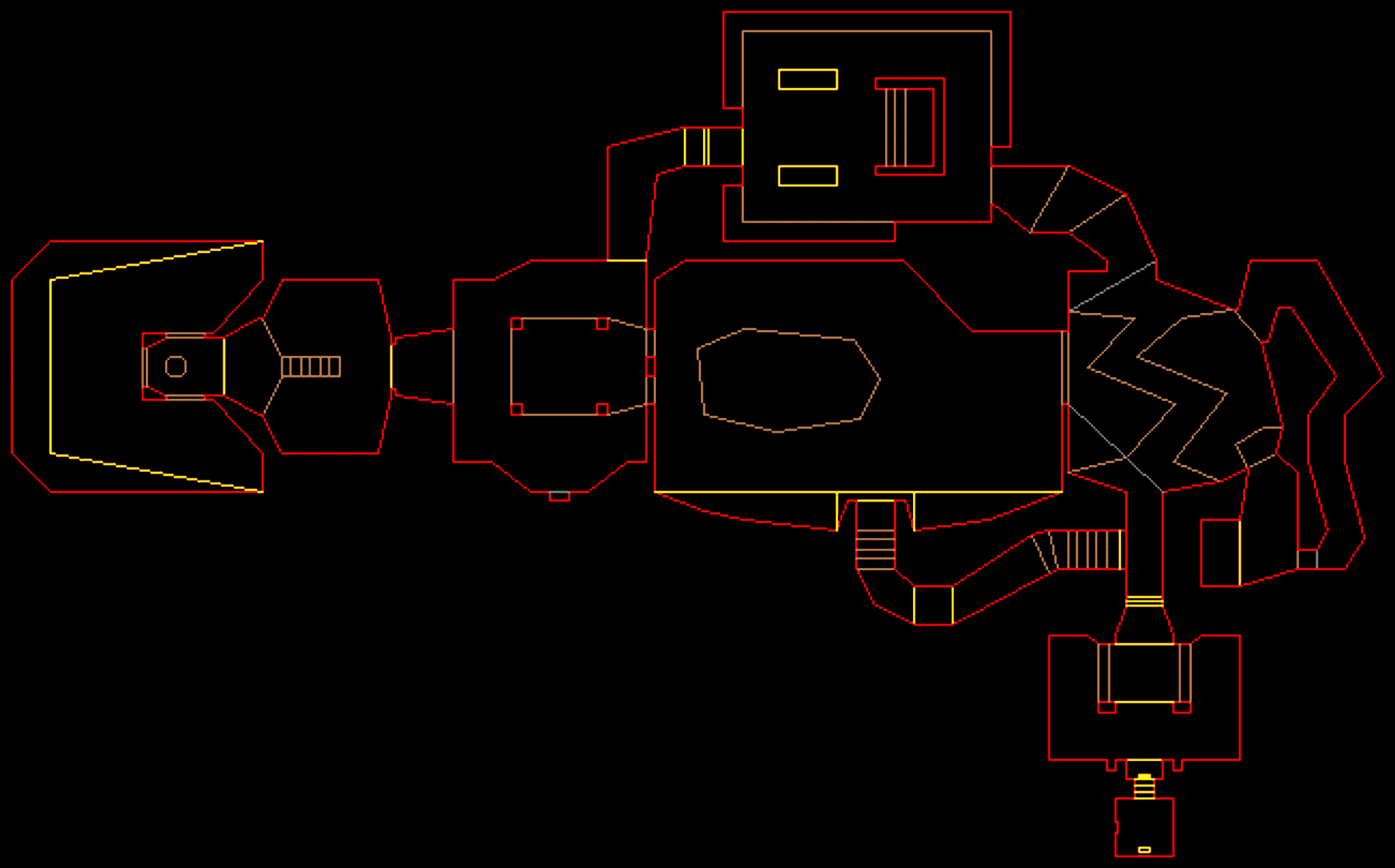
Automap of E1M1 ©id Software, via Doom Wiki
To construct these worlds, Romero developed DoomEd (or Doom Editor), a level editor written in the Objective-C language for the NeXTSTEP operating system. Used internally by id Software, DoomEd streamlined level generation so effectively that the gap between authorship and gameplay testing was reduced to mere seconds!
While community-made and public level editors emerged following DOOM II in 1994, the original DoomEd suite remained internal until its official release in around 2015. It remains an icon of early software tool design and rapid content iteration.
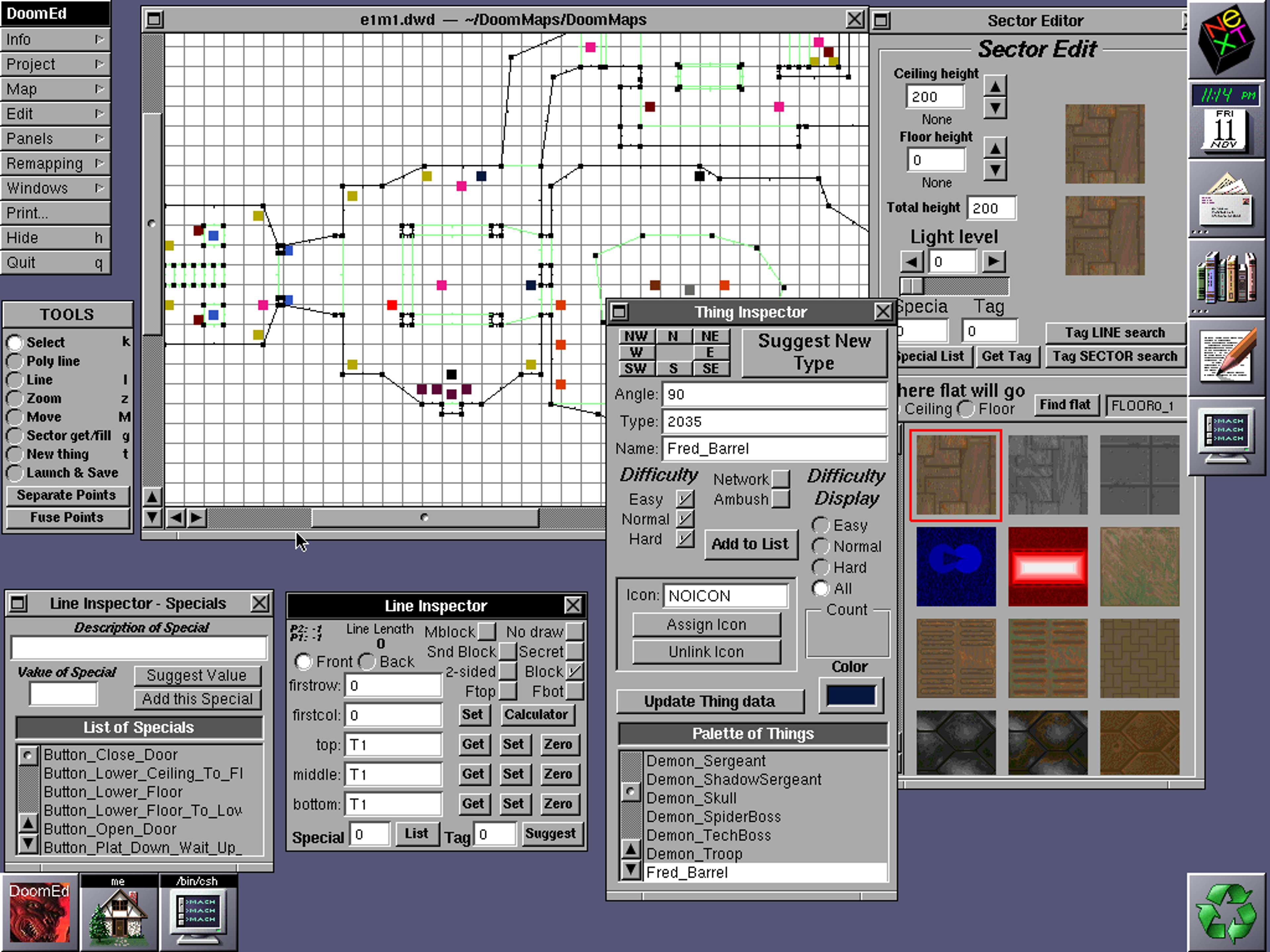
DoomEd, showing a segment in the west of E1M1 (1993) ©id Software, via Doom Wiki
Prior to DOOM, arcade game design conventions relied on gaining or losing lives, and coin-operated mechanics. id Software decided to drop these legacy constraints, establishing stronger emphasis on core loop gameplay: “Move forward, shoot stuff, pick up stuff, open doors, finish level.” By focusing purely on momentum, unlocking secret areas, and level timings, it inadvertently gave rise to competitive ‘side-quests’ such as ‘speedrunning’.
Players could save their play action records and establish community speedrun scoreboards worldwide. In the episode we hear John proudly boast a 5-second speedrun record for a level on DOOM II!
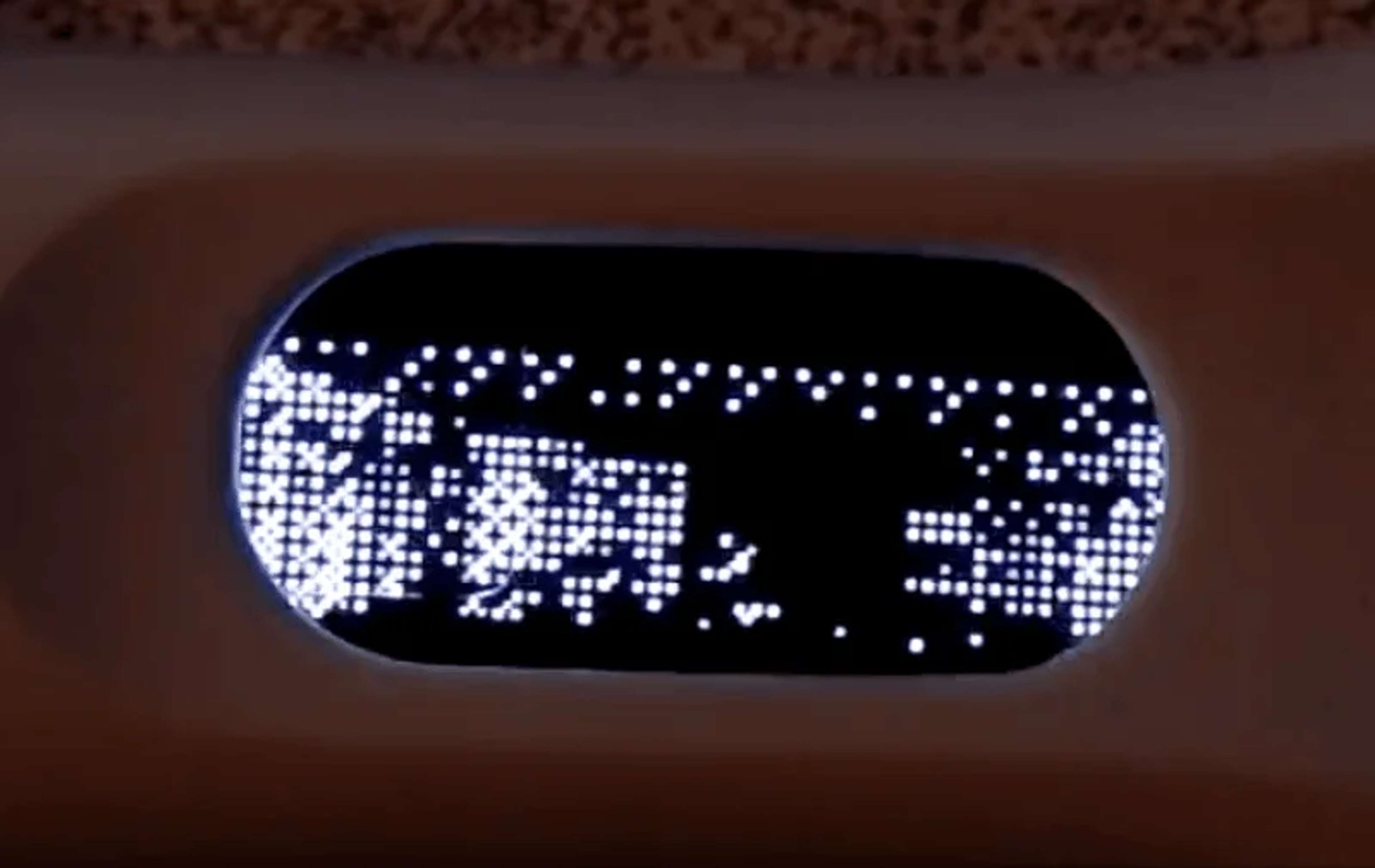
Credit: Foone
When id Software released the source code in 1997, DOOM's portable codebase allowed developers and hackers to adapt and play the game on virtually any device - from early mid-century mainframe computers, simple printers and calculators, to modern smart appliances. Someone even used a pregnancy test screen, as Jerry finds out!
Today, level authors utilise modern community suites like the Ultimate Doom Builder to live-edit environments instantly. Decades later, John continues to design new maps for DOOM, using only original assets and ingredients on his immersive, ultra-wide screen. This love of developing the environment brought about SIGIL, the fifth episode of DOOM made especially for the 25th Anniversary, in 2018.
To John, a game map remains an analogue to the physical world: a geospatial structure brought to life through thoughtful design and player agency.
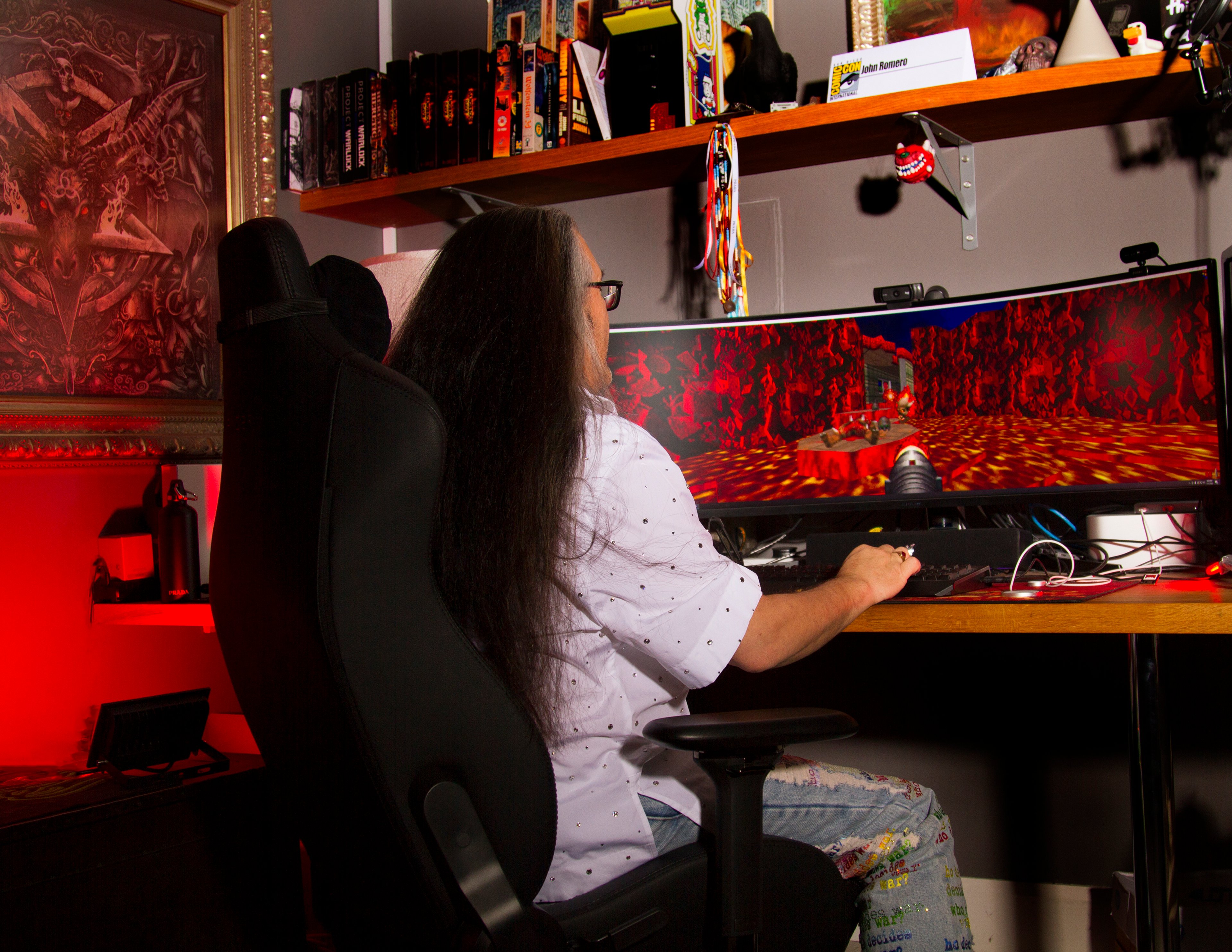
©John Romero
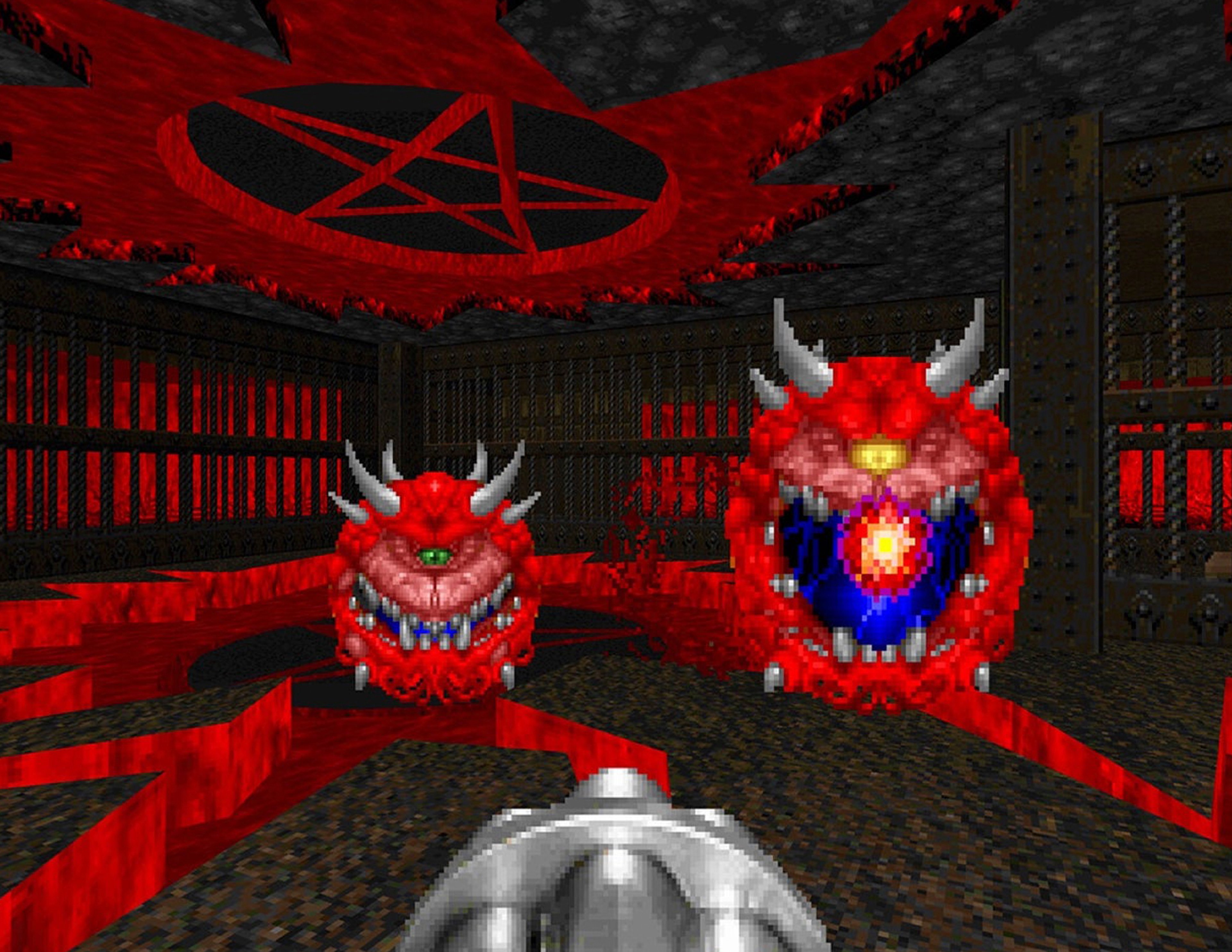
Cacodemon from Doom ©id Software
About John Romero

©John Romero
John Romero is a pioneering designer, programmer, and developer in the video game industry. He is best known as a co-founder of id Software and Romero Games. He is a designer and co-designer for many of gaming history’s most popular titles, including Dangerous Dave (1988), Wolfenstein 3D (1992), DOOM (1993) and Quake (1996).
His game designs and development tools, along with new programming techniques created and implemented by id Software's lead programmer John Carmack, led to a mass popularisation of the first person shooter games (‘FPS'). He is credited with inventing the term "deathmatch" in multiplayer video games where the objective is to eliminate opposing players.
His autobiography, Doom Guy: Life in First Person was released in 2023, published by Abrams Press, offers key insights into the world of game design, coding, and his career trajectory up to the present day.
John lives in Galway, Ireland with his wife Brenda, a fellow game designer and developer. You can find out more about John and his current projects at Romero Games.
Images: E1M1 Map and portraits of John were generously supplied by John and Brenda Romero, courtesy of Romero Games. Gameplay screenshots from Doom are ©id Software and shown strictly under fair use policy for purposes of illustrating the work. Source Doom Wiki
Why not continue your exploration of the wonderful world of maps by subscribing to the podcast? That way you will never miss an episode.
Feel free to let us know - What's YOUR Map?!
All views and opinions expressed by guests on the podcast are entirely their own and do not represent those of The Sunderland Collection or Whistledown Productions.