Jago Cooper
Series 4 Episode 5
Out of the Cave: Encounters and Anima with Dr. Jago Cooper
Series 4 Episode 5
Available on all major podcast platforms: click the icons or hit 'play' to listen now.
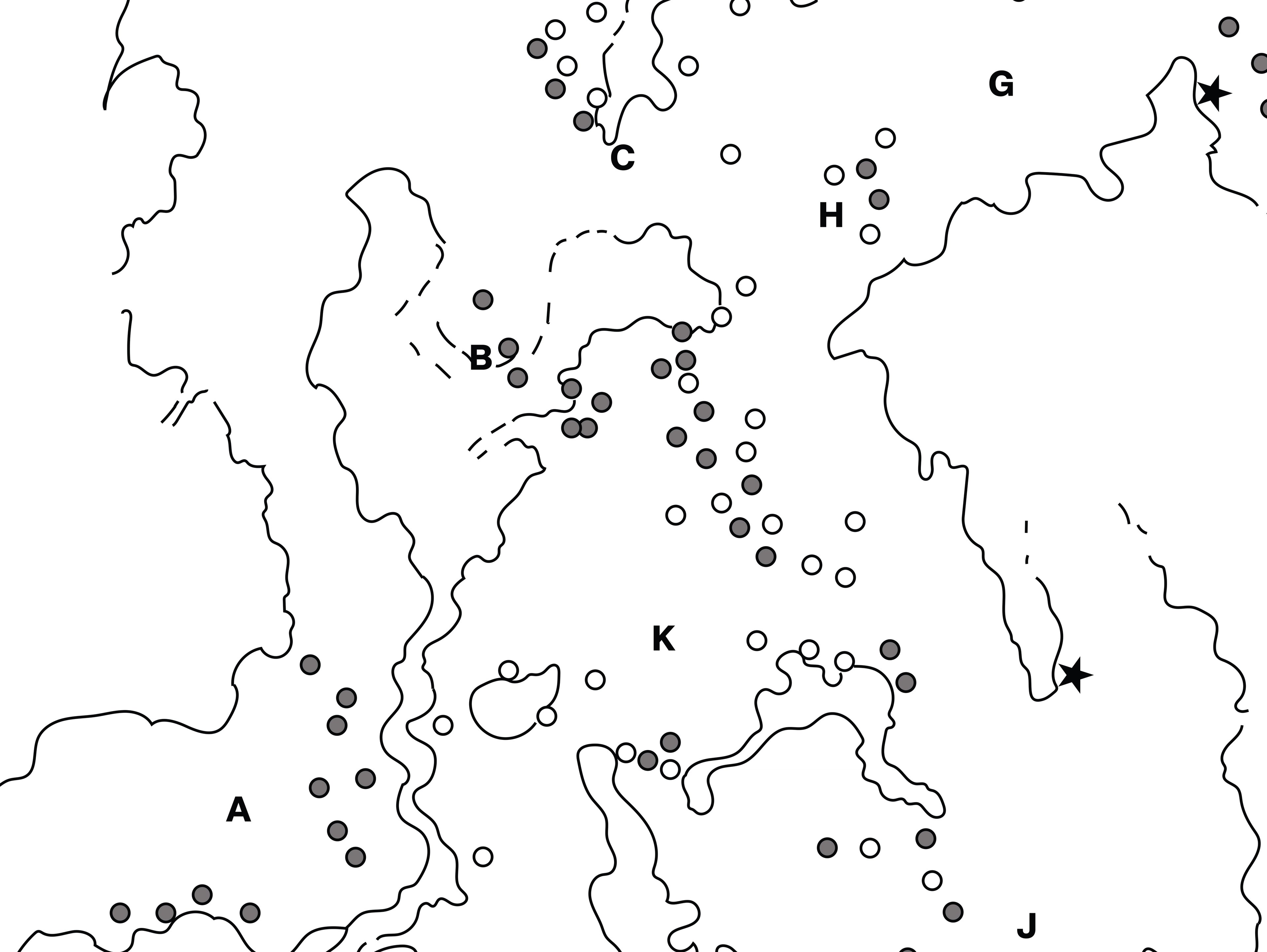
In this episode, Jerry meets with Dr. Jago Cooper to examine a map of an ancient cave network on Isla de Mona in the Caribbean Sea. The map pinpoints the locations of markings that depict Indigenous beliefs and also trace 500 years of cross-cultural encounters.
Jago is the Director of the Sainsbury Centre for Visual Arts, a world class art museum based in Norwich with a unique perspective on how art can foster cultural dialogue and exchange. It is the first of its kind in formally recognising art as a living lifeforce and acts as a conduit between the art and people.
In his discussion with Jerry, Jago reflects on how his archaeology career has influenced his views and deepened his knowledge of diverse world cultures. He and Jerry explore how mapping can help us understand relationships between people and place, rather than just routes and borders.
To explore the map while you listen, click the image below:
Map and all cave image credits: Jago Cooper, Alice V.M. Samson, Miguel A. Nieves, Michael J. Lace, Josué Caamaño-Dones, Caroline Cartwright, Patricia N. Kambesis, and Laura del Olmo Frese. ‘The Mona Chronicle’: the archaeology of early religious encounter in the New World. Copyright ©Antiquity Publications Ltd and Cambridge University Press (2016). Antiquity, Vol 90, Issue 352, pp.1054 - 1071. DOI 10.15184
This simple schematic map descibes the intricate subterranean tunnel system of Cave 18 on the south coast of Isla de Mona - a remote, uninhabited island situated between Hispaniola and Puerto Rico in the Caribbean. This limestone-dolomite island is just four by six miles in size and home to a vast network of over 200 underground caves.
Each of the icons on the map identifies the location of ancient Indigenous cave art dating back thousands of years, as well as the carvings made by the Taíno inhabitants and post-Columbian Europeans on the island between the late fifteenth century and the late-sixteenth century.
As Jago explains, there were no ‘maps’ in the European sense in the Americas before the arrival of explorers in the late fifteenth century. The Indigenous population had a perception of space which was temporal and did not include concepts like land ownership and territorial boundaries. The location of their carvings in Cave 18 is highly significant in this belief system.

CIA, Public Domain
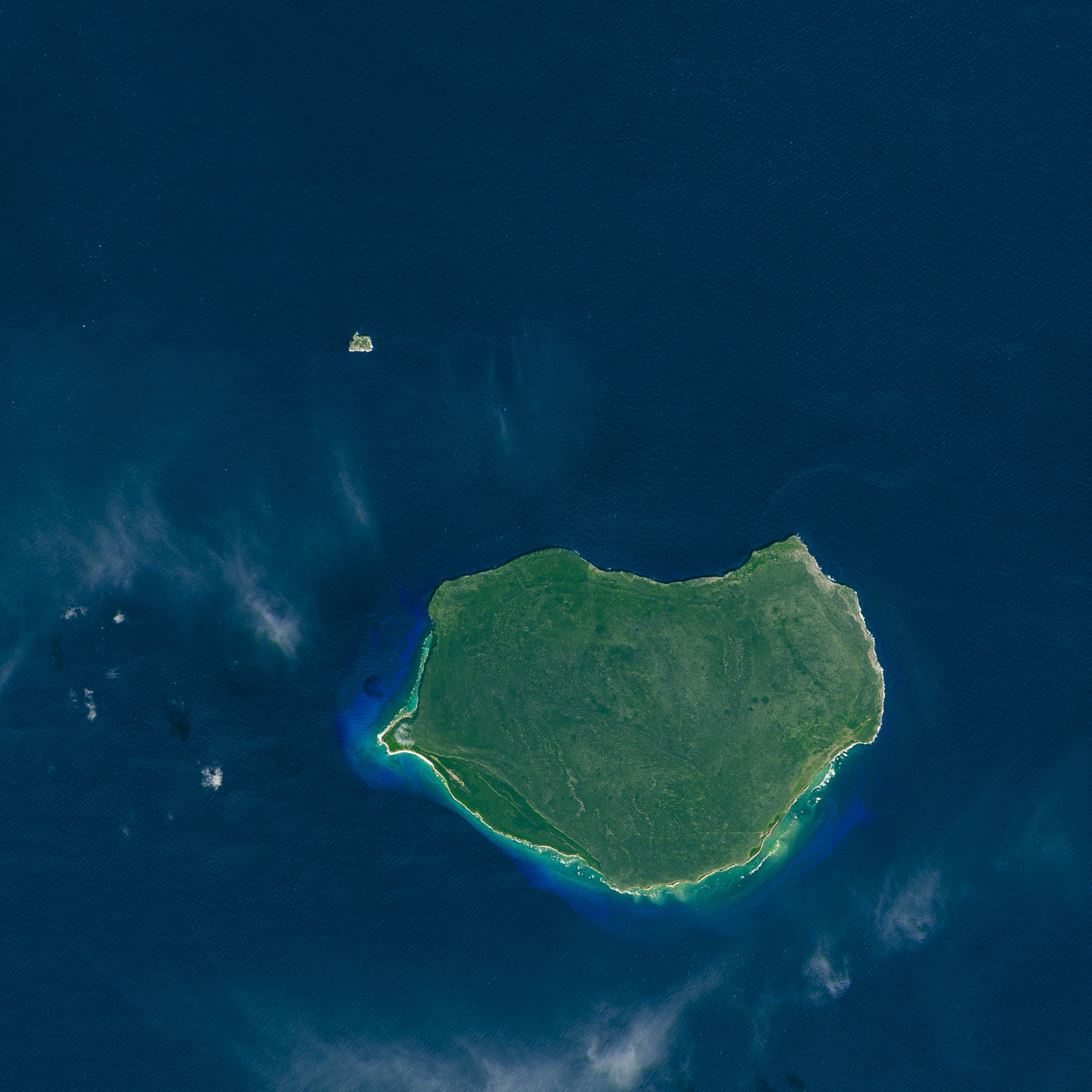
NASA, Public Domain
Isla de Mona has a varied history of settlement. The island's first inhabitants were a Taíno community, from around 2800 BCE. This population saw a period of significant growth and prosperity between 1200 and 1500 CE, in part due to their rich material culture, which included cotton and ceramics. The Taíno were some of the first people in the Caribbean to encounter Europeans travelling to the ‘New World’. Their population declined rapidly due to colonisation and the Taíno were eventually removed from the island in c1590.
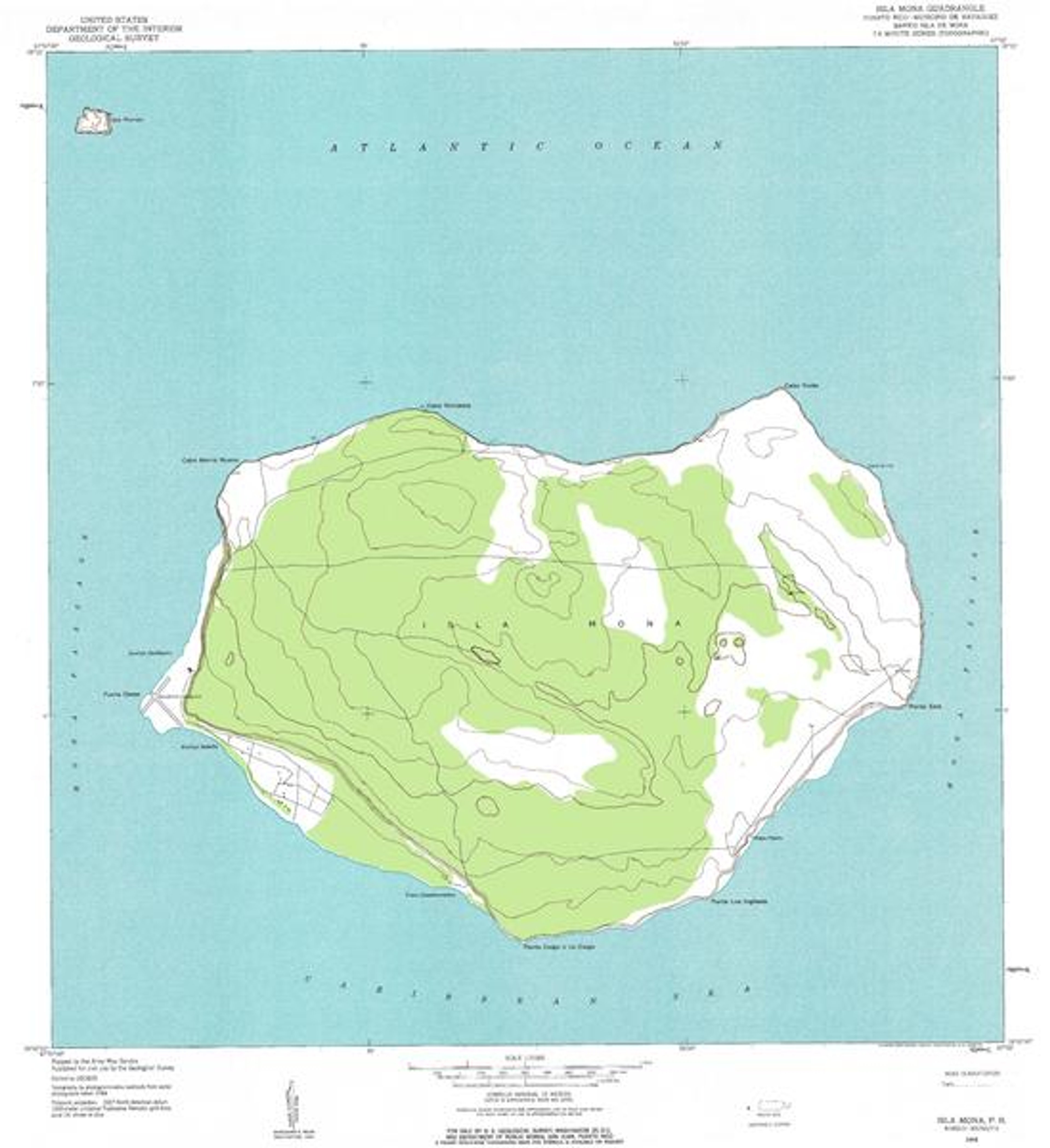
USGS, Public Domain
Isla de Mona became a strategic landing place for European navigators, traders, and pirates in the seventeenth and eighteenth centuries. Its uses diversified over time: it was a commercial guano mining site in the nineteenth century, a drop point for smugglers during Prohibition, and a US military air base in the mid-twentieth century.
Today, the island is an uninhabited, protected historic landmark and nature reserve frequented by scientists, conservationists, archaeologists, and the occasional Scout troop.
As Jago explains to Jerry, his first encounter with the caves of Isla de Mona was in 2013. A dream research expedition mapped out on the back of a beer mat years earlier turned into what Jago described as ‘one of the greatest discoveries that [he] has ever seen’.
An interdisciplinary team of archaeologists and researchers led by Jago - then Head of the Americas at The British Museum - and Alice Samson (University of Leicester) - surveyed 70 cave systems as part of their study of past human activity. They were joined by celebrated cavers Patricia Kambesis and Michael Lace.
Once the team had become accustomed to the disorienting darkness of the caves, they were able to examine an astonishing display on its walls and ceilings. The caves had acted as a time capsule, preserving ancient cave art and a record of some of the earliest Indigenous-European interactions in the Americas.
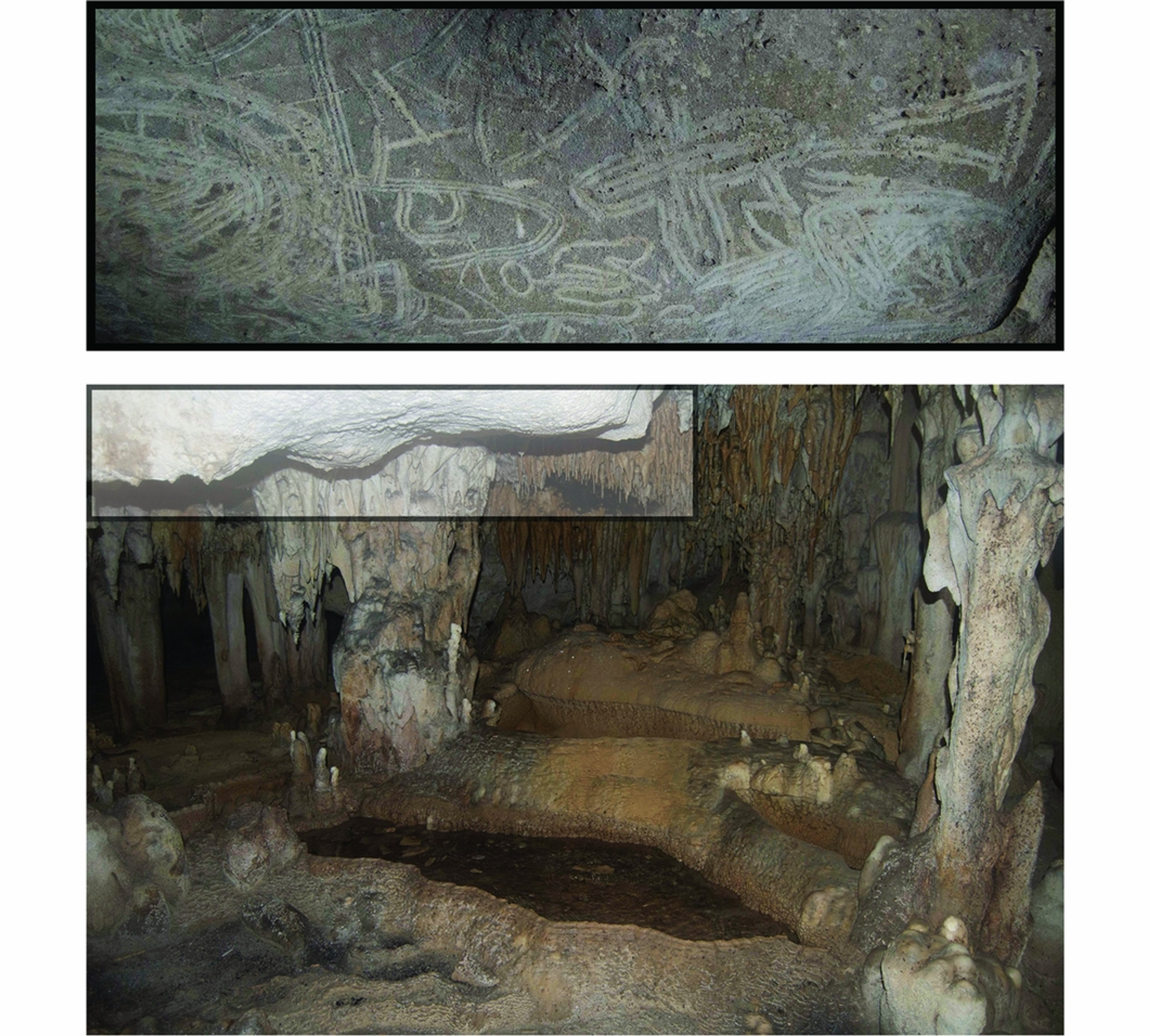
Indigenous carvings in Chamber E
Using a range of scientific imaging and dating methods - including Accelerator Mass Spectrometry (AMS) radiocarbon dating and uranium-thorium (U-Th) dating - they were able to inspect the composition of the pictorial petroglyphs.
In the podcast, Jago describes the walls of the cave and their unique characteristics which enable ‘finger fluting’ - where an artist uses their fingers rather than rocks or sticks to create an image.
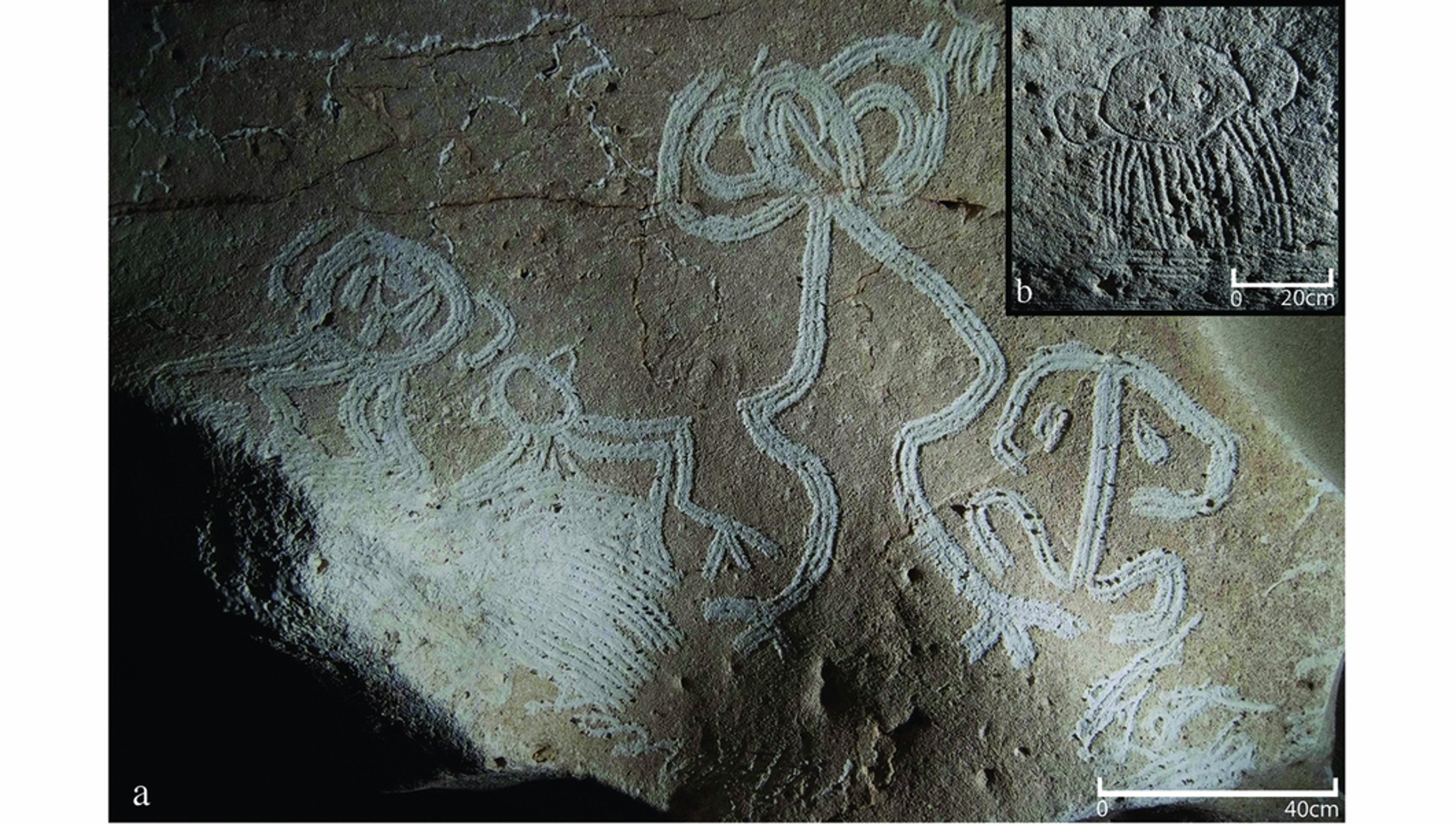
Indigenous iconography showing ancestral beings and transitional anthro-zoomorphic figures.
The black dots on the map show the locations of ancient Indigenous pictograms, often showing Taíno ancestral figures (cemíes) in a state of transition.
These carvings illustrate how the caves were sacred liminal spaces to the Taíno people. They are a visual depiction of the Taíno origin story, which states that all life emerged from a cave known as 'Cacibajagua'.
Jago notes that the cave chambers provided a profound multi-sensory experience. This combination of a distorted perception of space and time, reflections of water and light bouncing off the walls, paired with unusual sounds, tastes, and touch, all adding to the feeling of a remarkable spiritual encounter.
The small circles on the map show post-Columbian markings, made after Europeans made landfall on the island. During the podcast, Jago shares several examples of those carvings, which were made as a result of Europeans being led into the complex cave system by Taíno residents.
The carvings evidence an intimate conversation between two cultures about their belief systems using a visual language. Here, Christian iconography (c) is carved into the glistening calcite wall alongside a Taíno carving (b):
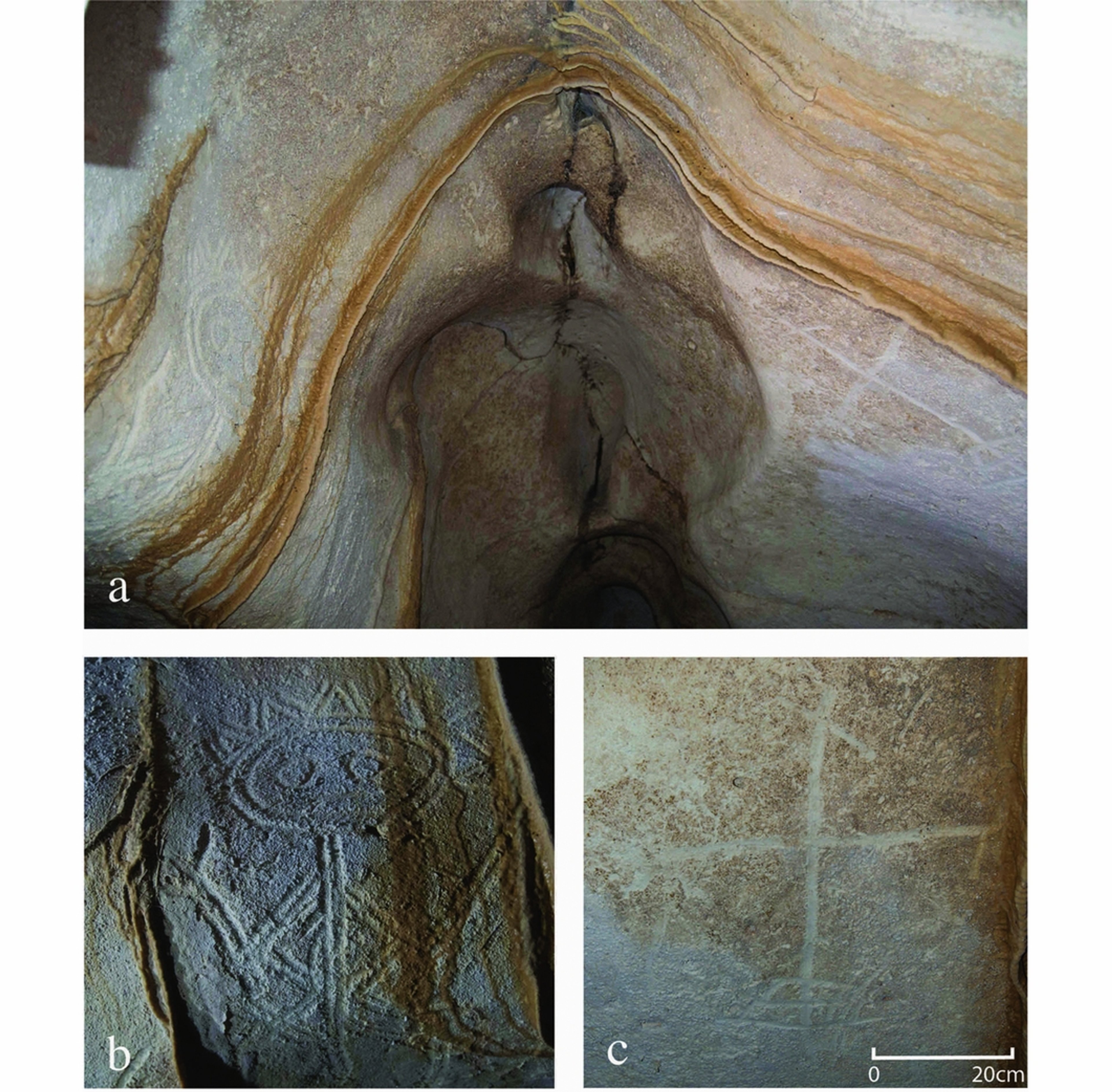
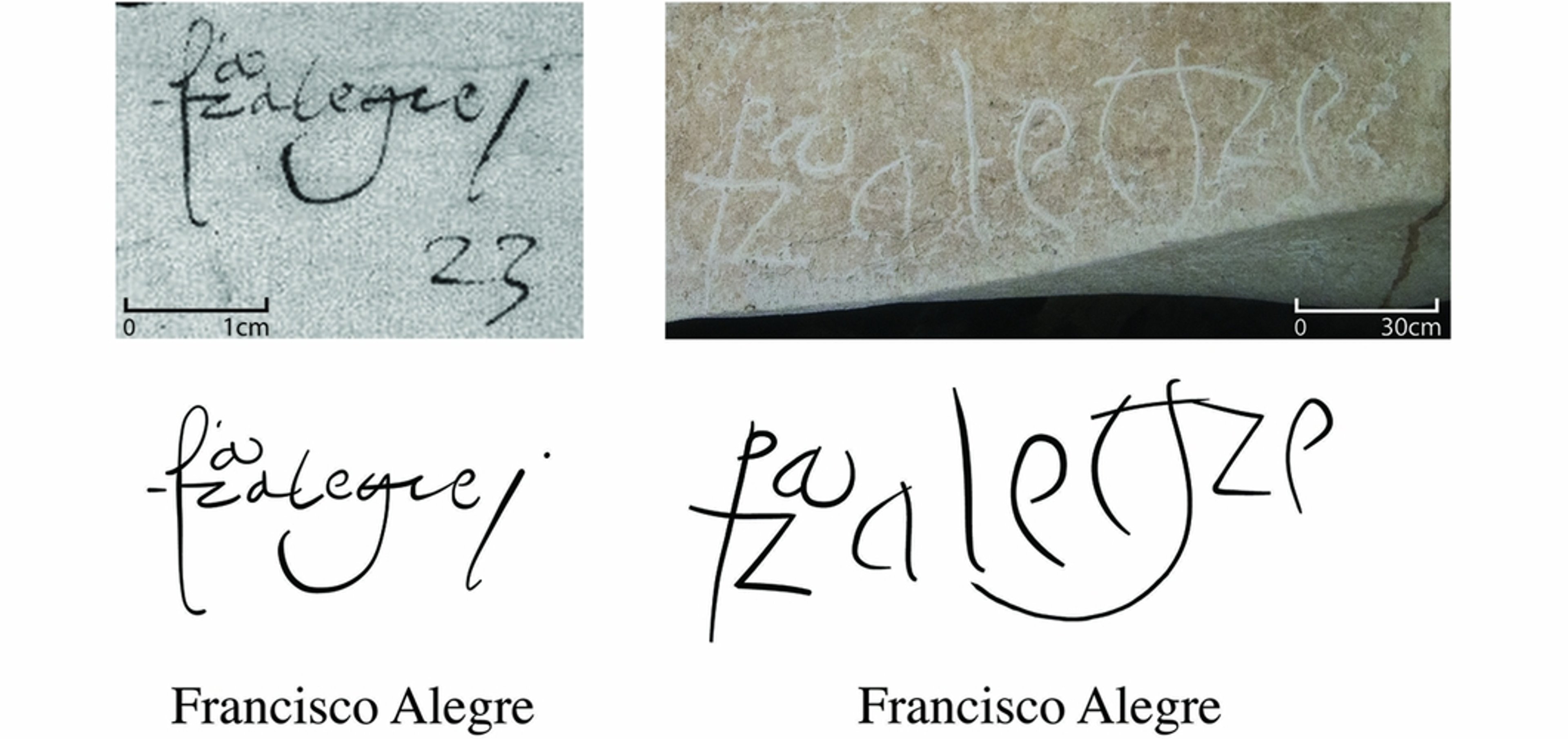
Remarkable etchings by European visitors to the cave. In chamber K, a Spanish royal official named Capitán Francisco Alegre signed his name on the wall.
Stars on the map mark the location of carbon-dated, pre-Columbian torch fragments found in the cave. Visitors used torches for navigation, and fallen charcoal fragments from these torches provided Jago and his colleagues an activity timestamp.
To explore more of the remarkable findings made by Jago and his colleagues you can read the full research paper, ‘The Mona Chronicle: the archaeology of early religious encounters in the New World’ in Antiquity Journal, Vol 90, Issue 352, pp.1054 - 1071. DOI 10.15184
Authors: Jago Cooper, Alice V.M. Samson, Miguel A. Nieves, Michael J. Lace, Josué Caamaño-Dones, Caroline Cartwright, Patricia N. Kambesis and Laura del Olmo Frese. With special thanks to the team at Antiquity Journal for their advice and permission.
About Jago Cooper
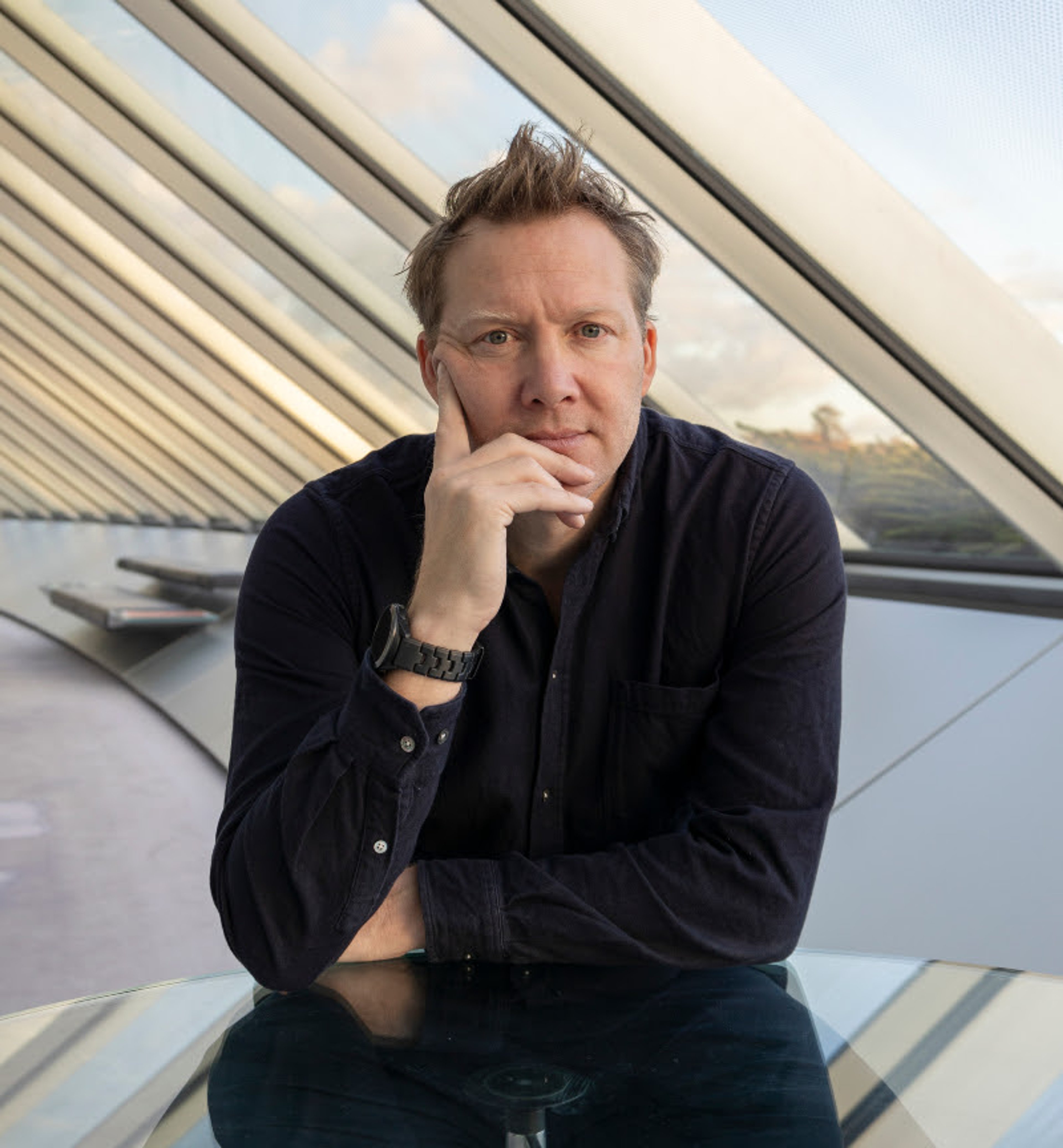
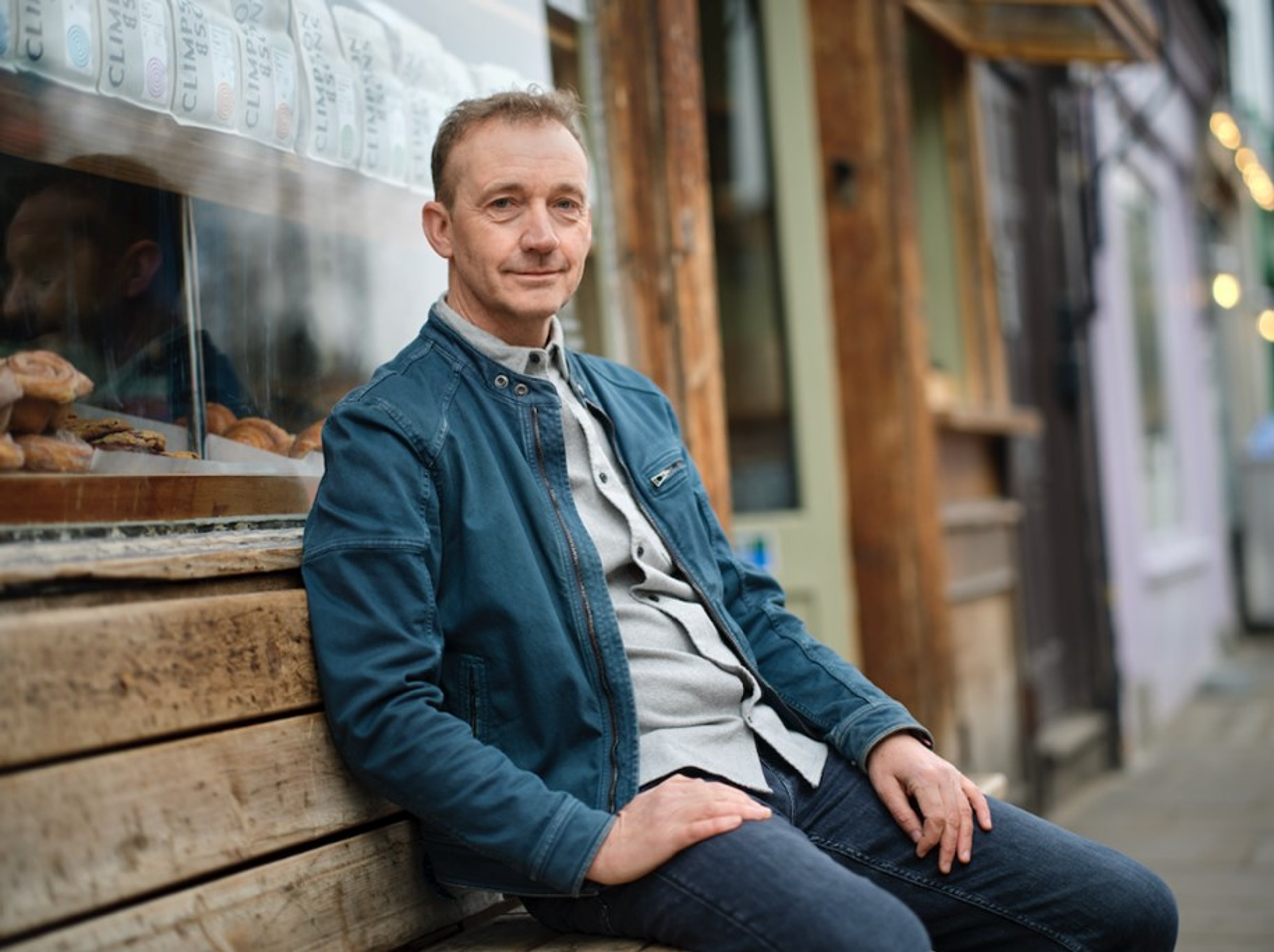
Image courtesy of Dr. Jago Cooper
Dr Jago Cooper is the Director of the Sainsbury Centre for Visual Arts and Professor of Art and Archaeology at University of East Anglia.
For more than 20 years, Jago has worked for and with museums, cultural ministries, technology companies, and heritage organizations around the world to explore and communicate aspects of the great human story.
His publications provide innovative perspectives on cultural experience and interpretation of material expression. Jago's research has ranged across universal questions including climate change, technological revolution, colonial encounters and social innovation. He has always worked hard to engage a broader public audience with his research interests through exhibitions, digital platforms and broadcast media, including writing and presenting over a dozen documentaries for the BBC.
After a decade as the Head of the Americas Collections at the British Museum, Jago joined the Sainsbury Centre in 2021. The Centre is a genre-defying art museum with world-class collections ranging from Jomon ceramics to Giacometti bronzes with bold acquisitions continually being made to intrigue, inform and inspire new audiences. It is the perfect place for Jago’s passion and experiences, as it is a universal museum of human expression with a unique perspective on how art can foster cultural dialogue and (ex)change.
Jago’s career in archaeology, art, and the heritage sector has provided him with brilliant insight into how cultures and peoples from around the world have lived through history.
In 2023, Jago became the Executive Director of the Sainsbury Centre for Visual Arts, and relaunched the museum with a brand new philosophy that champions art as a living entity - a mission unmatched by any other museum in the world.
In contrast to traditional museums which often embody a controlled environment where the museum has 'ownership' of cultural artifacts, the Centre aims for an accessible, immersive approach promoting real connection on a human level. One such example is its 'Hug a Henry Moore' initiative; the Centre's radical approach allows visitors to engage with art in intimate ways beyond the usual conventions of a museum.
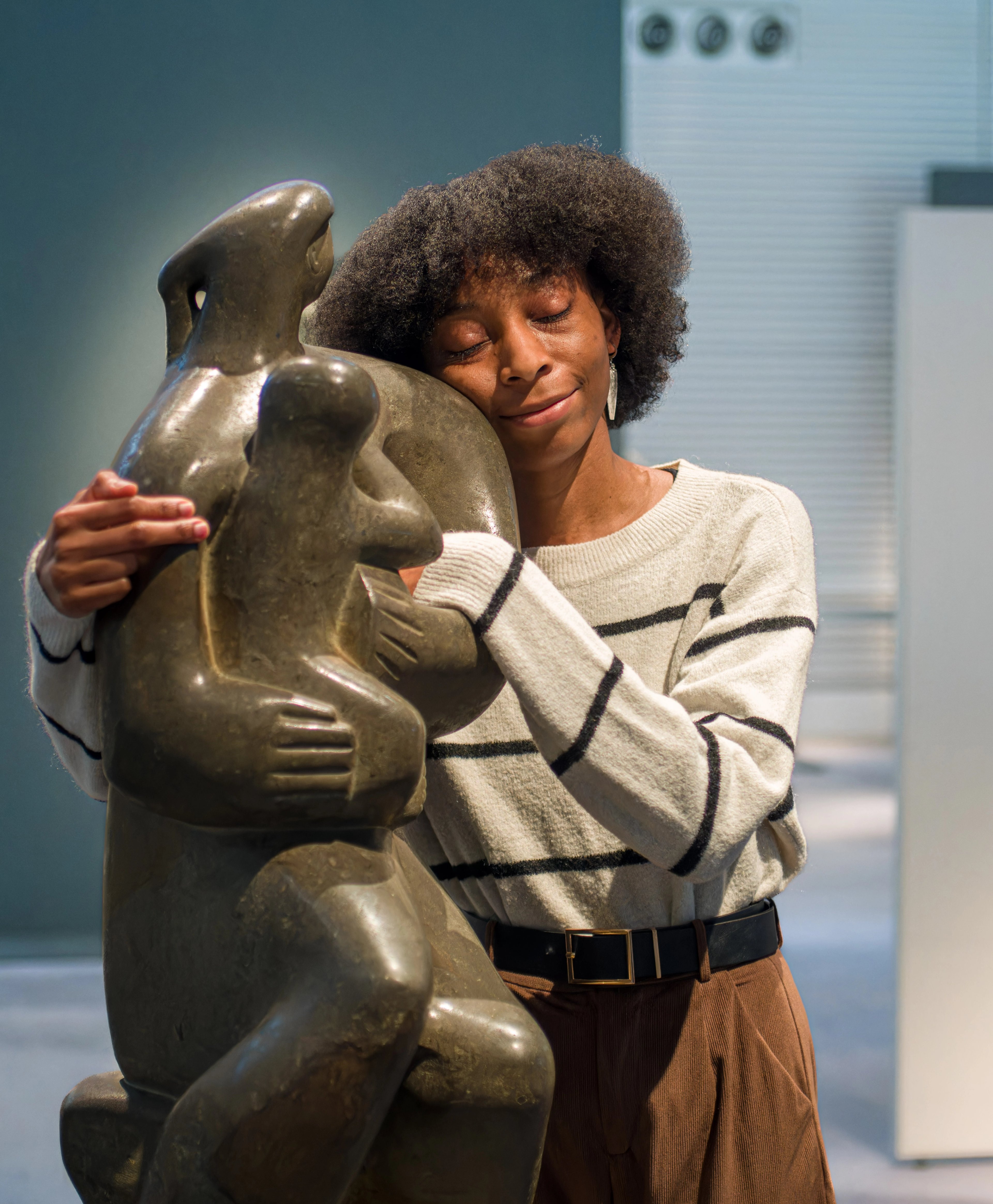
SainsburyCentre1, CC BY-SA 4.0
Why not continue your exploration of the wonderful world of maps by subscribing to the podcast? That way you will never miss an episode.
Feel free to let us know - What's YOUR Map?!