Cultural Data Sculpting 2024
Proudly presenting a student project from Prof. Sarah Kenderdine's Cultural Data Sculpting Course at eM+ Lausanne
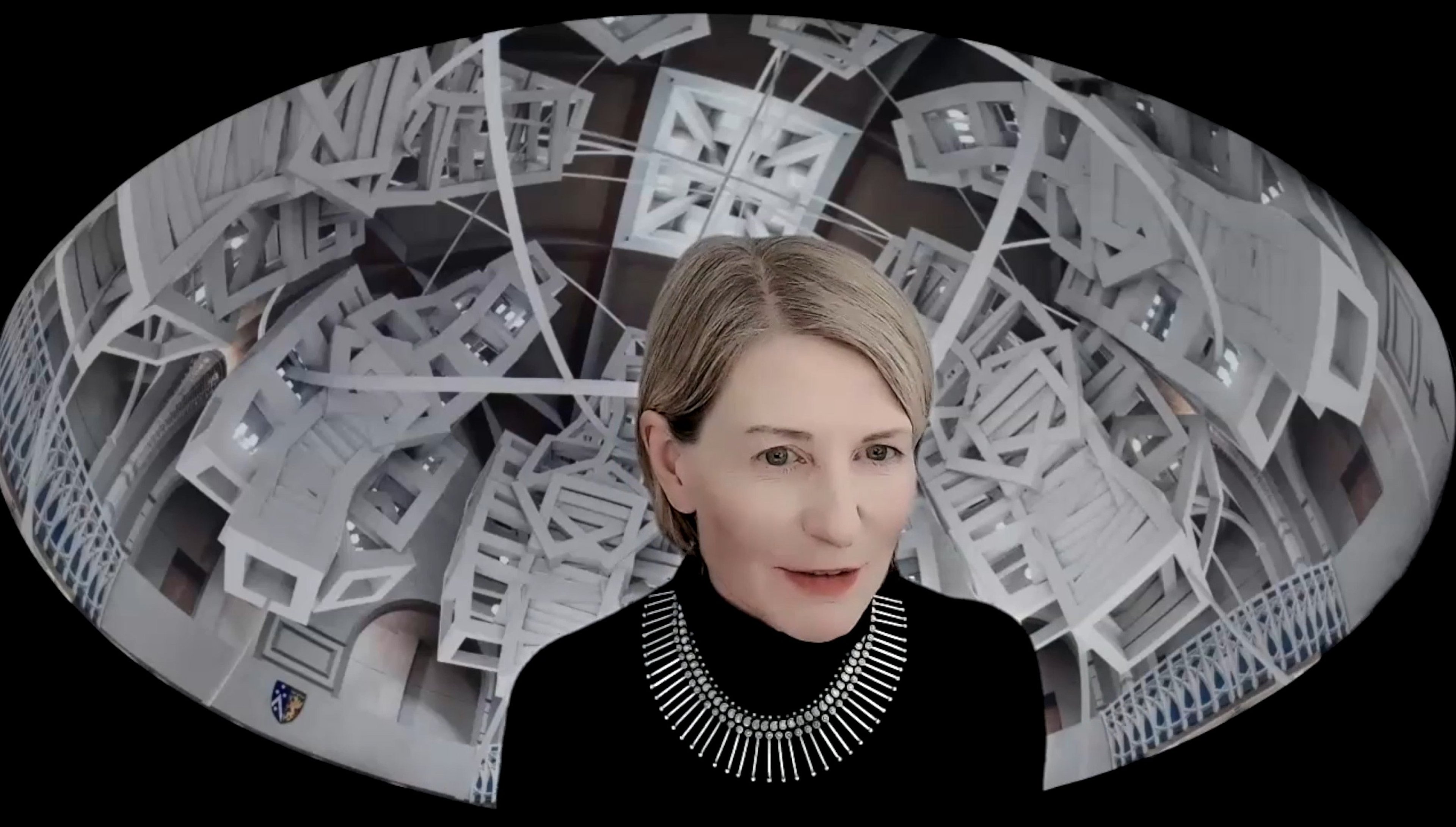
As part of its efforts to support the study of cartography, The Sunderland Collection is delighted to contribute high-resolution images of maps from the collection as a data set for Digital Humanities Masters students on the Cultural Data Sculpting course, taught by the pioneering Prof. Sarah Kenderdine at École Polytechnique Fédérale de Lausanne (EPFL).
The Cultural Data Sculpting course is located at EPFL’s Laboratory for Experimental Museology (eM+), a specialist research centre focused on experimentation in galleries, libraries, archives and museums.
The course teaches students how to approach and handle archive data sets and transform them into cutting-edge, immersive experiences for audiences engaging with cultural heritage objects.
We are proud to share what the students created in their module during the spring of 2024 using data from The Sunderland Collection.
2024: Staring into the Belly of the Earth with Kircher
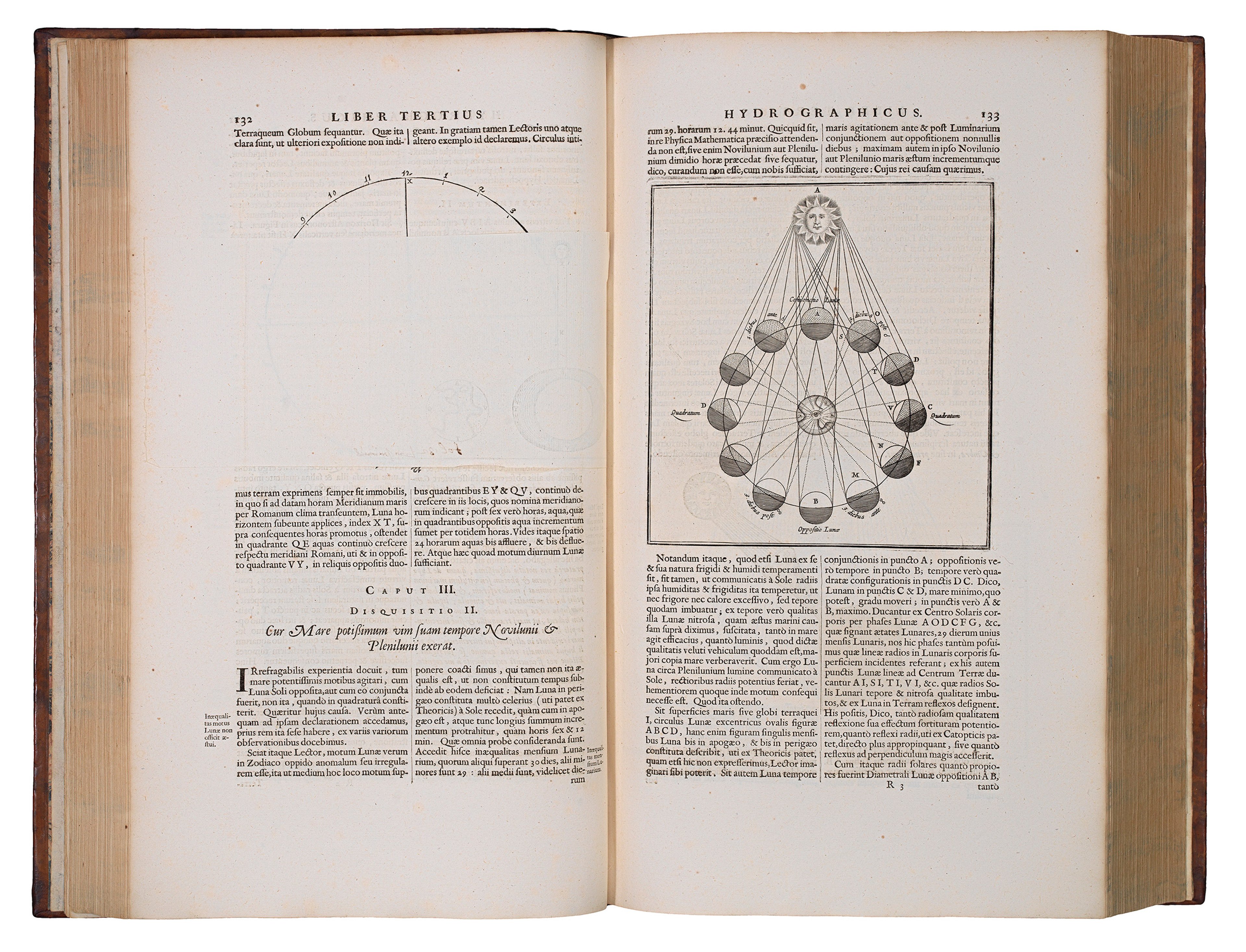
In 2024, the student group used two plates illustrating theories on underground water systems and volcanology from Athanasius Kircher’s 'Mundus Subterraneus' (1665). The students called their project ‘Staring into the Belly of the Earth with Kircher’.
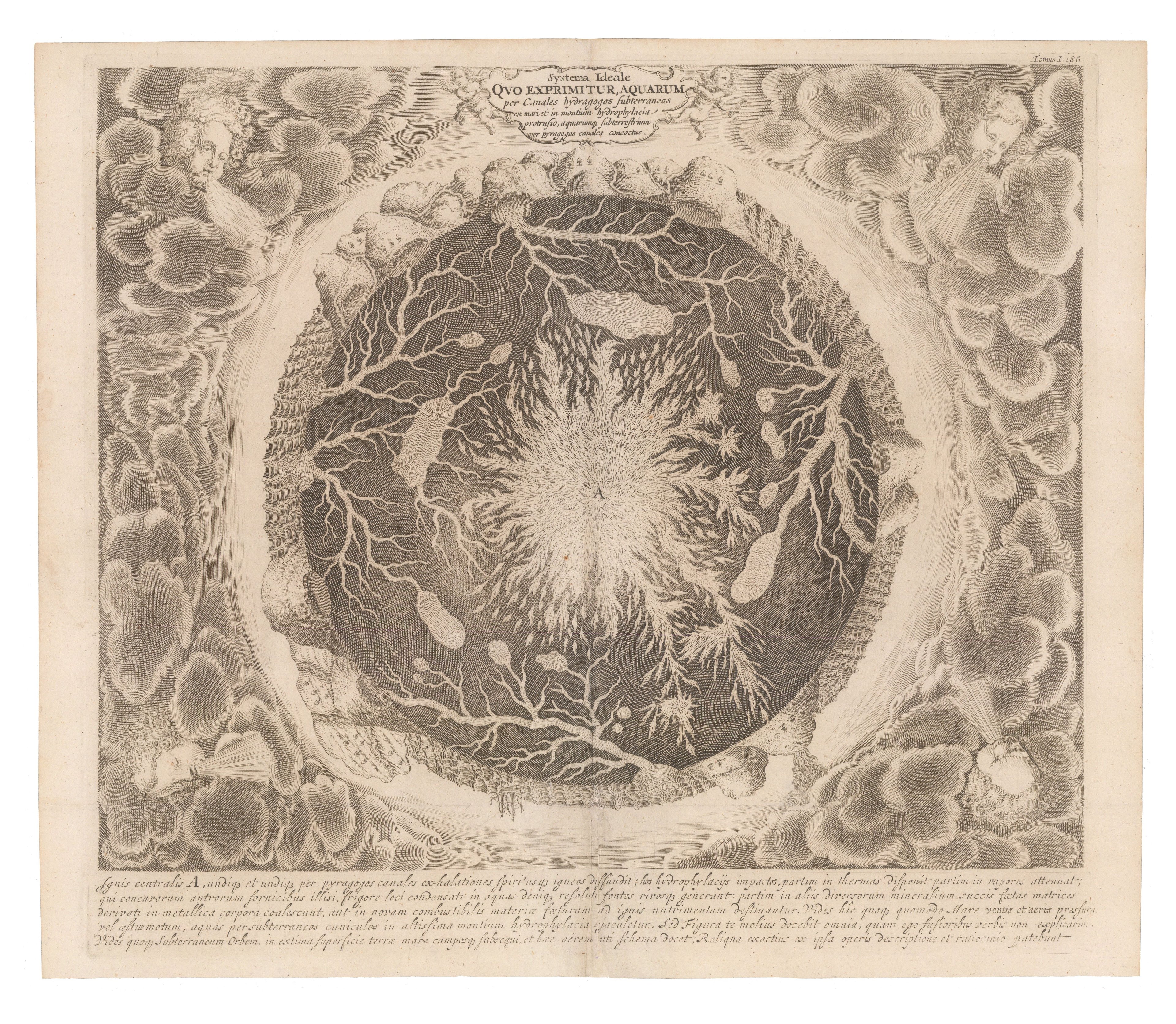
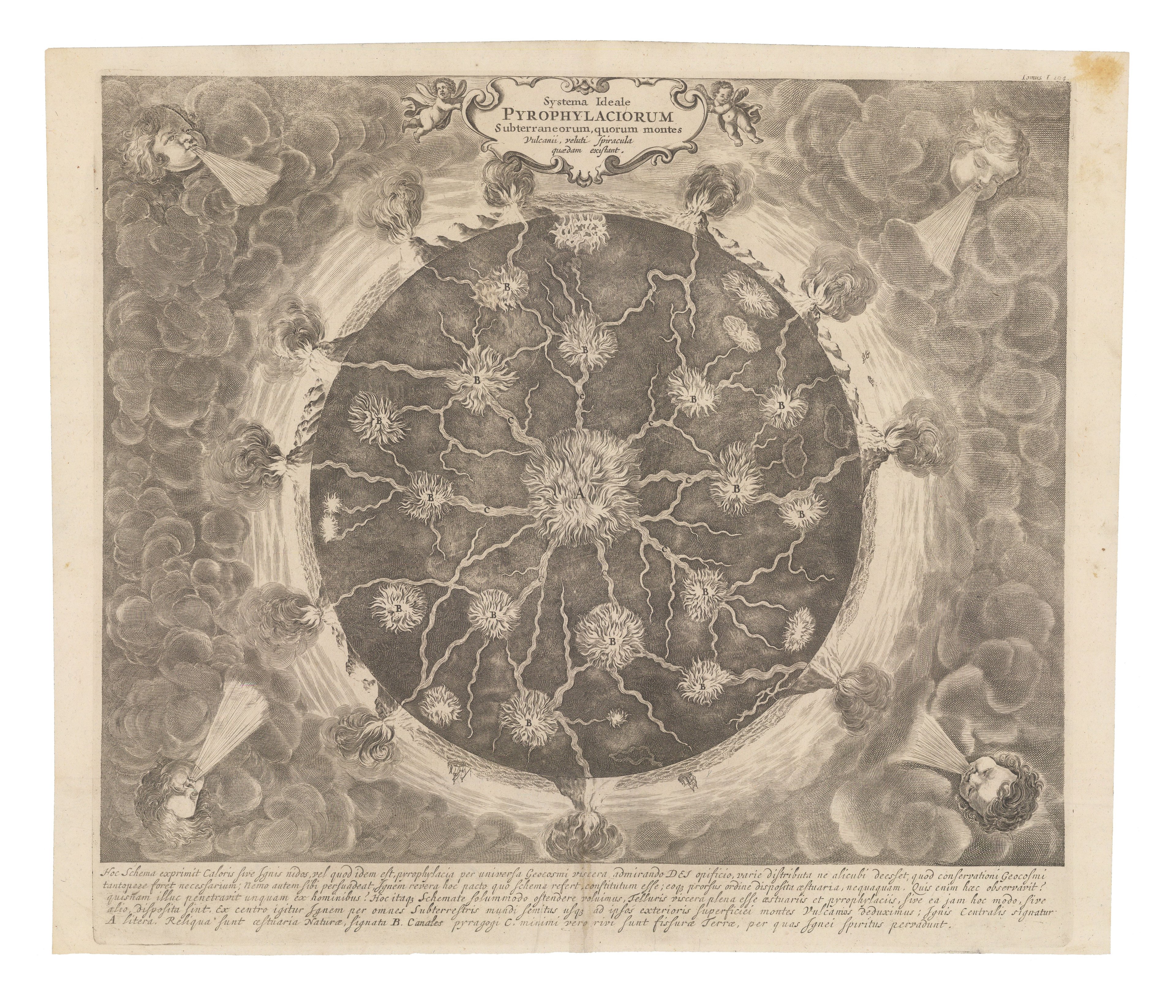
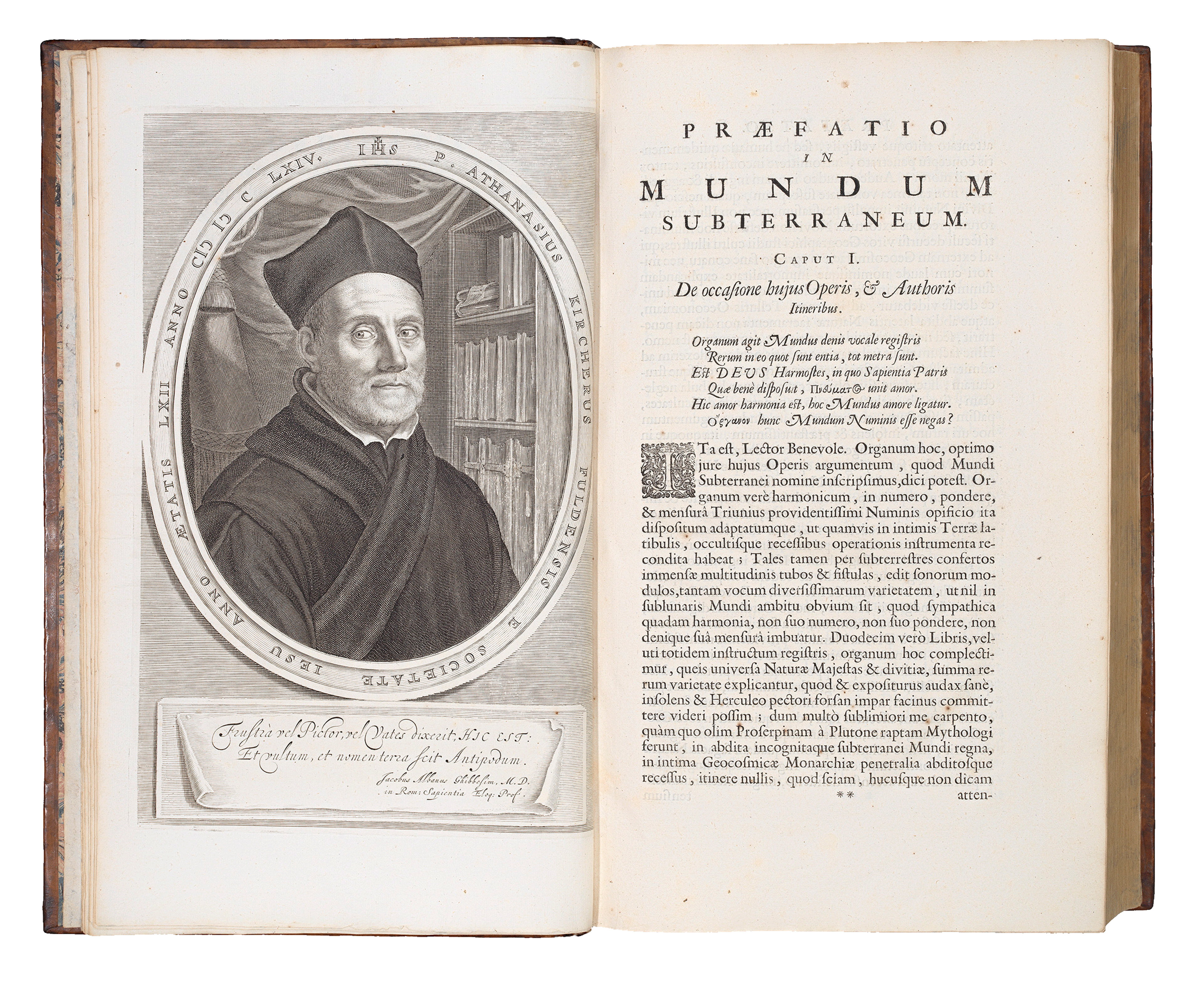
Portrait of Athanasius Kircher. Above, the two plates from his work used by students.
The students began by conducting research on the work of Jesuit priest and polymath Kircher, paying particular attention to his hypotheses on hydrology, volcanology, and astronomy. They also looked at the theologians and creators who had been influenced by Kircher, including sculptor Gian Lorenzo Bernini’s ‘Fountain of the Four Rivers’ (1651) in Rome, and author Jules Verne’s famous novel, ‘A Journey to the Centre of the Earth’ (1864).
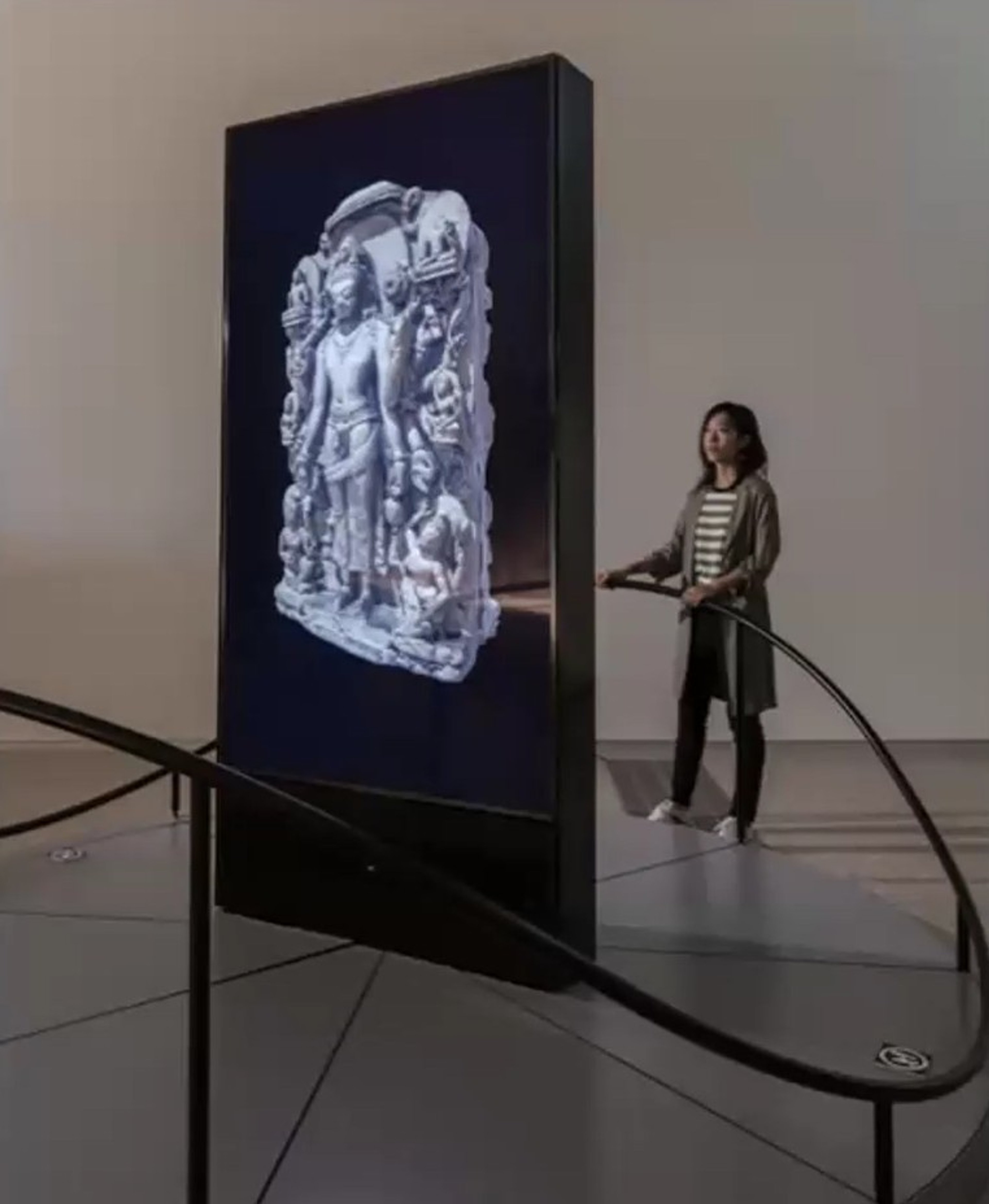
The Object Navigator © EPFL/eM+
The students selected the Object Navigator as their presentation device, to dynamically illustrate Kircher’s interconnected theories. The Navigator was developed by Prof. Sarah Kenderdine and her team at eM+. It features an interactive, high-resolution 85-inch LCD panel mounted onto a rotating platform that is turned by the viewer.
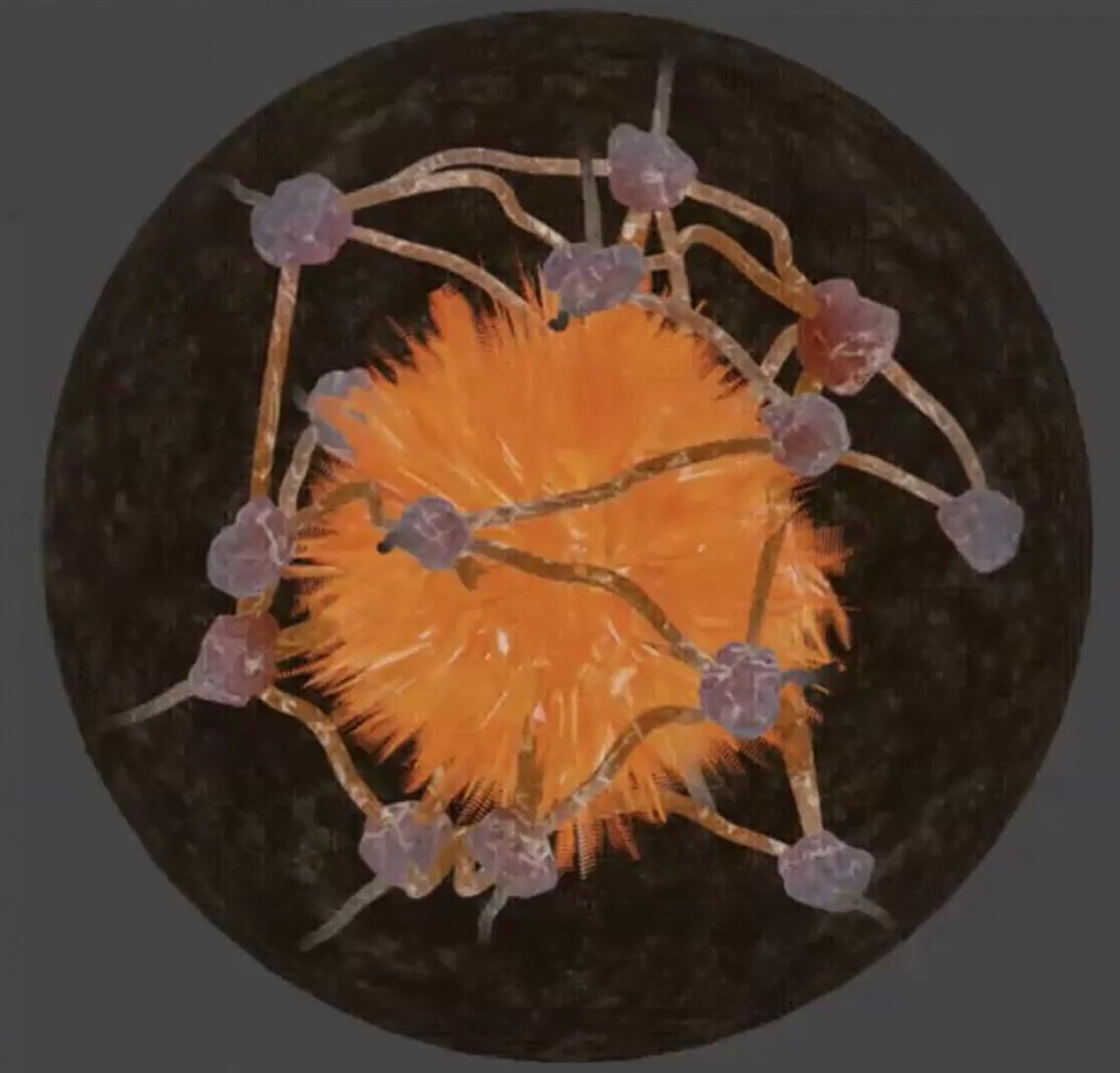
They then set about developing digital models of Kircher’s underground world using AI and software such as Blender and Adobe Substance, to illustrate how he believed subterranean fire and water behave. Below you can see an animated rendering of this model in the initial stages of development.
The digital models were accompanied by sound and animation to enhance the experience and immerse the user.

Animation for a 3D model of how Kircher imagined subterranean water and fire.
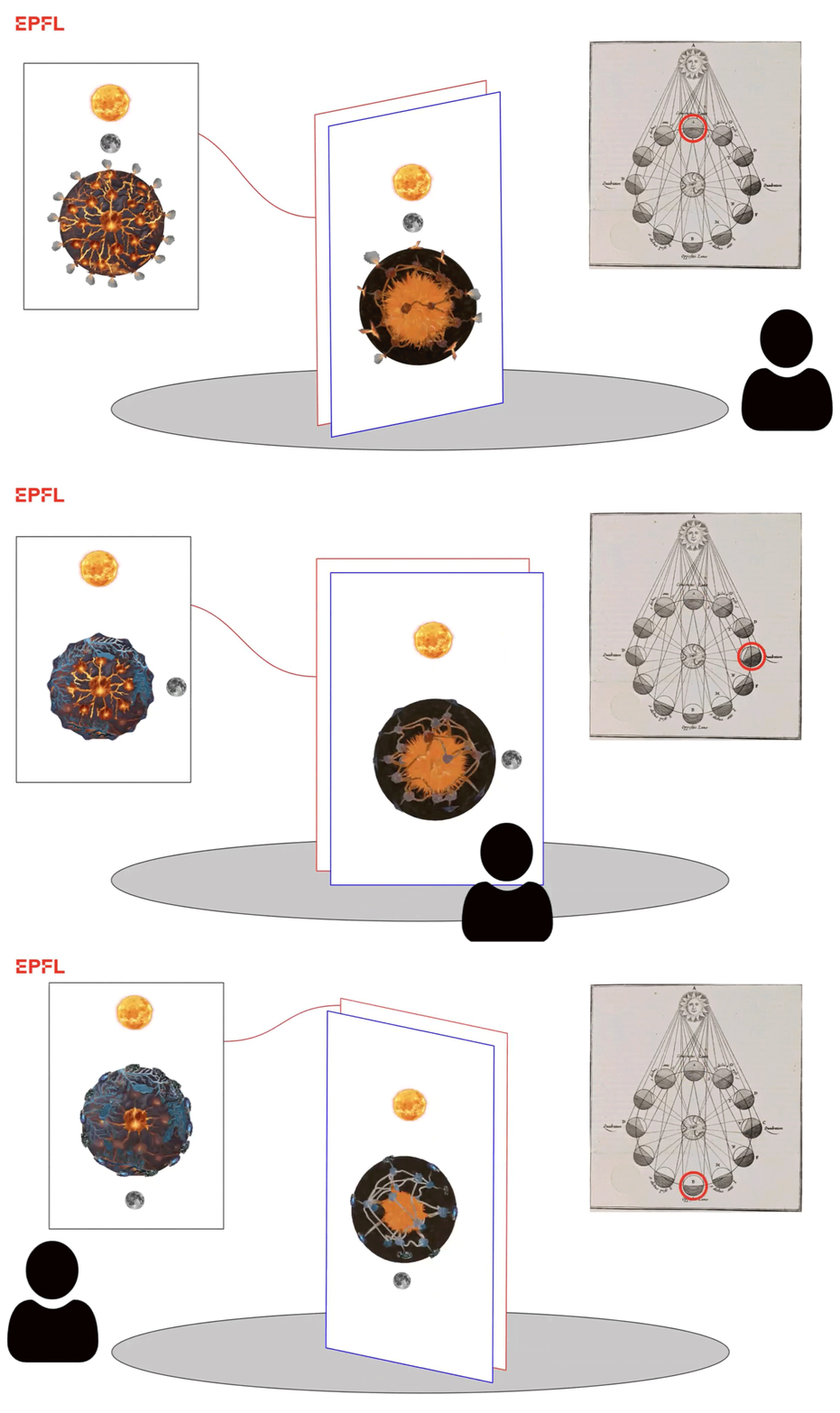
Staying true to Kircher’s theories and etchings, the team decided to use a stylised version of the original map for when the panel was static. This image would transition into an animated digital model when the panel was rotated by the viewer.
They were able to achieve this effect through frame interpolation, a technique which uses AI to generate new blending frames between existing ones in a video sequence.
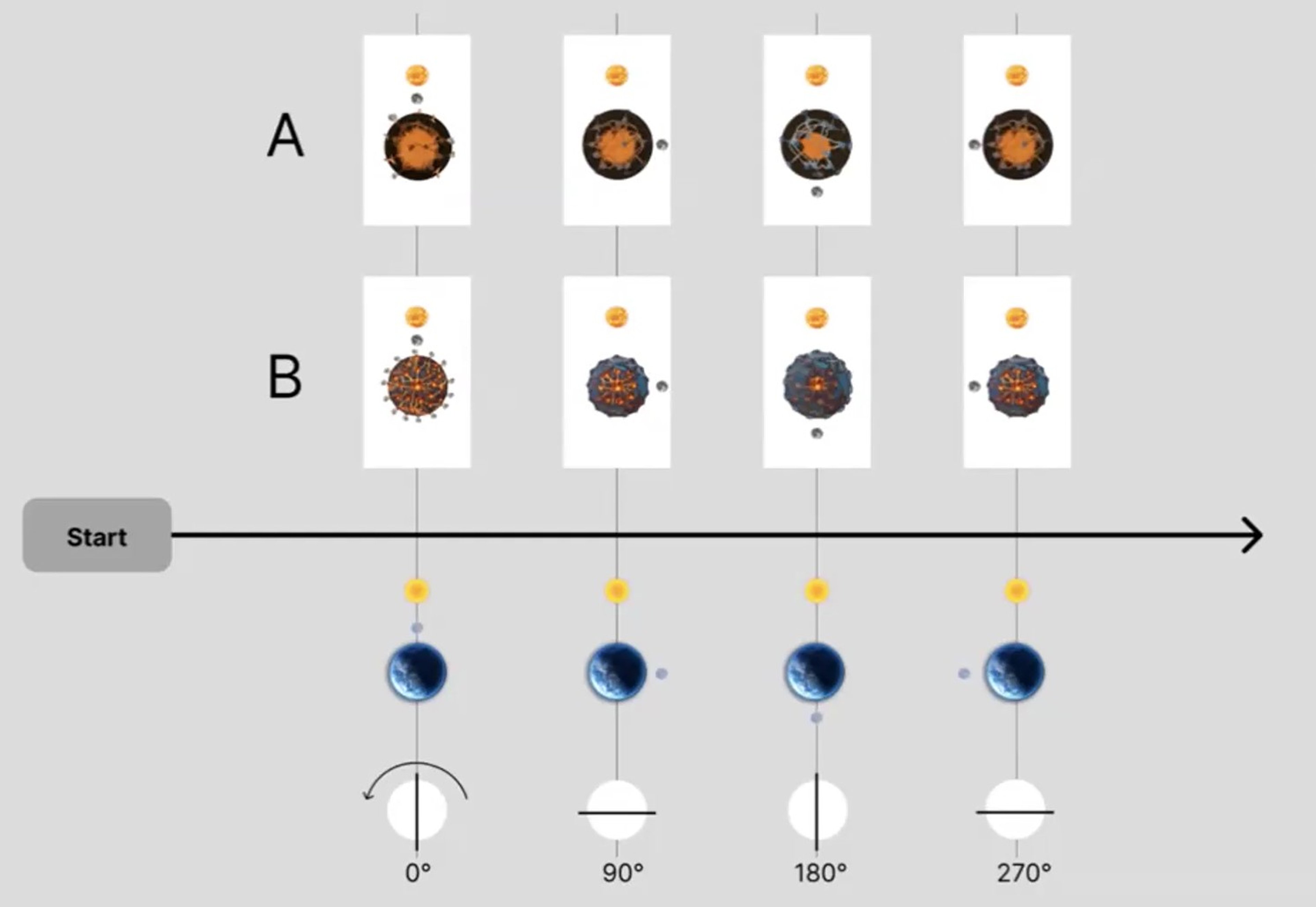
Sun and moon elements were carefully added to orbit the dynamic earth model as a variable, and illustrate the passage of time. This feature also brilliantly reflects Kircher's intertwining terrestrial and astronomical theories. Additional sound effects were added to pair with the intensity of volcano eruption visuals for a more immersive experience.
Kircher's theory of the movements of water and fire underground were depicted on opposing sides of the Navigator. As the viewer manually turns its rotating platform, their action would reveal animated fire-water dynamics theories paired with astronomical phenomena. This is illustrated in the diagram below and the animated technical drawing above.
©eM+
©The Sunderland Collection
While this installation was only built as digitally simulated prototype, one piece of feedback that the students received was that because the gamification element of their models is so strong, they may wish to consider adding more elements to increase viewer interaction, and lengthen the time that viewers are exposured to the original data sets. For example, they may wish to add further graphic devices alongside the sun and moon; or they could develop more animated segments to depict Kircher's other subterranean theories.
The Sunderland Collection is honoured to partner with eM+ and wishes to thank the brilliant Prof. Sarah Kenderdine for inviting us to submit data sets for her classes. We are inspired by the next generation of digital humanities innovators, and looking forward to seeing what they create next!
To find out more about Prof. Kenderdine's work, watch her presentation at 'Maps Are Too Exciting! Digital innovations in mapping", a Sunderland Collection Symposium held in October 2024 at the Bodleian Library.
All images courtesy of EPFL / eM+ and The Sunderland Collection.